This week on “Picture Perfect,” for the 70th anniversary of the release of Cecil B. DeMille’s “The Ten Commandments – and just in time for Passover – we’ll hear selections from Elmer Bernstein’s classic score.
From a 6-CD set on the Intrada label – that includes the complete 2 ½ hour score, three commercial soundtrack releases, and bonus material intriguing enough to curl Charlton Heston’s beard – we’ll hear lovingly remastered highlights from the 1960 Dot and 1966 United Artists soundtrack re-recordings, the Pillar of Fire and parting of the Red Sea sequence from the original score, as heard in the film, and rare demos, prepared for Mr. DeMille by the composer, who announces his themes as he plays them, from the piano.
So let it be written, so let it be done!
It’s the collector’s equivalent of stone tablets handed down from Mount Sinai. Join me for the definitive “The Ten Commandments,” on “Picture Perfect,” music for the movies, now in syndication on KWAX Classical Oregon!
——–
Clip and save the start times for all three of my recorded shows:
PICTURE PERFECT, the movie music show – Friday at 8:00 PM EDT/5:00 PM PDT
SWEETNESS AND LIGHT, the light music program – Saturday at 11:00 AM EDT/8:00 AM PDT
THE LOST CHORD, unusual and neglected rep – Saturday at 7:00 PM EDT/4:00 PM PDT
Stream them, wherever you are, at the link!
https://kwax.uoregon.edu
Tag: Film Music
-
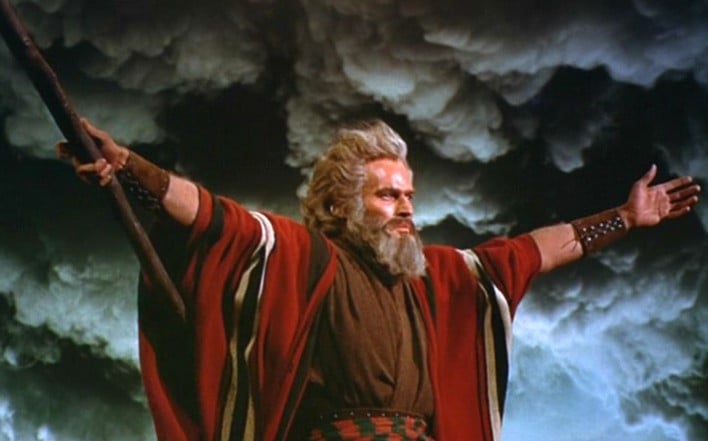
“The Ten Commandments” on “Picture Perfect”
-
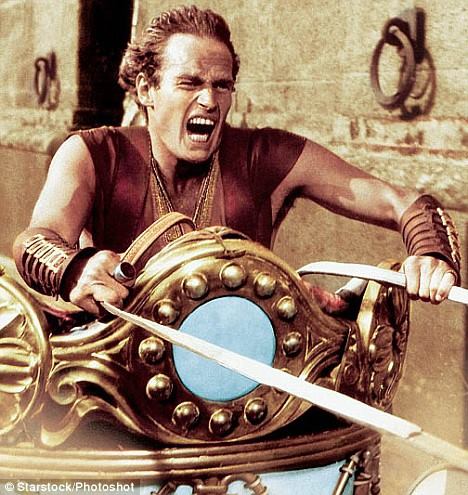
Ben-Hur: Bigger Than Jesus
When asked to name my favorite movies, my top-10 list is probably more like top-50 or 60. But one film I do love dearly is “Ben-Hur” (1959). So imagine my excitement when I saw the trailer – in an honest to goodness theater – this weekend when attending the Met “Live in HD” simulcast of Wagner’s “Tristan und Isolde.” It turns out it’s going to be given the Fathom Events treatment, shown in select theaters in a brand new 4K restoration, March 29 & 30 and April 1 & 2.
The winner of a record 11 Academy Awards, “Ben-Hur” was also a stunning popular success, at the time, becoming the second-highest grossing film in history, after “Gone with the Wind” (adjusting for inflation, STILL the all-time box office champ).
The score, by Miklós Rózsa, is a prime example of the kind of masterly music you rarely, if ever, encounter at the movies anymore. It was also the longest ever composed for film – and, before the soundtrack for “Star Wars” became a bestselling phenomenon, “Ben-Hur” found a home in record collections of folks who didn’t ordinarily seem to pay too much attention to film music. I love it. Surely, it’s in my top-10 film scores of all time. But there we go again.
In fact, I have nothing but superlatives to heap on this film. Its detractors might dismiss it as risible, histrionic, Hollywood religioso kitsch, but I’m glad I lack their cynicism. The film is actually beautifully acted, with Charlton Heston, often way over the top in everyman parts, perfect for this kind of grandiose canvas. He winds up giving one of his best performances. The tragedy of the soured friendship between Judah Ben-Hur, a Jewish prince, and his childhood friend Messala (played by Stephen Boyd), now an ambitious Roman tribune, is beautifully modulated.
Gore Vidal was fond of sharing an anecdote about their introductory scene, which, after many takes, just wasn’t working. As he told it, the director William Wyler grew increasingly frustrated, until Vidal suggested playing it with a gay subtext, an idea Boyd found fascinating. Wyler considered it for a few moments, before remarking, “Okay. But don’t tell Chuck!” Whether or not it’s true – and who cares? – the scene establishes the characters’ deep bond, soon to be dashed against the rocks of their political differences. The look Judah casts upon his friend at the end of the chariot race gets me every time. It conveys the humanity at the center of this big, big film, full of very big themes.Is it overdone? Did I mention, Jesus is in it too?
Regardless of your religious convictions, it’s a beautiful movie, with lots of painterly shots and the aforementioned chariot race, with a cast of thousands and an arena actually built, as opposed to computer generated (some of the sets were extended using matte paintings), and staged, with galloping horses and death-defying stuntmen. They just don’t make ‘em like this anymore!
For classic movie buffs, it’s also fun to spend time with Jack Hawkins, Sam Jaffe, Finlay Currie, and the always supercilious Frank Thring, who specialized in debauched rulers – and, okay, even Hugh Griffith in brown-face, ouch! (He plays an Arab sheik.)
William Wyler had an incredible batting average. Hardly any of his films rate less than four stars, and three of them – this one, “The Best Years of Our Lives,” and “The Big Country” – are among my all-time favorites.
“Ben-Hur” is a four-hour movie, presented in the grand ‘50s tradition, complete with overture and intermission music, but Fathom will be screening it at sensible hours – in most theaters, beginning at 6:00 for weekday showings and 2:00 on the weekend – but do double-check the listings for your area.
It won’t be projected from film, and you’re unlikely to be able to catch it in an old-fashioned movie palace, but for now, it’s the best we can hope for. The only other challenge is finding someone who will be willing to watch it with you!
Tickets and information available at https://www.fathomentertainment.com/releases/ben-hur-2026/ -

Spring Into Documentary Music from England’s Green and Pleasant Land
This week on “Picture Perfect,” with the arrival of spring, we travel to “England’s green and pleasant land” for an hour of documentary music. The playlist will include scores by some of the country’s most respected composers.
We’ll hear selections by Ralph Vaughan Williams, from “The People’s Land” (1941), Benjamin Britten, from “The King’s Stamp” (1935), William Alwyn, from “The Green Girdle” (1941), and Master of the Queen’s Music, Sir Arthur Bliss, from “The Royal Palaces of Britain” (1966). All four films are patriotic utterances on distinctly English themes.
Historically, in the United States, writing music for the movies has often been regarded as “hack work,” but overseas it has been accepted as just another aspect of what it means to be a working artist. There is no disgrace in a composer earning a living, and some of the nation’s greatest musicians – including those in the employ of the Royal Family – have contributed finely-crafted scores to its body of cinema.
You may not have seen any of these shorts, but the music sure is beautiful. I hope you’ll join me for music from English documentaries, on “The Lost Chord,” now in syndication on KWAX Classical Oregon!
——–
Clip and save the start times for all three of my recorded shows:
PICTURE PERFECT, the movie music show – Friday at 8:00 PM EDT/5:00 PM PDT
SWEETNESS AND LIGHT, the light music program – Saturday at 11:00 AM EDT/8:00 AM PDT
THE LOST CHORD, unusual and neglected rep – Saturday at 7:00 PM EDT/4:00 PM PDT
Stream them, wherever you are, at the link!
https://kwax.uoregon.edu
——–
In the meantime, if you’re having a slow day, why not get a taste of the films themselves?
“The People’s Land,” score by Vaughan Williams:
https://film.britishcouncil.org/resources/film-archive/the-peoples-land
“The King’s Stamp,” score by Benjamin Britten:
https://www.dailymotion.com/video/x21r04k
“The Green Girdle,” score by William Alwyn:
https://www.youtube.com/watch?v=YOlnnshTsvQ -
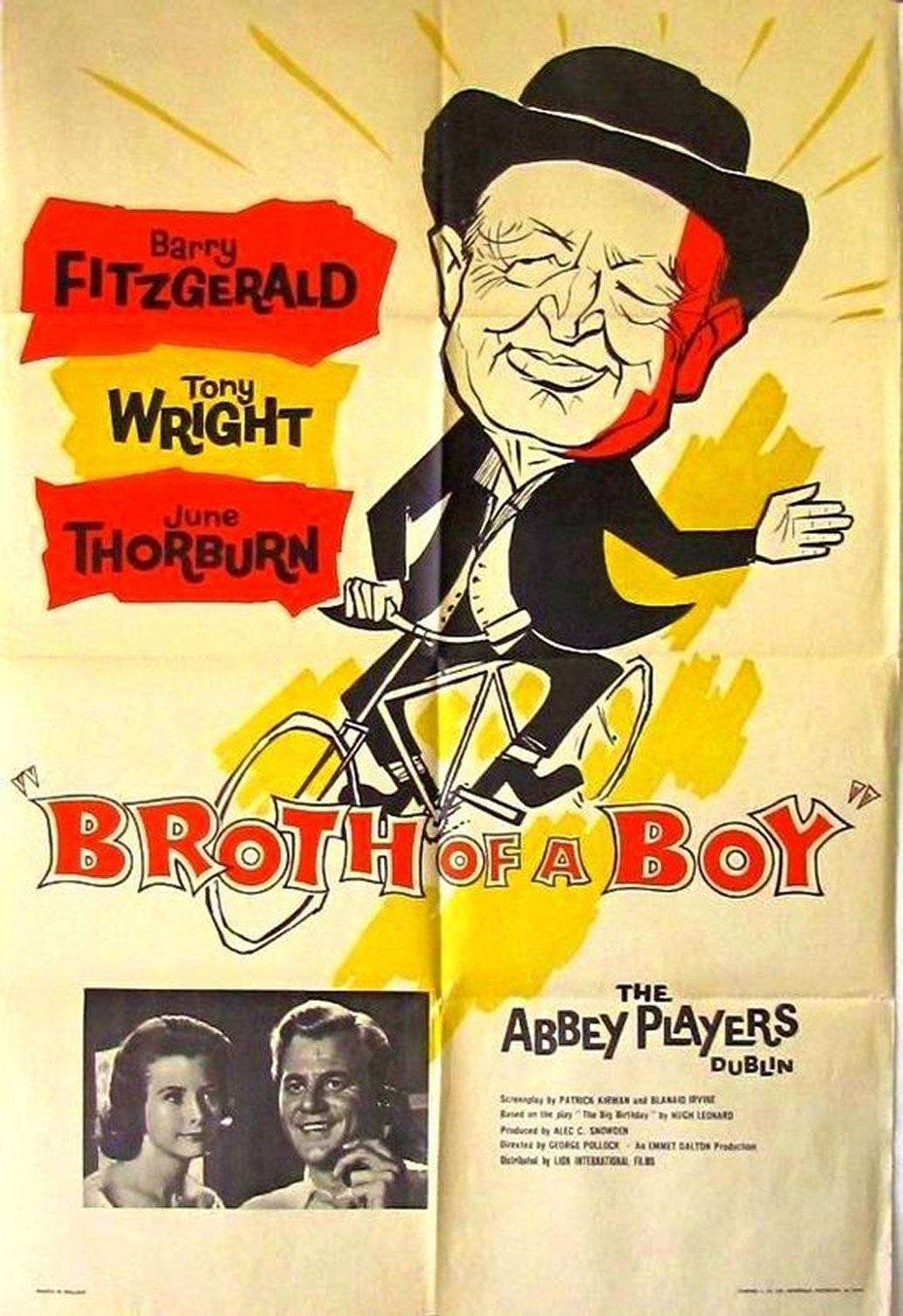
Raising a Pint to Barry Fitzgerald for St. Patrick’s Day
I try to watch “The Quiet Man” every year on St. Patrick’s Day, whether I need it or not. If, already a quarter of the way into the 21st century, this confirms that I am hopelessly out of touch, so be it. Someday, someone will pry this twee, politically-incorrect Irish fable from my cold dead hand.
I’m working my way through the recent John Williams biography by Tim Greiving, and although I am having some major issues with it (the book, published by Oxford University Press, reads like a first draft, to put it kindly), it is obviously written with love and chock full of valuable information. I know Williams always speaks fondly of Victor Young, but it was interesting to learn that Young’s music for “The Quiet Man,” which Williams saw in the theater in 1953, was one of the first film scores that really made him sit up and take notice and made him consider the possibility of writing for the movies.
I guess this makes sense, especially with having everything laid out chronologically in a biography. Progressions become clearer, and from the start Williams was always a gifted arranger. I mean, his first Academy Award was for his arrangements for Norman Jewison’s film of “Fiddler on the Roof,” and it was far from his first musical. Even apart from the movies, Williams was arranging for and accompanying Frank Sinatra, Vic Damone, Frankie Laine, and so many others. So he would have had a connoisseur’s appreciation of what Young achieved in his score for “The Quiet Man,” which positively overflows with inspiring arrangements of folk and popular song and sentimental ballads.
On a related note, for a long time, after having run across some clips, probably on YouTube, I’ve wanted to see a film called “Broth of a Boy.” It stars Barry Fitzgerald (who plays the “Quiet Man’s” insatiably thirsty Michaeleen Oge Flynn) as the oldest man in the world. With that premise, how could it miss? Unfortunately, the film is seemingly unavailable in the United States – only intensifying my desire to see it – and the reviews I’ve read ranged from mildly charmed to middling. So I certainly knew not to expect a classic.
Every year, around St. Patrick’s Day, I search for it, and what do you know, last night I found it on YouTube! The transfer is barely adequate, but you know how old movies are from the United Kingdom. Even the Alastair Sim version of “A Christmas Carol” (released in the U.K. as “Scrooge” in 1951 – a year before “The Quiet Man!”) looks like it was made in the 1930s. I don’t blame the technology; I blame post-war austerity.
Anyway, “Broth of a Boy” looks older than its years, as for that matter, does Barry Fitzgerald. His character is supposedly 110. Fitzgerald died in 1961 at the age of 72. But here, in 1959, he looks tired. Or maybe he was just hammered the whole time.
Be that as it may, if you’re a “Quiet Man” fan, I think you will find much to enjoy. The humor and characterizations are of the same cloth, and both films employ actors from Dublin’s Abbey Players – the National Theatre of Ireland – although, as far as I can tell, Fitzgerald is the only common denominator between the two.
Alas, the screenplay isn’t as consistent or sharp, and the scenes are not always the most imaginatively captured. I sure do miss John Ford’s direction and Technicolor. The score, by Stanley Black, will never be mistaken for Victor Young. The film feels longer than its 77 minutes, but if you are a “Quiet Man” die-hard, you might want to give it a shot. Or have a few yourself, if you know what’s good for you. -
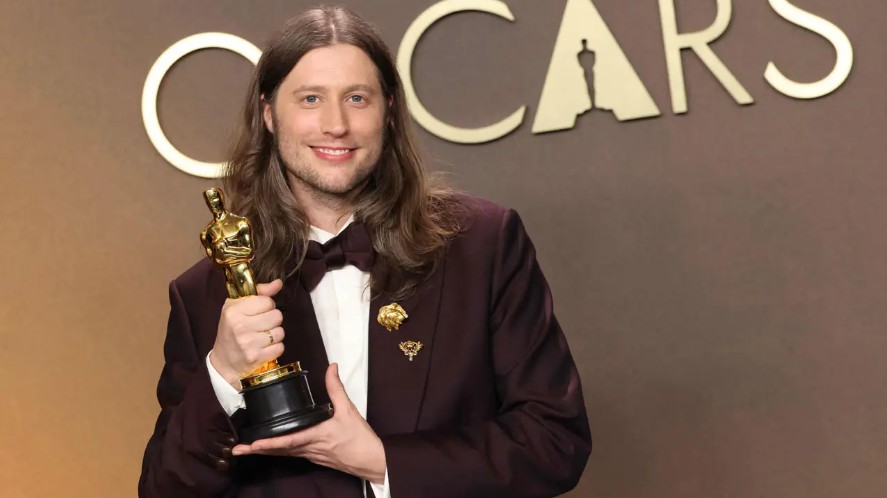
Nice Guy Ludwig Göransson Picks Up Third Oscar for “Sinners”
As predicted, Ludwig Göransson received his third Academy Award last night for his bluesy score to “Sinners.”
Summing up, then:
Elmer Bernstein, Jerry Goldsmith, and Bernard Herrmann – 1 Oscar
Erich Wolfgang Korngold and Franz Waxman – 2 Oscars
Ludwig Göransson and Miklós Rózsa (composer of “Ben-Hur”) – 3 Oscars
Okay, then!
What does a white kid from Sweden know about the blues, one might ask? In his acceptance speech, Göransson talked about his father’s chance discovery of an album by John Lee Hooker in 1964. (“It changed my dad’s life, and he devoted his whole life to music.”) He handed off a guitar to his son when Göransson was 7. (“I loved the guitar. It became everything to me.”) It was actually a rather touching speech. As in his acceptance speeches for his previous awards, for “Black Panther” and “Oppenheimer,” he came across as sweet-natured – gentle, humble, and sincere. Good for him.
I did think his music for “Sinners” was worlds better than his score for “Oppenheimer,” which in its manic insistence to be everything everywhere all at once (in tandem with the breakneck editing) actually made it a weaker film than it might otherwise have been. Still good enough for Best Picture in 2024.
Göransson’s most recent win was announced by… the cast from “Bridesmaids?”
Congratulations, Ludwig Göransson. Watch his acceptance speech here.
In related news, “Sinners’” Miles Caton performed “I Lied to You,” one of this year’s nominees for Best Original Song. (The award went to “Golden” from “KPop Demon Hunters,” which I’m not even going to touch.)
Host Conan O’Brien included a parody of Handel’s “Zadok the Priest” in a mock-coronation bit during his opening monologue (with the Los Angeles Master Chorale and Josh Groban, of all people, lending a voice).
Classical music was also represented by way of “Viva Verdi!,” a documentary about a retirement home for musicians, Casa di Riposo per Musicisti – commonly known as Casa Verdi – established by the celebrated opera composer in 1896. The film was nominated in the category of Best Original Song, not for Verdi himself, but for Nicholas Pike’s “Sweet Dreams of Joy,” performed on the film’s soundtrack by soprano Ana María Martínez.
Soprano Sonya Yancheva was in the audience (as an ambassador of Rolex!), with her husband, conductor Domingo Hindyan.
Ballet dancer Misty Copeland came out of retirement to appear in the “Sinners” production number, causing one to wonder if it was an intentional smack in the face to Timothée Chalamet, who kicked up the ire of the ballet and opera communities a couple of weeks ago by offhandedly dismissing the art forms during a very “bro” promotional appearance chatting with Matthew McConaughey.
Chalamet had been the front-runner for the Best Actor award. Last night, he went home with nothing but tears for his pillow. He could have benefited from a touch of Göransson’s humility.
Conan’s send-up of Handel’s “Zadok”
“Cicero! My Oscar!”
Tag Cloud
Aaron Copland (92) Beethoven (94) Composer (114) Film Music (116) Film Score (143) Film Scores (255) Halloween (94) John Williams (185) KWAX (228) Leonard Bernstein (99) Marlboro Music Festival (125) Movie Music (131) Opera (197) Philadelphia Orchestra (86) Picture Perfect (174) Princeton Symphony Orchestra (106) Radio (86) Ralph Vaughan Williams (85) Ross Amico (244) Roy's Tie-Dye Sci-Fi Corner (290) The Classical Network (101) The Lost Chord (268) Vaughan Williams (99) WPRB (396) WWFM (881)