Tag: Film Music

  • Princeton Symphony Salutes the Silver Screen

    Princeton Symphony Salutes the Silver Screen

    Lights! Camera! Music?

    The Princeton Symphony Orchestra will present “A Silver Screen Salute” on February 7 at 8 p.m.

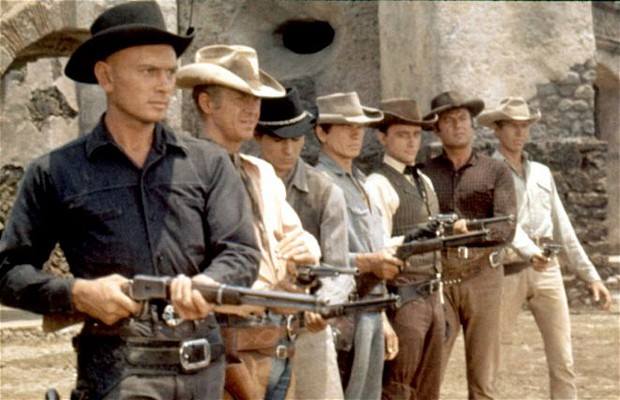
    The concert, which will take place at Princeton University’s Richardson Auditorium, will include some of film’s most evocative music, including themes from “Gone with the Wind,” “The Magnificent Seven,” “Lawrence of Arabia” and “Star Wars.”

    Also featured will be Academy Award winning music by Franz Waxman for “Sunset Boulevard,” Bernard Herrmann’s score for Alfred Hitchcock’s “Vertigo,” Ennio Morricone’s poignant melodies for “Cinema Paradiso,” and John Williams’ Indiana Jones march from “Raiders of the Lost Ark.”

    The PSO will be joined by The American Boychoir for selections from Williams’ “Empire of the Sun,” “Amistad,” and “Saving Private Ryan,” as well as Herbert Stothart’s score for “The Wizard of Oz,” on themes of Harold Arlen.

    NPR arts commentator Bob Mondello will host the event. Read more about it in my article in today’s Trenton Times.

    http://www.nj.com/times-entertainment/index.ssf/2015/01/princeton_symphony_orchestra_p.html

    PHOTO: PSO Music Director Rossen Milanov, ready for his close-up

  • Jules Verne Film Music Adventure on Picture Perfect

    Jules Verne Film Music Adventure on Picture Perfect

    THE NINTH DAY OF CHRISTMAS

    This week on “Picture Perfect,” we begin the New Year with science, progress and adventure, courtesy of Jules Verne.

    We’ll hear music from four films inspired by Verne novels, including “20,000 Leagues Under the Sea,” composed by Paul J. Smith; “In Search of the Castaways,” by William Alwyn; “Journey to the Center of the Earth,” by Bernard Herrmann; and “Around the World in 80 Days,” by Victor Young.

    Grab your gear and climb aboard, tonight at 6 ET, with a repeat tomorrow morning at 6, or listen to it later as a webcast at http://www.wwfm.org.

    P.S. Don’t forget to bring a harpoon!

  • Thanksgiving Film Music Family Community Country

    Thanksgiving Film Music Family Community Country

    This week on “Picture Perfect,” with Thanksgiving fast approaching, we’ll have music from films about family, community and country.

    Aaron Copland’s music for “The Cummington Story” (1945) sets the tone. The short semi-documentary, made for the Office of War Information, relates the gradual acceptance of European war refugees into a cautious but fundamentally decent New England community. The score is pure Americana, with some of the material later finding its way into Copland’s Clarinet Concerto and “Down a Country Lane.”

    Thank you, amazing YouTube, for making the complete film available online!

    James Horner’s music for “Field of Dreams” (1989) is cut from the same cloth, or at any rate it is a square in the same folksy counterpane. Horner clearly wrote the music under the influence of Copland’s “Our Town.” The film itself is a male wish-fulfillment fantasy, in which a man finds redemption and a new understanding of his father in the enchanted cornfields of America’s heartland.

    “The Best Years of Our Lives” (1946) tells the tale of the three war veterans struggling to readjust to civilian life. It isn’t easy, but with the support of family and friends, there’s plenty of hope for the future. Hugo Friedhofer wrote the Academy Award-winning score. The orchestrations were by Copland protégé (and composer of “The Big Country”) Jerome Moross.

    Finally, Daniel Day-Lewis elevated Steven Spielberg’s “Lincoln” (2012) to greatness with one of the most amazing performances ever captured on film. Day-Lewis’ gentle but shrewd Man of Destiny would go to any lengths to hold the country together. John Williams tapped into America’s proud musical heritage, clearly influenced by Copland and Ives, to create a score of stirring nobility.

    I hope you’ll join me for these musical reflections of family, community and country this week, on “Picture Perfect.” You can listen to it this Friday evening at 6, with a repeat Saturday morning at 6, or you can catch it later as a webcast at http://www.wwfm.org.

  • Film Composers Times Changing?

    Film Composers Times Changing?

    “Times sure have changed for film composers,” writes Allan Kozinn of the New York Times. I’m not so sure.

    Kozinn is of the opinion that film music is making massive strides in the concert halls. While it’s true that orchestras have embraced the profitability of performing film scores with showings of the actual movies, for the most part you’ll find music written for film relegated to pops concerts. And you’ll likely hear only the main themes. That’s not to say that all film music deserves to stand toe-to-toe with the world’s masterpieces. But judicious selections from the best would be at least as welcome as Berlioz or Liszt.

    Part of the problem is that many of the composers themselves weren’t thinking of posterity. They were just churning the stuff out against deadline and then chasing the next paycheck. But when you think about it, so was Mozart.

    Some of the music is derivative, certainly, but that can be gotten around. There is plenty of finely-crafted music from which to draw by composers with a strong, original voice. Miklós Rózsa, for instance.

    Another part of the problem is that because of the nature of the film business, many of the scores weren’t even preserved. So many modern recordings have taken place only after painstaking reconstruction. If the actual, widespread rehabilitation of classic film music ever catches fire, it could be the biggest business since the period instrument movement.

    Finally, it was comparatively seldom that film composers made usable concert arrangements, so that the music can be enjoyed separate from the images. There are notable exceptions: for instance, Bernard Herrmann’s “Psycho: A Narrative for String Orchestra.” Can you name another piece of orchestral music composed in 1960 that is as widely recognized as that written for the film’s shower scene? Herrmann’s suite contains 15 minutes of alternately driving, moody and chilling music.

    On the other hand, sometimes composers are not the best judge of their own material. I cringe whenever I hear John Williams’ concert arrangement, “Adventures on Earth,” drawn from his score to “E.T.,” which completely subverts the perfection he achieved when writing for the film. The music was so good, director Steven Spielberg told Williams to just go with it when conducting and he’d edit the images to suit the music. That’s a show of respect rarely bestowed on the film composer. Yet rather than allow the music to speak as it did so eloquently in the film’s final 15 minutes, Williams’ concert arrangement jumps all over the place, grabbing a little bit from here and a little bit from there. Even judging from a purely musical standpoint, the end result is a much weaker statement.

    Anyone who has ever listened to Sibelius’ incidental music to “The Tempest” understands the wisdom of taking the best moments and arranging them into concert suites. In the digital age, there are multiple recordings of the complete score for the curious. For the average symphony concert, I don’t propose programming the complete music from “King Kong,” say, any more than I would the complete incidental music to Mendelssohn’s “Oepidus at Colonus” (though I certainly believe there is a niche to be filled by some enterprising orchestra that would devote itself exclusively to just that – playing and preserving classic film scores in their entirety). Often the best bits are already in the concert suites, or even the overtures.

    There is at least one positive development, in terms of respectability. Kozinn reports that London’s Royal College of Music is offering a new scholarship named for the composer John Barry. Barry was the winner of five Academy Awards, including two for “Born Free,” and one each for “The Lion in Winter,” “Out of Africa” and “Dances with Wolves.” The John Barry Scholarship for Film Composition, established by the composer’s widow, Laurie Barry, covers tuition fees for a two year period, as well as a student’s living expenses.

    While this post has devolved into a rant about preservation and acceptance, what we really need in the present are educated film composers. I am so sick of Hans Zimmer.

    But if the music is going to get better, one hopes so will the films, or at least the conditions, so that the composer is able to write something good. Writing music takes time, and time is money. In Hollywood, there has always been a tension between art and commerce. Over the decades, however, the shift has been decidedly in favor of the latter. Can independent films afford the expense of recording with a symphony orchestra? The ball, sadly, appears to remain in Hollywood’s court.

    Here’s Kozinn’s article:

    PHOTO: John Barry accepts his Oscar for “Out of Africa.”

  • Medieval Movie Scores Chivalry Lives

    Medieval Movie Scores Chivalry Lives

    Chivalry is not dead this week on “Picture Perfect,” as we listen to music from movies set in the Middle Ages. The term “chivalry” conjures images of knights in armor, of courtly behavior, of bravery, honor, courtesy, moral virtue and willingness to defend the weak. For the average filmmaker and moviegoer, that likely translates into spectacle and adventure.

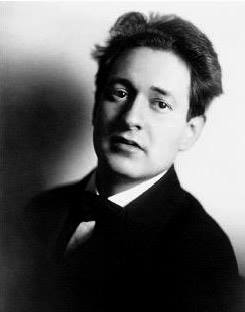
    We’ll hear scores that celebrate or circumvent the code, with selections from “The Warlord” by Jerome Moross, “El Cid” by Miklós Rózsa, “Lionheart” by Jerry Goldsmith and “The Adventures of Robin Hood” by Erich Wolfgang Korngold.

    As always, we go on a crusade for great film music this week, on “Picture Perfect,” this Friday evening at 6 ET. If you miss it, you can enjoy it later as a webcast at http://www.wwfm.org.

    Robin is a bold rascal:

Tag Cloud

Aaron Copland (93) Beethoven (95) Composer (114) Film Music (141) Film Score (143) Film Scores (255) Halloween (94) John Williams (195) KWAX (229) Leonard Bernstein (103) Marlboro Music Festival (125) Movie Music (156) Mozart (89) Opera (212) Philadelphia Orchestra (89) Picture Perfect (174) Princeton Symphony Orchestra (108) Radio (88) Ross Amico (244) Roy's Tie-Dye Sci-Fi Corner (290) The Classical Network (101) The Lost Chord (268) Vaughan Williams (103) WPRB (396) WWFM (881)

DON’T MISS A BEAT

Receive a weekly digest every Sunday at noon by signing up here


RECENT POSTS