Only months after Martin Scorsese revealed he would be making a film about Leonard Bernstein, Variety announces a second project, with Scorsese producing – a biopic of pianist Byron Janis!
Once again, you’ve got to love the Golden Age of Hollywood. In terms of music, movies from that era just seemed so… inclusive.
On the one hand, you could have crooner Rudy Vallée acting in Preston Sturges comedies (and not singing a note); on the other, you could have Leopold Stokowski shaking hands with Mickey Mouse. There seemed to be a wider acceptance of musicians of all stripes as equally valid entertainers, and an assumption that the general public would understand (or at least not be put off by) a line of dialogue about Delius or Sibelius. When the Three Stooges weren’t flipping fruit into opera singers’ mouths, that is.
This is especially fascinating when viewed from the perspective of the present, when seemingly the bar is set lower and lower all the time, with everyone racing to the lowest common denominator so as not to seem too pointy-headed. Wouldn’t it make sense that people of any era would want to aspire to be more? That they would want to be led, represented and entertained by the most talented, most intelligent people? It’s a very strange world we live in.
José Iturbi was one of the seemingly unlikely cinematic superstars of the 1940s. Like Oscar Levant, Iturbi was a serious pianist. In the ‘20s, he had made a name for himself as a barnstorming virtuoso who toured Europe, Asia, Africa and South America. He made his North American debut with the Philadelphia Orchestra under Stokowski.
Eventually, he made the transition to conducting, which had long been his dream. He led the great symphony orchestras of Philadelphia and New York, the London Symphony, the orchestra of La Scala Milan, and the Concertgebouw Orchestra of Amsterdam. He would serve as music director of the Rochester Philharmonic.
Iturbi generally played himself in Hollywood musicals, including “Thousands Cheer” (1943), “Anchors Away” (1945) and especially “Three Daring Daughters” (1948), in which he was actually the lead.
For all his talent and charisma, however, Iturbi was always churning up controversy, making provocative remarks and losing his temper. Ironically, for a musician who owed so much of his fame to his absorption into popular culture, he made a big hullabaloo about appearing on concert programs that included both classical and popular music. It wasn’t popular music he objected to, particularly; it was the mixing of the two. This is particularly puzzling from a pianist who studied at the Valencia and Paris Conservatories, yet played jazz and boogie-woogie in innumerable film shorts.
His private life was equally turbulent, perhaps even more so, with tragic results. His wife died of accidental poisoning. He sued his daughter, claiming she was an unfit mother to his grandchildren. The daughter later committed suicide.
Iturbi could be a brilliant pianist, though he sometimes drew criticism that he was diluting his talents through his involvement with Hollywood, and a number of his concerto recordings, which he conducted himself from the keyboard, don’t really seem to take flight. Even so, there are gems among his recorded repertoire, and the part he played in keeping classical music in the mainstream is to be lauded.
It’s a vine that is now severely withered. I wonder if Luciano Pavarotti’s “Yes, Giorgio” (1982) was the last in the line of dubious movies featuring great classical musicians.
Happy birthday, José Iturbi (1895-1980).
Iturbi in “Holiday in Mexico” (1946):
Insane take on Liszt’s “Hungarian Rhapsody No. 2” from “Anchors Aweigh” (1945):
Iturbi plays Mozart with his sister, while conducting the Rochester Philharmonic, in 1946:
Iturbi plays Albeniz, Granados and Navarro, from 1933:
Oscar Levant in “The Barkleys of Broadway” (1949):
Lauritz Melchior with Esther Williams and Van Johnson in “Thrill of a Romance” (1945):
The Enlightenment isn’t exactly remembered for its flights of fancy. If the odd novel embraced a fantastic tone, it was frequently in the service of satire, an entertaining means to send-up contemporary mores and pursuits or to poke fun at authority figures and good old reliable human frailty. This week on “Picture Perfect,” we’ll explore a few of these fantastic adventures of the 18th century.
“The Surprising Adventures of Baron Munchausen” (1785) pokes fun at a real-life German nobleman and veteran of the Russo-Turkish War, one Hieronymus Karl Friedrich, Freiherr von Münchhausen, whose reputation for telling outrageous tall tales was lampooned by Rudolf Erich Raspe. Raspe, fearing a libel suit, published the work anonymously, with the result that it was commonly believed that the Baron had actually dictated the tales himself. Naturally, Munchausen was upset by the unwanted attention. The name “Munchausen” has come down through the centuries to describe feigned illness and pathological lying.
The book has been adapted to film several times, beginning with a silent version by Georges Méliès, all the way back in 1911. We’ll be hearing music from two subsequent adaptations. The first, titled simply “Münchhausen” (1943), is undeniably entertaining and exceptionally well-made. However, underlying a sense of enjoyment is a kind of unease in the knowledge that the film was a pet project of Joseph Goebbels, who wanted to celebrate the 25th anniversary of the UFA film studio by producing a lavish spectacle worthy to stand toe-to-toe with foreign efforts like “The Wizard of Oz” and “The Thief of Bagdad.”
Considering the source, one would have to look awfully hard to come up with anything resembling Nazi propaganda. The entire exercise comes across as a pastoral escape from the horrors of totalitarianism, total war and the Final Solution. The elegant music, by Georg Haentzschel, would not be out of place in the concert hall. Haentzschel is regarded as perhaps the last representative of a generation of Middle European light music composers.
More than 40 years later, director Terry Gilliam undertook another production design-driven adaptation that resembled a series of Doré illustrations brought to life. Contrary to received wisdom, “The Adventures of Baron Munchausen” (1988) managed to pull in a respectable amount of per-screen capital. Ultimately, the film was a casualty of a management turnover at Columbia Pictures, with the new regime eager to bury the projects of the old. Therefore, it was never seen theatrically beyond a very limited release. The score, by Michael Kamen, while in a romantic heroic style, wittily contains abundant allusions to music of the 18th century.
“The Manuscript Found in Saragossa” (1805) is a transitional work, with its ecstatically lurid opening chapter – replete with gypsy storytellers, highwaymen, dueling skeletons, lesbian vampires and a couple of corpses dangling in a gibbet – dragging the Enlightenment kicking and screaming into the Romantic age. It starts out as a masterpiece of surrealism by way of Gothic convention, with the spell eventually broken, sadly, by a large cold bucket of Enlightenment water in the form of a perfectly rational explanation at the end. But until then, the author, Jan Potocki, gets an A for effort. The interlocking structure, with stories inside stories inside stories looks ahead to postmodern experiments by writers like Italo Calvino and John Barth, to say nothing of Jorge Luis Borges.
The book was made into an acclaimed Polish film, “The Saragossa Manuscript,” in 1965. Its cult status led to a restoration financed by Jerry Garcia, Martin Scorsese and Francis Ford Coppola that was released on VHS and DVD in 2001.
Who else could provide the perfect soundtrack to such a hallucinogenic experience but Krzysztof Penderecki? Penderecki intersperses spooky passages with neo-classical and baroque interludes.
Finally, we’ll have music from one of the many adaptations of Jonathan Swift’s “Gulliver’s Travels” (1726). “The Three Worlds of Gulliver” (1960) simplifies the book’s narrative and dispenses with a great deal of the misanthropic humor in favor of children’s fantasy. You won’t catch Gulliver extinguishing a fire in the Lilliputian Emperor’s palace with his urine in this version. What you will find is a good deal of technical wizardry and a delightful score by Bernard Herrmann.
I hope you’ll join me for music from fantastic 18th century adventures this week, on “Picture Perfect” – music from the movies – this Friday evening at 6 ET, with a repeat Saturday morning at 6; or that you’ll listen to it later as a webcast at http://www.wwfm.org.
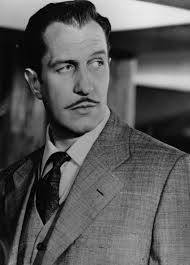
What are the odds of two horror icons being born on the same day? It’s like Jascha Heifetz and Fritz Kreisler sharing a birthday (February 2), or Ferruccio Busoni and Sergei Rachmaninoff (April 1). Today is the birthday of both Vincent Price (1911-1993) and Christopher Lee (born 1922).
Though he’d been a professional actor since the 1930s (he appeared as Sir Walter Raleigh in “The Private Lives of Elizabeth and Essex,” with Bette Davis and Errol Flynn, in 1939), Price settled into the horror genre in the 1950s, with films like “House of Wax,” “The Fly,” “The House on Haunted Hill,” and “The Tingler.”
In the 1960s, he became closely associated with Roger Corman, appearing in a series of films loosely inspired by the stories of Edgar Allan Poe.
Of course, he turned in great performances in a number of extra-genre classics, such as “Laura,” “The Baron of Arizona,” and the rib-tickling “Champagne for Caesar,” but he will always be remembered as Prince Prospero, Dr. Phibes and the narrator on Michael Jackson’s “Thriller.”
He was an actor blessed with campy self-awareness (though he could dial it down when required), and he was quick to capitalize on both his image and his indelible voice.
Though he too has played a broad range of roles over the course of a career which has spanned more than six decades, Christopher Lee will always be linked to the Hammer Studios horror explosion of the 1950s and ‘60s. Younger fans will recognize him as Count Dooku, from the even more horrid “Star Wars” prequel trilogy, and as the turncoat wizard Saruman, in Peter Jackson’s self-indulgent “The Lord of the Rings.”
When Lee determined to become an actor, his plan was to model himself on Conrad Veidt, the German Expressionist icon who had created Cesare the Somnambulist in “The Cabinet of Doctor Caligari” and later played a string of refined though despicable Nazis – notably Major Strasser in “Casablanca” – in Warner Brothers films of the 1940s.
Lee’s imposing stature and bass-baritone voice make him a natural for screen villainy – though some of my favorite Lee roles are heroic (for instance, that of the Duke de Richelieu, the gentleman occultist who matches wits with a band of Satanists in “The Devil Rides Out”).
Thankfully, at 92, Lee is still very much with us, with recent appearances in “The Hobbit,” Martin Scorsese’s “Hugo,” and Tim Burton’s “Alice in Wonderland.”
Fun fact: it had at one point been Lee’s ambition to become an opera singer. In fact, it was Jussi Björling who recommended Lee audition for the Swedish Opera. Lee did just that and was accepted. Unfortunately, he was unable to afford the training, but whenever he filmed in Scandinavia, he made it a point to go slumming with Swedish amateur companies under an assumed name.
His singing talent has been sinfully underutilized on film, though he does get to belt out a couple of numbers in “The Return of Captain Invincible,” also starring Alan Arkin. The film, with songs by the composer and lyricist of “The Rocky Horror Picture Show,” was widely panned.
Happy birthday, Vincent Price and Christopher Lee!
Lee in “The Return of Captain Invincible:”
Price playing Mendelssohn’s “The War March of the Priests” in “The Abominable Dr. Phibes:”