Tag: Frédéric Chopin

  • Neil Sedaka, Prodigal Son of the Piano

    Neil Sedaka, Prodigal Son of the Piano

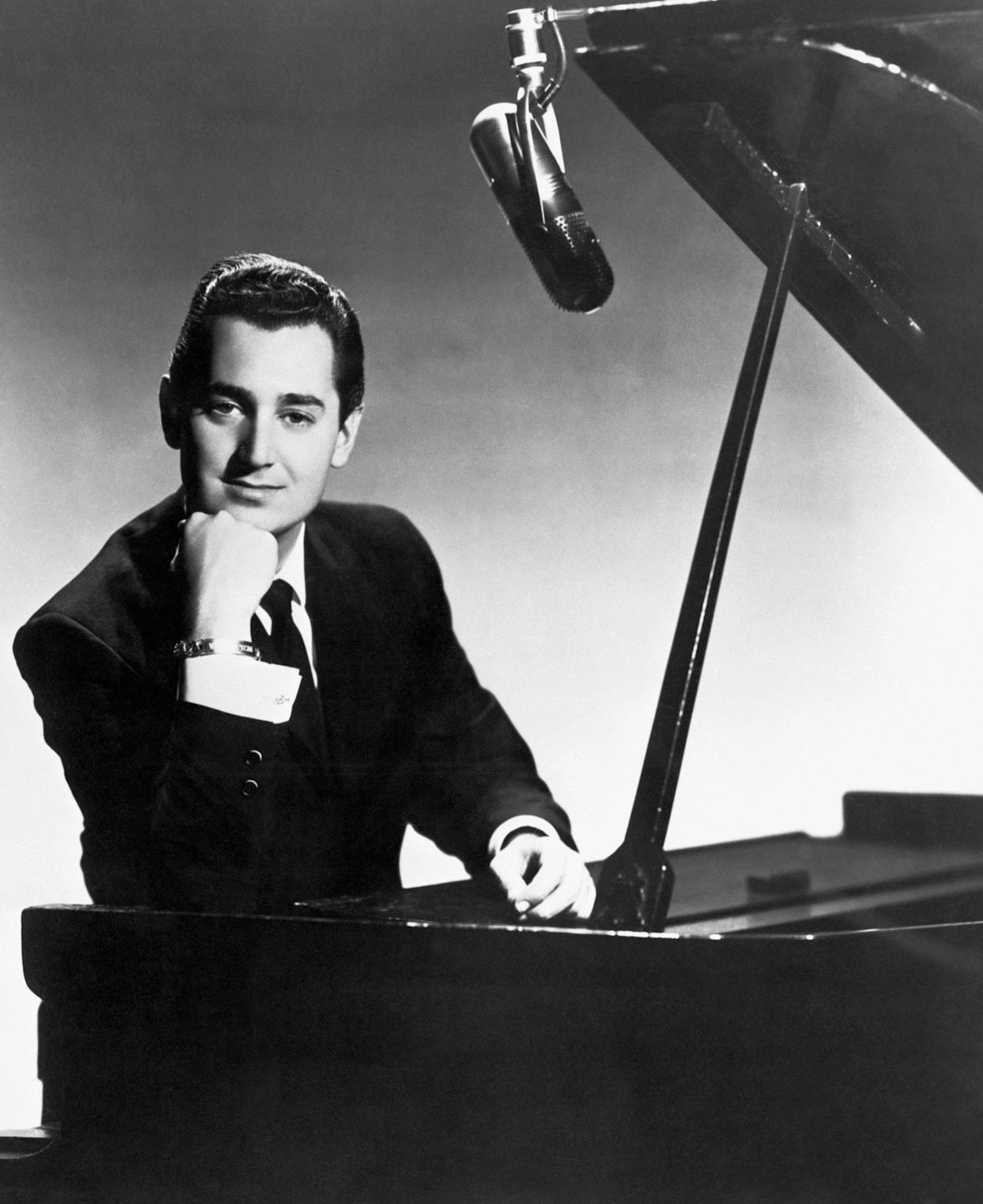
    When Neil Sedaka died on Friday, I think everyone of a certain age, regardless of their musical proclivities, must have felt it. “Breaking Up Is Hard to Do,” “Laughter in the Rain,” and “Love Will Keep Us Together” have been a part of our lives since it was still okay to feel good about the world – in no small part thanks to Sedaka’s contributions to it.

    The man was pure music. I knew something of his classical music background from a piano concerto he composed, called “Manhattan Intermezzo,” a recording of which I’ve played on the air a few times, but I never realized the extent of his training and ambition until reading up on him after his death.

    Both Sedaka’s parents – his father a taxi driver of Lebanese Jewish descent and his mother an Ashkenazi Jew of Polish and Russian descent – played piano. When Neil revealed his own musical aptitude at school, his mother took a part-time job to raise money for a second-hand upright. Sedaka took to it like laughter in the rain. He successfully obtained a scholarship to the Juilliard School of Music prep division.

    However, he took an unexpected turn (secretly, so as not to break his mother’s heart) when he teamed with a neighbor, Howard Greenfield, three years his senior, a poet and an aspiring lyricist. Sedaka claims that the two churned out a song a day for the next three years. They pounded the pavement and knocked on doors until Connie Francis recorded “Stupid Cupid.” That was followed by “Where the Boys Are.” When Sedaka received a five-figure royalty check for “Calendar Girl,” he must have thought, hey, maybe this is the way to go, after all – for now anyway. At least it made his mother feel better.

    But after a few years, he was starting to get the itch to get back to the long-hair stuff and began to practice seriously, three and four hours a day, with the intent to compete in the Tchaikovsky Piano Competition in Moscow. You’ll remember Van Cliburn won the inaugural competition in 1958, earning himself a ticker-tape parade on Fifth Avenue.

    Sedaka, however, would be rejected by the Soviet authorities for his association with “American popular capitalistic music.”

    He retained a lifelong love of the classics. Later in his career, he put out a kitschy album of classical music melodies outfitted with his own lyrics.

    For Frédéric Chopin’s birthday, I wondered if there might be any videos or recordings of Sedaka playing Chopin. Lo and behold, here he is talking with Steve Allen and then doing just that on “I’ve Got a Secret.”


    “Classically Sedaka”

    https://archive.org/details/neil-sedaka-classically-sedaka

    “Manhattan Intermezzo”


    It seemed like Sedaka was around forever, but at the time of his death, he was only 86 years-old.

    R.I.P.
  • Chopin’s Heart: A Postmortem Journey

    Chopin’s Heart: A Postmortem Journey

    “Swear to make them cut me open so I won’t be buried alive!”

    No, that was not Edgar Allan Poe, but rather the pianist and composer Frederic Chopin.

    Chopin died on this date in 1849.

    His music may go straight to the heart, but did you know that when the composer died, his heart went right to Poland?

    Chopin had lived in exile in Paris since he arrived there in 1831 and became one of its most celebrated pianists; this in a city teeming with great pianists (including Chopin’s friend and rival, Franz Liszt).

    For most of his life, Chopin struggled against poor health. When he sensed his impending death in 1849, he made the request of his sister, Ludwika Jędrzejewicz, that his heart be removed from his corpse and transported back to the land of his birth.

    Ludwika complied, smuggling her brother’s heart under her cloak in a jar full of booze (probably cognac), and delivering it to Holy Cross Church in Warsaw. The heart is now immured there in a pillar. A decorative monument to the composer soon became a rallying point for Polish nationalists.

    During World War II, understanding the significance of Chopin as a source of national pride, the Nazis stole the heart (paging Indiana Jones!), but it was returned after the war and reinterred.

    At Chopin’s funeral in Paris, Mozart’s Requiem was played, as were Chopin’s own Preludes No. 4 in E minor and No. 6 in B minor. His body was buried in Père Lachaise Cemetery. At his graveside was heard the famous and now-hackneyed “Funeral March” from his Piano Sonata No. 2, in an orchestration by Napoléon-Henri Reber. The plinth on his grave is capped by a statue of Euterpe, muse of music, weeping over her broken lyre.

    Mozart’s Requiem has been performed annually at Holy Cross Church, per the composer’s request, as part of a solemn mass conducted every year on the anniversary of his death. The International Chopin Piano Competition also takes place during this time.

    While the ultimate cause of Chopin’s early demise (at 38) has been the subject of speculation – his death certificate reads tuberculosis, but modern medicine has posited, among other things, cystic fibrosis, cirrhosis, and alpha-1 antitrypsin deficiency – an examination of Chopin’s preserved heart in 2014 (through the unopened jar) suggests the likely cause of his passing was a rare case of pericarditis indeed caused by complications of chronic tuberculosis.

    To avoid risking a public outcry, the composer’s heart was exhumed by church officials, scientists, and medical experts under cloak of night. Their motive was no more sinister than ensuring that the container preserving the heart had not cracked. Happily, even though the patient appears to have died of tuberculosis, his heart remains in excellent health.


    Actually, despite the recurring fate of premature burial in a number of his fictions, Poe did not seem to have any extraordinary concerns about being buried alive himself. However, taphophobia is definitely a thing.

    https://www.smithsonianmag.com/sponsored/people-feared-being-buried-alive-so-much-they-invented-these-special-safety-coffins-180970627/

    Arturo Benedetti Michelangeli plays Chopin’s Funeral March

    Samson François plays the Piano Concerto No. 2

    Ballade No. 4

    Sviatoslav Richter fires off an Étude

    Alexander Brailowsky reduced to offal by Ophüls

  • Impromptu Movie Review Chopin’s Birthday

    Impromptu Movie Review Chopin’s Birthday

    On the day we observe Frederic Chopin’s birthday, has anyone else seen “Impromptu” (1991)?

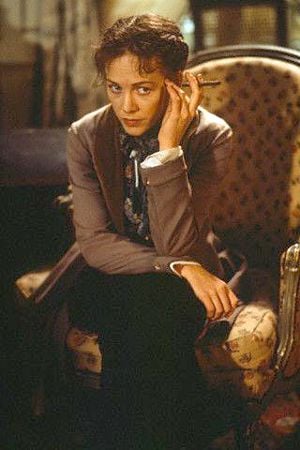
    Judy Davis, at her most flamboyant, plays the cigar-smoking, trouser-wearing George Sand, who scrawls by candlelight thinly-veiled fictions about her own ardent and often scandalous love affairs, while in an adjacent chamber, a young Hugh Grant, as the consumptive Chopin, improvises morbid piano fantasies.

    The supporting parts are heavy with historical figures of bohemian Paris: Julian Sands as Liszt, Mandy Patinkin as Alfred de Musset, Bernadette Peters as Liszt’s mistress, Marie d’Agoult, Ralph Brown as Delacroix, and Emma Thompson as the would-be socialite who naively offers them her house.

    This is the Romantic movement as farce, a feature-length “Frasier” episode by way of Merchant-Ivory, or perhaps “Smiles of a Summer Night” as dreamt by Bob Hope. The director is frequent Sondheim collaborator James Lapine.

    If you’re searching for a profound experience, this most certainly is not it. But if you’ve a hankering for classical music junk food, you’ve come to the right place. Is it historically accurate? I wouldn’t recommend it as the basis for any term papers. But if you liked Thompson’s “Sense and Sensibility,” the Branagh version of “Much Ado About Nothing,” or “Amadeus,” definitely check it out. If it doesn’t put a smile on your face, you’re too grumpy for me. And I would say that’s saying something.

  • Kolchak’s Secret Past Darren McGavin as Chopin Extra

    Kolchak’s Secret Past Darren McGavin as Chopin Extra

    Does anyone else remember the time Kolchak the Night Stalker met Frederic Chopin?

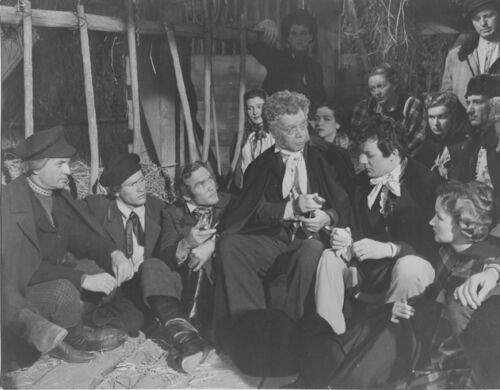
    I always assumed Kolchak was a Slavic name, but here’s photographic evidence that, indeed, he was a student with the famed Polish pianist and composer.

    Darren McGavin was hard at work painting scenery at Columbia Pictures in 1945, when he caught wind of auditions being held for a Chopin biopic, titled “A Song to Remember.” Cornel Wilde would play the immortal pianist-composer, and Paul Muni his teacher. McGavin’s role would be so small, he wouldn’t even receive screen credit, but his very casting was momentous, since it would mark his film debut. Once he rinsed the paint out of his brush that day, he never looked back.

    He had already clocked countless hours on stage, film, and especially television, by the time he donned the rumpled seersucker and crumpled raffia as Kolchak, muckraker of the macabre, in the early 1970s.

    Here, McGavin appears second from the left. Wilde is second from the right, with Muni, center, as Prof. Joseph Elsner.

    The great irony, of course, is that “A Song to Remember” is such a generic title that it is easy to forget – or at least to confuse with “Song of Love” (1947, about the Schumanns) and “Song without End” (1960, about Liszt).

    Follow the link for McGavin. He’s on the left side of the room, wearing a cap, already a scene-stealer, at one point trying to draw attention to himself by scratching his head with a piece of straw, which he then holds in his mouth. The entire scene lasts a mere 90 seconds.

  • Chopin’s Birthday Mystery: February 22 or March 1?

    Chopin’s Birthday Mystery: February 22 or March 1?

    People lie about their birthdays all the time, usually to make themselves appear younger. In the case of Frédéric Chopin, he may have bought himself a week.

    It is widely believed – including by his mother and himself – that Chopin was born on March 1, 1810. However, his baptismal certificate, filled out on April 23, gives February 22 as the date. The Chopin Society UK, in defiance of the composer and his family, is inclined to go with the latter.

    Was there a conspiracy at work? Do we have ourselves a 19th century precursor of the “birther movement?”

    You can read more about the Chopin birthday controversy here:

    http://jackgibbons.blogspot.com/2010/03/chopins-birthday.html

    Or you can simply join me today to enjoy a sampling of his music, between 4 and 7 p.m. EST, on WWFM – The Classical Network and at wwfm.org.


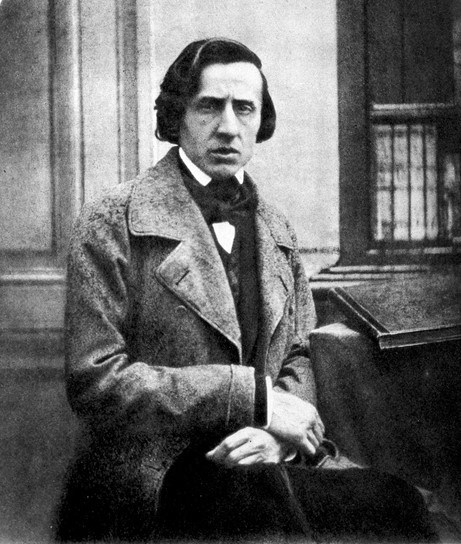
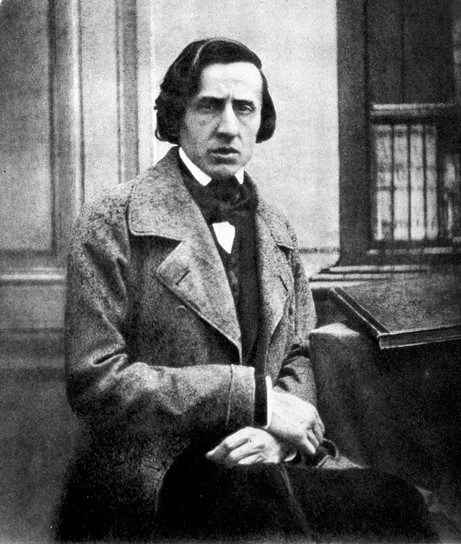
    PHOTO: Chopin, not looking a day older than 207

Tag Cloud

Aaron Copland (92) Beethoven (95) Composer (114) Film Music (120) Film Score (143) Film Scores (255) Halloween (94) John Williams (185) KWAX (229) Leonard Bernstein (100) Marlboro Music Festival (125) Movie Music (135) Opera (198) Philadelphia Orchestra (88) Picture Perfect (174) Princeton Symphony Orchestra (106) Radio (87) Ralph Vaughan Williams (85) Ross Amico (244) Roy's Tie-Dye Sci-Fi Corner (290) The Classical Network (101) The Lost Chord (268) Vaughan Williams (103) WPRB (396) WWFM (881)

DON’T MISS A BEAT

Receive a weekly digest every Sunday at noon by signing up here


RECENT POSTS