Tag: French Baroque

  • Jacques Hotteterre The “Roman” Flute Master

    Jacques Hotteterre The “Roman” Flute Master

    They called him “le Romain,” but not because he resembled a lettuce.

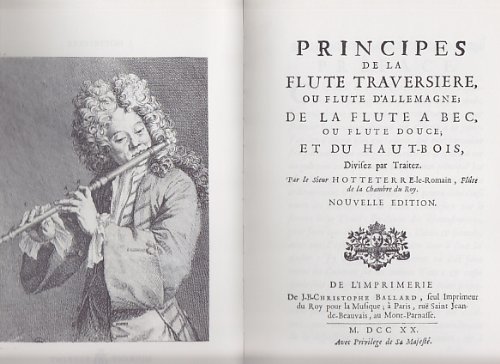
    Jacques Hotteterre, most celebrated of a dynasty of woodwind makers and players, received his nickname for his early period in Rome. There he studied and soon found employment with Prince Francesco Ruspoli. In 1708, he entered the court of Louis XIV, King of France, whom he served as Jouëur de Fluste de la musique de chambre. In addition to being a master of the transverse flute, Hotteterre also played bassoon, oboe, and musette (a kind of French bagpipe). He’s said to have made certain innovations to the design of the transverse flute and wrote several methods. His “L’Art de préluder sur la flûte traversière,” published in 1719, was Europe’s first flute manual and enjoyed great success.

    Today marks the 350th anniversary of his birth. Hotteterre died in Paris in 1763, a few months shy of his 90th birthday. Joyeux anniversaire!

  • Destouches Turns 350 A French Baroque Birthday

    Destouches Turns 350 A French Baroque Birthday

    Today is the 350th birthday of André Cardinal Destouches. My, but how time flies!

    Destouches’ best-known music is “Les Élémens” (“The Elements”) of 1721. The complete opéra-ballet, consisting of a prologue and four “entrées,” was written in collaboration with Michel Richard Delalande. In the grand tradition of footloose French kings, an 11 year-old Louis XV danced in the divertissements.

    According to the composer, “At its first appearance this ballet was by no means the success we hoped for. It was found to be long; it seemed to be too serious; it was danced by noble youths whose talents were not up to the highest standards. Which caused very unpleasant boredom that was most humiliating for the authors.”

    It was revived at the Paris Opera four years later to increasing success, and remained in the repertoire for half a century.

    In 1697, Destouches’ opera “Issé” had been a big hit with dancing monarch Louis XIV, who claimed to enjoy Destouches’ music as much as that of Jean-Baptiste Lully. (Lully, also a dancer, and the most powerful musician in France, died of a gangrenous foot wound ten years earlier.)

    In 1713, Louis appointed Destouches inspector general of the Académie Royale de Musique, at a stipend of 4000 livres a year. In 1725, Louis XV made him director of the Académie, as well as superintendent of La Musique de la Chambre du Roi. With the death of his colleague, Delalande, in 1726, Destouches was installed as Surintendant de la Musique du Roi – a post once held by Lully himself.

    Happy semiseptcentennial, André Cardinal Destouches!


    From “Les Élémens”

    From “Issé”

    And speaking of “entrées,” Delalande’s “Symphonies for the King’s Supper”

  • Lully From Italy to France Sun King’s Creep

    Lully From Italy to France Sun King’s Creep

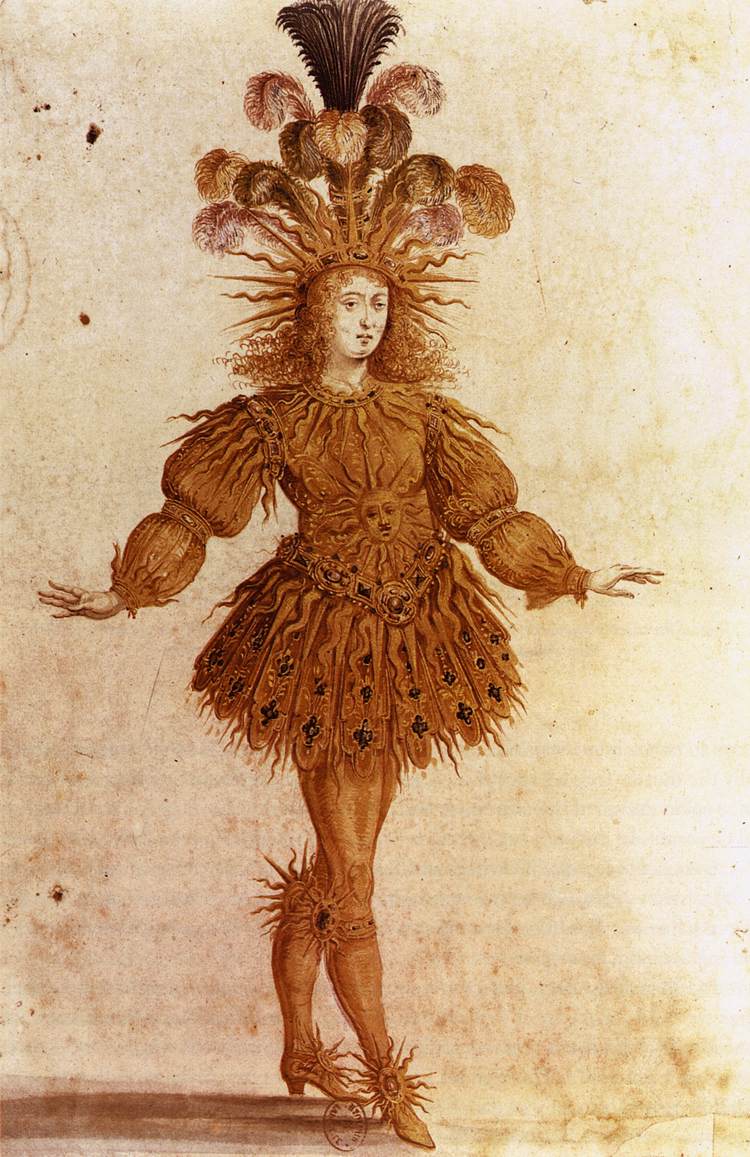
    The most powerful musician in France was Italian. Jean-Baptiste Lully rose from humble beginnings, born into a family of millers in Florence, to become Master of the King’s Music at the court of Versailles and a cherished friend of Louis XIV. In fact, he and the “Sun King” used to dance side by side in the court ballets Lully had written. Unfortunately, he was also a bit of a creep.

    Among his other quirks, Lully was very vain about his legs. It is ironic, then, that he would ultimately die as a result of an injury to his toe, sustained while pounding the floor with a heavy staff to mark time during a performance of his “Te Deum,” written to celebrate the king’s recovery from surgery. Vanity caused Lully to ignore advice to have the toe amputated, and he died of a gangrenous infection.

    On today’s Noontime Concert on The Classical Network, Jean-Féry Rebel’s memorial piece, “Tombeau de Monsieur de Lully,” will be among selected highlights from two concerts of French Baroque music that appeared on last season’s Midtown Concert Series, presented at St. Bartholomew’s Church in Midtown Manhattan, by Gotham Early Music Scene, or GEMS.

    The Italian Problem was more than simply one of personality. Lully’s influence sent shoots all over Europe. Equally, Arcangelo Corelli’s influence crept into France. François Couperin’s “Le Parnesse, ou L’Apothéose de Corelli” was one of his most ambitious attempts to reconcile the Italian and French styles.

    “Tombeau” and “Le Parnesse” will be performed by members of Voyage Sonique.

    The second half of the broadcast will feature ballet music by Jean Philippe Rameau, “La Lyre Enchantée.” The performance was taken from a separate concert presented by the BALAM Dance Theatre.

    GEMS is a non-profit corporation that supports and promotes artists and organizations in New York City devoted to early music – music of the Middle Ages, Renaissance, Baroque, and early Classical periods. Free lunchtime concerts are held at St. Bart’s every Thursday at 1:15 p.m. The Midtown Concerts series is on hiatus for the summer, but performances will resume in the fall. For more information and updates to GEMS’ events calendar, look online at gemsny.org.

    Tune in for French music from GEMS today at 12 p.m. Then stick around for Russian music, as I share some reminiscences of my weekend at the Bard Music Festival and “Rimsky-Korsakov and His World,” until 4 p.m. EDT, on WWFM – The Classical Network and wwfm.org.
Tag Cloud

Aaron Copland (92) Beethoven (95) Composer (114) Film Music (119) Film Score (143) Film Scores (255) Halloween (94) John Williams (185) KWAX (229) Leonard Bernstein (99) Marlboro Music Festival (125) Movie Music (134) Opera (198) Philadelphia Orchestra (86) Picture Perfect (174) Princeton Symphony Orchestra (106) Radio (87) Ralph Vaughan Williams (85) Ross Amico (244) Roy's Tie-Dye Sci-Fi Corner (290) The Classical Network (101) The Lost Chord (268) Vaughan Williams (102) WPRB (396) WWFM (881)

DON’T MISS A BEAT

Receive a weekly digest every Sunday at noon by signing up here


RECENT POSTS