Tag: French Revolution

  • Bastille Day: Composers of the Revolution

    Bastille Day: Composers of the Revolution

    It’s Bastille Day. A French toast for breakfast, and a nod to two of France’s greatest composers of the Revolutionary Era.

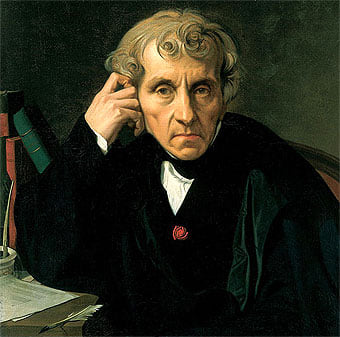
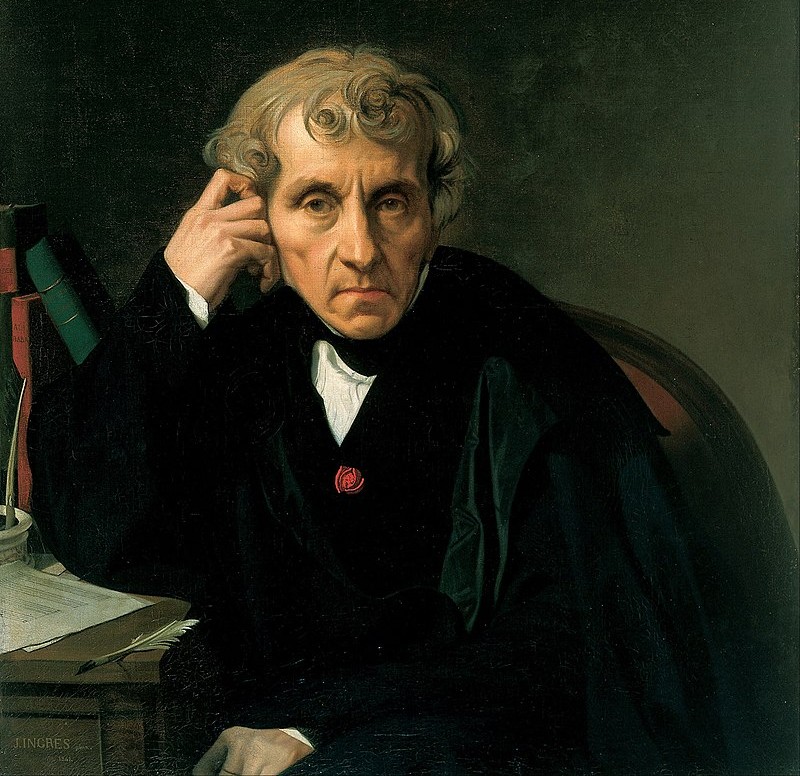
    On top of the usual burden of trying to cobble together a living as working musicians, both Étienne-Nicolas Méhul (1763-1817) and Luigi Cherubini (1760-1842) bore the additional stress of having to navigate an incendiary political environment.

    When Méhul’s opera “Adrien” was banned, he quickly figured out which side his baguette was buttered on and began writing propaganda pieces and patriotic songs. Vive la France! He was rewarded by being the first composer named to the newly-established Institute de France in 1795. He was also installed as an inspector at the Paris Conservatory.

    Allegedly, he was one of the favorite composers of Napoleon, with whom he was on friendly terms. He became one of the first recipients of Napoleon’s Légion d’honneur. According to musicologist and Berlioz biographer David Cairns, Méhul was also the first composer to be classified as “Romantic.”

    Cherubini was born in Florence. He arrived in France in 1785. There, he was introduced to Marie Antoinette and, of necessity, as a musician, had many interactions with the aristocracy – which likely caused sweat to bead on his forehead in 1789.

    Following the Revolution, Cherubini (born Maria Luigi Carlo Zenobio Salvatore Cherubini) adopted the French version of his name (Marie-Louis-Charles-Zénobi-Salvador Cherubini). It was during this period that his music began to really take flight. His works became more adventurous, more dynamic, more heroic. It’s not for no reason that Beethoven claimed him as an influence. His rescue opera “Lodoiska” served as a model for Beethoven’s “Fidelio.” Beethoven is also said to have found inspiration in Cherubini for the writing of his Fifth Symphony.

    Following the Revolution, Cherubini took great care to play down his former aristocratic connections and cleave to the prevailing government. Every year for over a decade, he was mindful of composing at least one overtly patriotic work.

    While Napoleon is said to have disliked Cherubini’s music, finding it “too complex,” he did appoint him director of music in Vienna. Perhaps Cherubini’s best-known work, the comic opera “Les deux journée” (“The Two Days”), was written in an intentionally simplified style and became an enormous hit. Beethoven kept Cherubini’s score on his desk at the time he was engaged in the writing of “Fidelio.” The incident upon which the opera is based allegedly occurred during the time of the Revolution, but again, treading lightly, Cherubini and his librettist, Jean-Nicolas Bouilly, erred on the side of caution, setting the action in a safely remote 1647.

    Gradually, as Cherubini’s operas began to fall out of fashion, he transitioned to writing church music. His Requiem in C minor, again, was particularly admired by Beethoven (also Schumann and Brahms).

    In 1822, Cherubini became director of the Paris Conservatory. There he came into conflict with a young firebrand by the name of Hector Berlioz. Berlioz’s withering and amusing portrayal of Cherubini in his “Mémoires,” as a hidebound pedant, has colored the elder composer’s reputation to the present day, more indelibly than has any of Cherubini’s own music.

    However, during his lifetime, the composer enjoyed fame and fortune and was the recipient of France’s highest and most prestigious honors.

    Méhul, Symphony No. 3

    Méhul, “Le chant du départ”

    Cherubini, “Anacréon” Overture

    Cherubini, “Hymn du Panthéon”

    Berlioz’s arrangement of “La Marseillaise”


    They kept their heads: Luigi Cherubini (left) and Étienne-Nicolas Méhul
  • Bastille Day Music on Sweetness and Light

    Bastille Day Music on Sweetness and Light

    Admittedly, there’s not much “sweetness” or “light” in revolution. Nevertheless, I hope you’ll join me, as we anticipate Bastille Day this morning on “Sweetness and Light.”

    We’ll have music on French patriotic themes by Franz Liszt, Georges Bizet, and Hector Berlioz, a symphony by Revolutionary Era composer Etienne-Nicolas Méhul (also a favorite of Napoleon), and a selection from the collaborative ballet “The Wedding on the Eiffel Tower” – set at the iconic Paris landmark on July 14 (Bastille Day) – by Germaine Tailleferre.

    The playlist was thoughtfully curated in commemoration of the storming of the Bastille on July 14, 1789, a defining moment of the French Revolution that toppled the monarchy and abolished feudalism. But I’m a lover, not a fighter.

    Vive la sucrosité et la légèreté on “Sweetness and Light,” this Saturday morning at 11:00 EDT/8:00 PDT, exclusively on KWAX, the radio station of the University of Oregon!

    Stream it, wherever you are, at the link.

    https://kwax.uoregon.edu/

  • Bastille Day: Composers of the Revolution

    Bastille Day: Composers of the Revolution

    It’s Bastille Day. A French toast for breakfast, and a nod to two of France’s greatest composers of the Revolutionary Era.

    On top of the usual burden of trying to cobble together a living as working musicians, both Étienne-Nicolas Méhul (1763-1817) and Luigi Cherubini (1760-1842) bore the additional stress of having to navigate an incendiary political environment.

    When Méhul’s opera “Adrien” was banned, he quickly figured out which side his baguette was buttered on and began writing propaganda pieces and patriotic songs. Vive la France! He was rewarded by being the first composer named to the newly-established Institute de France in 1795. He was also installed as an inspector at the Paris Conservatory.

    Allegedly, he was one of the favorite composers of Napoleon, with whom he was on friendly terms. He became one of the first recipients of Napoleon’s Légion d’honneur. According to musicologist and Berlioz biographer David Cairns, Méhul was also the first composer to be classified as “Romantic.”

    Cherubini was born in Florence. He arrived in France in 1785. There, he was introduced to Marie Antoinette and, of necessity, as a musician, had many interactions with the aristocracy – which likely caused sweat to bead on his forehead in 1789.

    Following the Revolution, Cherubini (born Maria Luigi Carlo Zenobio Salvatore Cherubini) adopted the French version of his name (Marie-Louis-Charles-Zénobi-Salvador Cherubini). It was during this period that his music began to really take flight. His works became more adventurous, more dynamic, more heroic. It’s not for no reason that Beethoven claimed him as an influence. His rescue opera “Lodoiska” served as a model for Beethoven’s “Fidelio.” Beethoven is also said to have found inspiration in Cherubini for the writing of his Fifth Symphony.

    Following the Revolution, Cherubini took great care to play down his former aristocratic connections and cleave to the prevailing government. Every year for over a decade, he was mindful of composing at least one overtly patriotic work.

    While Napoleon is said to have disliked Cherubini’s music, finding it “too complex,” he did appoint him director of music in Vienna. Perhaps Cherubini’s best-known work, the comic opera “Les deux journée” (“The Two Days”), was written in an intentionally simplified style and became an enormous hit. Beethoven kept Cherubini’s score on his desk at the time he was engaged in the writing of “Fidelio.” The incident upon which the opera is based allegedly occurred during the time of the Revolution, but again, treading lightly, Cherubini and his librettist, Jean-Nicolas Bouilly, erred on the side of caution, setting the action in a safely remote 1647.

    Gradually, as Cherubini’s operas began to fall out of fashion, he transitioned to writing church music. His Requiem in C minor, again, was particularly admired by Beethoven (also Schumann and Brahms).

    In 1822, Cherubini became director of the Paris Conservatory. There he came into conflict with a young firebrand by the name of Hector Berlioz. Berlioz’s withering and amusing portrayal of Cherubini in his “Mémoires,” as a hidebound pedant, has colored the elder composer’s reputation to the present day, more indelibly than has any of Cherubini’s own music.

    However, during his lifetime, the composer enjoyed fame and fortune and was the recipient of France’s highest and most prestigious honors.

    Méhul, Symphony No. 3

    Méhul, “Le chant du départ”

    Cherubini, “Anacréon” Overture

    Cherubini, “Hymn du Panthéon”

    Berlioz’s arrangement of “La Marseillaise”


    They kept their heads: Luigi Cherubini (top) and Étienne-Nicolas Méhul

  • Bastille Day Music on WPRB: Eiffel Tower & Revolutions

    Bastille Day Music on WPRB: Eiffel Tower & Revolutions

    Nobody knew how to revolt like the French. French history reads like a wine list of revolution, from 1789 forward. With that in mind, we’re celebrating Bastille Day today on WPRB.

    Few symbols of French pride are more widely recognized than the Eiffel Tower. Yet to come this morning, we’ll hear the collaborative ballet, “Les mariés de la tour Eiffel” (“The Wedding Party on the Eiffel Tower”), by members of Les Six – Georges Auric, Arthur Honegger, Darius Milhaud, Francis Poulenc and Germaine Tailleferre (only Louis Durey opted out) – a surreal romp conceived by Jean Cocteau. The action takes place on a deck of the tower on Bastille Day, July 14.

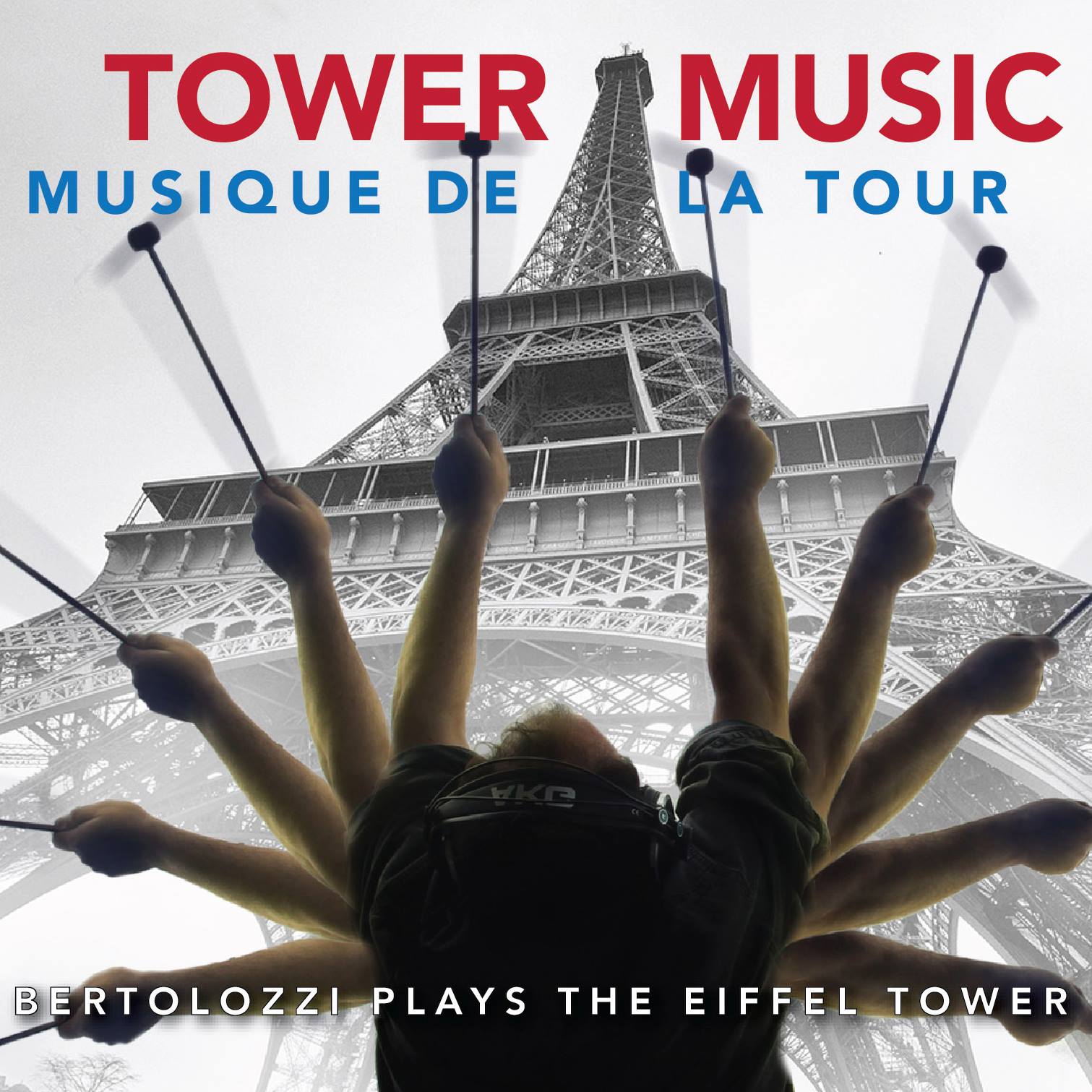
    We’ll also hear selections from the album “Tower Music,” a recent release on the Innova Recordings label, on which mad visionary Joseph Bertolozzi plays the actual Tour Eiffel like a giant percussion instrument. Bertolozzi will present a multi-media concert, Joseph Bertolozzi’s Bridge & Tower Music (he’s also played the Mid-Hudson Bridge), tonight at 7:00 at Live at The Falcon in Marlboro, NY.

    Right now, we’re listening to Franz Liszt’s “Héroïde funèbre,” his memorial to the fallen heroes of the July Revolution of 1830. We’ll also have an opportunity to hear Hector Berlioz’s “Symphonie funèbre et triomphale,” which was written to accompany the dead as their remains were transferred to a newly erected monument in the Place de la Bastille.

    I’ll be asking you to pardon my French until 11 EDT on WPRB 103.3 FM and at wprb.com. What’s creepier than a crêpe? Why, Classic Ross Amico, of course.

  • French Revolutions in Music

    French Revolutions in Music

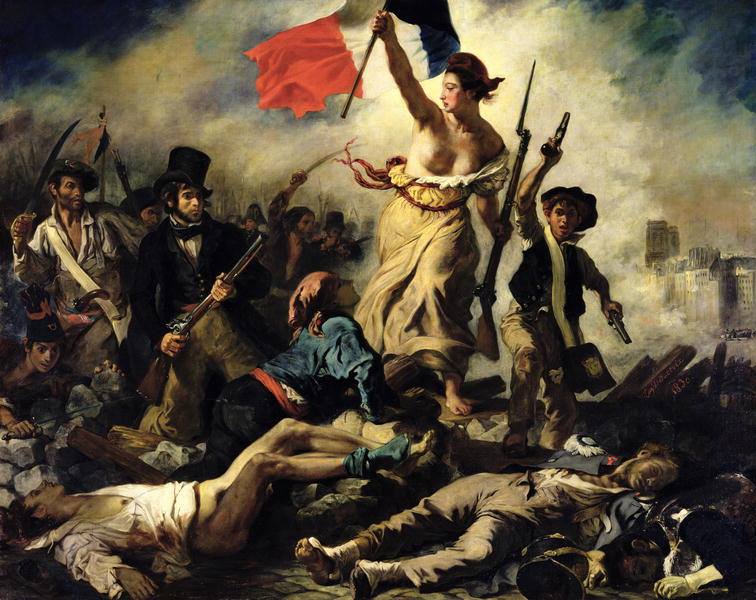
    How many revolutions has France had, anyway? 1789, of course; then 1830; the “Les Miserables” revolution of 1832; another big one in 1848; a failed one in 1871… You might say, all throughout the 19th century, the French were a rather revolting people.

    This morning on WPRB, we’ll hear musical responses to revolutionary France, including many by native composers, including Darius Milhaud’s martial Symphony No. 4, written to mark the centenary of the February Revolution of 1848.

    We’ll also have Hector Berlioz’s “Symphonie funèbre et triomphale,” composed to honor those who died during the July Revolution of 1830. Of course, that was the heyday of the gunslinger-pianist, and Paris was teeming with foreign keyboard artists like Frederic Chopin and Franz Liszt. The conflict of 1830 inspired Liszt to write a symphonic poem, “Héroïde funèbre.”

    But Bastille Day is really all about 1789, so we’ll also include music by Luigi Cherubini and Étienne Nicolas Méhul, both important figures during what is commonly known as THE French Revolution.

    Otherwise, there will be abundant apolitical celebrations of France in general and Paris in particular, including the surrealist ballet “Les mariés de la tour Eiffel” (“The Wedding Party on the Eiffel Tower”), a collaborative work by members of Les Six, and plenty of musical joie de vivre courtesy of composers like Jacques Ibert and Jean Françaix.

    We’ll slather everything with French dressing this morning, from 6 to 11 EDT, on WPRB 103.3 FM and at wprb.com. Je suis le grand fromage, on Classic Ross Amico.

Tag Cloud

Aaron Copland (92) Beethoven (95) Composer (114) Film Music (120) Film Score (143) Film Scores (255) Halloween (94) John Williams (185) KWAX (229) Leonard Bernstein (100) Marlboro Music Festival (125) Movie Music (135) Opera (198) Philadelphia Orchestra (88) Picture Perfect (174) Princeton Symphony Orchestra (106) Radio (87) Ralph Vaughan Williams (85) Ross Amico (244) Roy's Tie-Dye Sci-Fi Corner (290) The Classical Network (101) The Lost Chord (268) Vaughan Williams (103) WPRB (396) WWFM (881)

DON’T MISS A BEAT

Receive a weekly digest every Sunday at noon by signing up here


RECENT POSTS