Tag: Fritz Reiner

  • Fritz Reiner The Real Whiplash

    Fritz Reiner The Real Whiplash

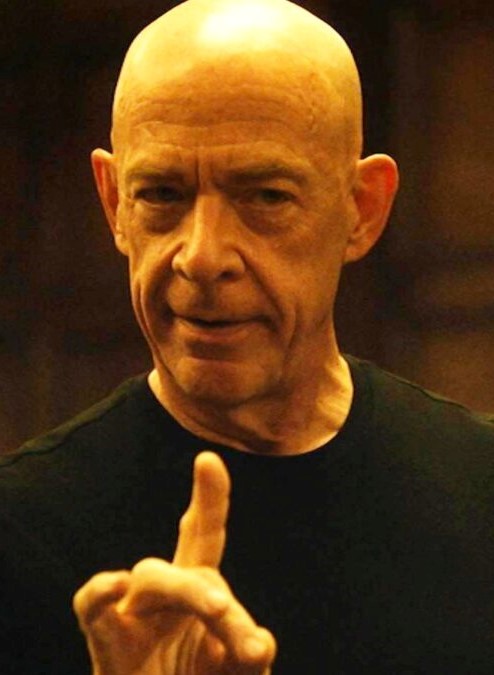
    Before “Whiplash,” there was Fritz Reiner.

    J.K. Simmons earned an Oscar for his portrayal of ruthless bandmaster Terence Fletcher in Damien Chazelle’s breakout film. It’s no secret that Chazelle modeled Simmons’ sociopath on his real-life band instructor at Princeton High School.

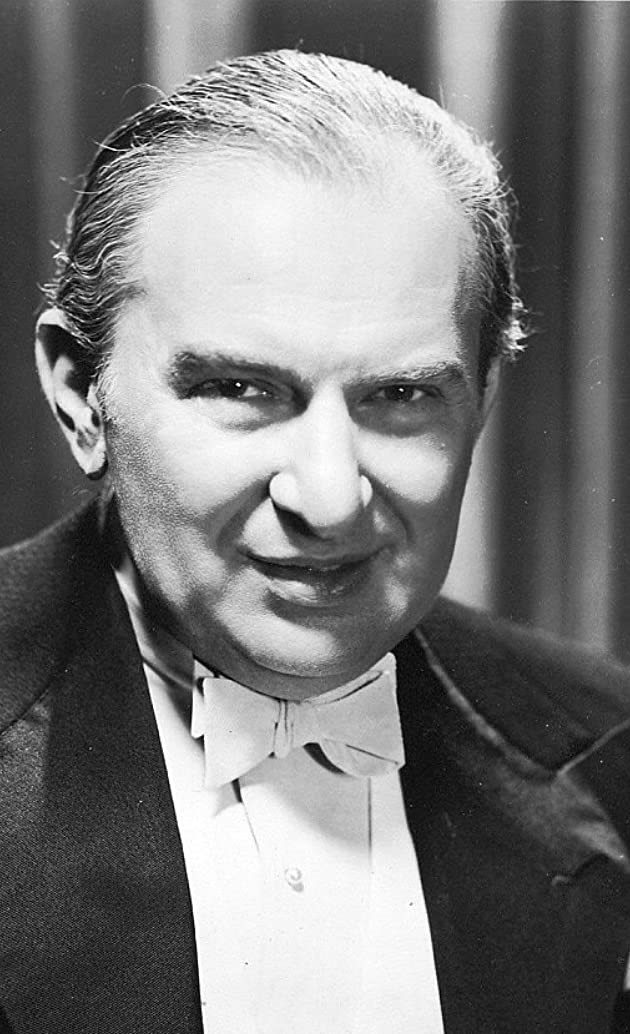
    Classical music has had more than its share of Terence Fletchers, but few burned as ferociously as Fritz Reiner. From a musician’s standpoint, Reiner was one of the most dreaded conductors, in an era when tyrants of the podium still very much roamed the earth. With a glower that could make Bela Lugosi quake – and sporting quite the similar hairline – Reiner was forged in Hungary at the twilight of the Austro-Hungarian Empire. Hungary at the time had quite the reputation for churning out great conductors. George Szell, Eugene Ormandy, Antal Doráti, Ferenc Fricsay, Sir Georg Solti, and István Kertész all achieved considerable international success.

    Among Reiner’s own teachers was Béla Bartók, with whom he studied piano. Reiner would later repay the favor with what many consider to be the benchmark recording of Bartók’s “Concerto for Orchestra.” He also worked closely with Richard Strauss in Dresden, and his recordings of Strauss’ works are equally revered. All in all, the Chicago Symphony under Fritz Reiner was a surefire choice to give the ol’ hi-fi a good workout in the early days of stereo.

    In 1928, Reiner became a naturalized American citizen. He began to teach conducting at the Curtis Institute of Music in Philadelphia, where among his pupils was Leonard Bernstein. His first American post was as principal conductor of the Cincinnati Symphony. He took over the Pittsburgh Symphony for a decade, beginning in 1938. Then he spent several years at the Met. But it was as music director of the Chicago Symphony that he attained legendary status.

    For a master interpreter of some of the largest and most challenging works in the repertoire, his baton technique was notable for its precision and economy. Much of what he achieved, unfortunately, was through the brutality he exuded in rehearsals. Reiner emerged from an Old World steeped in aristocratic privilege. At the top of their profession, conductors then were regarded as gods-on-earth. When drive and ego were bolstered by absolute power, working conditions could become downright perilous. Before strong musicians’ unions, conductors exercised the authority to fire anyone on a whim. So when musicians played for Reiner, they played as if their lives depended on it – or at the very least their livelihoods.

    Did it make for better musicmaking? You can’t argue with the excellence of Reiner’s Chicago Symphony.

    Were you rushing or were you dragging?

    Fritz Reiner: A Marriage of Talent and Terror

    https://drgeraldstein.wordpress.com/2013/10/12/fritz-reiner-a-marriage-of-talent-and-terror/

    Reiner finally gets his “perfect concert”

    https://csosoundsandstories.org/125-moments-101-fritz-reiners-perfect-concert/?fbclid=IwAR27Vi_fsWhdExZqJPF5SRRmJqpp9jsoaNXDJ6tVbfAmjbo5ZNTEhPPfKkY

    I guess even autocrats have their cuddly moments. Happy birthday, Fritz Reiner.


    Reiner conducts Beethoven

    Big band Bach

    Benchmark Bartók

    Strauss’ “Salome”

    And, to keep it seasonal, “Waltz of the Flowers” from “The Nutcracker”

    https://www.youtube.com/watch?v=mgaS9CZ7KsQ

  • Fritz Reiner Birthday The Tyrant Conductor

    Fritz Reiner Birthday The Tyrant Conductor

    December 5th is when Krampus, the Christmas demon, descends from his Alpine lair to flog fearful girls and boys. And December 19th is the birthday of Fritz Reiner.

    From a musician’s standpoint, Reiner was one of the most dreaded conductors, in an era when tyrants of the podium still very much roamed the earth. With a glower that could make Bela Lugosi quake – and sporting quite the similar hairline – Reiner was forged in Hungary at the twilight of the Austro-Hungarian Empire. Hungary at the time had quite the reputation for churning out great conductors. George Szell, Eugene Ormandy, Antal Doráti, Ferenc Fricsay, Sir Georg Solti, and István Kertész all achieved considerable international success.

    Among Reiner’s own teachers was Béla Bartók, with whom he studied piano. Reiner would later repay the favor with what many consider to be the benchmark recording of Bartók’s “Concerto for Orchestra.” He also worked closely with Richard Strauss in Dresden, and his recordings of Strauss’ works are equally revered. All in all, the Chicago Symphony under Fritz Reiner was a surefire choice to give the ol’ hi-fi a good workout in the early days of stereo.

    In 1928, Reiner became a naturalized American citizen. He began to teach conducting at the Curtis Institute of Music in Philadelphia, where among his pupils was Leonard Bernstein. His first American post was as principal conductor of the Cincinnati Symphony. He took over the Pittsburgh Symphony for a decade, beginning in 1938. Then he spent several years at the Met. But it was as music director of the Chicago Symphony that he attained legendary status.

    For a master interpreter of some of the largest and most challenging works in the repertoire, his baton technique was notable for its precision and economy. Much of what he achieved, unfortunately, was through the brutality he exuded in rehearsals. Reiner emerged from an Old World steeped in aristocratic privilege. At the top of their profession, conductors then were regarded as gods-on-earth. When drive and ego were bolstered by absolute power, working conditions could become downright perilous. Before strong musicians’ unions, conductors exercised the authority to fire anyone on a whim. So when musicians played for Reiner, they played as if their lives depended on it – or at the very least their livelihoods.

    Did it make for better musicmaking? You can’t argue with the excellence of Reiner’s Chicago Symphony.

    Read this account of the day Reiner finally gave his “perfect concert.”

    https://csosoundsandstories.org/125-moments-101-fritz-reiners-perfect-concert/?fbclid=IwAR1XCI9gDY-L5-Z-wSxZyYMlWjDU2IbhvhlVSgZ17SA0ekYHWECHuQw4L3A

    Even autocrats have their soft side. Happy birthday, Fritz Reiner.


    Reiner conducts Beethoven

    Big band Bach

    Benchmark Bartók

    Strauss’ “Salome”

    And, to keep it seasonal, “Waltz of the Flowers” from “The Nutcracker”
    https://www.youtube.com/watch?v=mgaS9CZ7KsQ

  • Fritz Reiner Tyrant Genius of the CSO

    Fritz Reiner Tyrant Genius of the CSO

    At a time when tyrant conductors still very much roamed the earth, Fritz Reiner was one of the most feared. With a glower that would make Bela Lugosi quake – and sporting quite the similar hairline – Reiner was forged in Hungary at the twilight of the Austro-Hungarian Empire. Hungary at the time had quite the reputation for churning out great conductors. Among those to achieve considerable international success were George Szell, Eugene Ormandy, Antal Doráti, Ferenc Fricsay, Sir Georg Solti, and István Kertész.

    Among Reiner’s own teachers was Béla Bartók, with whom he studied piano. Reiner would later repay the favor with what many consider to be the benchmark recording of Bartók’s “Concerto for Orchestra.” He also worked closely with Richard Strauss in Dresden, and his recordings of Strauss’ works are equally revered. All in all, the Chicago Symphony under Fritz Reiner was a surefire choice to give the ol’ hi-fi a good workout in the early days of stereo.

    Reiner became a naturalized American citizen in 1928, and began to teach conducting at the Curtis Institute of Music in Philadelphia. Among his pupils was Leonard Bernstein. His first American post was as principal conductor of the Cincinnati Symphony. He led the Pittsburgh Symphony for ten years, from 1938 to 1948, then spent several years at the Met. But it was as music director of the Chicago Symphony that he attained legendary status.

    For a master interpreter of some of the largest and most challenging works in the repertoire, his baton technique was notable for its precision and economy. Much of what he achieved, unfortunately, was through the brutality he exerted in rehearsals. Reiner emerged from an Old World steeped in aristocratic methods. At the top of their profession, conductors then were regarded as gods-on-earth. When drive and ego were bolstered by absolute power, working conditions became downright perilous. Before strong musicians’ unions, conductors exercised the authority to fire anyone on the spot. So when musicians played for Reiner, they played as if there lives depended on it – or at the very least their livelihoods.

    Did it make for better musicmaking? You can’t argue with the excellence of Reiner’s Chicago Symphony.

    Read this account of the day Reiner finally gave his “perfect concert.”

    https://csosoundsandstories.org/125-moments-101-fritz-reiners-perfect-concert/#:~:text=In%20October%201958%2C%20Fritz%20Reiner,New%20Brunswick%2C%20and%20Washington%2C%20D.C.

    Even autocrats have birthdays. Happy birthday, Fritz Reiner.


    Reiner conducts Beethoven

    Reiner conducts Kodály and Bartók, with Rudolf Serkin at the piano
    https://www.youtube.com/watch?v=TOE83a1FrwA

    Reiner conducts Strauss’ “Salome”

  • William Kapell: America’s Lost Piano Genius

    William Kapell: America’s Lost Piano Genius

    Was William Kapell America’s greatest pianist? I realize that discounts a lot of our native talent, but if Leon Fleisher thinks so, then that’s good enough for me.

    Kapell was killed in a plane crash in 1953 at the age of 31. Until then, his light burned very brightly indeed. In 1944, he was signed to an exclusive contract with RCA Victor. All of his recordings were pre-stereo and many were issued on 78s, but reencountering a number of these 70 years later confirms that the interpretations still sing, including some stunning Rachmaninoff and a classic account of the Khachaturian Piano Concerto.

    Even so, by 1960, all of Kapell’s commercial recordings had gone out of print. With few exceptions – there was an LP reissue of some Beethoven and Prokofiev in the early ‘70s – Kapell’s reputation was kept alive mostly through bootlegs and unlicensed live recordings. In 1998, RCA finally did the right thing and reissued all of Kapell’s authorized recordings, making them accessible to a whole new generation of music lovers.

    Sadly, for all the enjoyment these still give, the brilliance of Kapell’s recorded legacy inevitably causes one to wonder what might have been. 31 is awfully soon to have lost one so talented.

    How good was he? Well, for one thing, he learned Richard Strauss’ “Burleske” in a week – by the command of Fritz Reiner, no less. You can find the complete story and listen to the live performance, not otherwise available, here:

    Publish or Perish?

    Join me this afternoon, from 4 to 7 p.m. EDT, for plenty more Strauss on his birthday, on WWFM – The Classical Network and wwfm.org.


    PHOTO: William Kapell with Leonard Bernstein in 1947, around the time he received Reiner’s order to perform Strauss

Tag Cloud

Aaron Copland (92) Beethoven (95) Composer (114) Film Music (120) Film Score (143) Film Scores (255) Halloween (94) John Williams (185) KWAX (229) Leonard Bernstein (100) Marlboro Music Festival (125) Movie Music (135) Opera (198) Philadelphia Orchestra (88) Picture Perfect (174) Princeton Symphony Orchestra (106) Radio (87) Ralph Vaughan Williams (85) Ross Amico (244) Roy's Tie-Dye Sci-Fi Corner (290) The Classical Network (101) The Lost Chord (268) Vaughan Williams (103) WPRB (396) WWFM (881)

DON’T MISS A BEAT

Receive a weekly digest every Sunday at noon by signing up here


RECENT POSTS