Tag: George Washington Slept Here

  • July 4th Movie Music: Patriotism on Film

    July 4th Movie Music: Patriotism on Film

    With the Fourth of July right around the corner, “Picture Perfect” celebrates its 12th anniversary with an hour of cinematic fifes and drums.

    We’ll begin with selections from “The Patriot” (2000), in which slow-burning pacifist Mel Gibson is pushed too far by ruthless British officer Jason Isaacs and reverts to his bloody French and Indian War ways. By the end of the film, he is literally waving the flag to John Williams’ triumphant score.

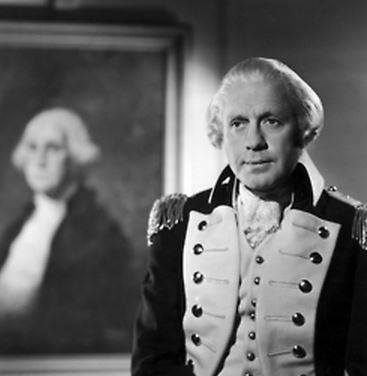
    Then we’ll hear a suite from the Jack Benny-Ann Sheridan fixer-up comedy, “George Washington Slept Here” (1942), based on the play by Moss Hart and George S. Kaufman – not really about the Revolution, beyond the fact that the ramshackle Pennsylvania farm house purchased by a transplanted New York couple is alleged to have been one of the seemingly limitless resting places of the Continental Army’s commander in chief. The music is by Adolph Deutsch.

    The film “Revolution” (1985) seemed to have everything going for it. Its director was Hugh Hudson, whose “Chariots of Fire” was the big winner at the 1981 Academy Awards; its star was Al Pacino; and its composer was John Corigliano, who would go on to win a Pulitzer Prize for Music for his Symphony No. 2 AND an Oscar for his score to “The Red Violin.” But “Revolution” bombed horribly – so horribly that Pacino gave up making movies for the next four years. James Galway plays the flute and pennywhistle on the film’s soundtrack.

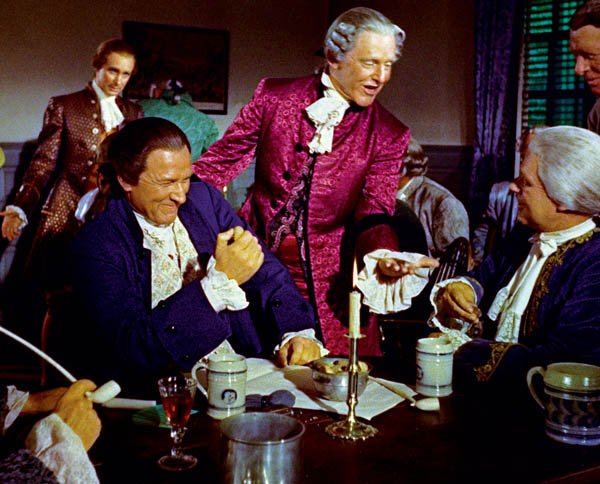
    Finally, we’ll hear music from the longest continuously-shown film in cinematic history, “Williamsburg: The Story of a Patriot” (1957), created exclusively for the tourist attraction of Colonial Williamsburg. The 38-minute featurette stars future “Hawaii Five-O” icon Jack Lord, and the score is by none other than Bernard Herrmann.

    Here’s a clip from “Williamsburg,” with some of Herrmann’s music:

    https://www.youtube.com/watch?v=A0VXfVhenXQ

    We celebrate Independence Day this week, on “Picture Perfect,” music for the movies. Stick a feather in your cap and call it macaroni, this Saturday evening at 6:00 EDT, on WWFM – The Classical Network and wwfm.org.


    PHOTO: George Washington wagers he can crack a walnut with his bare hand in “Williamsburg: The Story of a Patriot”
  • City Mouse Country Mouse Movies

    City Mouse Country Mouse Movies

    There are of course many, many movies about “city mice” and “country mice” – those from the city displaced to a rural setting and those from the country dazzled by the city. These often take the form of fish-out-of-water comedies. But a trip the country can also be restorative, or even have redemptive qualities. Though in the end, more often than not, the central characters return to their place of origin.

    “Witness” (1985) employs elements of both “city mouse” and “country mouse.” The plot is set in motion by the witness of a murder by an Amish boy at Philadelphia’s 30th Street Station. The investigation reveals a vein of corruption in the Philadelphia Police Department, forcing a wounded detective, John Book (played by Harrison Ford), to lay low among the Amish. There are certainly comic elements, but also fascinating dramatic possibilities, in throwing together these figures from two very different cultures.

    The music was by Maurice Jarre. Jarre is best known for his scores presented on large orchestral canvases, for films like “Lawrence of Arabia” and “Dr. Zhivago.” But by the 1980s, he was experimenting with electronic music in films like “The Year of Living Dangerously,” “Mosquito Coast,” and “Dead Poets Society.” The approach worked particularly well in “Witness.”

    Another police thriller, “On Dangerous Ground” (1952), throws together a detective with definite anger management issues (played by Robert Ryan) with the backwoods father of a murder victim (played by Ward Bond) for a wild mountain manhunt. Ryan finds redemption through his interactions with the suspect’s blind sister, played by Ida Lupino. Bernard Herrmann wrote the music. If you find yourself trying to identify the solo string instrument, it’s actually a viola d’amore, an instrument rarely heard outside of the Baroque.

    “George Washington Slept Here” (1942), based on the play by Moss Hart and George S. Kaufman, is a “fixer-up” comedy, kind of a precursor to “Mr. Blandings Builds His Dream House” and “The Money Pit,” with perhaps a touch of “Green Acres” thrown into the mix. Jack Benny and Ann Sheridan play a Manhattan couple fed up with city living. They transport their family to a dilapidated Bucks County farmhouse, with predictably disastrous results.

    The somewhat cartoonish music is by English-born composer Adolph Deutsch, one of the less remembered names of Hollywood’s Golden Age, although he scored such high profile films as “The Maltese Falcon” and “Some Like It Hot.” His is an old fashioned approach – at any moment you might expect to hear a “sad trombone” – but it’s wholly appropriate in a film that features abundant pratfalls.

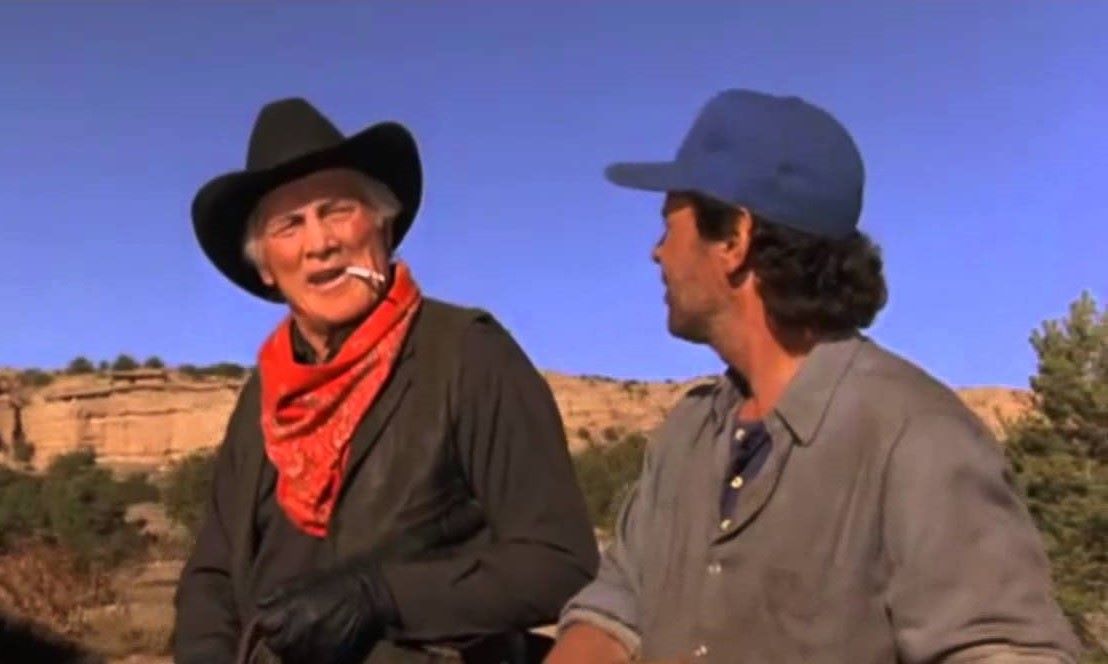
    Finally, the Billy Crystal comedy “City Slickers” (1991) is built on the premise of three middle-aged Manhattanites who find renewal and purpose at a kind of cowboy fantasy camp. Jack Palance gives an Oscar-winning performance as the intimidating trail boss. The music is by Marc Shaiman. Shaiman has also written for Broadway. He may be best known for his scores for the musicals “Hairspray” and “The Book of Mormon.”

    Whether you’re on the lam or on the lamb, the fresh air will do you good, as “city mice” go to the country this week, on “Picture Perfect,” music for the movies, this Friday evening at 6:00 EDT, on WWFM – The Classical Network and at wwfm.org.

  • City Mice in the Country Movie Music

    City Mice in the Country Movie Music

    The Jack Benny comedy “George Washington Slept Here” has only the flimsiest connection to Presidents Day. Why, a dream sequence, in which Benny and Ann Sheridan are dressed like George and Martha Washington, was even cut from the film. Nevertheless, music from “George Washington Slept Here” will be heard on “Picture Perfect” this week, as the focus is on “city mice” in the country.

    Of course there are many, many movies about “city mice” and “country mice” – those from the city displaced to a rural setting, and those from the country dazzled by the city. These often take the form of fish-out-of-water comedies. But a trip the country can also be restorative, or even have redemptive qualities. Though in the end, more often than not, the central characters return to their place of origin.

    “Witness” (1985) employs elements of both “city mouse” and “country mouse.” The plot is set in motion by the witness of a murder by an Amish boy at Philadelphia’s 30th Street Station. The investigation reveals a vein of corruption in the Philadelphia Police Department, forcing a wounded detective, John Book (played by Harrison Ford), to lay low among the Amish. There are certainly comic elements, but also fascinating dramatic possibilities, in throwing together these figures from two very different cultures.

    The music was by Maurice Jarre. Jarre is best known for his scores presented on large orchestral canvases, for films like “Lawrence of Arabia” and “Dr. Zhivago.” But by the 1980s, he was experimenting with electronic music in films like “The Year of Living Dangerously,” “Mosquito Coast,” and “Dead Poets Society.” The approach worked particularly well in “Witness.”

    Another police thriller, “On Dangerous Ground” (1952), throws together a detective with definite anger management issues (played by Robert Ryan) with the backwoods father of a murder victim (played by Ward Bond) for a wild mountain manhunt. Ryan finds redemption through his interactions with the suspect’s blind sister, played by Ida Lupino. Bernard Herrmann wrote the music. If you find yourself trying to identify the solo string instrument, it’s actually a viola d’amore, an instrument rarely heard outside of the Baroque.

    “George Washington Slept Here” (1942), based on the play by Moss Hart and George S. Kaufman, is a “fixer-up” comedy, kind of a precursor to “Mr. Blandings Builds His Dream House” and “The Money Pit,” with perhaps a touch of “Green Acres” thrown into the mix. Benny and Sheridan play a Manhattan couple fed up with city living. They transport their family to a dilapidated Bucks County farmhouse, with predictably disastrous results.

    The somewhat cartoonish music is by English-born composer Adolph Deutsch, one of the less remembered names of Hollywood’s Golden Age, although he scored such high profile films as “The Maltese Falcon” and “Some Like It Hot.” His is an old fashioned approach – at any moment you might expect to hear a “sad trombone” – but it’s wholly appropriate in a film that features abundant pratfalls.

    Finally, the Billy Crystal comedy “City Slickers” (1991) is built on the premise of three middle-aged Manhattanites who find renewal and purpose at a kind of cowboy fantasy camp. Jack Palance gives an Oscar-winning performance as the intimidating trail boss. The music is by Marc Shaiman. Shaiman has also written for Broadway. He may be best known for his score to the musical “Hairspray.”

    I hope you’ll join me, as “city mice” go to the country this week, on “Picture Perfect,” music for the movies, this Friday evening at 6:00 EST, on WWFM – The Classical Network and at wwfm.org.

Tag Cloud

Aaron Copland (92) Beethoven (95) Composer (114) Film Music (119) Film Score (143) Film Scores (255) Halloween (94) John Williams (185) KWAX (229) Leonard Bernstein (99) Marlboro Music Festival (125) Movie Music (134) Opera (198) Philadelphia Orchestra (87) Picture Perfect (174) Princeton Symphony Orchestra (106) Radio (87) Ralph Vaughan Williams (85) Ross Amico (244) Roy's Tie-Dye Sci-Fi Corner (290) The Classical Network (101) The Lost Chord (268) Vaughan Williams (102) WPRB (396) WWFM (881)

DON’T MISS A BEAT

Receive a weekly digest every Sunday at noon by signing up here


RECENT POSTS