Tag: Gerald Finzi

  • “Rood Awakening” on “The Lost Chord”

    “Rood Awakening” on “The Lost Chord”

    This week on “The Lost Chord,” it’s a Howard Ferguson Easter.

    Born in Belfast in 1908, Ferguson had ambitions to become a composer. To this end, he traveled to London, where he studied at the Royal College of Music with, among others, Ralph Vaughan Williams. He also met and befriended fellow student Gerald Finzi. He achieved early success with works like the Octet of 1933, and no less a personage than Jascha Heifetz recorded his Violin Sonata No. 1.

    Even so, over the decades his music has slipped from consciousness, no doubt helped by the fact that, by mid-life, he felt he had already said everything he had to say as a composer. He devoted his last four decades to musicological pursuits, editing and promoting works of Purcell, Schubert, and Finzi. In the 1990s, he also wrote a cookbook, “Cooking Solo.” Ferguson died in 1999, not long after his 91st birthday.

    Thankfully, he lived long enough to hear some fine recordings as part of a modest revival of his music in the 1980s and ‘90s. A number of his chamber works were released on the Hyperion label by fine musicians like Thea King and members of the Nash Ensemble; his Piano Concerto was recorded for EMI by Howard Shelley; and Richard Hickox conducted a disc of his orchestral works for Chandos.

    Also on the latter album is what turned out to be Ferguson’s last completed work, “The Dream of the Rood,” for chorus and orchestra, composed in 1958. After that, the composer embarked on a string quartet, but became frustrated by the lack of a fresh perspective and tore the thing up.

    “The Dream of the Rood” is based on an 8th century Anglo-Saxon poem that marries the Passion story with characteristics of the secular heroic tradition. The poem is framed by a narrator’s vision of a magnificent bejeweled tree. Upon closer inspection, however, he finds its jewels bespattered with blood. It becomes apparent that this tree is the very same upon which Christ was crucified.

    The middle portion of the poem is told from the tree’s perspective, with the tree being cut down and carried away for the purpose of the Crucifixion. The nails pierce the tree, yet man and tree endure, refusing to fall, bearing unimaginable pain for the sake of mankind. Just as Christ is resurrected, so is the Cross resurrected, now adorned with gold and silver. It is honored above all trees, just as Christ is honored above all men. The narrator gives praise to God, filled with hope at the prospect of eternal life and a desire to be nearer the glorious Cross.

    I hope you’ll join me for music by Howard Ferguson (you’ll get to hear the Octet too), on “Rood Awakening,” on “The Lost Chord,” now in syndication on KWAX Classical Oregon!

    ——–

    Clip and save the start times for all three of my recorded shows:

    PICTURE PERFECT, the movie music show – Friday at 8:00 PM EDT/5:00 PM PDT

    SWEETNESS AND LIGHT, the light music program – Saturday at 11:00 AM EDT/8:00 AM PDT

    THE LOST CHORD, unusual and neglected rep – Saturday at 7:00 PM EDT/4:00 PM PDT

    Stream them, wherever you are, at the link!

    https://kwax.uoregon.edu

    ——–
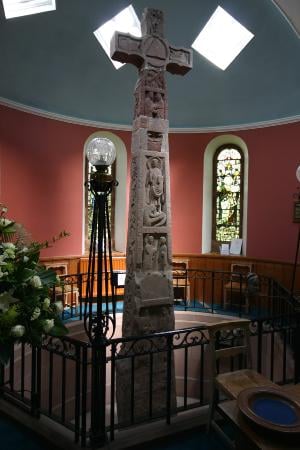

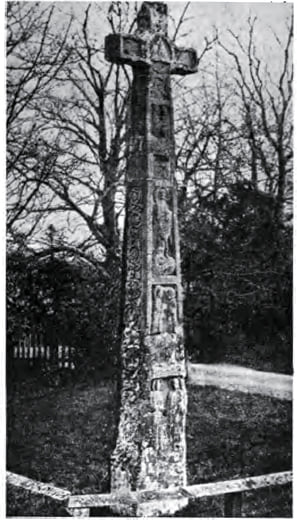
    PHOTOS: Portions of the poem are engraved on the 8th century Ruthwell Cross (top, as it appeared between 1823 and 1887; and bottom, at its current location at Ruthwell Church, Dumfriesshire, Scotland)

  • Yo-Yo Ma at 70 A Musical Journey

    Yo-Yo Ma at 70 A Musical Journey

    As you may have read here before, Yo-Yo Ma turned 70 this week. Arguably the most visible and charismatic cellist of his generation, Ma was born on October 7, 1955. We follow up on our salute to this beloved figure and his work in film, heard on Friday’s “Picture Perfect” (on which was featured music from “Seven Years in Tibet,” “Memoirs of a Geisha” and “Crouching Tiger, Hidden Dragon”), by programming two of his more unusual recordings on “The Lost Chord.”

    Ma has long been acclaimed for his performances of the Bach Cello Suites, chamber music by Beethoven and Brahms, and most of the major concertos for cello and orchestra. However, his first commercial recording, believe it or not, was of music by the English composer Gerald Finzi.

    Nor is Finzi’s Cello Concerto likely what we would expect from a composer largely known for his wistful, though innocuous choral works and endlessly melodic string miniatures. In fact, there’s an urgency to the first movement of the piece that seems to predict his diagnosis with leukemia, of which he learned just before his 50th birthday. The slow movement of the work unfolds in the composer’s characteristically straightforward and easily assimilated musical language. The third movement fulfills audience expectations of an optimistic and buoyant finale.

    The completed concerto was given its first performance in July of 1955. It would be the last music Finzi ever heard, when, a little over a year later, he listened to a concert broadcast of a performance from his hospital room the night before he died.

    Ma recorded the piece while in his early 20s, with the Royal Philharmonic Orchestra, conducted by Vernon Handley.

    More recently, having conquered the classical concert hall and established his mastery of the standard repertoire, Ma has proved increasingly restless and exploratory, with forays into Baroque music on period instruments, American bluegrass, Argentinean tango, improvisatory duets with Bobby McFerrin, and several musical journeys along the Silk Road.

    The excitement and purity of working out musical ideas with artists from diverse cultures color his album titled “Silk Road Journeys.” We’ll hear Ma on an instrument called the morin khuur, performing with Mongolian vocalist Ganbaatar Khongorzul, in “Legend of Herlen,” built on a traditional long-song about the Herlen River, by Byambasuren Sharav. They’ll be joined by trombonists and percussionists of The Silk Road Ensemble, a group assembled by Ma to satisfy his curiosity about musical traditions existing beyond the confines of Western culture.

    I hope you’ll join me for “Yo-Yo, around the World.” It’s more than just a party trick. Our heart belongs to Ma, on “The Lost Chord,” now in syndication on KWAX, the radio station of the University of Oregon!


    Clip and save the start times for all three of my recorded shows:

    PICTURE PERFECT, the movie music show – Friday at 8:00 PM EDT/5:00 PM PDT

    SWEETNESS AND LIGHT, the light music program – Saturday at 11:00 AM EDT/8:00 AM PDT

    THE LOST CHORD, unusual and neglected rep – Saturday at 7:00 PM EDT/4:00 PM PDT

    Stream them, wherever you are, at the link!

    https://kwax.uoregon.edu/

  • Yo-Yo Ma at 70 a Musical Legend

    Yo-Yo Ma at 70 a Musical Legend

    The years, they do fly by. How can Yo-Yo Ma be 70? It seems only yesterday we were celebrating his 60th birthday.

    Arguably the most visible and charismatic cellist of his generation, Ma was born on October 7, 1955. He’s recorded more than 90 albums and been recognized with 19 Grammy Awards. In addition, among innumerable other honors, he has been the recipient of the National Medal of the Arts and the Presidential Medal of Freedom. As recently as 2020, he was included in Time Magazine’s “100 Most Influential People.”

    Ma began playing cello at the age of 4. That’s when he “put away childish things” – that is to say, a juvenile pursuit of the violin, viola, and piano! At 5, he began performing in public, and at 7, played for Presidents Dwight D. Eisenhower and John F. Kennedy. At 8, he was introduced to American television audiences courtesy of Leonard Bernstein. The next year, Isaac Stern brought him along to “The Tonight Show with Johnny Carson.”

    This was all before Ma attended Juilliard, where he studied with Leonard Rose. He dropped out of Columbia – only to attend Harvard. He spent four summers at the Marlboro Music Festival, where he played under the direction of legendary cellist and conductor Pablo Casals. He’s been friends with Emanuel Ax, a regular chamber music partner, since their student days.

    Ma has long been acclaimed for his interpretations of the Bach Cello Suites, chamber music by Beethoven and Brahms, and most of the major concertos for cello and orchestra. However, his first commercial recording, believe it or not, was of the Cello Concerto by English composer Gerald Finzi. Ma recorded the piece while in his early 20s, with the Royal Philharmonic Orchestra conducted by Vernon Handley.

    Later, having conquered the classical concert hall and established his mastery of the standard repertoire, Ma proved increasingly restless and exploratory, with forays into Baroque music on period instruments, American bluegrass, Argentinean tango, improvisatory duets with Bobby McFerrin, and several musical journeys along the Silk Road.

    He’s also been active in film, contributing to the soundtracks of “Seven Years in Tibet” and “Memoirs of a Geisha” for John Williams and “Crouching Tiger, Hidden Dragon” (the recipient of an Academy Award for Best Original Score) for Tan Dun. And of course his album of arrangements of Ennio Morricone themes sold faster than a tray full of cannoli.

    Ma’s friendship with Williams also yielded a cello concerto, which they first recorded together in 1994. My most recent Ma acquisition is his recording of the concerto in its revised version, released on Sony Classical in 2022, and of course it’s wonderful. However, the earlier release has an alluring bonus in Williams’ “Elegy,” reworked from material originally conceived for “Seven Years in Tibet” – six transporting minutes of unalloyed loveliness.

    Ma is one of classical music’s last media celebrities, whether introducing kids to the cello on PBS’ “Arthur,” “Sesame Street,” or “Mr. Rogers’ Neighborhood,” or playing Bach in support of dancer Misty Copeland and sitting in with the band on “The Late Show with Stephen Colbert.”

    I’ve been privileged to see him in concert several times. Last season, he was in Princeton at McCarter Theatre for a conversation with PBS NewsHour correspondent Jeffrey Brown. His love for music is such that it is not unusual for him to return after intermission, following a star turn in a big concerto, to modestly sit in with the rest of the cello section and play as a rank-and-file musician on the concert’s second half.

    All in all, I suspect he’s a really good guy. In fact, I’m sure he is. Happy birthday, and thanks for everything, Yo-Yo Ma!


    John Williams’ “Elegy”

    On Colbert with Misty Copeland

    At the age of 7, presented by Leonard Bernstein

    “Crouching Tiger, Hidden Dragon”

    Ma with saxophonist Joshua Redman, playing “Crazy Bus” on “Arthur”

    On “Sesame Street”

    Gerald Finzi’s Cello Concerto

    Bach, Suite No. 1 for Unaccompanied Cello

  • Diana McVeagh’s Charming Music Memoirs

    Diana McVeagh’s Charming Music Memoirs

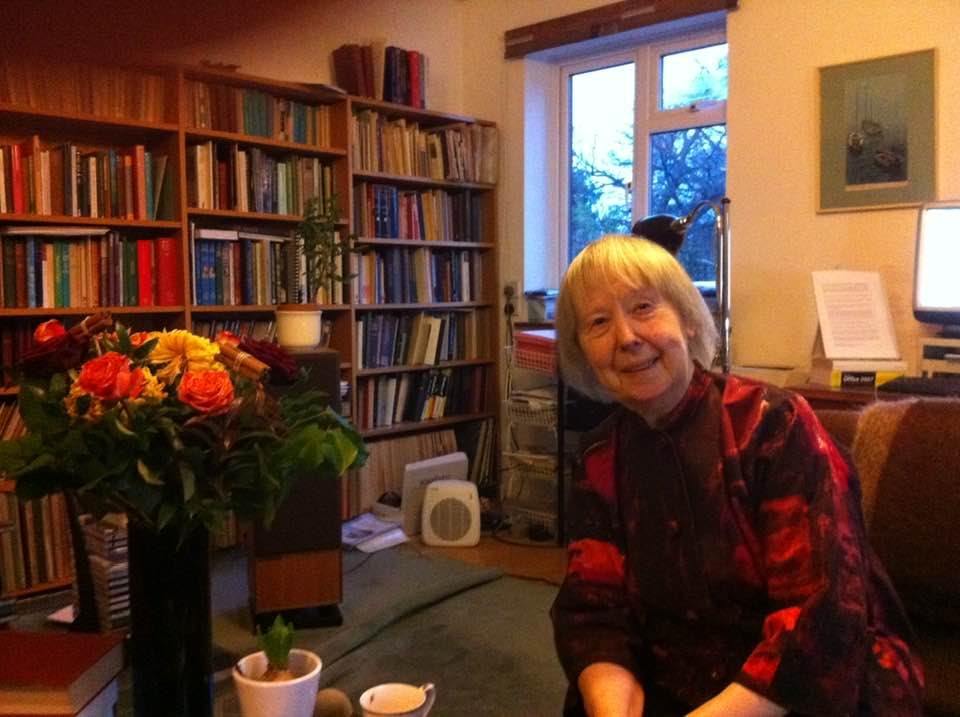
    I did not know Diana McVeagh personally, but I own her books on Elgar and Gerald Finzi and was totally charmed by this video memoir curated and introduced by Byron Adams. By my calculations, McVeagh was just weeks shy of her 97th birthday when she shared her recollections of Finzi, Herbert Howells, and Ralph & Ursula Vaughan Williams – all of whom she knew – with wonderful side-stories about Sir Edward Elgar and Sir Charles Villiers Stanford, among others. It’s an invaluable document, full of wit and personality, and guaranteed to elicit a few chuckles.

    My thanks to Byron for making it possible. The interview was conducted during the 2023 Bard Music Festival.

    McVeagh died on July 2, two months shy of her 99th birthday. R.I.P.

    https://www.youtube.com/watch?v=8SjZTNK_3aI

    Photo borrowed from Piers Lane’s Facebook page

  • English Pastoral Piano Music Folk Song Spirit

    English Pastoral Piano Music Folk Song Spirit

    According to a certain school of thought, folk music – music of the land – embodies the spirit of a nation. And no nation’s composers milked that cow quite as soulfully as the English.

    This week on “The Lost Chord,” we’ll have an hour of bucolic reflections for the keyboard of a time lost to technology and industrialization.

    We’ll begin with Gerald Finzi’s “Eclogue” for piano and string orchestra. Originally drafted in the mid-‘20s as the projected slow movement of a piano concerto, the material was later reshaped by the composer, who was content to let it stand on its own. In case you’re not familiar with the term, an eclogue is a short pastoral poem.

    If you find yourself transported by this, I think you will also really enjoy Cyril Rootham’s “Miniature Suite” of 1921. Rootham, better known for his choral music, was a friend of Ralph Vaughan Williams and Gustav Holst. His work at Cambridge University exerted a significant influence over English musical life. Like the “Eclogue,” the “Miniature Suite” is scored for piano and strings.

    In between, I’ll provide a palate cleanser in the form of E.J. Moeran’s “Summer Valley.” Moeran was one of the last composers to really thrive on English folk music. “Summer Valley,” composed for solo piano in 1925, was dedicated to Frederick Delius.

    Finally, we’ll engage in a bit of musical time travel. In addition to the whole folk song perspective, England is justifiably proud of its formal musical past. The legacy of the Tudors was a particular influence on works such as Benjamin Britten’s “Gloriana,” Gordon Jacob’s “William Byrd Suite,” and Vaughan Williams’ “Fantasia on a Theme by Thomas Tallis.”

    In the case Herbert Howells – like Rootham, a composer better recognized for his choral endeavors – he fell under the spell of the clavichord, after he was lent one by one Herbert Lambert, a photographer with a passion for building replicas of early keyboard instruments.

    The fortuitous encounter led to the composition of three suites, written in different periods of Howells’ life, which hark back to the glory days of the “Fitzwilliam Virginal Book.” All three sets are characterized by an inventive blend of Tudor and English folk influences. Each of the individual movements are dedicated to a friend or colleague of the composer. We’ll hear the first set, titled “Lambert’s Clavichord,” written in 1927, which was sanctioned for performance on the modern piano.

    I hope you’ll join me for an hour of musical escapes to the countryside and the golden musical past. That’s “Idyll Thoughts,” pastoral English works for piano, on “The Lost Chord,” now in syndication on KWAX, the radio station of the University of Oregon!


    Clip and save the start times for all three of my recorded shows:

    PICTURE PERFECT, the movie music show – Friday at 8:00 PM EDT/5:00 PM PDT

    SWEETNESS AND LIGHT, the light music program – ALL NEW! – Saturday at 11:00 AM EDT/8:00 AM PDT

    THE LOST CHORD, unusual and neglected rep – Saturday at 7:00 PM EDT/4:00 PM PDT

    Stream them, wherever you are, at the link!

    https://kwax.uoregon.edu/

Tag Cloud

Aaron Copland (92) Beethoven (95) Composer (114) Film Music (120) Film Score (143) Film Scores (255) Halloween (94) John Williams (185) KWAX (229) Leonard Bernstein (100) Marlboro Music Festival (125) Movie Music (135) Opera (198) Philadelphia Orchestra (88) Picture Perfect (174) Princeton Symphony Orchestra (106) Radio (87) Ralph Vaughan Williams (85) Ross Amico (244) Roy's Tie-Dye Sci-Fi Corner (290) The Classical Network (101) The Lost Chord (268) Vaughan Williams (103) WPRB (396) WWFM (881)

DON’T MISS A BEAT

Receive a weekly digest every Sunday at noon by signing up here


RECENT POSTS