Musically, the Academy Awards lost me some time ago. I’m an orchestra guy and a product of the 20th century (if not the 19th). This morning on “Sweetness and Light,” we’ll hark back to a halcyon era when indelible movie themes were indispensable components of the overall cinematic experience.
I don’t want to give it all away in my Facebook teaser – in fact, during the course of the show, I won’t even identify the pieces until after each one of them is played, so that you’ll have the added enjoyment of guessing along at home – but trust that you’ll likely recognize most of them, all Best Original Score winners or nominees from highly-decorated films.
As a bonus, the show will open with a 90-second montage of introductory fanfares from the great studios of Hollywood’s Golden Age. So you’ll want to be there when the lights go down. Celluloid memories will be stirred by reel music, on “Sweetness and Light,” this Saturday morning at 11:00 EST/8:00 PST, exclusively on KWAX, the radio station of the University of Oregon!
In my Leopold Stokowski post on April 18, I wondered (not for the first time) what the hell happened to my country. This was while reflecting on how classical music, while perhaps never entirely mainstream, was once heard and recognized by the populace, and the most celebrated musicians were household names. Toscanini, Paderewski, Caruso, Paganini. Some of these were already in the grave, but thanks to radio and cinema, in the 1940s, they were names everyone knew. The sextet from “Lucia” was familiar enough that it could be parodied. A lot. Then came television, which continued to keep everyone culturally literate, or at least aware. For a few decades, anyway.
At a point, José Iturbi entered the conversation, in a comment beneath my post, with a lament that today he is nearly forgotten. Which is probably true, except for classic movie buffs. But wouldn’t you know it, just a few months ago, Sony Classical reissued Iturbi’s recordings made for the RCA label.
Here’s a post I wrote in 2015 on Iturbi and how classical music was once an expected – and accepted – part of our culture. I’ve included a link to the new Iturbi set at the very end.
Once again, you’ve got to love the Golden Age of Hollywood. In terms of music, movies from that era just seemed so… inclusive.
On the one hand, you could have crooner Rudy Vallée acting in Preston Sturges comedies (and not singing a note); on the other, you could have Leopold Stokowski shaking hands with Mickey Mouse. There seemed to be a wider acceptance of musicians of all stripes as equally valid entertainers, and an assumption that the general public would understand (or at least not be put off by) a line of dialogue about Delius or Sibelius. When the Three Stooges weren’t flipping fruit into opera singers’ mouths, that is.
This is especially fascinating when viewed from the perspective of the present, when seemingly the bar is set lower and lower all the time, with everyone racing to the lowest common denominator so as not to seem too pointy-headed. Wouldn’t it make sense that people of any era would want to aspire to be more? That they would want to be led, represented and entertained by the most talented, most intelligent people? It’s a very strange world we live in.
José Iturbi (1895-1980) was one of the seemingly unlikely cinematic superstars of the 1940s. Like Oscar Levant, Iturbi was a serious pianist. In the ‘20s, he had made a name for himself as a barnstorming virtuoso who toured Europe, Asia, Africa and South America. He made his North American debut with the Philadelphia Orchestra under Stokowski.
Eventually, he made the transition to conducting, which had long been his dream. He led the great symphony orchestras of Philadelphia and New York, the London Symphony, the orchestra of La Scala Milan, and the Concertgebouw Orchestra of Amsterdam. He would serve as music director of the Rochester Philharmonic.
Iturbi generally played himself in Hollywood musicals, including “Thousands Cheer” (1943), “Anchors Away” (1945) and especially “Three Daring Daughters” (1948), in which he was actually the lead.
For all his talent and charisma, however, Iturbi was always churning up controversy, making provocative remarks and losing his temper. Ironically, for a musician who owed so much of his fame to his absorption into popular culture, he made a big hullabaloo about appearing on concert programs that included both classical and popular music. It wasn’t popular music he objected to, particularly; it was the mixing of the two. This is especially puzzling from a pianist who studied at the Valencia and Paris Conservatories, yet played jazz and boogie-woogie in innumerable film shorts.
His private life was equally turbulent, perhaps even more so, with tragic results. His wife died of accidental poisoning. He sued his daughter, claiming she was an unfit mother to his grandchildren. The daughter later committed suicide.
Iturbi could be a brilliant pianist, though he sometimes drew criticism that he was diluting his talents through his involvement with Hollywood, and a number of his concerto recordings, which he conducted himself from the keyboard, don’t really seem to take flight. Even so, there are gems among his recorded repertoire, and the part he played in keeping classical music in the mainstream is to be lauded.
It’s a vine that is now severely withered. I wonder if Luciano Pavarotti’s “Yes, Giorgio” (1982) was the last in the line of dubious movies featuring great classical musicians.
Iturbi in “Holiday in Mexico” (1946)
Insane take on Liszt’s “Hungarian Rhapsody No. 2” from “Anchors Aweigh” (1945)
Iturbi plays Mozart with his sister, while conducting the Rochester Philharmonic, in 1946
Iturbi plays Albeniz, Granados and Navarro, from 1933
Oscar Levant in “The Barkleys of Broadway” (1949)
Lauritz Melchior with Esther Williams and Van Johnson in “Thrill of a Romance” (1945)
“Unfaithfully Yours” (1948): “No one handles Handel like you handle Handel!”
The Three Stooges, “Voices of Spring,” and “Lucia di Lammermoor” in “Micro-Phonies” (1945)
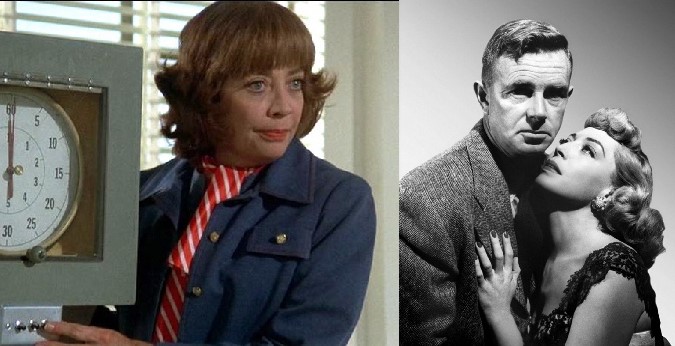
Well, once again, I’m eating humble pie. The morning after Roy and my discussion of “Freaky Friday” (1976), during which I was not entirely convinced the housekeeper wasn’t played by Marie Windsor, I discover Roy was correct and that the unflattering character was indeed played by Patsy Kelly.
In common with Windsor, Kelly was another Golden Age actor, a brash supporting player, who often (yes) played a maid. Or a gun moll. Or a wacky sidekick. She was one smart-talking, sassy dame. In 1933, a serious accident that compromised her lungs brought a diagnosis of only ten years to live, but Kelly wound up carrying on for decades. Likely, she was just too cantankerous to die.
At first, she didn’t think much of Hollywood, but she came to adore film in all its facets. However, it was the stage that was her first love, and she won a Tony Award for her work in the 1971 Broadway revival of “No, No, Nanette.” To my knowledge, the only other “modern” movie I’ve seen her in is “Rosemary’s Baby,” and there, I have to say, she looks quite different, on account of the coke bottle glasses.
Because of her unfortunate proximity to several actors who suffered untimely deaths (including Thelma Todd, Lyda Roberti, and Jean Malin), early on Kelly developed a reputation for being “bad luck.” So even though “Freaky Friday” is in itself set on Friday the 13th, Kelly only reinforces the appropriateness of our choice.
As for Windsor, I guess I just assumed that noir can age you hard, what with all the bourbon and cigarettes (to say nothing of the bullets). However, here it turns out Windsor is still looking quite well as Mrs. Murphy, Jodie Foster’s typing teacher. Like most of the supporting cast, she was onscreen for such a short time that if you blink, you’ll miss her. I must have been caught up in the drama of Annabelle’s typing exam.
In addition to always being easy on the eyes, Windsor had a sharp sense of humor. Though a beauty pageant winner, she got her real break in Hollywood after submitting jokes to Jack Benny under an assumed name. After she retired from acting, she devoted herself to painting and sculpture.
Favorite line in a Marie Windsor movie? It’s from the 1952 noir “The Narrow Margin,” uttered by Charles McGraw as the hardbitten police detective assigned to protect her, a mob boss’s widow, on a train ride from Chicago to L.A., where she’s expected to testify before a grand jury. Asked by his partner what he thinks of her, McGraw replies, “She’s a sixty-cent special: cheap, flashy, strictly poison under the gravy.”
Anyway, here she is, pictured upper left, still looking quite the dish, in “Freaky Friday,” and upper right, in her heyday with Sterling Hayden in Stanley Kubrick’s “The Killing.” I guess I must have been distracted by Barbara Harris. I’m glad Windsor didn’t have to suffer Kelly’s indignity of spinning on the back tire of a bicycle during the eyerolling final chase.
You can watch our whole “Freaky” conversation here:
Next week, Roy and I will tackle a George Pal classic fondly recollected by his dad, “Destination Moon” (1950). Breathe a sigh of relief in the comments section that we’re actually covering sci-fi, for a change, on the next Roy’s Tie-Dye Sci-Fi Corner. (Robert A. Heinlein contributed to the screenplay.) As always, the journey is the destination when we livestream on Facebook, YouTube, etc., next Friday evening at 7:30 EST!
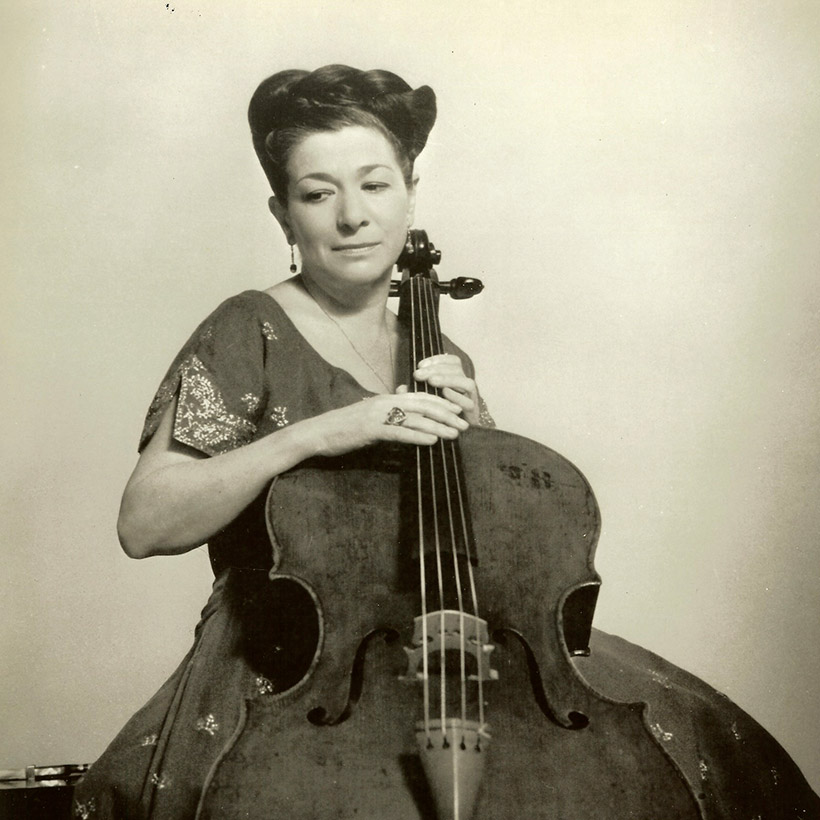
For the new year: Leonard Slatkin shares a family reminiscence written by his brother, the cellist Frederick Zlotkin, who died only a few months ago. The focus is mainly on their mother, Eleanor Aller Slatkin, who played in the Hollywood String Quartet with her husband, Felix, and as principal cellist in the Warner Bros. studio orchestra. In the latter capacity, she frequently recorded cello solos for the films. There’s plenty here to fascinate, both in terms of Saltkin family history and glimpses into what it was like for a musician, particularly a female musician, to work in Hollywood during the “Golden Age.” Furthermore, it concludes with a great anecdote about Arnold Schoenberg, in Eleanor’s own words.
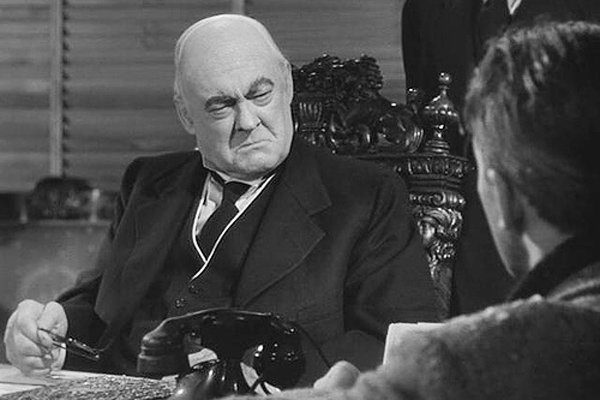
In “It’s a Wonderful Life,” Lionel Barrymore plays heartless Old Man Potter, a modern-day Scrooge, who views his fellow citizens of Bedford Falls as so much grist to be ground for his own profit. Barrymore the man, however, was full of generous human qualities, with a great enthusiasm and aptitude for the arts. I’d long known that he was also a composer, but it is only in doing a YouTube search this week that I discovered a broader cross-section of his output than the last time I checked, now perhaps six years ago.
Barrymore was born in Philadelphia in 1878. He was, of course, part of a venerable acting dynasty that also included his famous siblings, John and Ethel Barrymore. He’s also the great-uncle of Drew Barrymore.
He was especially fine in character roles, playing a variety of them on screen, in retrospect perhaps most memorable for his curmudgeons. He played the irascible Dr. Gillespie in the “Doctor Kildare” movies of the 1930s and ‘40s. He was Ebenezer Scrooge in annual radio broadcasts of “A Christmas Carol.” Of course, he is probably most familiar these days as the soul-crushing capitalist Mr. Potter. He was honored with an Academy Award for Best Actor for his performance in “A Free Soul” in 1931.
Despite his natural aptitude and widely acknowledged success in the field, it had never been his ambition to act. Instead, he was interested in being a visual artist. He even trained in Paris, and his prints and etchings were widely circulated.
As a composer, several of his piano works were published. His “Tableau Russe” was played, in both its piano and orchestral versions, in the film “Dr. Kildare’s Wedding Day.” His orchestral piece, “In Memoriam,” written to the memory of his brother John, was performed by the Philadelphia Orchestra. He also wrote an historical novel, “Mr. Cantonwine: A Moral Tale.”
Barrymore died in 1954. He had suffered from crippling arthritis for decades, which is why you’ll generally see him a wheelchair in most of his later films. He also broke his hip twice. He required morphine and cocaine to get through a shoot and to get to sleep at night. It was only through frequent injections of painkillers that he was able to get through “You Can’t Take It with You” on crutches.
Barrymore’s “Halloween Suite” can be heard here, beginning at the 36-minute mark. Barrymore is the narrator. Mario Lanza also appears on the concert. Miklós Rózsa conducts.
Music for the ages? Who cares? I would be the first in line if Naxos were to put out such an album.
PHOTOS (counterclockwise from top) As Old Man Potter; as himself; behind the scenes of “Rasputin and the Empress” (1932), the only film he ever made with both his siblings; and at lunch with fellow composers Eugene Zador, Charles Wakefield Cadman, Nat Finston, Mario Castelnuovo-Tedesco, and Daniele Amfitheatrof.