For some, it may be difficult to leave the holidays behind and face the prospect of a long, bleak winter. That would not be me.
But if it describes you, this week on “Sweetness and Light,” I’ll have some Victor Borge to brighten your day. “The Unmelancholy Dane” was born on this date in 1909.
Borge always proved to be quick on his feet, comfortable in his own skin, and unusually personable. Born into a family of Jewish musicians in Copenhagen (his birth name was Børge Rosenbaum), he was already before the public, giving recitals at the age of 8. He received a scholarship to the Royal Danish Academy of Music, and later studied with pupils of both Liszt (Frederic Lamond) and Busoni (Egon Petri).
After a few years of presenting straight classical concerts, he began to develop his act. His mix of music and comedy proved to be popular in Scandinavia, but some of his gibes didn’t exactly sit well with Hitler. When German forces occupied Denmark, Borge hopped a U.S. Army transport out of Finland – though he would return, not long after, disguised as a sailor, to visit his dying mother.
He arrived in the United States in 1940, with 20 dollars in his pocket and no understanding of English. But he was a fast learner, and he taught himself the language by going to American movies.
By 1941, he was already appearing with Rudy Valee and Bing Crosby, and adapting his jokes for U.S. audiences. In 1942, he was named “best new radio performer of the year.” By 1946, he had his own radio show and developed many of his signature routines.
He became a naturalized American citizen in 1948. His Broadway show, “Comedy in Music,” entered the Guinness Book for its unprecedented run, from 1953 to 1956. In the 1960s, he was one of the highest-paid entertainers in the world.
Borge continued to expand his popularity through appearances on television programs ranging from “What’s My Line?” to “The Muppet Show.” He continued to entertain to a ripe old age. He died in 2000, a few days shy of his 92nd birthday.
As he was fond of observing, “Laughter is the closest distance between two people.”
Join me for a selection of Borge at his improvisatory best, working the audience, as he grants requests, from a recording of his record-breaking Broadway show. The program will also include classic bits by Anna Russell and Peter Schickele (“discoverer” of P.D.Q. Bach) and a few more selections from the first of the notorious and uproarious Hoffnung Music Festival concerts.
Enter the new year laughing with an hour of musical humorists on “Sweetness and Light,” this Saturday morning at 11:00 EST/8:00 PST, exclusively on KWAX Classical Oregon!
Stream it, wherever you are, at the link:
Tag: Hoffnung Music Festival
-

Welcome 2026 with a Smile on “Sweetness and Light”
-
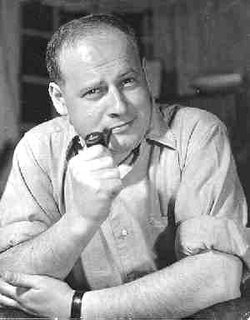
Laughing Through Cold Season with Hoffnung Music
It may be cold and flu season, and the holidays may dish up, among other things, a banquet of contagion. But, as it’s said that laughter is the best medicine, this week on “The Lost Chord,” we’ll laugh in the New Year with highlights from the notorious and uproarious Hoffnung Music Festival concerts.
Gerard Hoffnung was a boy when his family arrived in London, refugees from Nazi Germany. In his new home, he cultivated the persona of an English gentleman, though one with a decidedly impish bent. He attained celebrity through his work as a cartoonist, a sparkling panelist, and a public speaker. He was lauded as a brilliant improviser with a dry wit and a masterly sense of timing. He also played the tuba well enough that he was able to tackle the Vaughan Williams concerto.
Following a successful April Fool’s concert in 1956, Hoffnung embarked on the enterprise which, alongside his cartooning, ensured a kind of immortality – the first of the Hoffnung Music Festival concerts. The concerts brought together representatives of England’s finest musical talent to lampoon what, especially at the time, might have been perceived as a rather stodgy art form.
There would be three Hoffnung concerts in all. Alas, the third was presented posthumously. Hoffnung collapsed at his home in 1959, and died of a cerebral hemorrhage three days later, at the age of only 34. An untimely finish for a character who seemed his entire life to be a brilliant, fully-developed, middle-aged man, always at the peak of his form.
I hope you’ll join me as we celebrate Hoffnung’s whimsical legacy. We’ll hear Sir Malcolm Arnold’s “A Grand, Grand Overture,” for orchestra, organ, electric floor polisher, and three vacuum cleaners – the work was dedicated to President “Hoover” – and Franz Reizenstein’s “Concerto populare,” billed as “a piano concerto to end all piano concertos,” among others.
It’s a lighthearted playlist calculated to put a smile on your face and lend a boost to your spirits – to say nothing of your immune system. He who laughs last laughs best. So “Have a Ball,” on “The Lost Chord,” now in syndication on KWAX, the radio station of the University of Oregon!
Remember, KWAX is on the West Coast, so there’s a three-hour difference for those of you listening in the East. Here are the respective air-times for all three of my recorded shows (with East Coast conversions in parentheses):
PICTURE PERFECT, the movie music show – Friday on KWAX at 5:00 PM PACIFIC TIME (8:00 PM EST)
SWEETNESS AND LIGHT, the light music program – ALL NEW – Saturday on KWAX at 8:00 AM PACIFIC TIME (11:00 AM EST)
THE LOST CHORD, unusual and neglected rep – Saturday on KWAX at 4:00 PM PACIFIC TIME (7:00 PM EST)
Stream all three, at the times indicated, by following the link!
-

Joseph Horovitz Composer Dies at 95
Though he composed his share of “serious” music, Joseph Horovitz was not afraid to go popular, light, or even ridiculous. In fact, my first exposure to his work was through the “Horrortorio,” composed for one of the Hoffnung Music Festival concerts. Gerard Hoffnung’s whimsical series enlisted top-flight English musicians to let down their hair and embrace their lunatic side, in skewering staid classical music conventions. The “Horrortorio,” a response to Hammer Films’ lurid resurrections of classic monsters, relates the wedding of Dracula’s daughter to Frankenstein’s son, in the context of a faux oratorio. Horovitz spoofs Baroque standards by Bach and Handel, William Walton’s “Belshazzar’s Feast,” and the Gilbert & Sullivan operettas.
To a broader audience, he was perhaps best known for his theme music to “Rumpole of the Bailey,” the British television series starring Leo McKern.
The composer’s family, Jewish, fled Vienna following the Anschluss and settled in England in 1938. Horovitz’s musical studies began at New College, Oxford, where he also pursued modern languages. Later, he attended the Royal College of Music, where among his teachers was Gordon Jacob. Then he was off to Paris for further studies with Nadia Boulanger.
Horovitz was appointed music director at the Bristol Old Vic in 1950. He was also a conductor of opera and ballet, who toured widely.
His alma mater, New College, Oxford, recently celebrated his 95th birthday with streamed performances of his 4th and 5th String Quartets.
Among Horovitz’s other works were 16 ballets, including “Alice in Wonderland,” and several operas, including one based on the classic Garbo film “Ninotchka.” As an Edgar Rice Burroughs fan, I was also interested to discover that he composed the score for “Tarzan’s Three Challenges” (1963), with Jock Mahoney – at 44 the oldest Tarzan on film!
In addition, he wrote nine concertos, including one for euphonium and a “Jazz Concerto” for piano, strings, and percussion.
His children’s pop cantata, so-called, “Captain Noah and His Floating Zoo,” was widely embraced by amateur performers.
Horovitz died on Wednesday. He was 95 years-old.
“Rumpole of the Bailey”
The first three videos in this playlist comprise his Sonatina for Clarinet and Piano
The Euphonium Concerto
“Alice in Wonderland”: Lobster Quadrille and Grand Waltz
“Tarzan’s Three Challenges”
The String Quartet No. 5
The “Horrortorio”
The notorious and uproarious Hoffnung Music Festival
Joseph Horovitz speaks
-
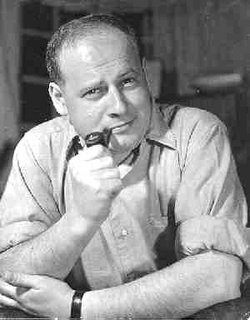
Hoffnung Music Festival a Hilarious New Year
If a ball drops in Times Square, and no one’s around to see it, is it still a new year? Call it the final conundrum of 2020.
This Sunday night on “The Lost Chord,” we laugh away a very rough year with highlights from the notorious and uproarious Hoffnung Music Festival concerts.
Gerard Hoffnung was a boy when his family arrived in London, refugees from Nazi Germany. In his new home, he cultivated the persona of an English gentleman, though one with a decidedly impish bent. He attained celebrity through his work as a cartoonist, a sparkling panelist, and a public speaker. He was lauded as a brilliant improviser with a dry wit and a masterly sense of timing. He also played the tuba well enough that he was able to tackle the Vaughan Williams concerto.
Following a successful April Fool’s concert in 1956, Hoffnung embarked on the enterprise which, alongside his cartooning, ensured a kind of immortality – the first of the Hoffnung Music Festival concerts. The concerts brought together representatives of England’s finest musical talent to lampoon what, especially at the time, might have been perceived as a rather stodgy art form.
There would be three Hoffnung concerts in all. Alas, the third was presented posthumously. Hoffnung collapsed at his home in 1959, and died of a cerebral hemorrhage three days later, at the age of only 34. An untimely finish for a character who seemed his entire life to be a brilliant, fully-developed, middle-aged man, always at the peak of his form.
I hope you’ll join me tonight as we celebrate Hoffnung’s whimsical legacy. We’ll hear Sir Malcolm Arnold’s “A Grand, Grand Overture,” for orchestra, organ, electric floor polisher, and three vacuum cleaners – the work was dedicated to President “Hoover” – and Franz Reizenstein’s “Concerto populare,” billed as “a piano concerto to end all piano concertos,” among others.
It’s a lighthearted playlist calculated to put a smile on your face and lend a boost to your spirits. He who laughs last laughs best. So “Have a Ball,” this Sunday night at 10:00 EST, on WWFM – The Classical Network and wwfm.org.
-

Hoffnung Music Festival A Hilarious Concert
THE FOURTH DAY OF CHRISTMAS
This Sunday night on “The Lost Chord,” we do our best to maintain a festive spirit with selections from the notorious – and uproarious – Hoffnung Music Festival concerts.
Gerard Hoffnung was born in Berlin in 1925. His family fled the Nazis while he was still a boy and settled in London, where Gerard became more English than the English. Over the next two decades, he attained celebrity through his work as a cartoonist, a sparkling panelist and a public speaker. He was lauded as a brilliant improviser with a dry wit and a masterly sense of timing. In addition, he played the tuba well enough that he was able to tackle the Vaughan Williams concerto.
Following his participation in an April Fool’s concert in 1956, Hoffnung embarked on the enterprise which, aside from his cartooning, ensured a kind of immortality – the first of the Hoffnung Music Festival concerts. The concerts brought together representatives of England’s finest musical talent to lampoon what, especially at the time, could be perceived as a rather stodgy art form.
For the inaugural effort, Sir Malcolm Arnold wrote “A Grand, Grand Overture” for an orchestra augmented by a rifle, two electric floor polishers and a vacuum cleaner. (The work was dedicated to President “Hoover.”) Sir William Walton walked on to conduct a one-word excerpt from his cantata “Belshazzar’s Feast,” in which he picked up the baton and the chorus shouted, “Slain!”
There would be three Hoffnung concerts in all. Alas, the third was presented posthumously. Hoffnung collapsed at his home in 1959 and died of a cerebral hemorrhage three days later, at the age of only 34! He was a mere child by today’s standards, yet he seemed his entire life to be a brilliant middle-aged man, always at the peak of his form.
I hope you’ll join me for “Have a Ball: Laughing in the New Year with the Hoffnung Music Festival Concerts,” this Sunday night at 10 ET, with a repeat New Year’s Eve at 6; or that you’ll listen to it later as a webcast at http://www.wwfm.org.
PHOTOS: Gerard Hoffnung and one of his creations
Tag Cloud
Aaron Copland (93) Beethoven (95) Composer (114) Film Music (144) Film Score (143) Film Scores (255) Halloween (94) John Williams (195) KWAX (229) Leonard Bernstein (104) Marlboro Music Festival (125) Movie Music (159) Mozart (90) Opera (212) Philadelphia Orchestra (89) Picture Perfect (174) Princeton Symphony Orchestra (109) Radio (88) Ross Amico (244) Roy's Tie-Dye Sci-Fi Corner (290) The Classical Network (101) The Lost Chord (269) Vaughan Williams (105) WPRB (397) WWFM (881)