Neoclassicism in music was a reaction against what was perceived as the garish effusiveness and gooey excesses of late Romanticism.
Contemporary composers, in search of a new lucidity, turned their attention to the 18th century, revisiting its musical processes, though reinterpreting them through a distinctly 20th century prism. Stravinsky was the master, but neoclassicism swept the world.
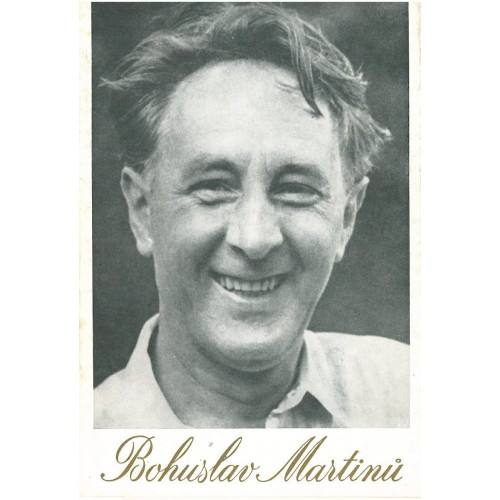
This week on “The Lost Chord,” we’ll have three cheery examples of Czech neoclassicism, including works by Ilja Hurník (his “Sonata da Camera”), Iša Krejči (his “Serenade for Orchestra,” conducted by Karel Ančerl) and Bohuslav Martinu (his Concerto for Two Violins and Orchestra).
These composers – well, Krejči and Martinu, anyway – manage to balance the clarity of the Enlightenment with an unmistakably Czech national sound.
Hurník’s work is perhaps the purest, in terms of looking back. The term “Sonata da Camera” recalls music of the Baroque and Classical eras, as does the clarity of its instrumentation, involving flute, oboe, cello and harpsichord. Each movement begins as if it were ripped from the pages of history and then gradually squeezed like a lemon, leaving a tangy, contemporary aftertaste.
All of this music is calculated to lift your spirits. I do hope you’ll join me for “Balanced Czechs,” on “The Lost Chord,” now in syndication on KWAX, the radio station of the University of Oregon!
Clip and save the start times for all three of my recorded shows:
PICTURE PERFECT, the movie music show – Friday at 8:00 PM EDT/5:00 PM PDT
SWEETNESS AND LIGHT, the light music program – ALL NEW! – Saturday at 11:00 AM EDT/8:00 AM PDT
THE LOST CHORD, unusual and neglected rep – Saturday at 7:00 PM EDT/4:00 PM PDT
Stream them, wherever you are, at the link!
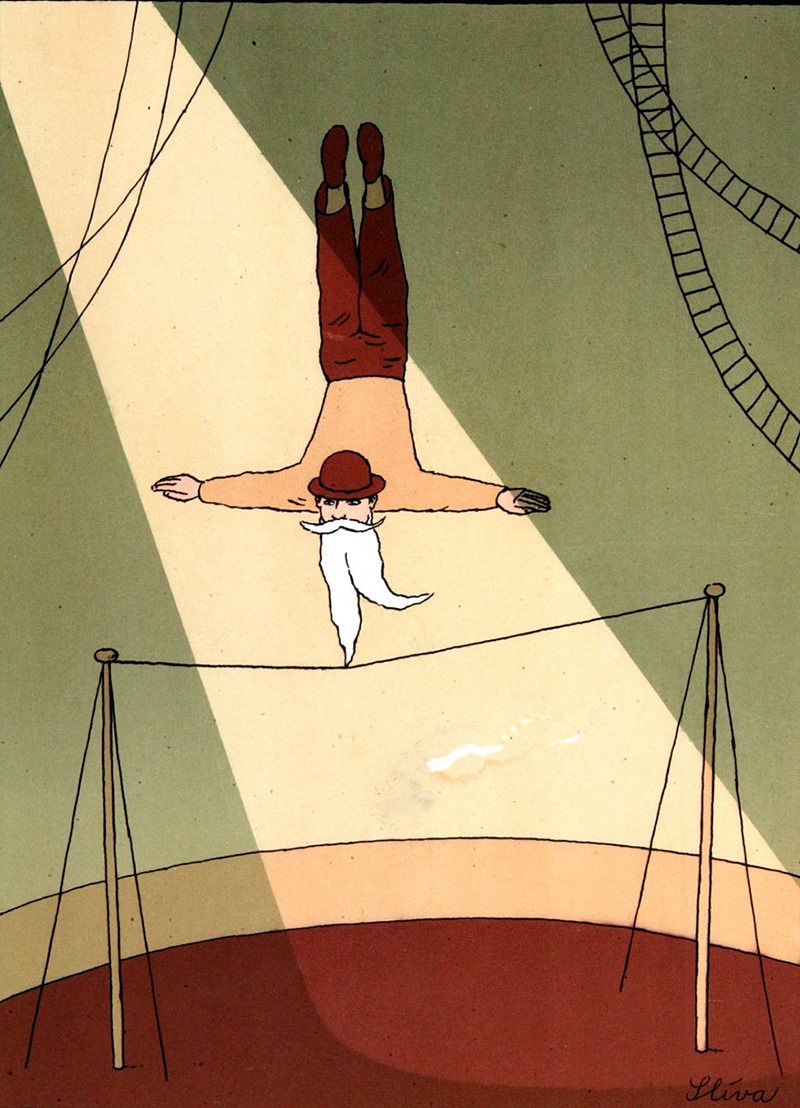
Tightrope walker by Jiří Sliva