Tag: Incidental Music

  • Norway’s Stage Halvorsen Grieg and Theater Music

    Norway’s Stage Halvorsen Grieg and Theater Music

    If all the world’s a stage, then why not Norway? This week on “The Lost Chord,” I hope you’ll join me in vicariously treading the boards with incidental music by two of the country’s most prominent composers.

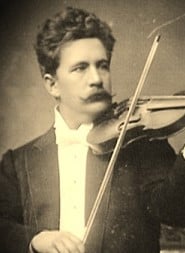
    Following a lengthy apprenticeship as a violinist, in the course of which he performed in orchestras all over Europe, Johan Halvorsen (1864-1935) developed an interest in conducting. In 1893, the same year he was appointed principal conductor of the Bergen Philharmonic, he worked as conductor of the theater orchestra at Bergen’s National Stage. In 1899, he became conductor of the newly-opened National Theater in Kristiana, a post he would occupy for the next three decades, until his retirement in 1929.

    Following his retirement, Halvorsen largely concentrated on writing symphonies and his popular Norwegian Rhapsodies. Until then, his work in the theater, understandably, brought many opportunities to write for the stage. In fact, he composed music for more than 30 plays.

    One of those was “Askeladden,” or “The Ash Lad,” a children’s comedy, based on Norwegian folk tales. Askeladden is an unprepossessing young man who succeeds where others fail, generally winning the hand of a princess and half the kingdom. Halvorsen actually composed the music for this particular play in his retirement. In fact, it is his last orchestral score.

    Norway’s best-known composer, of course, is Edvard Grieg (1843-1907). Grieg’s suite from the play “Sigurd Jorsalfar,” or “Sigurd the Crusader,” is actually rather famous, yet we seldom have an opportunity to hear the complete incidental music. Sigurd I, King of Norway, reigned from 1103 to 1130. His reign is regarded by historians as a golden age for medieval Norway.

    Sigurd became the subject of a play by Bjørnstjerne Bjørnson, for which Grieg provided music in 1872. The familiar suite was given its premiere 20 years later. Bjornson’s play concerns the brothers, Sigurd and Øystein, joint rulers of 12th century Norway, and the beautiful Borghild, whose love for Øystein is unrequited, but who herself is loved by Sigurd. The composer does his best to lend a third dimension, or at least some pageantry, to the historical tableaux.

    Your ticket is reserved for Norway, incidentally. I hope you’ll join me for “A-fjordable Theater,” on “The Lost Chord,” now in syndication on KWAX, the radio station of the University of Oregon!


    Clip and save the start times for all three of my recorded shows:

    PICTURE PERFECT, the movie music show – Friday at 8:00 PM EST/5:00 PM PST

    SWEETNESS AND LIGHT, the light music program – ALL NEW! – Saturday at 11:00 AM EST/8:00 AM PST

    THE LOST CHORD, unusual and neglected rep – Saturday at 7:00 PM EST/4:00 PM PST

    Stream them, wherever you are, at the link!

    https://kwax.uoregon.edu/

  • Carl Nielsen’s “The Fog is Lifting” Atmospheric Bliss

    Carl Nielsen’s “The Fog is Lifting” Atmospheric Bliss

    I can’t imagine a better way to start the day. From Carl Nielsen’s incidental music to “The Mother,” “The Fog is Lifting” is two minutes of atmospheric bliss.

    Nielsen, of course, is widely regarded as Denmark’s foremost composer. You wouldn’t know it from this serene miniature, but “The Mother” is an allegorical play written for a patriotic occasion: the reunification of Southern Jutland with Denmark. In the play, which is couched as a fairy tale, a mother’s son is kidnapped. Their climactic reunion is celebrated with a rousing march and choral anthem.

    The fiery spirit with which the work concludes is nowhere in evidence in its best-known cues – “The Fog is Lifting,” “Faith and Hope are Playing,” and “The Children are Playing” – which can be heard at the first link below. For years, these were all I knew of the complete score. I kind of wish all of the numbers were of the same character. I’m always up for a dreamy wallow.

    The complete incidental music was recorded for the first time in 2020, and I was surprised – and I confess a little disappointed – to find the rest of the work does not sustain the mellow and mysterious character of the seven-minute suite. Hardly surprising, I suppose, when you learn that Nielsen was also at work at the time on his turbulent Symphony No. 5. That’s the one with the implacable snare drum.

    Sometimes a piece of music is so ineffably beautiful, it has the power to suspend time, and you wish it would go on forever. That’s the case with “The Fog is Lifting.” Enjoy it as the first of three movements from “The Mother” here:

    Then shatter the mood with 30 minutes of highlights from the complete score

    The Symphony No. 5, with its menacing snare

    A tip of the blond brush cut to Carl Nielsen on his birthday!

  • Beethoven’s Incidental Stage Music

    Beethoven’s Incidental Stage Music

    Can anything about Beethoven truly be described as incidental?

    Beethoven’s music for the stage is one of the more neglected aspects of his output. This Sunday night on “The Lost Chord,” we’ll set aside the symphonies and concertos, for the time being, for a revelatory evening at the theater with the Master from Bonn.

    In 1807, Beethoven composed a curtain-raiser for the play “Coriolan,” by Heinrich Joseph Collin. Two years later came a commission from the Vienna Court Theatre for music for a new production of Goethe’s “Egmont.” The commission resulted in an overture and six separate numbers, altogether a fairly substantial work.

    Then in 1811, Beethoven was approached to write music for two plays by August von Kotzebue, “The Ruins of Athens” and “King Stephen.” Of the two, “King Stephen” is the less well-known. Stephen I, the 11th century sainted national hero of Hungary, was instrumental in converting the Hungarian people and neighboring tribes to Christianity. We’ll hear Beethoven’s incidental music, shorn of its frequently-performed overture.

    Four years later, he provided music for “Leonore Prohaska,” a play by Johann Friedrich Duncker. Duncker was cabinet secretary to the King of Prussia. Leonore Prohaska is a warrior maiden who disguises herself as a man to fight in a war of liberation. As it turned out, the play was cancelled, and the music was never performed in the context for which it was intended. In fact, it wasn’t even published until 1888. Beethoven’s efforts were not for nothing, however, as Duncker later persuaded the King to underwrite the “Missa solemnis.”

    We’ll hear the funeral march from “Leonore Prohaska,” which Beethoven arranged from the slow movement of his Piano Sonata No. 12 in A-flat Major.

    In 1822, Beethoven was enlisted to compose music for the reopening of the Theater in der Josefstadt. The director recalled the success of the Beethoven-Kotzebue double-bill in Pest, and requested a revival of “The Ruins of Athens.” Beethoven offered to revise the existing numbers of his 1811 score and compose new ones to suit the director. A new text was provided by Carl Meisl, about whose talents Beethoven was less than enthusiastic.

    Meisl’s occasional poem describes an exchange between the actor Thespis and the god Apollo and contrasts Greece under the Ottoman Turks to the freedom of Vienna. A chorus celebrates dance, altars are decorated for the entry of the Muses, and the work ends with the obligatory chorus, “Heil unserm Kaiser.” Beethoven wrote a new overture for the piece, which is performed fairly frequently, but this evening it will be omitted to allow time for some of the lesser-heard numbers.

    Don’t forget, December 16 is Beethoven’s birthday. Tomorrow morning, we’ll return to the Beethoven symphonies with a vengeance, presenting a marathon of the composer’s most popular and revered works, in recordings lovingly curated by WWFM hosts. The celebration begins at 9 a.m. I’ll be along at 4 p.m. to present Symphonies Nos. 7, 8 & 9, in performances that have meant a lot to me personally.

    At 8 p.m., David Dubal and Jed Distler will lend cinnamon to the strudel, with two hours of Beethoven’s piano music and some personal reflections on the composer.

    For tonight, Beethoven treads the boards. I hope you’ll join me for “Beethoven, Incidentally” – incidental music by Ludwig van Beethoven – this Sunday at 10 p.m. EST, on WWFM – The Classical Network and wwfm.org.

  • Sibelius Board Game and Incidental Music This Sunday

    Sibelius Board Game and Incidental Music This Sunday

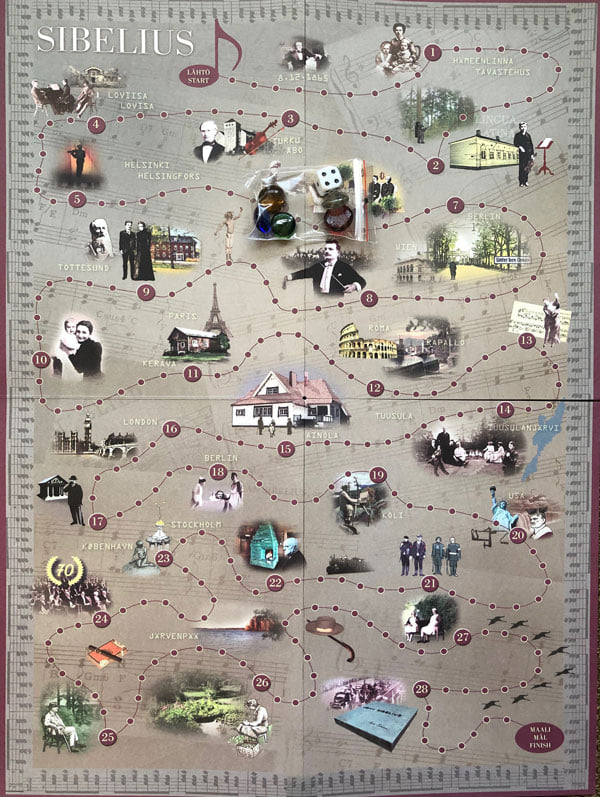
    Looking to kill time until tonight’s episode of “The Lost Chord?” Why not gather the family for a rollicking game of Sibelius? I’m not kidding, there really is a Sibelius board game (see below).

    Then join me for “Sibelius, Incidentally” – an hour of incidental music by Finland’s most famous composer – this Sunday night at 10:00 EST, on WWFM – The Classical Network and wwfm.org.

    Is this a drinking game?

    Sibelius Board Game

  • Rediscovering Lost Incidental Music

    Rediscovering Lost Incidental Music

    The play’s the thing – not only to uncover the conscience of the king, but to inspire music from untold composers down the ages. We refer to this kind of music, somewhat belittlingly, as “incidental.”

    No doubt, there are instances of incidental music having entered the standard concert repertoire – Edvard Grieg’s “Peer Gynt,” Georges Bizet’s “L’Arlésienne,” Felix Mendelssohn’s “A Midsummer Night’s Dream” – but so much more numerous are those that have suffered from neglect. Generally speaking, even under the best circumstances, the music is distilled into concert suites, offering but a few numbers, while some excellent work by some very fine composers goes unheard.

    This Sunday morning on WPRB, we’ll listen to incidental music by composers both well-known and perhaps not-quite-so, and marvel at the ingenuity on display, as acts are bridged and scenes are set in flourishes that last no more than a few moments.

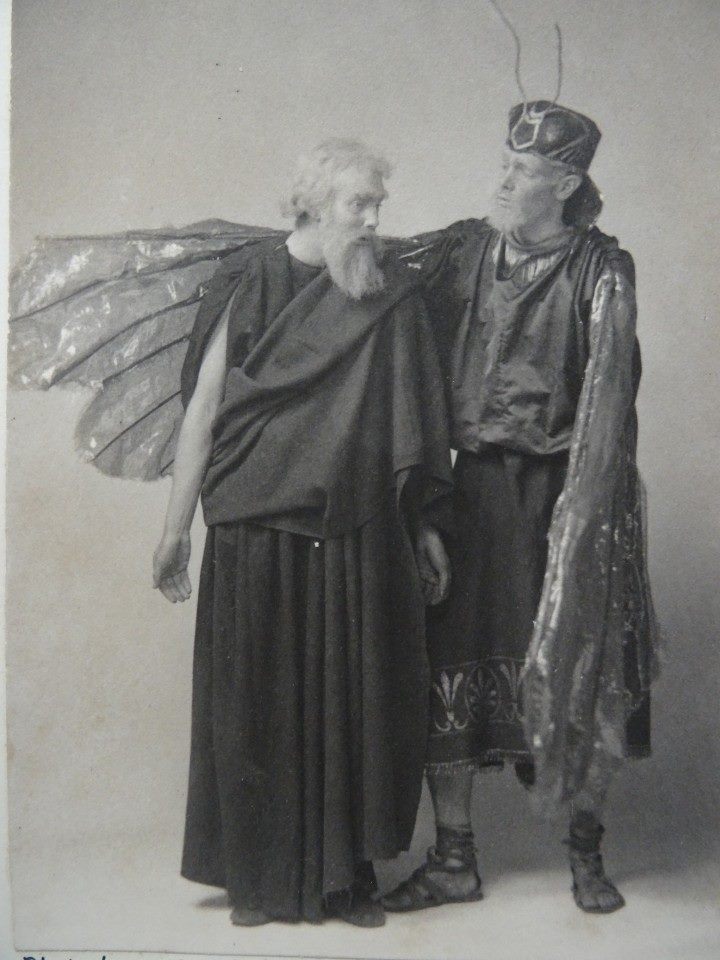
    The highlight of the morning will be a complete performance of Ralph Vaughan Williams’ “The Wasps,” written for a 1909 Cambridge University production of Aristophanes’ satire. Vaughan Williams re-arranged parts of the music to create a five-movement concert suite – the overture is especially well-known – but the complete, original, 80-minute score had faded from memory until this 2005 world premiere recording. The whole is held together by judicious narration and a pinch of salty dialogue.

    Join me for these unstung pleasures. We offer them incidentally, this Sunday morning from 7 to 10 EST, on WPRB 103.3 FM and wprb.com. Needless to say, it will all be very “playful,” on Classic Ross Amico.

Tag Cloud

Aaron Copland (92) Beethoven (95) Composer (114) Film Music (120) Film Score (143) Film Scores (255) Halloween (94) John Williams (185) KWAX (229) Leonard Bernstein (100) Marlboro Music Festival (125) Movie Music (135) Opera (198) Philadelphia Orchestra (88) Picture Perfect (174) Princeton Symphony Orchestra (106) Radio (87) Ralph Vaughan Williams (85) Ross Amico (244) Roy's Tie-Dye Sci-Fi Corner (290) The Classical Network (101) The Lost Chord (268) Vaughan Williams (103) WPRB (396) WWFM (881)

DON’T MISS A BEAT

Receive a weekly digest every Sunday at noon by signing up here


RECENT POSTS