With a few weeks left in August, there’s still time for a quick European vacation. This week on “Picture Perfect,” we glance across the pond for an hour of music from foreign films with summer settings.
“A Summer Story” (1988), based on a tale of John Galsworthy, tells of a young London lawyer and a farm girl who fall profoundly in love at the turn of last century. Georges Delerue provides the poignant score.
The juxtaposition of “Ingmar Bergman” and “comedy” may seem like something of an oxymoron, but the dour Swede’s “Smiles of a Summer Night” (1955) proves to be a witty examination of the folly of the human heart. Frequent Bergman collaborator Erik Nordgren wrote the music.
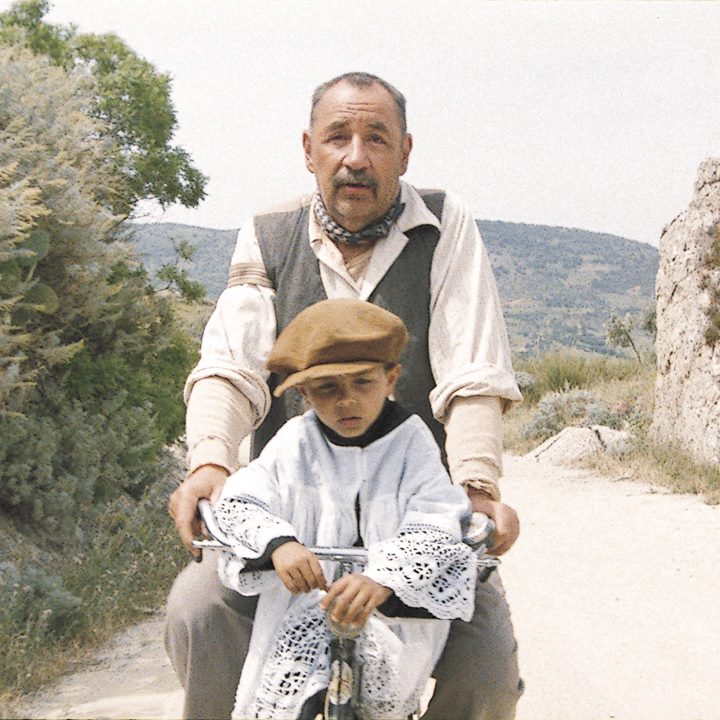
Director Yves Robert adapted the memoirs of Marcel Pagnol, who spent his childhood summers in the south of France, into two lovely films, “My Father’s Glory” and “My Mother’s Castle” (both 1990). We’ll hear music composed for both by Vladimir Cosma. Pagnol’s experiences in Provence marked him for life, informing the films and writings of his maturity, including “The Baker’s Wife,” and “Jean de Florette.”
Finally, we’ll have a generous sampling from one of Ennio Morricone’s most beloved scores, that for “Cinema Paradiso” (1988). “Cinema Paradiso,” set in a post-war Sicily where it seems always to be summer, is a nostalgic paean to the shared experience of film and the significance it holds in our lives. It won a special jury prize at the Cannes Film Festival and was honored with an Academy Award for Best Foreign Film.
FUN FACT: In this summer of renewed interest in “The Odyssey,” you might be interested to know that the memorable kiss that takes place during a rain storm on a sultry summer night occurs at an outdoor showing of Kirk Douglas’ “Ulysses.”
Join me for summer overseas this week, on “Picture Perfect,” music for the movies, now in syndication on KWAX Classical Oregon!
——-
Clip and save the start times for all three of my recorded shows:
PICTURE PERFECT, the movie music show – Friday at 8:00 PM EDT/5:00 PM PDT
SWEETNESS AND LIGHT, the light music program – Saturday at 11:00 AM EDT/8:00 AM PDT
THE LOST CHORD, unusual and neglected rep – Saturday at 7:00 PM EDT/4:00 PM PDT
Stream them, wherever you are, at the link!
https://kwax.uoregon.edu
Tag: Ingmar Bergman
-
Bergman’s Enchanting “The Magic Flute”
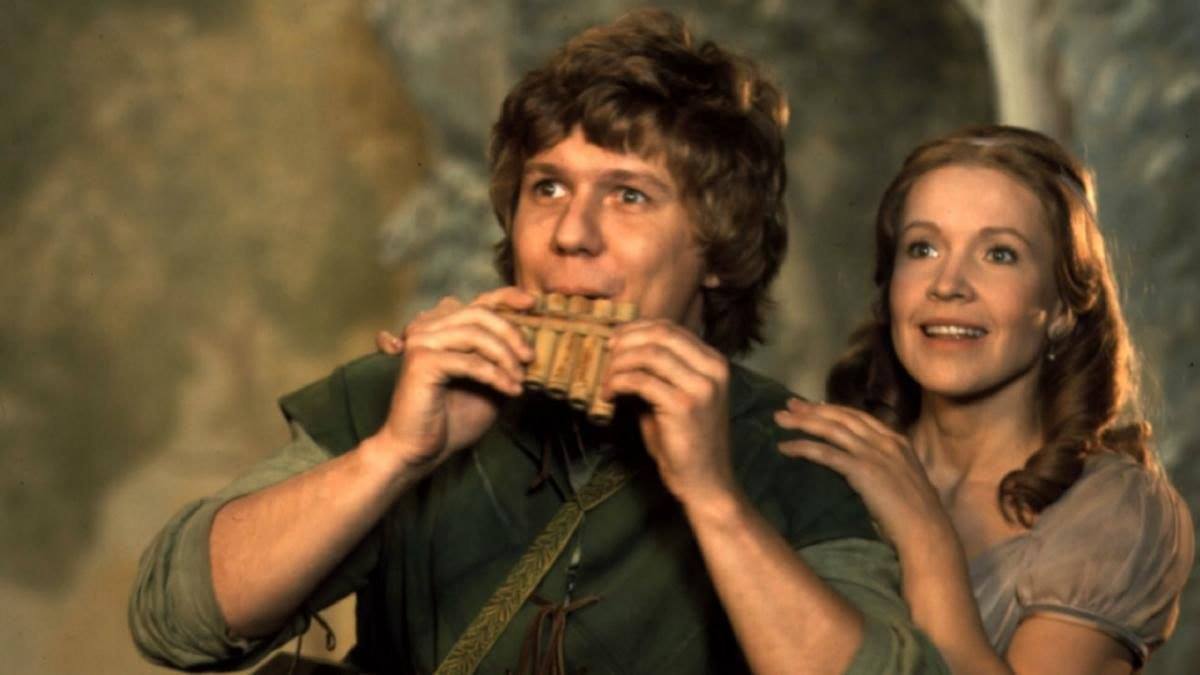
From time to time, I guess even Ingmar Bergman needed a break from existential dread. How else to explain his delightful adaptation of “The Magic Flute?” Originally intended for television, Bergman’s playful and inventive 1975 film of Mozart’s 1791 singspiel had a lot to do with setting me on the path to become an opera lover.
The conceit, to set the action as a live performance in the historic Drottningholm Palace Theater (a reproduction, since there were concerns about the actual theater safely accommodating a film crew), is disarming and inspired. All the stagecraft is laid bare. The scenery is evidently painted plywood, the animals are all people in suits, and the characters pause from time to time to hold up little signs with moralistic aphorisms on them as they sing their arias.
Bergman’s film begins outside the actual theater and then enters the hall during the overture to register the facial expressions of a audience members as they anticipate the curtain rising. Most especially the camera lingers on the eager face of an impressionable young girl. It’s evident that the director would like us to experience it all from her perspective, through a lens of innocence.
By contrast, we’re also taken backstage, to glimpse Papageno, fallen asleep and nearly missing a cue, Sarastro between acts studying the score to “Parsifal,” and one of Monostatos’ minions reading a Donald Duck comic book.
Sure, there are moments of despair even here, as a couple of the characters contemplate suicide (we also get a memorable vision of hellfire), but it’s all dispelled in a decisive victory of good over evil, an endorsement of universal brotherhood, and a resolution of unalloyed joy.
It was Mozart’s librettist, Emanuel Schikaneder, who suggested during rehearsals that Papageno stammer in excitement at the recognition of his desired Papagena, in their famous duet. Here’s what Bergman does with it.On Mozart’s birthday anniversary, I think it’s time to revisit this film.
Behold! Here it is on YouTube.
-

Bergman’s Magic Flute A Centennial Celebration
Today marks the 100th anniversary of the birth of Ingmar Bergman. Bergman, not exactly known for his lightness of spirit, filmed one of the most consistently delightful adaptations of any opera (or singspiel, for that matter) in a Swedish television version of “The Magic Flute” (1975). The production’s Papageno, Håkan Hagegård, went on to enjoy an international career.
“The Magic Flute” also figures in the puppet play featured in “Hour of the Wolf” (1968).
https://www.youtube.com/watch?v=Pw-8bwXFeZE
Many of Bergman’s films reflect their director’s love of classical music. Any favorites?
Tag Cloud
Aaron Copland (94) Beethoven (95) Composer (114) Film Music (148) Film Score (143) Film Scores (255) Halloween (97) John Williams (196) KWAX (232) Leonard Bernstein (105) Marlboro Music Festival (125) Movie Music (163) Mozart (91) Opera (215) Philadelphia Orchestra (90) Picture Perfect (174) Princeton Symphony Orchestra (110) Radio (90) Ross Amico (244) Roy's Tie-Dye Sci-Fi Corner (290) The Classical Network (101) The Lost Chord (269) Vaughan Williams (107) WPRB (397) WWFM (881)