Tag: Italian Composers

  • Castelnuovo-Tedesco From Exile to Hollywood

    Castelnuovo-Tedesco From Exile to Hollywood

    I always felt a mix of compassion and wonder when reading about all those artists and intellectuals in the 1930s and ‘40s, who were driven away from everything they ever knew, becoming refugees well into their adult years, and forced to reinvent themselves in strange lands. Of course, their loss was our gain, as, in particular, they made the United States a better place, bringing all their expertise to bear in their respective fields, ensuring the country was alive with fresh ideas and influences, making us a leader in medical, technological, academic, artistic, and other fields. But it was a hell of price for them to pay.

    Now I wonder if history is repeating itself, and many will be forced to flee in the opposite direction, if they can.

    Mario Castelnuovo-Tedesco was 44 when he came to the U.S., fleeing persecution, as a Jew, under Mussolini’s antisemitic policies. He was sponsored by none other than Arturo Toscanini, who loathed fascism. Castelnuovo-Tedesco had many empathetic, well-placed musical friends, including Jascha Heifetz, Andrés Segovia, and Gregor Piatigorsky, who understood his true worth.

    In addition to being a prolific concert composer, Castelnuovo-Tedesco wound up making a nice chunk of change in Hollywood. He wrote music for some 200 movies, including “And Then There Were None,” starring Barry Fitzgerald, and “The Loves of Carmen,” with Rita Hayworth. As a teacher, his students included André Previn, Nelson Riddle, Herman Stein, Henry Mancini, Jerry Goldsmith, and John Williams.

    I first to got to know Castelnuovo-Tedesco’s music through his guitar concertos, which live in the sweet spot between Italian lyricism and cinematic splendor. Just about everything I’ve ever heard by him goes straight to the heart. The slow movements make you sigh, and later, when you’re doing the dishes, they make you want to sing.

    Today marks the 130th anniversary of Castelnuovo-Tedesco’s birth, and more and more his music is being recorded all the time. Good for him. The man brought a hell of a lot of beauty to the world.

    Happy birthday, Mario C-T!


    Guitar Concerto No. 1

    With Passover right around the corner, this one’s always been a favorite of mine this time of year: the Violin Concerto No. 2 “The Prophets” (its three movements: “Isaiah,” “Jeremiah,” “Elijah”)

    A new discovery for me: “Ballata dall’Esilio”

    Shakespeare overtures. Pick any one of them.

  • Italian Composers Autumn Melancholy & Seasonal Joy

    Italian Composers Autumn Melancholy & Seasonal Joy

    “La generazione dell’ottanta” is a label used to describe that group of Italian composers born around 1880. By and large, they are remembered for their contributions to orchestral and instrumental music, as opposed to opera, though their contributions to the latter form were not inconsiderable. The group included Franco Alfano, Alfredo Casella, Gian Francesco Malipiero, Ildebrando Pizzetti, and the best known of the bunch, Ottorino Respighi.

    This week on “The Lost Chord,” we’ll enjoy seasonal works by three of them.

    Respighi wrote his “Poema autunnale,” for violin and orchestra, in 1926. He prefaced his score with the following descriptive program:

    “A sweet melancholy pervades the poet’s feelings, but a joyful vintner’s song and the rhythm of a Dionysiac dance disturb his reverie. Fauns and Bacchantes disperse at the appearance of Pan, who walks alone through the fields under a gentle rain of golden leaves.”

    The work is meditative, lovely and uplifting in the manner of Vaughan Williams’ “The Lark Ascending.”

    For a composer who disliked sonata form, Malipiero certainly wrote a lot of symphonies – 11 numbered symphonies, in all – though largely on his own terms. Two of these were inspired by the seasons.

    In the case of the Symphony No. 1, composed in 1933, the connection might be said to be analogous, as opposed to strictly programmatic. His initial plan had been to set passages from Anton Maria Lamberti’s poem, “La stagione.” Ultimately, he abandoned that design, but the idea of an annual cycle remained.

    The composer subtitled the work, “In Quattro tempi, come le quattro stagioni” (“In four movements, like the four seasons”). Indeed, the first has something of a vernal flavor, with the second, according to the composer, “strong and vehement like summer,” the third autumnal, and the fourth akin to “the winter carnival season and the gaiety of snow.”

    The program will open with music by Pizzetti that, while not strictly seasonal, is clearly of an autumnal cast. His “Preludio a un altro giorno” (“Prelude to Another Day”) is a fairly late piece, and rather a world-weary one, composed in 1952.

    Just before writing it, Pizzetti had received a painful letter from his former teacher, Giovanni Tebaldini, then 87 and praying for death after a series of strokes left him confined to a chair, terrified to stand for fear of falling. Not surprisingly, I thought it best to listen to this one first, so that we could relax and enjoy the leaves and snow.

    I hope you’ll join me for “Italian Seasoning,” on “The Lost Chord,” now in syndication on KWAX, the radio station of the University of Oregon!


    Clip and save the start times for all three of my recorded shows:

    PICTURE PERFECT, the movie music show – Friday at 8:00 PM EDT/5:00 PM PDT

    SWEETNESS AND LIGHT, the light music program – ALL NEW! – Saturday at 11:00 AM EDT/8:00 AM PDT

    THE LOST CHORD, unusual and neglected rep – Saturday at 7:00 PM EDT/4:00 PM PDT

    Stream them, wherever you are, at the link!

    https://kwax.uoregon.edu/


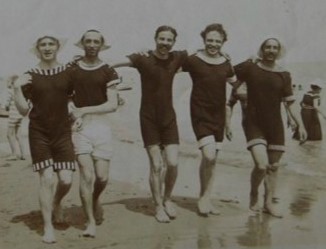
    PHOTOS: Pizzetti reflecting on our mortality; Malipiero and Respighi enjoying la dolce vita

  • Viva VERDI! Italian Music & Unification

    Viva VERDI! Italian Music & Unification

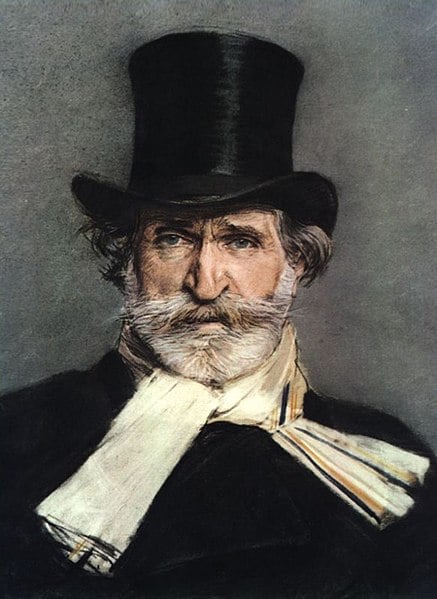
    “Viva VERDI!” – the cry of Italian patriots on the eve of unification.

    Italy of the 1850s was but a conglomerate of individual states, many of them still under foreign rule. The slogan “Viva VERDI!” was coined in 1859, following the premiere of the composer’s politically sensitive opera “Un ballo in maschera.”

    Verdi’s ongoing troubles with the censors are well-known. It’s a safe bet that when he undertook an opera about a political assassination, he had a pretty good idea what to expect. The name VERDI was taken up by firebrands of the Risorgimento as an acronym for “Vittorio Emanuele, Re D’Italia.” King Vittorio Emanuele II of Piedmont was seen by many as the best hope for a free and united Italy.

    This Sunday night on “The Lost Chord,” we’ll refrain for delving too much into Italy’s Second War for Independence, or of Garibaldi’s struggles with the Bourbons. Instead, we’ll enjoy examples of MUSICAL unification – various composers of Italian origin coming together to attempt cohesive works of art.

    There are those who believe the serenata “Andromeda Liberata” may have been composed entirely by Antonio Vivaldi – but perhaps not. The likely impetus for its creation was the return to Rome of one Cardinal Ottobone, who was also a patron of both Arcangelo Corelli and Alessandro Scarlatti.

    The story is that of Perseus and Andromeda. Andromeda has already been rescued from the sea serpent at the start of the piece, which mostly explores the ambiguous feelings of its characters, with a few extraneous love interests tossed into the mix to provide romantic conflict.

    The two-hour entertainment contains in its second part a single aria known definitively to have been composed by Vivaldi. The authorship of the rest remains in doubt. The long-lost manuscript, dating from 1726, was rediscovered as recently as 2002.

    In 1868, Verdi’s great operatic predecessor, the long-retired Gioachino Rossini, died. Rossini had completed his last opera nearly forty years before. Verdi undertook to bring together 12 of his contemporaries, now largely forgotten. The oldest, Carlo Coccia, at age 87, was actually a decade Rossini’s senior!

    Within the year, a collaborative mass was compiled in Rossini’s memory, for which Verdi provided the concluding “Libera me.” In fact, the music looks forward to Verdi’s own masterful Requiem. The completed work doesn’t attain anywhere near the lofty heights of Verdi’s solo run. However, it’s an interesting compendium of contemporary styles, and even the music of lesser talents serves to cast Verdi’s genius in a new light.

    Remarkably, the work lay unperformed in Verdi’s lifetime. Talk about politics! Here was Verdi, a Milanese, trying to kindle some sort of enthusiasm in Bologna (the location of Rossini’s earliest successes), for a project which was to bring together a bunch compositional dinosaurs, to salute a figure who, for all intents and purposes, had retired from public life some four decades earlier. Bologna at the time was in the process of becoming a stronghold of the musical avant-garde.

    All these factors, along with puzzling stipulations, such as the work being locked away after its first performance, to be trotted out only on special occasions, doomed the project virtually from the start. It remained unheard for another 120 years, resurrected only in 1988.

    I hope you’ll join me for “Viva VERDI!” – Italian unification through music – on Verdi’s birthday, this Sunday night at 10:00 EDT, on WWFM – The Classical Network and wwfm.org.

  • Respighi’s Long Shadow Classical Music Surprises

    Respighi’s Long Shadow Classical Music Surprises

    Wow! Did you know that Respighi’s widow died in 1996? That’s as crazy to contemplate as the fact that Gustav Mahler (whose birthday it was on Tuesday) would have turned 80 on the day Ringo Starr was born. And of course, there are those photos of Alma talking with Leonard Bernstein. History is collapsing in on itself like a telescope!

    Respighi’s wife, Elsa, outlived him by some 60 years. A singer and composer herself, she died one week shy of her 102nd birthday. She remained her husband’s biggest cheerleader, tirelessly promoting his music, after his own untimely death in 1936, at the age of 55, and even completed his last opera, “Lucrezia.”

    Respighi, of course, is best known for his trilogy of opulent, at times rafter-rattling tone poems celebrating the scenes and history of Rome – “Fountains of Rome” (1916), “Pines of Rome” (1924), and “Roman Festivals” (1928) – and his time-tripping sets of Renaissance lute recreations, the “Ancient Airs and Dances” (composed in 1917, 1923 & 1932).

    In 1929, when conductor Serge Koussevitzky suggested Respighi orchestrate some of Rachmaninoff’s keyboard pieces, Rachmaninoff responded enthusiastically. He supplied Respighi with hidden programs behind the works to lend additional insights into their creation. Koussevitzky was impressed with the results, which he unveiled with the Boston Symphony Orchestra in 1931. More importantly, Rachmaninoff found the orchestrations to be faithful to the spirit of the originals.

    Here is “The Sea and the Seagulls,” from “Cinq Études-Tableaux” by Respighi, after Rachmaninoff.

    Also, footage of Arturo Toscanini conducting “Pines of Rome” in 1952, with the NBC Symphony. Toscanini conducted the work’s U.S. premiere, with the New York Philharmonic, in 1926.

    https://www.youtube.com/watch?v=vThMQzLbN-Y

    Happy birthday, Ottorino Respighi!


    PHOTO: Respighi (second from right), horsing around with quattro vitelloni

  • Respighi & Pizzetti: Italian Masters at Marlboro

    Respighi & Pizzetti: Italian Masters at Marlboro

    We’re headed back to the ‘80s for this week’s “Music from Marlboro” – the 1880s, that is.

    We’ll hear music by two composers of “la generazione dell’Ottanta” (literally, “the Generation of the ‘80s”), artists of the post-Puccini era, born around 1880, who made their reputations largely in the concert halls, as opposed to in the opera houses. This would have been a change of pace for Italy.

    The best known of these, of course, was Ottorino Respighi. Respighi may have written twelve operas – can you name them? – but unquestionably it is for his roof-raising tone poems and time-traveling suites for chamber orchestra that he is most celebrated.

    Respighi’s “Il Tramonto” (or “The Sunset”), composed in 1918, was inspired by a poem of Shelley, which tells of a pair of crepuscular lovers who meet in the woods at twilight. The young woman wakes to find that the man has passed in the night.

    We’ll hear a performance by Marlboro musicians on tour at the Isabella Stewart Gardner Museum in Boston, in 2010, including Metropolitan Opera mezzo-soprano Jennifer Johnson Cano, violinists Ira Levin and Yonah Zur, violist Beth Guterman, and cellist Saeunn Thorsteindottir.

    Ildebrando Pizzetti was best known as an associate of the poet and playwright Gabriele d’Annunzio, providing incidental music for a number of d’Annunzio’s plays and setting his drama “Fedra” as an opera. Pizzetti’s Piano Trio in A major, written in 1925, is big music with big things to say. There is plenty of drama, lyricism, and warmth throughout the 30 minute piece, which is almost never heard.

    It was performed, however, at the Marlboro Music Festival in 1968, by violinist Pina Carmirelli, cellist Leslie Parnas, and that venerable poet of the keyboard, Mieczyslaw Horszowski.

    Temperatures will rise into the ‘80s, on this week’s “Music from Marlboro” – chamber music performances from the legendary Marlboro Music Festival – this Wednesday evening at 6:00 EDT, on WWFM – The Classical Network and wwfm.org.

    Marlboro School of Music and Festival: Official Page

Tag Cloud

Aaron Copland (92) Beethoven (95) Composer (114) Film Music (120) Film Score (143) Film Scores (255) Halloween (94) John Williams (185) KWAX (229) Leonard Bernstein (100) Marlboro Music Festival (125) Movie Music (135) Opera (198) Philadelphia Orchestra (88) Picture Perfect (174) Princeton Symphony Orchestra (106) Radio (87) Ralph Vaughan Williams (85) Ross Amico (244) Roy's Tie-Dye Sci-Fi Corner (290) The Classical Network (101) The Lost Chord (268) Vaughan Williams (103) WPRB (396) WWFM (881)

DON’T MISS A BEAT

Receive a weekly digest every Sunday at noon by signing up here


RECENT POSTS