“Italian opera was the single most competitive and economically significant branch of music worldwide in the early 19th century.”
I always suspected I was born too late.
Read about the extraordinary Carolina Uccelli, who managed to get her opera staged – with an “all-star cast,” no less – in 1835. Uccelli’s “Anna di Resburgo” will be revived by @[100069916331189:2048:Teatro Nuovo] in Montclair, NJ, on July 20 and at Lincoln Center’s Rose Theater on July 24.
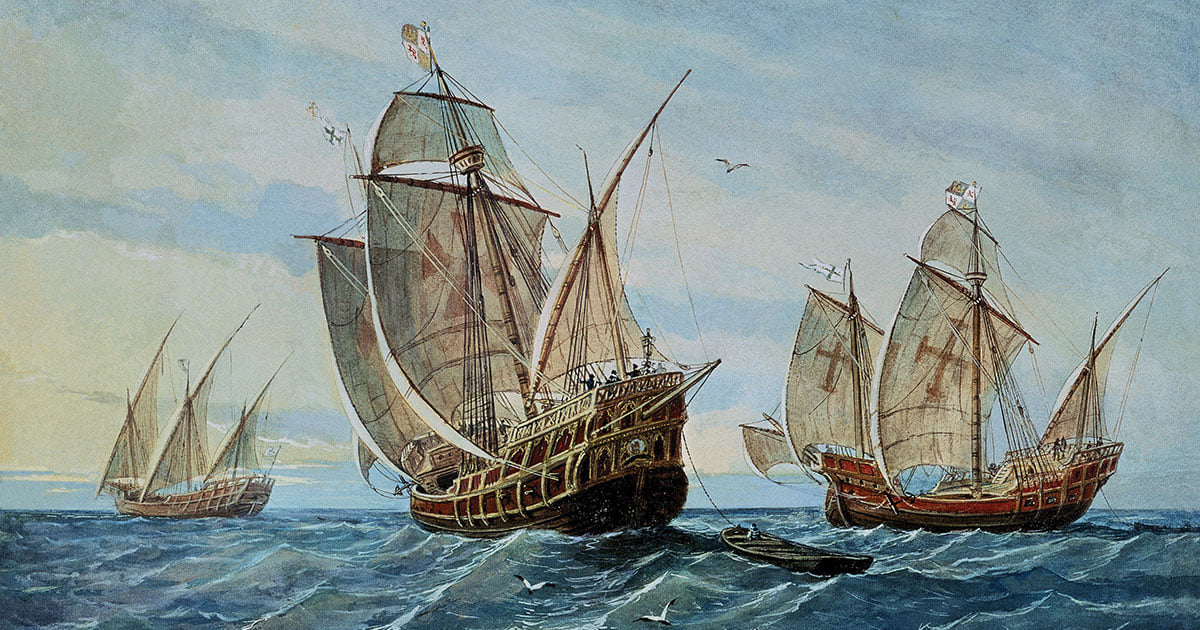
Before Columbus Circle, Columbus OH, and the Knights of Columbus came… He Who Must Not Be Named.
He may be a controversial figure today, but Christopher Columbus sure did inspire a lot of music. I’ve had this recording (bottom right) on the shelf for a few years now. I think today is probably as good a time as any to take it down and see what it’s all about.
“Cristoforo Colombo” was composed in 1892 to mark the 400th anniversary of Columbus’ first voyage to the New World. It is said to be Alberto Franchetti’s magnum opus. Franchetti (1860-1942) was a nobleman of independent means, who studied with Josef Rheinberger and Felix Draeseke.
Dubbed “the Meyerbeer of modern Italy,” his style synthesizes Wagner, Meyerbeer, and the contemporary school of Italian verismo. His most popular success was the opera “Germania,” which was held in high regard by both Toscanini and Caruso. In fact, in his day, Franchetti’s reputation was right up there with those of Mascagni and Cilea, second tier composers, perhaps, but on a good day they could still rise to an occasion. Unfortunately, “Germania” drifted out of circulation following the First World War.
Later, in accordance with Fascist racial laws, Franchetti’s works were banned from public performance. Franchetti was not only out of fashion; he was Jewish. Mascagni, composer of “Cavalleria Rusticana,” went out on a limb to plead his case before Mussolini.
Interestingly, it was Franchetti who had first been offered the libretto of “Tosca,” which of course eventually wound up in the hands of Giacomo Puccini. “Tosca” remains one of the most frequently performed operas in the world.
“Cristoforo Colombo” was given its debut in Genoa – Columbus’ birthplace – on October 6, 1892. The same year, it was performed at La Scala, Milan. Its North American premiere took place in Philadelphia, presented by the Philadelphia-Chicago Grand Opera Company at the Metropolitan Opera House on North Broad Street, on November 20, 1913. Tito Ruffo sang the title role.
The opera is nothing if not ambitious. It encompasses intrigues at the Spanish court, the encouragement of Queen Isabella, the voyage of discovery, an attempted mutiny, adventures in the New World, a love affair between one of Columbus’ associates and a native princess, and Columbus’ disgrace, disillusionment, and death.
Fascinatingly, for an opera necessarily tied to the conquest of the Americas, the Church comes in for some particularly harsh treatment. Already, in 1892, the clerics are critically portrayed in their violent attempts to evangelize the indigenous peoples.
Despite its early success, “Cristoforo Colombo” was deemed to be too long, and a lot of cuts were made, especially to the segments set in the New World. The final version excises Columbus’ adventures in the Americas altogether! It looks as if this recording, set down 30 years ago for the Koch Schwann label, restores the American material.
This is not a political statement, but rather a musical one. Hey, for three bucks from Princeton Record Exchange, I think it’s worth exploring.
Enrico Caruso’s first published recording, captured in a Milanese hotel room on April 10, 1902, was an aria from Franchetti’s “Germania,” which he had introduced at the opera’s world premiere only a month before:
The Columbus expedition sights land:
Not your cup of espresso? Here’s a Franchetti symphony:
IMAGES (top): “La Pinta, La Niña and La Santa Maria” by Rafael Monleón y Torres; (bottom, left to right) Alberto Franchetti; Franchetti, Mascagni and Puccini; Koch recording of “Cristoforo Colombo”
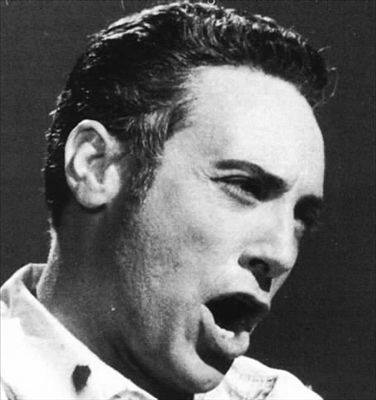
Today is the 100th anniversary of the birth of Mario del Monaco, born in Florence in 1915. There were some who thought he was the greatest tenor – maybe even the greatest singer – ever. Others found his voice monochromatic and too consistently “tutta forza.” Some claimed his acting could be histrionic. (Like that’s an exceptional quality in a tenor!) He did have the ability to incite near-hysteria in an audience.
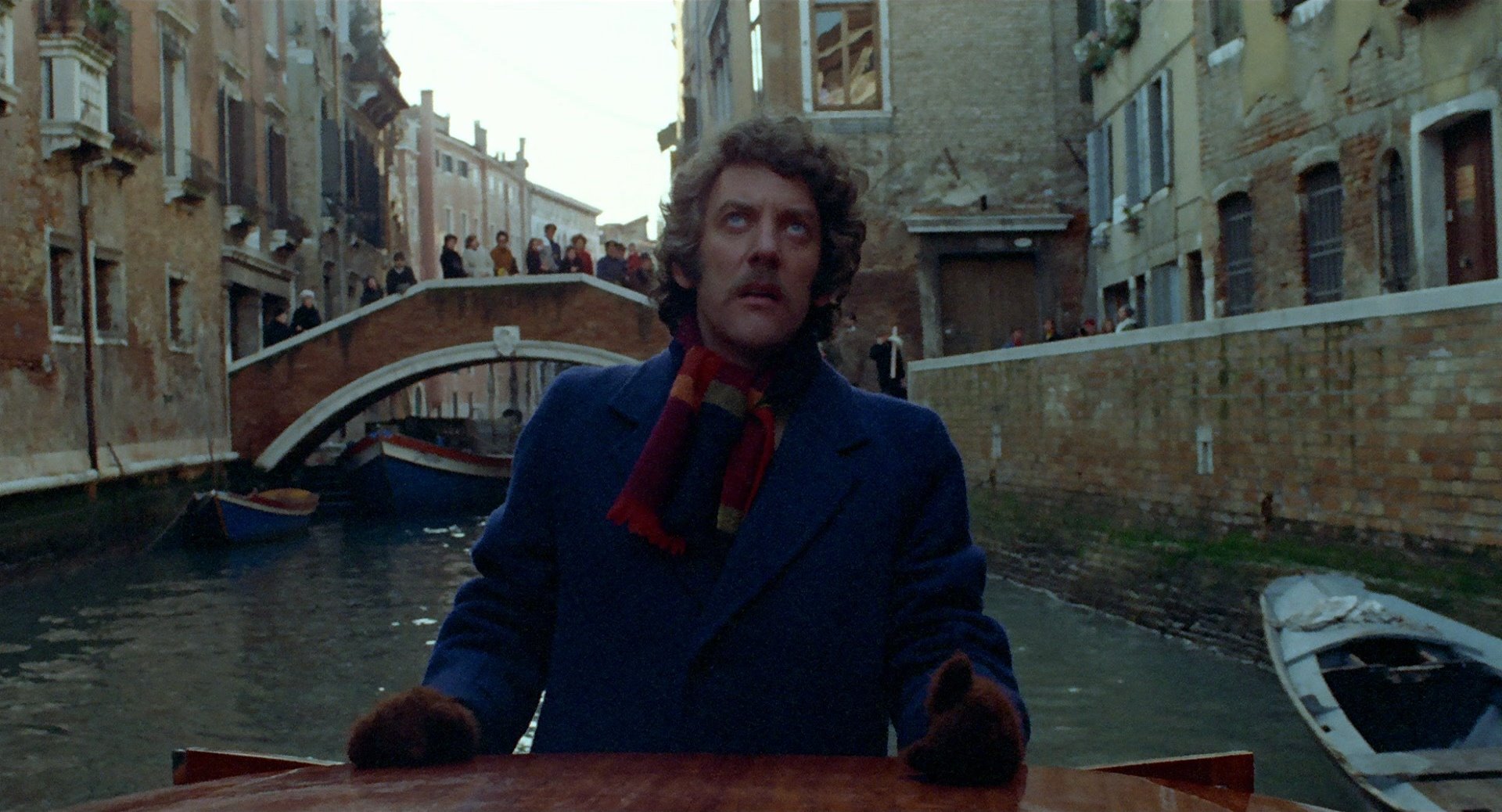
Whenever anyone mentions Italy, I imagine most envision sundrenched landscapes strewn with vineyards. But Venice was always a city apart. When I visited Venice it was in the middle of winter. Venice in winter is like something out of “Don’t Look Now.” One would do well to keep an eye out for anyone in a red plastic raincoat.
You won’t find much winter in the music of Ermanno Wolf-Ferrari (born in Venice on this date in 1876), although there is plenty that I would consider to be autumnal. Wolf-Ferrari’s gift for lyricism made him a natural for opera. While his operas of the first decade of the 20th century were mostly uproarious works after the farces of Goldoni, a vein of melancholy began to make itself evident in the works composed after World War I. The outbreak of war was particularly traumatic for Wolf-Ferrari, whose mother was Italian and whose father was German. He did about all he could do under the circumstances and struck out for Switzerland. Eventually he found his way home again. He died in Venice in 1948.
Good music for a rainy afternoon: the Idillio-Concertino for Oboe and Small Orchestra (1932):