Tag: Joaquin Rodrigo

  • Spanish Classics on The Lost Chord Radio Show

    Spanish Classics on The Lost Chord Radio Show

    Hola! This week on “The Lost Chord,” I’ll be dipping deep into the archive for a 2007 show devoted to Spanish classics from the Naxos catalogue.

    We’ll enjoy rarely heard works by Joaquín Rodrigo (his “Preludio para un poema a la Alhambra,“ from 1928), Basque composer Jesús Guridi (“Asi cantan los chicos” – variously translated as “So the boys sing” or “Thus sing the children” – settings of poems by Juan Carlos Gortázar, from 1915), and Antonio José (“Sinfonía castellana,” of 1923), whose life was cut tragically short by the Spanish Civil War.

    Few of us have the time, money, or motivation to hop the Atlantic for the weekend. Happily, as always, music is a passport to a wider world. I hope you’ll join me for “No Spain, No Gain,” on “The Lost Chord,” now in syndication on KWAX, the radio station of the University of Oregon!


    Clip and save the start times for all three of my recorded shows:

    PICTURE PERFECT, the movie music show – Friday at 8:00 PM EST/5:00 PM PST

    SWEETNESS AND LIGHT, the light music program – ALL NEW! – Saturday at 11:00 AM EST/8:00 AM PST

    THE LOST CHORD, unusual and neglected rep – Saturday at 7:00 PM EST/4:00 PM PST

    Stream them, wherever you are, at the link!

    https://kwax.uoregon.edu/

  • Aranjuez Guitar Concerto NJ This Weekend

    Aranjuez Guitar Concerto NJ This Weekend

    Opportunities to enjoy a genuine guitar concerto – that is to say, an acoustic guitar with symphony orchestra – in person are scarce. That being the case, it should be self-recommending for you to check out this weekend’s concert with the New Jersey Capital Philharmonic Orchestra, as the centerpiece of tomorrow night’s Latin-inflected program will be not just any guitar concerto, but possibly the most famous of all time – or at the very least, of the last century – Joaquin Rodrigo’s “Concierto de Aranjuez.”

    Even if you can’t pronounce it, you’ll recognize the music! Here’s the soloist, Peruvian artist David Galvez, to tell you more about it:

    The program will also include works by Arturo Marquez and José Pablo Moncayo. Music director Daniel Spalding will conduct. The concert will be held at Patriots Theater at the War Memorial in Trenton, Saturday at 7:30 p.m.

    For tickets and more information, visit capitalphilharmonic.org.

  • Cosmic Classics NASA Inspired Music This Sunday

    Cosmic Classics NASA Inspired Music This Sunday

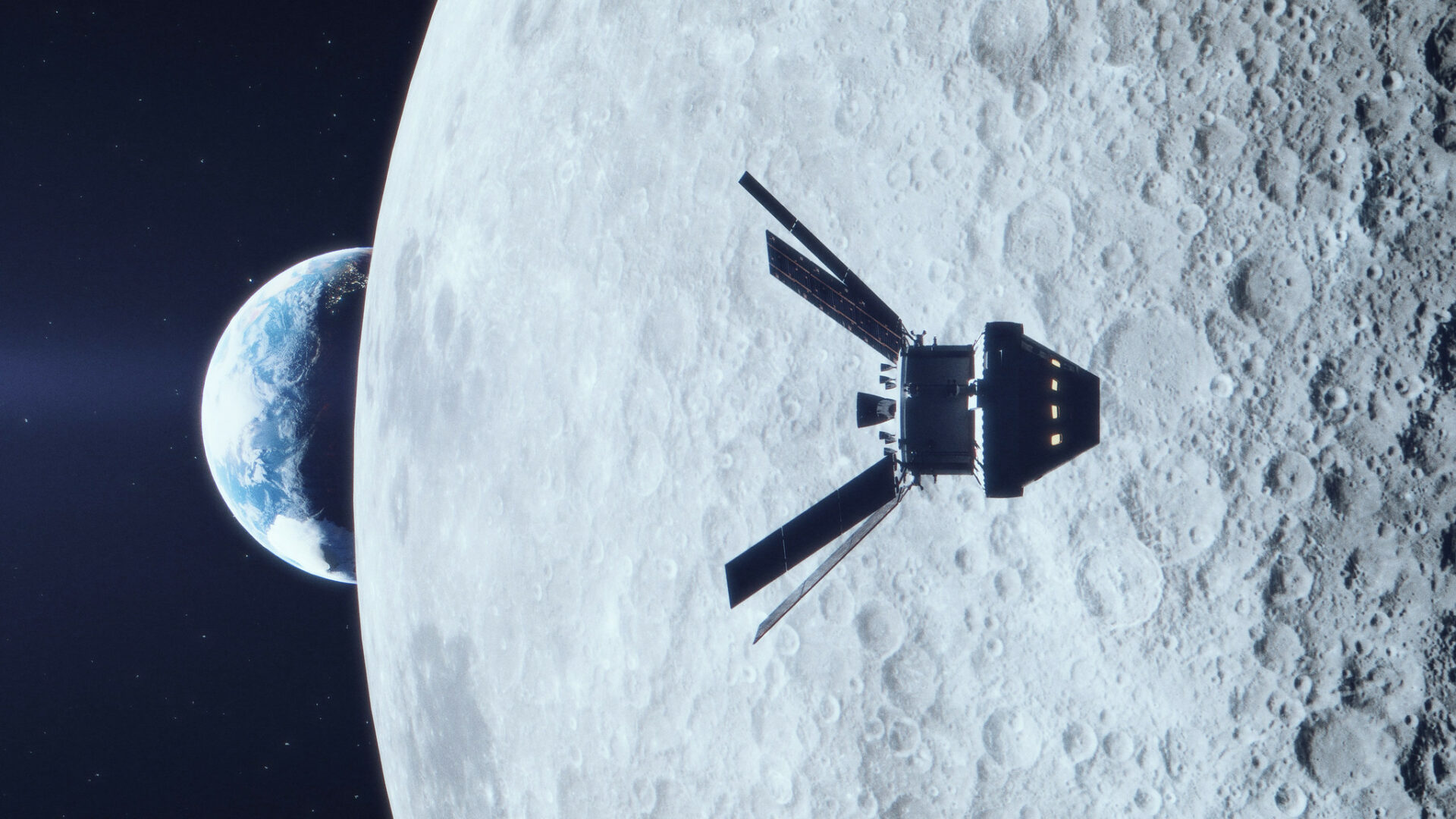
    This Sunday night on “The Lost Chord,” with the Artemis I Orion spacecraft and the James Webb Space Telescope keeping NASA very much in the news these days, we look to the heavens, with an hour of music inspired by the cosmos.

    When Spanish master Joaquin Rodrigo was in the United States in 1970 to attend the world premiere of his “Concierto Madrigal” at the Hollywood Bowl, he decided to make a side-trip to Houston, where he visited what is now the Johnson Space Center. There, NASA saw to it that the composer, blind since the age of three, was introduced to astronauts and permitted to handle moon rocks.

    The experience left him with a powerful impression, so that when he was commissioned by the Houston Symphony Orchestra several years later to write a piece of music to celebrate the American Bicentennial, his thoughts returned to his friends at NASA and the idea of space exploration. The result was something worlds away – if you’ll excuse the expression – from his popular works for guitar: the symphonic poem “A la busca del más allá” (“In search of the beyond”).

    Another Spaniard inspired by extraterrestrial concerns was Enrique Granados, very well-known for his music for the keyboard. Perhaps Granados’ most unusual work is a concerto of sorts for piano, with choruses and organ, “Cant de les estrilles” (“Song of the Stars”). This music was composed as a vehicle for Granados himself and dedicated to the long-lived pianist, Mieczyslaw Horszowski, who died as recently as 1993 – one month shy of his 101st birthday.

    “Song of the Stars” was given its first performance in 1911, on the same program as the premiere of Granados’ enduring piano suite “Goyescas.” However, the manuscript would remain unpublished. Granados died in 1916, only a few years later, on a return trip from the United States, when his ship was torpedoed by a German submarine while crossing the English Channel.

    The manuscript found its way to New York in the 1930s, brought there by the composer’s son, who was lured by businessman and conductor Nathaniel Shilkret with the promise of publication. Legal entanglements ensued, involving other members of the Granados family. A fire in the 1960s was feared to have destroyed the work, and efforts by the family to recover the piece with the assistance of José Iturbi and Alicia de Larrocha came to naught.

    In 1982, Granados’ daughter enlisted the American pianist Douglas Riva to act as the family representative. Finally, an agreement was negotiated with Shilkret’s grandson, and the work was performed again for the first time in nearly 100 years. The unattributed Catalan text is said to be a response to the poetry of Heinrich Heine, about love and the stars, from the perspective of the stars themselves.

    Finally, we’ll round out the hour with music by contemporary Finnish composer Kaija Saariaho. Saariaho evokes both the mythological and astrological in her work for orchestra, “Orion,” from 2002. The piece falls into three movements: “Memento mori,” “Winter Sky,” and “Hunter.” With spacecraft Orion just wrapping up its lunar mission, how appropriate is that?

    Pour yourself some cosmos; then look to the skies in wonder! I hope you’ll join me for “Creating Space,” this Sunday night at 10:00 EST, on WWFM – The Classical Network and wwfm.org.

  • Festivus Karolju a Holiday Music Treat

    Festivus Karolju a Holiday Music Treat

    December 23rd. Happy Festivus! Let the airing of grievances begin.

    Then enjoy this postmodern, pandenominational, mid-winter concoction by Christopher Rouse, called “Karolju.” The title, fabricated by the composer, puts an Old World spin on the word “carol.” The “ju” is merely because, as Rouse states, he happens to like words that end in “u.” The text is totally pidgin, and the musical allusions to Orff, Tchaikovsky, Vaughan Williams, Prokofiev, and others only add to the fun.

    To hear the complete piece, click the link and allow the videos to play continuously. (There are eleven movements.) The album also contains Witold Lutoslawski’s “Polish Christmas Carols” and Joaquin Rodrigo’s “Retablo de Navidad.”

  • Cosmic Classics Moonwalk Anniversary

    Cosmic Classics Moonwalk Anniversary

    This Sunday night on “The Lost Chord,” for the 50th anniversary of the first moonwalk, cap your weekend of lunar celebrations with an hour of music inspired by the cosmos.

    When Spanish master Joaquin Rodrigo was in the United States in 1970 to attend the world premiere of his “Concierto Madrigal” at the Hollywood Bowl, he decided to make a side-trip to Houston, where he visited what is now the Johnson Space Center. There, NASA saw to it that the composer, blind since the age of three, was introduced to astronauts and permitted to handle moon rocks.

    The experience left him with a powerful impression, so that when he was commissioned by the Houston Symphony Orchestra several years later to write a piece of music to celebrate the American Bicentennial, his thoughts returned to his friends at NASA and the idea of space exploration. The result was something worlds away – if you’ll pardon the expression – from his popular works for guitar: the symphonic poem “A la busca del más allá” (“In search of the beyond”).

    Another Spaniard inspired by extraterrestrial concerns was Enrique Granados, very well-known for his music for the keyboard. Perhaps Granados’ most unusual work is a concerto-of-sorts for piano, with choruses and organ, “Cant de les estrilles” (“Song of the Stars”). This music was composed as a vehicle for Granados himself and dedicated to the long-lived pianist, Mieczyslaw Horszowski, who died as recently as 1993 – one month shy of his 101st birthday.

    “Song of the Stars” was given its first performance in 1911, on the same program as the premiere of Granados’ enduring piano suite “Goyescas.” However, the manuscript would remain unpublished. Granados died in 1916, only a few years later, on a return trip from the United States, when his ship was torpedoed by a German submarine while crossing the English Channel.

    The manuscript found its way to New York in the 1930s, brought there by the composer’s son, who was lured by businessman and conductor Nathaniel Shilkret with the promise of publication. Legal entanglements ensued, involving other members of the Granados family. A fire in the 1960s was feared to have destroyed the work, and efforts by the family to recover the piece with the assistance of José Iturbi and Alicia de Larrocha came to naught.

    In 1982, Granados’ daughter enlisted the American pianist Douglas Riva to act as the family representative. Finally, an agreement was negotiated with Shilkret’s grandson, and the work was performed again for the first time in nearly 100 years. The unattributed Catalan text is said to be a response to the poetry of Heinrich Heine, about love and the stars, from the perspective of the stars themselves.

    Finally, we’ll round out the hour with music by contemporary Finnish composer Kaija Saariaho. Saariaho evokes both the mythological and astrological in her work for orchestra, “Orion,” from 2002. The piece falls into three movements: “Memento mori,” “Winter Sky,” and “Hunter.”

    Pour yourself some cosmos. Then look to the skies in wonder! Join me for “Creating Space,” this Sunday night at 10:00 EDT, on WWFM – The Classical Network and wwfm.org.
Tag Cloud

Aaron Copland (92) Beethoven (95) Composer (114) Film Music (120) Film Score (143) Film Scores (255) Halloween (94) John Williams (185) KWAX (229) Leonard Bernstein (100) Marlboro Music Festival (125) Movie Music (135) Opera (198) Philadelphia Orchestra (88) Picture Perfect (174) Princeton Symphony Orchestra (106) Radio (87) Ralph Vaughan Williams (85) Ross Amico (244) Roy's Tie-Dye Sci-Fi Corner (290) The Classical Network (101) The Lost Chord (268) Vaughan Williams (103) WPRB (396) WWFM (881)

DON’T MISS A BEAT

Receive a weekly digest every Sunday at noon by signing up here


RECENT POSTS