G’day! This week on “Picture Perfect,” we’re off to the antipodes for an hour of music from films set in the Australian bush.
Ealing Studios shot several movies there – three independently, and then two in collaboration with MGM. The first was “The Overlanders” (1946), told in semi-documentary style, about a wartime push to evacuate Australia’s Northern Territory, with its 5000 settlers and a million head of cattle, before an anticipated Japanese invasion. The music is by John Ireland. Despite its excellence, it would prove to be Ireland’s only film score.
Ealing’s final independent Australian venture was “Bitter Springs” (1950). One of the earliest cinematic attempts to address Aboriginal land rights and colonial dispossession, the film tells the story of a headstrong patriarch of an Australian pioneer family, who denies the locals access to a watering hole, precipitating a cycle of violence.
The thematic material was by Ralph Vaughan Williams, who left it to composer and conductor Ernest Irving to arrange and orchestrate what he felt needed for the various cues. Vaughan Williams wrote his friend and colleague to express his pleasure with the finished product. Irving would soon receive the dedication of Vaughan Williams’ Symphony No. 7, the “Sinfonia Antartica” (itself derived from RVW’s film score to Ealing’s “Scott of the Antarctic”).
Both of these films, “The Overlanders” and “Bitter Springs,” are essentially westerns set in the Australian outback. From a little closer to our own time, we’ll hear music from another film that’s unapologetic in its use of American western motifs, “Quigley Down Under” (1990).
The film stars Tom Selleck as an American cowboy, hired by an Australian rancher, played by Alan Rickman, allegedly to shoot dingoes; however, he soon finds that the rancher’s real purpose is to rid the land of Aborigines – a proposition Quigley naturally rejects, setting up the film’s conflict.
The score is by Basil Poledouris, a composer who achieved cult status for his work on films like “Robocop” and especially “Conan the Barbarian,” though he never really seemed to receive the recognition the deserved. He did, however, win an Emmy for his score to “Lonesome Dove.”
Finally, we’ll have just a bit from John Barry’s haunting score to Nicholas Roeg’s “Walkabout” (1971), in which two British children find themselves stranded in the bush and survive only through the aid of a young Aborigine.
We’re heading down under and out back this week, on “Picture Perfect,” music for the movies, now in syndication on KWAX Classical Oregon!
——-
Clip and save the start times for all three of my recorded shows:
PICTURE PERFECT, the movie music show – Friday at 8:00 PM EDT/5:00 PM PDT
SWEETNESS AND LIGHT, the light music program – Saturday at 11:00 AM EDT/8:00 AM PDT
THE LOST CHORD, unusual and neglected rep – Saturday at 7:00 PM EDT/4:00 PM PDT
Stream them, wherever you are, at the link!
https://kwax.uoregon.edu/
Tag: John Barry
-
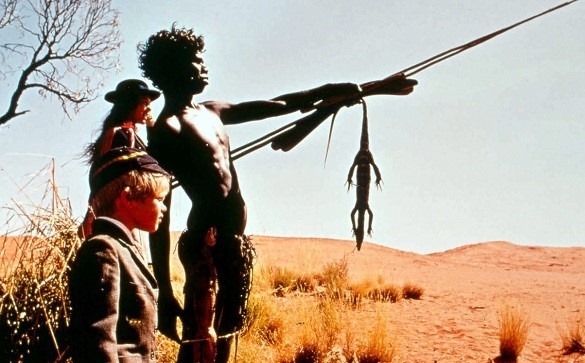
Down Under and Out Back on “Picture Perfect”
-
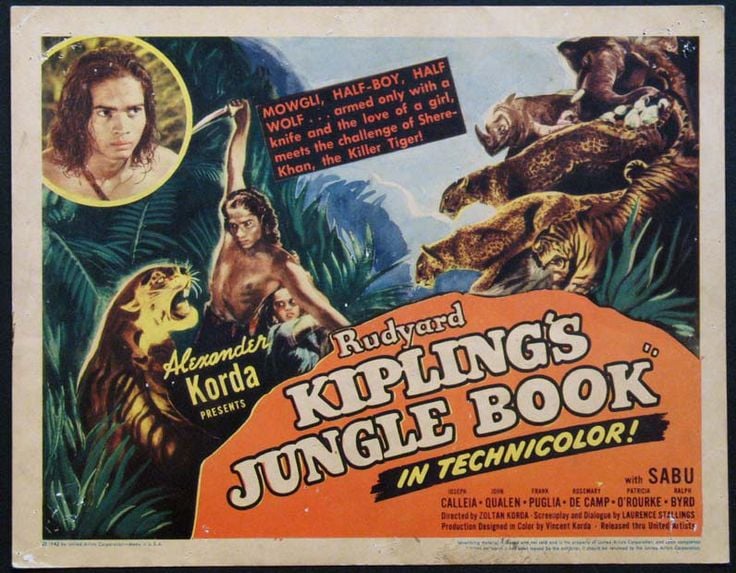
Take a Walk on the Wild Side on “Picture Perfect”
This week on “Picture Perfect,” poised as we are between the birthdays of Henry Mancini (April 16) and Miklós Rózsa (April 18), we’ll hear music by both composers as part of a cinematic carnival of the animals.
Take a walk on the wild side with music from “The Jungle Book” (1942), the classic Korda Brothers’ adaptation of Rudyard Kipling’s tale of tails. The film stars the charismatic Sabu as Mowgli. (For the record, Kipling pronounced the name such that the first syllable rhymes with “cow.”) Miklós Rózsa wrote the enchanting score.
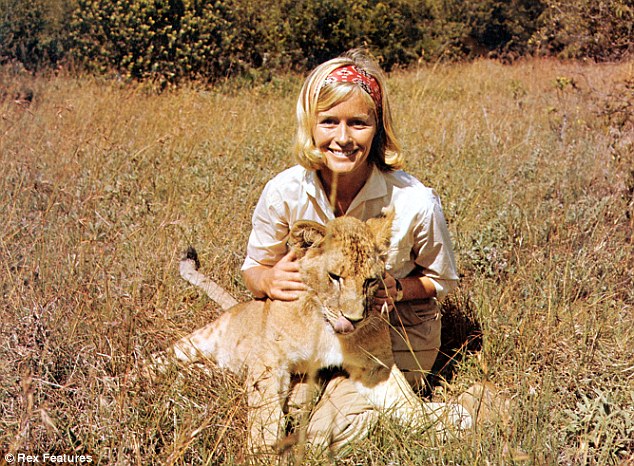
We’ll also hear selections from John Barry’s music for “Born Free” (1966), based on Joy Adamson’s memoir about the raising of Elsa, an orphaned lion cub who grows to adulthood and is eventually released into the Kenyan wilderness. The music turned out to be a double Academy Award winner for Barry, who was recognized for Best Original Score and Best Original Song.
Jerome Moross is probably best known for his music to “The Big Country.” His “great outdoors” style lends verve to the National Geographic special, “Grizzly!” (1967), a documentary about a pair of ecologists studying North American bears. The energetic Americana score is both memorable and motivating.
And we can’t allow the hour to pass without listening to Henry Mancini’s “Baby Elephant Walk,” from “Hatari!” (So many exclamation points in these wilderness titles!) The film was directed by Howard Hawks and stars John Wayne. In case you’re wondering, “Hatari!” is Swahili for “Danger!”
No danger in treating yourself to a musical menagerie of classic film scores, on “Picture Perfect,” music for the movies, now in syndication on KWAX Classical Oregon!
——–
Clip and save the start times for all three of my recorded shows:
PICTURE PERFECT, the movie music show – Friday at 8:00 PM EDT/5:00 PM PDT
SWEETNESS AND LIGHT, the light music program – Saturday at 11:00 AM EDT/8:00 AM PDT
THE LOST CHORD, unusual and neglected rep – Saturday at 7:00 PM EDT/4:00 PM PDT
Stream them, wherever you are, at the link!
https://kwax.uoregon.edu -

Dual O’Tooles: Peter Gets Medieval as Henry II on “Picture Perfect”
March is Early Music Month. While the concept may seem somewhat remote from the world of film music, this week on “Picture Perfect,” we’ll set the Wayback Machine and enjoy four scores that employ melodies and modes of the Middle Ages.
We’ll hear selections from “Becket” (1964), by Laurence Rosenthal. In the film, based on a play by Jean Anouilh, Richard Burton plays the Archbishop of Canterbury, and Peter O’Toole, King Henry II. The music is reliant on chant, with a quotation from the familiar Gregorian melody “Dies Irae” (“Day of Wrath”), occurring fairly early in the action.
Then we’ll hear music from “The Hunchback of Notre Dame” (1939), by Alfred Newman. This time based on a novel – “Notre Dame de Paris,” by Victor Hugo – the film features Maureen O’Hara as Esmeralda and Charles Laughton as Quasimodo, with Cedric Hardwicke, Thomas Mitchell, Edmond O’Brien, and Harry Davenport in the supporting cast. The project was one of nine scored by Newman that year, which many historians regard as Hollywood’s finest. Again, the composer evokes the era through sacred choral passages and secular dances.
“The Warlord” (1965) starring Charlton Heston, Richard Boone, and Rosemary Forsyth, is the tale a knight who falls in love with a peasant woman, and in order to keep her, claims his right of “droit du seigneur” – his prerogative to spend the first night with any bride among his serfs. Unfortunately, she falls in love with him, and all hell breaks loose.
It was an unusual project for the composer, Jerome Moross, who is best-known for the kind of breezy Americana sound employed in his best-known music, that for “The Big Country.” Here, he evokes the 11th century with an underscore that, again, finds inspiration in authentic music of the era.
Finally, we’ll turn to “The Lion in Winter” (1965), adapted from a play by James Goldman, an historical drama set at the Christmas court of Henry II – again, as in “Becket,” played by Peter O’Toole. Henry spars with his estranged wife, the temporarily paroled Eleanor of Aquitaine (played by Katherine Hepburn), in a familial power struggle, which also involves their three sons, played by Anthony Hopkins, John Castle, and Nigel Terry. Timothy Dalton appears as Philip II of France.
The film was the winner of three Academy Awards, including one for Best Original Score. The composer was John Barry. Yet again the music is steeped in that of the Middle Ages, yet given a distinctly modern twist.
Plentiful intrigue and funny haircuts are guaranteed. However, there’s nothing Middling about the music. Film composers make history, on “Picture Perfect,” music for the movies, now in syndication on KWAX Classical Oregon!
——–
Clip and save the start times for all three of my recorded shows:
PICTURE PERFECT, the movie music show – Friday at 8:00 PM EST/5:00 PM PST
SWEETNESS AND LIGHT, the light music program – Saturday at 11:00 AM EST/8:00 AM PST
THE LOST CHORD, unusual and neglected rep – Saturday at 7:00 PM EST/4:00 PM PST
Stream them, wherever you are, at the link!
https://kwax.uoregon.edu -
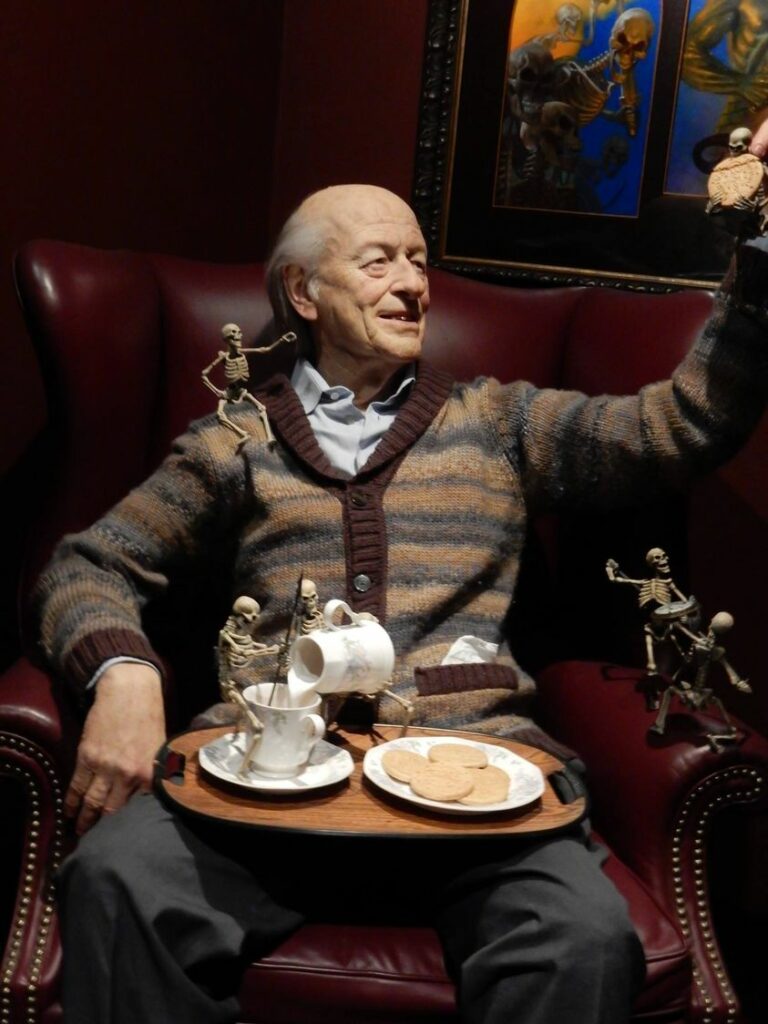
Harryhausen on Herrmann Rózsa & Rejected Barry
This was shared yesterday on the Bernard Herrmann Society page. At the link, you’ll find a couple of letters written by special effects legend Ray Harryhausen, in which he comments on the various composers he had the privilege to work with. He has especially high praise for Herrmann and Miklós Rózsa.
Ray Harryhausen On Miklos Rozsa … Bernard Herrmann … And Max Steiner
Interestingly, on his last film, “Clash of the Titans,” Harryhausen apparently rejected a score-in-progress by Academy Award winning composer John Barry (composer of “Born Free,” “Out of Africa,” “Dances with Wolves,” and the James Bond franchise). In a later interview, Barry, who had been hired because Harryhausen was impressed by his score for “The Lion in Winter,” claimed not to remember much about the experience, beyond the fact that he had provided a few demos.
Some of the music can actually be heard in this installment of the Ray Harryhausen Podcast.
The composer’s fragmentary contributions begin at the following times:
• 6:48, “Heroic 1”
• 1:27:10, “Andromeda”
• 1:28:43, “Persius Growing Up”
• 1:30:49, “Scorpion”
Barry was replaced by Laurence Rosenthal (composer of “A Raisin in the Sun,” “The Miracle Worker,” “Becket,” “The Return of a Man Called Horse,” “The Island of Dr. Moreau,” and “The Young Indiana Jones Chronicles”).
But don’t shed any tears for Barry. He wound up doing just fine.
-
Wild Movie Music Picture Perfect on WWFM
This week on “Picture Perfect,” March goes out like a lion… and a bear… and a baby elephant… and the tiger Shere Khan!
We’ll hear selections from John Barry’s music for “Born Free” (1966), based on Joy Adamson’s memoir about the raising of Elsa, an orphaned lion cub who grows to adulthood and is eventually released into the Kenyan wilderness. The music proved a double Academy Award winner for Barry, who was recognized for Best Original Score and Best Original Song.
Jerome Moross, best known for his music to “The Big Country,” had such a strong personality that his immediately recognizable sound extended even to his work on the National Geographic special, “Grizzly!” (1967), a documentary about a pair of ecologists studying North American bears. “Grizzly!” sports an energetic Americana score that is very much cut from the same cloth.
The Korda Brothers’ adaptation of Rudyard Kipling’s “The Jungle Book” (1942) stars the charismatic Indian actor Sabu, as Mowgli, raised by wolves, who yearns to reconnect with his human roots. (For the record, Kipling pronounced “Mowgli” so that the first syllable rhymes with “cow.”) Miklós Rózsa wrote the enchanting score.
And we can’t get through the hour without hearing Henry Mancini’s “Baby Elephant Walk,” from “Hatari!” (1962). So many exclamation points in these wilderness titles! The film was directed by Howard Hawks and starred John Wayne. In case you’re wondering, “Hatari!” is Swahili for “Danger!”
Take a walk on the wild side, with a spring in your step, on “Picture Perfect,” music for the movies, this Saturday evening at 6:00 EDT, on WWFM – The Classical Network and wwfm.org.
Tag Cloud
Aaron Copland (93) Beethoven (95) Composer (114) Film Music (145) Film Score (143) Film Scores (255) Halloween (94) John Williams (195) KWAX (229) Leonard Bernstein (104) Marlboro Music Festival (125) Movie Music (160) Mozart (91) Opera (213) Philadelphia Orchestra (89) Picture Perfect (174) Princeton Symphony Orchestra (109) Radio (88) Ross Amico (244) Roy's Tie-Dye Sci-Fi Corner (290) The Classical Network (101) The Lost Chord (269) Vaughan Williams (105) WPRB (397) WWFM (881)