Tag: John Eliot Gardiner

  • Berlioz’s “Te Deum” Napoleon’s Musical Echo

    Berlioz’s “Te Deum” Napoleon’s Musical Echo

    With Ridley Scott’s “Napoleon” in theaters – and tanking with the critics – it might be a good time to revisit Hector Berlioz’s “Te Deum.” The “Te Deum,” literally “To God,” was originally conceived as the climax of a grand symphony in celebration of Napoleon Bonaparte. The first performance took place on April 30, 1855, at the Church of Saint-Eustache in Paris, with the composer conducting, in true Berlioz fashion, an ensemble of 900-950 performers.

    As the real-life Napoleon had also tanked with critics, Berlioz dedicated his “Te Deum” to Prince Albert, husband of Queen Victoria. What an ambitious concert it would make if revived on the same program with Beethoven’s “Eroica” Symphony, undertaken in a wave of euphoria at a time when Bonaparte was perceived as a democratic reformer. In Beethoven’s case, his disillusionment is reflected in the violence with which he scratched out the original dedication on his score, offering it instead “to celebrate the memory of a great man.”

    Some of the material employed in the creation of Berlioz’s “Te Deum” was originally conceived for his “Messe solennelle” of 1824. The Mass was commissioned by Paris’ Church of Saint-Roch to mark the Feast of the Slaughter of the Holy Innocents by King Herod in his attempt to the snare the baby Jesus.

    Berlioz was only 22 years-old at the time, but already driven by his creative demons. If you are a fan of the composer, you must hear this piece, which teems with presentiments of many of his major works, including the “Symphonie fantastique,” “The Damnation of Faust,” “Benvenuto Cellini” (with its “Roman Carnival Overture”), and of course the Requiem.

    Berlioz himself played the tam-tam at the Mass’ premiere, and in his excitement gave it such a blow that it blew everyone back in their pews. The “Messe” was favorably received (unusual for this composer), but Berlioz decided he hated the piece and wound up burning the score.

    The work was believed lost for nearly 170 years, until it was rediscovered by a Belgian schoolteacher in an organ gallery in Antwerp in 1991. Sir John Eliot Gardiner conducted the first modern performance two years later.

    Gardiner is on self-imposed sabbatical after punching a bass (singer) after a performance of Berlioz’s “The Trojans” in August. He’s expected to return to the podium next year.

    Berlioz too was recognized for his unbridled passion. At one time, he planned to murder his inconstant fiancée, her mother, and the fiancée’s new beau (in drag, no less), then take his own life. Thankfully, he cooled his jets when he realized he forgot his disguise. At any rate, Berlioz and Gardiner seem to be made for each other.

    Berlioz’s oratorio “L’enfance du Christ,” mostly composed in 1853-54, returns to the topic of the Slaughter of the Innocents. The work is much better known, as it is frequently encountered during the Christmas season.

    Berlioz knew a thing or two about tanking with the critics. But unlike Ridley Scott, most of his works get better with age.

    Happy birthday, Hector Berlioz!


    “Te Deum”

    Gardiner conducts the “Messe solennelle”

    “L’enfance du Christ”


    Berlioz in 1832. Believe or not, I once had hair like that.

  • Gardiner’s Troubles Impact Princeton Performance

    Gardiner’s Troubles Impact Princeton Performance

    Unfortunately, Sir John Eliot Gardiner clocked somebody again, so he’s taking off the rest of 2023 to seek professional help and reflect. When he backed out of a touring production of Berlioz’s “The Trojans” last week, I was afraid it would come to this. Gardiner was scheduled to appear in Princeton this October to conduct Bach’s Mass in B minor with the Monteverdi Choir and the English Baroque Soloists. If the show goes on as scheduled, I’m guessing it will be taken over by his assistant conductor, Dinis Sousa. With all respect to Maestro Sousa, who may well do a fantastic job, this is a great disappointment.

    I had the privilege to see Gardiner live in Princeton twice, in 2014 and 2015, thanks to the munificence of late philanthropist and humanitarian William H. Scheide, who kindly picked up the tab. I was hoping to have a chance to see him again, as both those concerts were stunners.

    I also interviewed Gardiner in connection with his book, “Bach: Music in the Castle of Heaven.” I confess I was a little nervous, as he is a large man, and already there had been stories spread through social media about his temper. At the time, he had recently been alleged to have punched out a trumpet player in the London Symphony Orchestra! But I must say, I saw no evidence of any such prickliness. On the contrary, I found him to be quite the gentleman.

    Gardiner established the Monteverdi Choir in 1964. He is especially renowned for his interpretations of the music of Johann Sebastian Bach. In 2000, he undertook a Bach Cantata Pilgrimage, performing and recording all the sacred cantatas in liturgical order, in churches in Europe and New York City.

    More recently, he conducted at the coronation of King Charles III in May.

    I hope he gets the help he needs and that he is able to return to Princeton soon. Gardiner is 80 years-old.


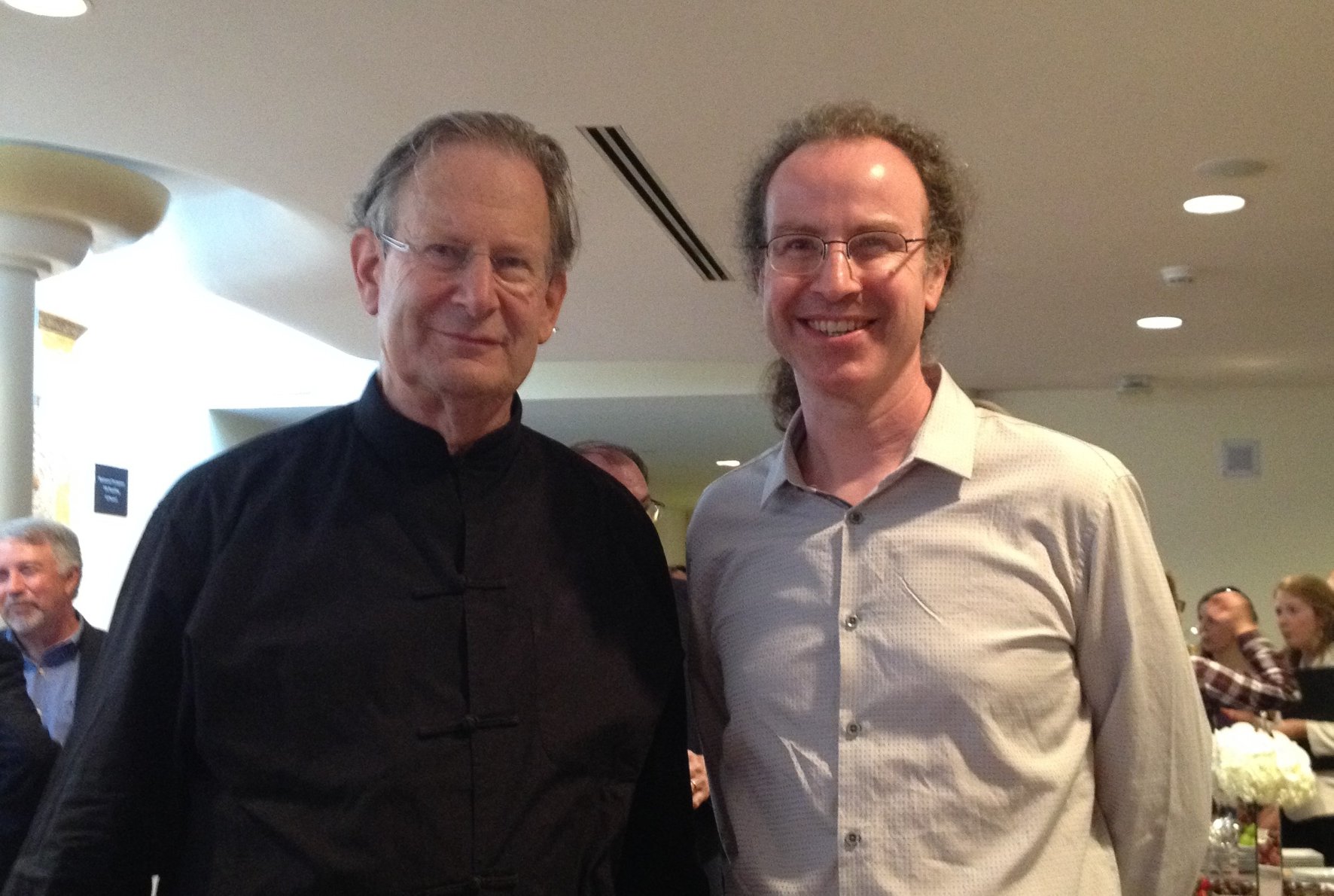
    PHOTO: Note the ponytail. If I were Gardiner, I would definitely have punched me!

  • Berlioz: Passion, Obsession, and Rediscovered Music

    Berlioz: Passion, Obsession, and Rediscovered Music

    Hector Berlioz was a man governed by his passions.

    When rejected by the object of his desire, the Shakespearean actress Harriet Smithson, he frenziedly dashed off his “Symphonie fantastique,” an opium-induced fever dream that envisions his own execution for murdering her. In the last movement, her spirit reappears in the midst of a witches’ sabbath, to jeer at his headless corpse. Perhaps counterintuitively, Smithson went for this in a big way, and the two were married, though, perhaps unsurprisingly, not at all happily.

    Berlioz’s biography is full of crazed, seething adventures. Whether in regard to his affairs of the heart, his musical education, or his notorious compositions, always he was driven by mercurial passion and excess.

    He lived large, and he dreamed big music. One need only think of his Requiem, with its massive choir, antiphonal brass ensembles, and 16 timpani. The composer even suggested the orchestration could be doubled or tripled, depending on the size of the space. (However, in an uncharacteristic show of restraint, he recommended the chorus be limited to 400 singers, except in some of the larger numbers.)

    Today is Berlioz’s birthday. It also happens to be the Christmas season, so naturally my thoughts gravitate to “L’enfance du Christ” – which, I must say, is not my favorite Berlioz work. Fortunately, he also composed a “Messe solennelle” in 1824, on virtually the same subject – the commemoration of the Feast of the Slaughter of the Holy Innocents by King Herod, in his attempt to the snare the baby Jesus.

    Berlioz was only 20 years-old at the time, but already he was driven by his creative demons. If you are a fan of the composer, you must hear this piece, which teems with presentiments of many of his major works, including the “Symphonie fantastique,” “The Damnation of Faust,” “Benvenuto Cellini” (with its “Roman Carnival Overture”), and of course the Requiem.

    Berlioz himself played the tam-tam at the work’s premiere, and in his excitement gave the instrument such a blow that it knocked everyone back in their pews. The “Messe” was favorably received (unusual for this composer), but Berlioz decided he hated the piece and wound up burning the score.

    The work was believed lost for nearly 170 years, until it was rediscovered by a Belgian schoolteacher, in an organ gallery in Antwerp, in 1991. Sir John Eliot Gardiner conducted the first modern performance two years later.

    Who knows how Berlioz would have reacted? This is the guy, after all, who once responded to a Dear John letter by racing back from Italy in full drag, bearing two pistols and vial of poison.

    No one partied like Hector Berlioz. Happy birthday, my misguided friend.


    John Eliot Gardiner conducts the rediscovered “Messe solennelle”

    A knock-out recording of the “Symphonie fantastique,” conducted by Argentinean powder keg Carlos Païta – with an interesting choice of imagery: 48 minutes of fetishizing an antique Chinese vase! An exercise in misguided passion, perhaps worthy of Berlioz himself.

  • Remembering William Scheide Princeton Benefactor

    Remembering William Scheide Princeton Benefactor

    Today would have been the 107th birthday of William H. Scheide.

    By coincidence, I was only just thinking about two concerts given in Princeton by Sir John Eliot Gardiner and his Monteverdi Choir. The first, in 2014, was devoted to Bach and Handel, and the second, in 2015, was a performance of Monteverdi’s “Orfeo.” These were among the most memorable concerts I ever attended. Both were made possible thanks to Scheide’s munificence.

    Scheide, who died in 2014 at the age of 100, was as generous as he was long-lived. He shared his abiding love for music, of course, especially that of Bach, of whom he was a respected interpreter and scholar; but he was also active in social causes, fighting against poverty, disease, hunger, ignorance, and discrimination. He touched many, many lives in the Princeton area and beyond.

    He also happened to enrich Princeton University’s Firestone Memorial Library with a trove of rare books and documents, including a Gutenberg Bible, some Shakespeare first folios, a copy of the Declaration of Independence, and manuscripts by Bach, Beethoven, and Lincoln, among others, the fruits of three generations of Scheide book-collecting.

    I had also, by chance, only just been thinking about a Scheide memorial program, a radio documentary of sorts, that I assembled for broadcast on WWFM – The Classical Network, for which I interviewed a number of his intimates and associates, including conductor Mark Laycock, radio personality Teri Noel Towe, and Bach scholar Christoph Wolff, in addition to Scheide’s widow, Judith. In the end, I had to pull a literal all-nighter in order to get it on the air in time, sounding the best it possibly could, on January 6, 2015, on what would have been Scheide’s 101st birthday.

    The year before, I had interviewed Gardiner, in advance of the first of his Princeton concerts, for an article in The Times of Trenton. Gardiner talked about his relationship with the famous Haussman Bach portrait, which then hung in the Scheide home. I also wrote a little more about Scheide’s relationship with Bach and Bach scholarship and his founding of the Bach Aria Group.

    Two Scheide-sponsored concerts, conducted by Laycock, were also mentioned. In 2013, Laycock conducted the Philadelphia Orchestra, in yet another landmark Scheide-sponsored event – the first time the orchestra had played in Princeton in nearly 50 years. His performance of Beethoven’s Symphony No. 9, with the Wiener KammerOrchester and the Westminster Symphonic Choir, on the occasion of Scheide’s 100th birthday, was broadcast nationally on PBS.

    https://www.nj.com/times-entertainment/2014/06/sir_john_eliot_gardiner_to_con.html

    Thanks for the musical memories, Mr. Scheide, and beyond that, thank you for making the world a better place.


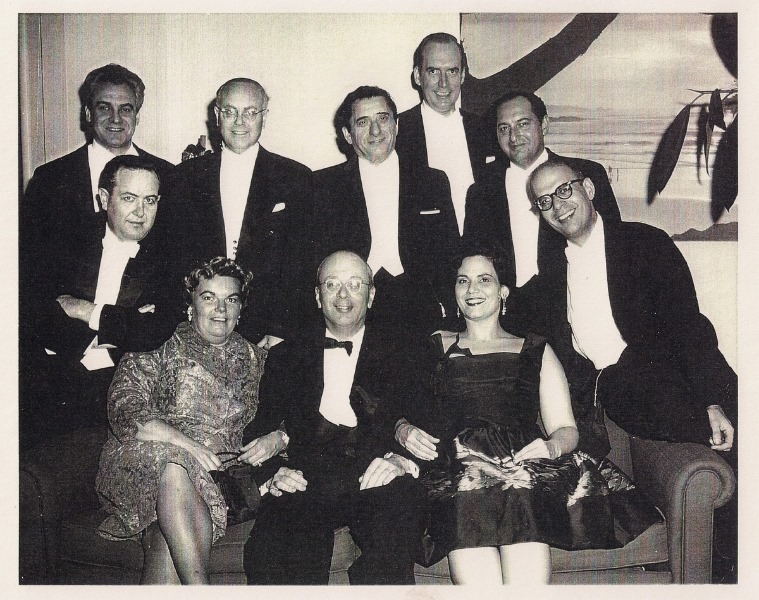
    PHOTO: William Scheide (center) with the Bach Aria Group he founded. Clockwise, from left, Eileen Farrell, Julius Baker, Robert Bloom, Paul Ulanowsky, Jan Peerce, Norman Farrow, Bernard Greenhouse, Maurice Wilk and Carol Smith

  • Gardiner Resigns from Monteverdi Choir?

    Gardiner Resigns from Monteverdi Choir?

    EDIT, 12:18 p.m. EDT: PLEASE NOTE:

    There seems to be some discrepancy as to what aspect of the Monteverdi Choir’s directorship John Eliot Gardiner may have resigned. It could merely be from some facet of its management, but NOT its artistic directorship — in which case, presumably, from a performance standpoint, everything will continue as before. The first rule of the internet is: Don’t believe everything you read on the internet. I will certainly be following-up on this as confirmation becomes available.


    I am stunned to learn that Sir John Eliot Gardiner has resigned as director of the Monteverdi Choir. Gardiner has led the ensemble since its founding in 1964 – 56 years!

    In 2000, for the 250th anniversary of the death of Johann Sebastian Bach, Gardiner and his choir undertook an extensive Bach Cantata Pilgrimage, performing and recording most of the cantatas in 60 historic churches.

    The two programs they presented at Princeton University’s Richardson Auditorum, of Bach’s cantata “Christ lag in Todesbanden” and motet “Singet dem Herrn ein neues Lied,” and Handel’s “Dixit Dominus” (in 2014), and Monteverdi’s “Orfeo” (in 2015), were among the most memorable of my concertgoing career.

    Gardiner has a reputation for being a little prickly, but when I had the privilege to interview him in 2014, he was nothing if not patient and gentlemanly.

    Gardiner will turn 77 on Monday. As of 2014, he was also running an organic farm inherited from his great-uncle, the conductor and composer Balfour Gardiner.

    It’s the end of an era.


    About Gardiner’s connection with Princeton philanthropist William H. Scheide:

    https://www.nj.com/times-entertainment/2014/06/sir_john_eliot_gardiner_to_con.html

    Gardiner leading his choir in a performance of “Dixit Dominus”:

Tag Cloud

Aaron Copland (92) Beethoven (95) Composer (114) Film Music (120) Film Score (143) Film Scores (255) Halloween (94) John Williams (185) KWAX (229) Leonard Bernstein (100) Marlboro Music Festival (125) Movie Music (135) Opera (198) Philadelphia Orchestra (88) Picture Perfect (174) Princeton Symphony Orchestra (106) Radio (87) Ralph Vaughan Williams (85) Ross Amico (244) Roy's Tie-Dye Sci-Fi Corner (290) The Classical Network (101) The Lost Chord (268) Vaughan Williams (103) WPRB (396) WWFM (881)

DON’T MISS A BEAT

Receive a weekly digest every Sunday at noon by signing up here


RECENT POSTS