Tag: John Wayne

  • Old West Elegy Movie Music Picture Perfect

    Old West Elegy Movie Music Picture Perfect

    With the days growing shorter and the shadows lengthening, we contemplate moseying off into the sunset. This week on “Picture Perfect,” it’s an elegy for the Old West.

    By the 1960s, the cinematic western was becoming a victim of its own success. The western had been a popular genre since the silent era, with dozens, of variable quality, released every year. Seemingly the genre hit its peak in the 1950s. One might say, the western suffered the fate of the actual American West, with its mythic resonance choked into clichés by too many settlers.

    Also, current events began to color filmmakers’ perceptions of the West, the turbulence surrounding the Vietnam War, the assassinations of both Kennedys and King, and increased suspicion of government making for violent, bloodier and more nihilistic visions of Manifest Destiny. The shift gave rise to the revisionist western, which embraced new realities of dirt, corruption, and moral ambiguity in the West. At the same time, there was a rise in more wistful, elegiac westerns, which seem to bid farewell to beloved western icons like Joel McCrea, Kirk Douglas, and John Wayne.

    Common characteristics include the obsolescence of the gunfighter; the free-ranging cowboy fenced off by barbed wire; the encroachment of corporations in the form of railroad and mining interests; horses replaced by automobiles; the six-shooter superseded by the Gatling gun – the land of limitless possibility and moral certitude, subdivided and spoiled by industrialization. Once-heroic figures ride slowly into the sunset, or are killed, their qualities unrecognized, perhaps even willfully rejected, by those who come after.

    We’ll hear selections from four elegiac westerns, including “Cheyenne Autumn” (1964), with music by Alex North; “The Shootist” (1976), with music by Elmer Bernstein; “The Wild Bunch” (1969), with music by Jerry Fielding; and “Monte Walsh” (1970), with music by John Barry.

    Autumn comes to the Old West, on “Picture Perfect,” music for the movies, now in syndication on KWAX, the radio station of the University of Oregon!


    Clip and save the start times for all three of my recorded shows:

    PICTURE PERFECT, the movie music show – Friday at 8:00 PM EDT/5:00 PM PDT

    SWEETNESS AND LIGHT, the light music program – Saturday at 11:00 AM EDT/8:00 AM PDT

    THE LOST CHORD, unusual and neglected rep – Saturday at 7:00 PM EDT/4:00 PM PDT

    Stream them, wherever you are, at the link!

    https://kwax.uoregon.edu/


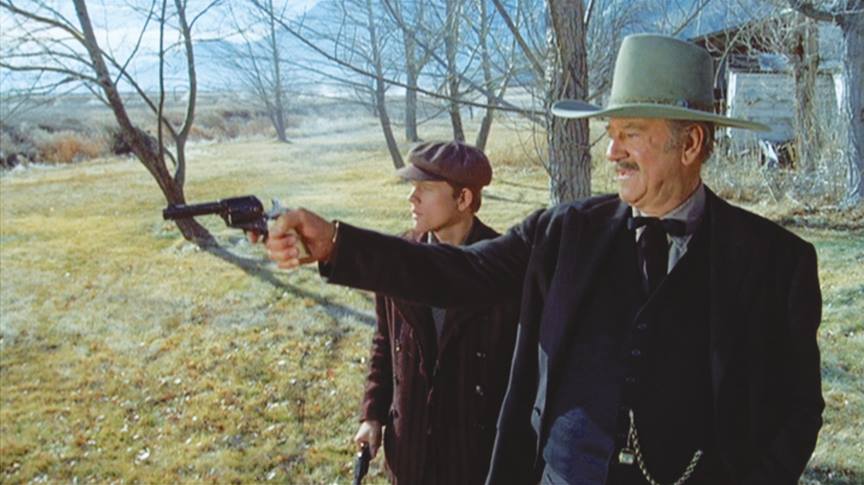
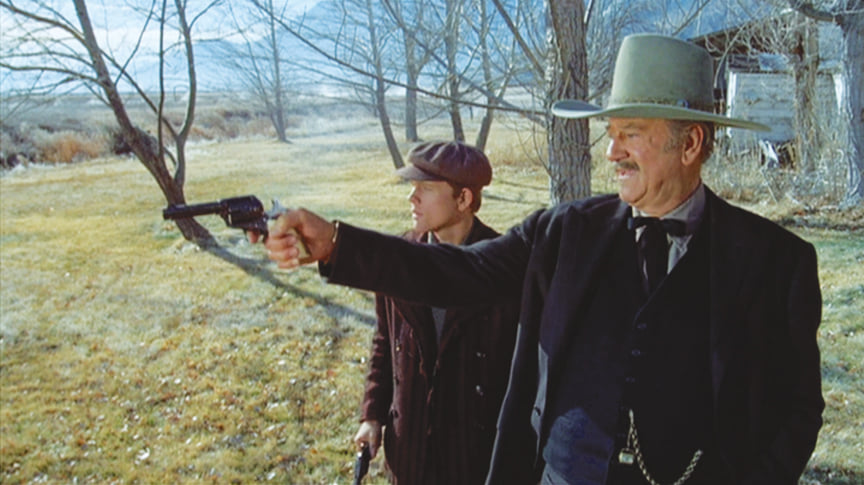
    PHOTO: John Wayne and Ron Howard take aim in “The Shootist”
  • Elmer Bernstein’s Magnificent Western Film Scores

    Elmer Bernstein’s Magnificent Western Film Scores

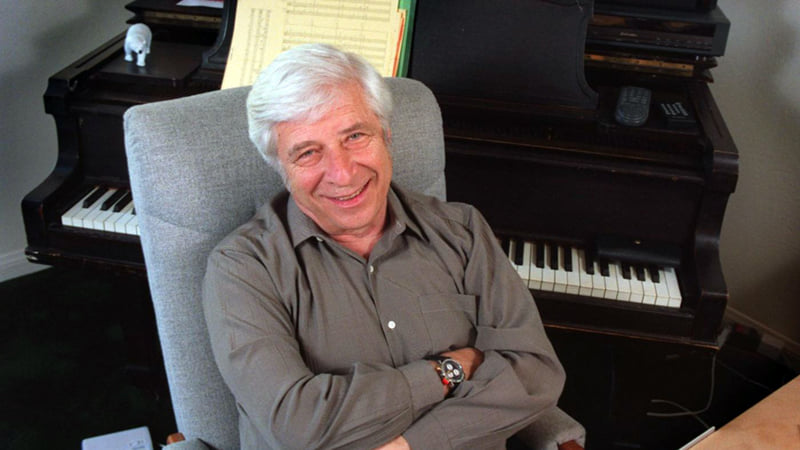
    Elmer Bernstein scored films in just about every genre – from “The Man with the Golden Arm” (1955) to “The Ten Commandments” (1956) to “To Kill a Mockingbird” (1962) to “The Great Escape” (1963) to “Animal House” (1978) to “The Age of Innocence” (1993) to his final project, the Oscar-nominated “Far from Heaven” (2002) – but he had a particular knack for the western.

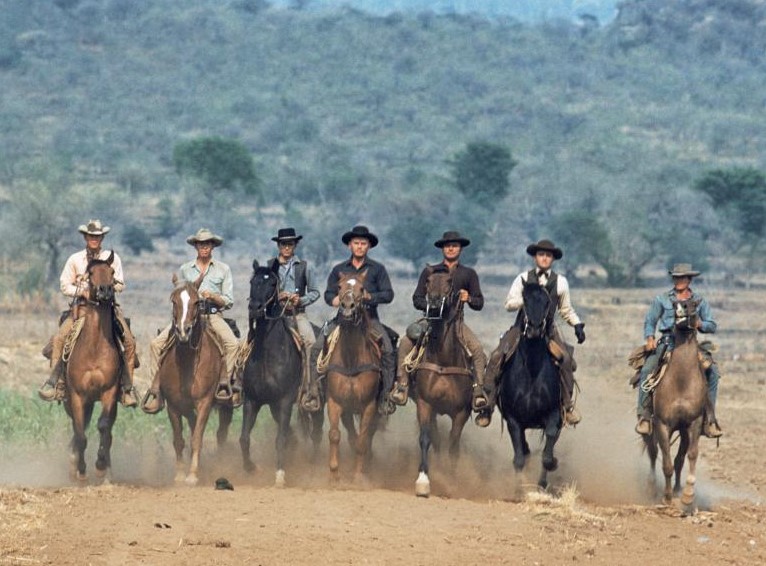
    His swaggering theme for “The Magnificent Seven” (1960) is just about synonymous with most people’s idea of western adventure. (It also sold a heck of a lot of cigarettes when it was licensed by Marlboro.)

    Not surprisingly, “The Magnificent Seven” put Bernstein much in demand as a western composer, and he wrote scores for many, including most of the films of John Wayne’s final decade. What’s striking is just how much he was able to vary them. His work for “The Comancheros” (1961) is very different from that for “True Grit” (1969), for instance, and “The Shootist” (1976), Wayne’s final film, is different still.

    You’ll be able to sample some of them, when we saddle up for seven magnificent western scores of Elmer Bernstein, for the composer’s birthday, on “Picture Perfect” – music for the movies – now in syndication on KWAX, the radio station of the University of Oregon!


    Clip and save the start times for all three of my recorded shows:

    PICTURE PERFECT, the movie music show – Friday at 8:00 PM EDT/5:00 PM PDT

    SWEETNESS AND LIGHT, the light music program – Saturday at 11:00 AM EDT/8:00 AM PDT

    THE LOST CHORD, unusual and neglected rep – Saturday at 7:00 PM EDT/4:00 PM PDT

    Stream them, wherever you are, at the link!

    https://kwax.uoregon.edu/

  • Elmer Bernstein A Centennial Celebration

    Elmer Bernstein A Centennial Celebration

    His was an enviable career that spanned some 50 years. He composed music for over 150 movies and nearly 80 television projects, many of them still much-beloved, including “The Ten Commandments” (1956), “The Magnificent Seven” (1960), “To Kill a Mockingbird” (1962), “The Great Escape” (1963), and the iconic theme for the National Geographic television specials.

    Elmer Bernstein would have been 100 years-old today.

    Bernstein was composer-of-choice for John Wayne’s later films, including “The Comancheros” (1961), “The Sons of Katie Elder” (1965), “True Grit” (1969), and “The Shootist” (1976).

    In addition, he was one of the first film composers to incorporate jazz elements into his work for dramatic purposes, in movies like “The Man with the Golden Arm” (1955), “Sweet Smell of Success” (1957), and “Walk on the Wild Side” (1962).

    Coming out of the Swinging Sixties, a time when the industry clearly favored a more popular sound over purely orchestral music (that is, until John Williams changed everything), Bernstein kept right on working. Thanks to a generation of younger filmmakers who had grown up on his classics, he never lacked for choice. Suddenly, he found himself much in demand as a comedy composer, providing the underscores for “Animal House” (1978), “The Blues Brothers” (1980), “Airplane!” (1980), “Stripes” (1981), and “Ghostbusters” (1984).

    For Martin Scorsese, he composed music for “The Age of Innocence” (1993), “Bringing Out the Dead” (1999), and “The Gangs of New York” (2002) – although his score for the latter was ultimately rejected due to extensive tampering in post-production. He also adapted Bernard Herrmann’s music for Scorsese’s remake of “Cape Fear” (1991) and wrote the music for the Scorsese-produced “The Grifters” (1990).

    In all, Bernstein was nominated for 14 Academy Awards, but claimed the Oscar only once, fairly early on, for his work on “Thoroughly Modern Millie” (1967), of all things. His final nomination was for his very last score, for “Far from Heaven” (2002). Elmer Bernstein died on August 18, 2004 at the age of 82.

    No relation to Leonard Bernstein (or “Bern-STINE”), Elmer pronounced his name “Bern-STEEN.” The two were sometimes further differentiated as “East Coast Bernstein” and “West Coast Bernstein.”

    In the year 2000, Elmer Bernstein composed a guitar concerto and expressed regret that he hadn’t contributed more to the concert hall. At least it was good one. David Hurwitz of classicstoday.com described it as “incontestably the finest piece ever composed for this combination” (i.e. guitar and orchestra), going so far as to hold it up to Joaquin Rodrigo’s “Concierto de Aranjuez.” I don’t know if I’d take it that far, but it is pretty damn good.

    Movement 1 https://www.youtube.com/watch?v=_mrSyhK6174

    Movement 2 https://www.youtube.com/watch?v=f072Efxnw24

    Movement 3 https://www.youtube.com/watch?v=mBi-BHZPkq4

    Keep an eye out for my webcast for this past weekend’s “Picture Perfect,” devoted to Bernstein. I’m told the audio will be up this afternoon. Once it’s posted, you can click on “listen” at the link.

    https://www.wwfm.org/show/picture-perfect-with-ross-amico/2022-03-31/picture-perfect-apr-2-elmer-bernstein-at-100

    Some of Bernstein’s music for “The Ten Commandments” will also be featured on this weekend’s show, which will be devoted to scores composed for Biblical epics, this Saturday evening at 7:00 EDT, on WWFM – The Classical Network and wwfm.org.

    In the meantime, enjoy “Elmer Bernstein: This Is Your Life,” with appearances by John Williams, John Landis, Eli Wallach, and others, offering congratulations to the composer at the age of 80.

    Happy birthday, Elmer Bernstein. Thank you for your magnificent body of work!

  • Elegies for the Old West: Western Film Scores

    Elegies for the Old West: Western Film Scores

    With summer winding down and the shadows lengthening, it’s a good time to think about moseying off into the sunset. This week on “Picture Perfect,” it’s an elegy for the Old West.

    By the 1960s, the cinematic western was becoming a victim of its own success. The western had been a popular genre since the silent era, with dozens, of variable quality, released every year. Seemingly the genre hit its peak in the 1950s. One might say, the western suffered the fate of the actual American West, with its mythic resonance choked into clichés by too many settlers.

    Also, current events began to color filmmakers’ perceptions of the West, the turbulence surrounding the Vietnam War, the assassinations of both Kennedys and King, and increased suspicion of government making for violent, bloodier and more nihilistic visions of Manifest Destiny. The shift gave rise to the revisionist western, which embraced new realities of dirt, corruption, and moral ambiguity in the West. At the same time, there was a rise in more wistful, elegiac westerns, which seem to bid farewell to beloved western icons like Joel McCrea, Kirk Douglas and John Wayne.

    Common characteristics include the obsolescence of the gunfighter; the free-ranging cowboy fenced off by barbed wire; the encroachment of corporations in the form of railroad and mining interests; horses replaced by automobiles; the six-shooter superseded by the Gatling gun – the land of limitless possibility and moral certitude, subdivided and spoiled by industrialization. Once-heroic figures ride slowly into the sunset, or are killed, their qualities unrecognized, perhaps even willfully rejected, by those who come after.

    We’ll hear selections from four elegiac westerns, including “Cheyenne Autumn” (1964), with music by Alex North; “The Shootist” (1976), with music by Elmer Bernstein; “The Wild Bunch” (1969), with music by Jerry Fielding; and “Monte Walsh” (1970), with music by John Barry.

    Autumn comes to the Old West, on “Picture Perfect,” this Friday evening at 6:00 EDT, on WWFM – The Classical Network and wwfm.org.


    PHOTO: John Wayne and Ron Howard take aim in “The Shootist”
  • Elegies for the Old West: Revisionist Westerns

    Elegies for the Old West: Revisionist Westerns

    This week on “Picture Perfect,” it’s an elegy for the Old West.

    By the 1960s, the cinematic western was becoming a victim of its own success. The western had been a popular genre since the silent era, with dozens, of variable quality, released every year. Seemingly the genre hit its peak in the 1950s. One might say, the western suffered the fate of the actual American West, with its mythic resonance choked into clichés by too many settlers.

    Also, current events began to color filmmakers’ perceptions of the West, the turbulence surrounding the Vietnam War, the assassinations of both Kennedys and King, and increased suspicion of government making for violent, bloodier and more nihilistic visions of Manifest Destiny. The shift gave rise to the revisionist western, which embraced new realities of dirt, corruption, and moral ambiguity in the West. At the same time, there was a rise in more wistful, elegiac westerns, which seem to bid farewell to beloved western icons like Joel McRea, Kirk Douglas and John Wayne.

    Common characteristics include the obsolescence of the gunfighter; the free-ranging cowboy fenced off by barbed wire; the encroachment of corporations in the form of railroad and mining interests; horses replaced by automobiles; the six-shooter superseded by the Gatling gun – the land of limitless possibility and moral certitude, subdivided and spoiled by industrialization. Once-heroic figures ride slowly into the sunset, or are killed, their qualities unrecognized, perhaps even willfully rejected, by those who come after.

    We’ll hear selections from four elegiac westerns, including “Cheyenne Autumn” (1964), with music by Alex North; “The Shootist” (1976), with music by Elmer Bernstein; “The Wild Bunch” (1969), with music by Jerry Fielding; and “Monte Walsh” (1970), with music by John Barry.

    Autumn comes to the Old West, on “Picture Perfect,” this Friday evening at 6:00 EST, on WWFM – The Classical Network and wwfm.org.


    PHOTO: John Wayne and Ron Howard take aim in “The Shootist”

Tag Cloud

Aaron Copland (92) Beethoven (95) Composer (114) Film Music (120) Film Score (143) Film Scores (255) Halloween (94) John Williams (185) KWAX (229) Leonard Bernstein (100) Marlboro Music Festival (125) Movie Music (135) Opera (198) Philadelphia Orchestra (88) Picture Perfect (174) Princeton Symphony Orchestra (106) Radio (87) Ralph Vaughan Williams (85) Ross Amico (244) Roy's Tie-Dye Sci-Fi Corner (290) The Classical Network (101) The Lost Chord (268) Vaughan Williams (103) WPRB (396) WWFM (881)

DON’T MISS A BEAT

Receive a weekly digest every Sunday at noon by signing up here


RECENT POSTS