Tag: Kaija Saariaho

  • Kaija Saariaho Dies at 70

    Kaija Saariaho Dies at 70

    Kaija Saariaho, the first woman to have a work staged at New York’s Metropolitan Opera in over 100 years – since Ethel Smyth’s “Der Wald” in 1903! – has died. Saariaho was one of Finland’s foremost composers.

    Saariaho’s “L’Amour de loin” (“Love from Afar”) was performed at the Met in 2016. Originally presented in Salzburg 16 years earlier, the opera is a meditation on the idealized love between a French troubadour and a countess of Tripoli. The two are separated by the Mediterranean Sea.

    Saariaho’s most recent opera, “Innocence,” composed in 2018, examines the aftermath of a school shooting in Helsinki. “Innocence” is projected to be heard at the Met in the 2025-26 season.

    In February 2021, Saariaho was diagnosed with glioblastoma, an aggressive form of brain cancer, but was able to carry on successfully until fairly recently, when she entered the terminal phase of her illness. Her last completed work was a trumpet concerto, “Hush,” completed in March and scheduled for performance in Helsinki in August.

    Saariaho was born in Helsinki in 1952. She studied at the Sibelius Academy with Paavo Heininen. Following summer courses in Darmstadt, she attended the Hochschule für Musik Freiburg, where she studied with Brian Ferneyhough and Klaus Huber. In Darmstadt, she was influenced by a concert of spectral music by Tristan Murail and Gérard Grisey. This led her to Paris to study electronic music at the avant-garde institute IRCAM.

    Saariaho claimed to experience a kind of synesthesia, in which all of her senses were engaged in composition. She once commented that “the visual and the musical world are all one to me.”

    She was married to composer, computer scientist, and sometimes collaborator Jean-Baptiste Barrière. The two were separated for a time, as the COVID-19 pandemic intensified while she was away, visiting Helsinki, and they were forced to live apart. “L’Amour de loin,” indeed!

    Even in the years she lived abroad in Germany and France, she always held Finland very dear. Like Sibelius, she found inspiration in the country’s ample natural world, citing specifically the big forests she knew during the summers of her childhood; also the sounds of wind, waves, and footsteps in the snow.

    In April, Saariaho endowed the construction of a new organ at the Helsinki Music Center with one million euros (US $1,072,450) . She was also the chair of the International Kaija Saariaho Organ Composition Competition.

    During her career, she was the recipient of many awards. In 2011, “L’Amour de loin” was recognized with a Grammy for Best Opera Recording.

    This morning, she died peacefully at her home in Paris. At the time of her death, she was counted among the world’s leading composers. Saariaho was 70 years-old.


    “L’Amour de loin” at the Met

    “Graal théâtre” for violin and orchestra

    “Orion”

    “Nymphéa (Jardin Secret III) for string quartet and electronics

    “Six Japanese Gardens” for percussion

    “Sept Papillons” for solo cello

    A brief interview with the composer
  • Cosmic Classics NASA Inspired Music This Sunday

    Cosmic Classics NASA Inspired Music This Sunday

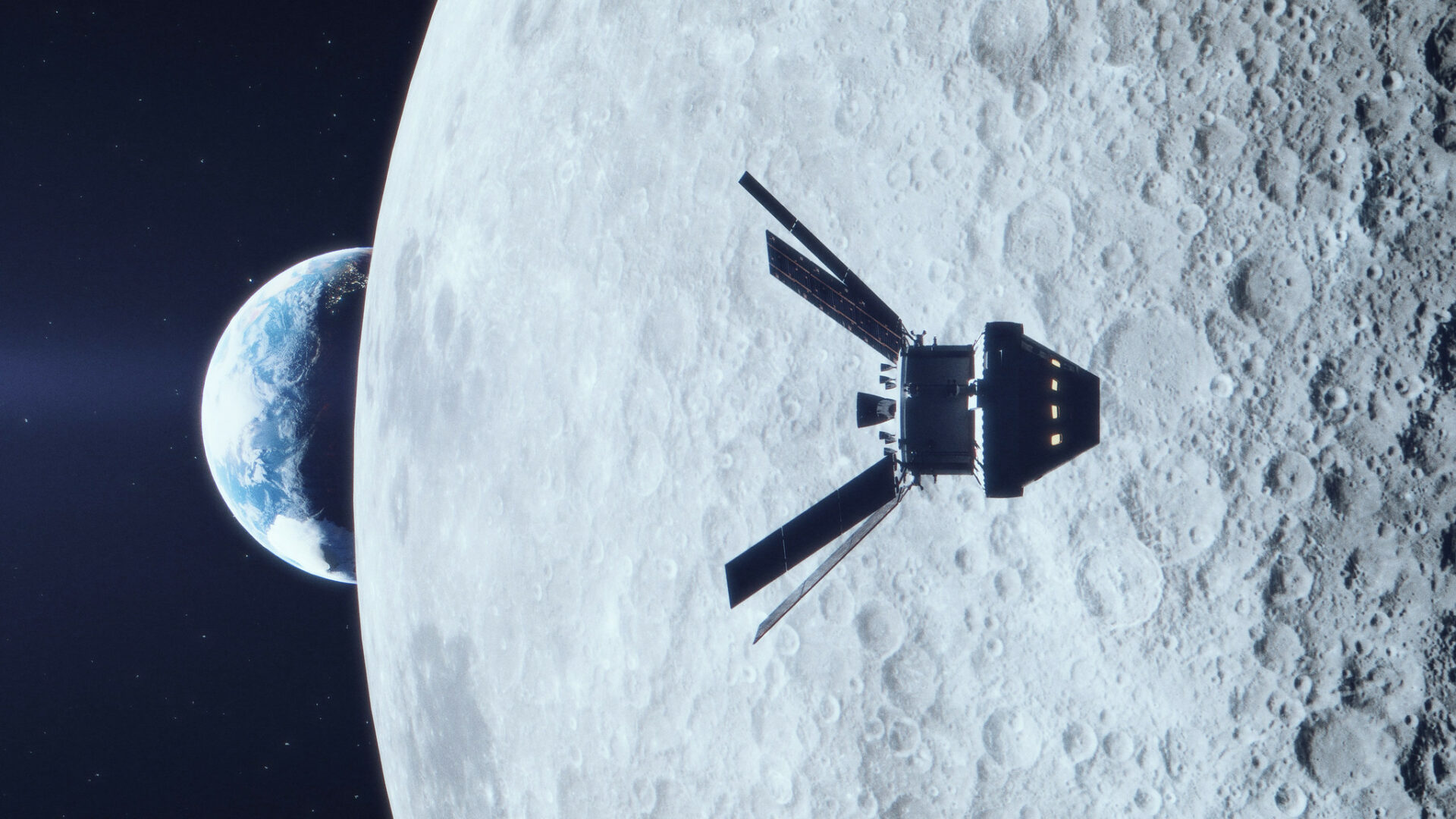
    This Sunday night on “The Lost Chord,” with the Artemis I Orion spacecraft and the James Webb Space Telescope keeping NASA very much in the news these days, we look to the heavens, with an hour of music inspired by the cosmos.

    When Spanish master Joaquin Rodrigo was in the United States in 1970 to attend the world premiere of his “Concierto Madrigal” at the Hollywood Bowl, he decided to make a side-trip to Houston, where he visited what is now the Johnson Space Center. There, NASA saw to it that the composer, blind since the age of three, was introduced to astronauts and permitted to handle moon rocks.

    The experience left him with a powerful impression, so that when he was commissioned by the Houston Symphony Orchestra several years later to write a piece of music to celebrate the American Bicentennial, his thoughts returned to his friends at NASA and the idea of space exploration. The result was something worlds away – if you’ll excuse the expression – from his popular works for guitar: the symphonic poem “A la busca del más allá” (“In search of the beyond”).

    Another Spaniard inspired by extraterrestrial concerns was Enrique Granados, very well-known for his music for the keyboard. Perhaps Granados’ most unusual work is a concerto of sorts for piano, with choruses and organ, “Cant de les estrilles” (“Song of the Stars”). This music was composed as a vehicle for Granados himself and dedicated to the long-lived pianist, Mieczyslaw Horszowski, who died as recently as 1993 – one month shy of his 101st birthday.

    “Song of the Stars” was given its first performance in 1911, on the same program as the premiere of Granados’ enduring piano suite “Goyescas.” However, the manuscript would remain unpublished. Granados died in 1916, only a few years later, on a return trip from the United States, when his ship was torpedoed by a German submarine while crossing the English Channel.

    The manuscript found its way to New York in the 1930s, brought there by the composer’s son, who was lured by businessman and conductor Nathaniel Shilkret with the promise of publication. Legal entanglements ensued, involving other members of the Granados family. A fire in the 1960s was feared to have destroyed the work, and efforts by the family to recover the piece with the assistance of José Iturbi and Alicia de Larrocha came to naught.

    In 1982, Granados’ daughter enlisted the American pianist Douglas Riva to act as the family representative. Finally, an agreement was negotiated with Shilkret’s grandson, and the work was performed again for the first time in nearly 100 years. The unattributed Catalan text is said to be a response to the poetry of Heinrich Heine, about love and the stars, from the perspective of the stars themselves.

    Finally, we’ll round out the hour with music by contemporary Finnish composer Kaija Saariaho. Saariaho evokes both the mythological and astrological in her work for orchestra, “Orion,” from 2002. The piece falls into three movements: “Memento mori,” “Winter Sky,” and “Hunter.” With spacecraft Orion just wrapping up its lunar mission, how appropriate is that?

    Pour yourself some cosmos; then look to the skies in wonder! I hope you’ll join me for “Creating Space,” this Sunday night at 10:00 EST, on WWFM – The Classical Network and wwfm.org.

  • Asteroid Schumann & the Election of 2020

    Asteroid Schumann & the Election of 2020

    NASA’s projected arrival of Asteroid 2018 VP1 on November 2, the eve of the Presidential Election, reminds me of Robert Schumann and Clara Wieck’s 1840 legal victory over her father. The two had initiated a long and acrimonious lawsuit against Friedrich Wieck, Schumann’s former teacher, in the hope of overriding his opposition to their marriage. By the time the court ruled in their favor, and they were allowed to tie the knot, it was the last day of Clara’s 20th year. One more day, and she would have attained majority status. At 21, as a matter of course, the decision to marry would have been legally hers.

    Where was this asteroid in 2016, when we really needed it?*


    Kaija Saariaho’s “Asteroid 4179 – Toutatis”

    Schumann’s “Widmung” (“Dedication”), a gift to his new bride


    *Not to worry, it’s only 6 to 12 feet wide and likely to burn up, mostly, or explode in the atmosphere.

    https://en.wikipedia.org/wiki/2018_VP1

  • Cosmic Classics Moonwalk Anniversary

    Cosmic Classics Moonwalk Anniversary

    This Sunday night on “The Lost Chord,” for the 50th anniversary of the first moonwalk, cap your weekend of lunar celebrations with an hour of music inspired by the cosmos.

    When Spanish master Joaquin Rodrigo was in the United States in 1970 to attend the world premiere of his “Concierto Madrigal” at the Hollywood Bowl, he decided to make a side-trip to Houston, where he visited what is now the Johnson Space Center. There, NASA saw to it that the composer, blind since the age of three, was introduced to astronauts and permitted to handle moon rocks.

    The experience left him with a powerful impression, so that when he was commissioned by the Houston Symphony Orchestra several years later to write a piece of music to celebrate the American Bicentennial, his thoughts returned to his friends at NASA and the idea of space exploration. The result was something worlds away – if you’ll pardon the expression – from his popular works for guitar: the symphonic poem “A la busca del más allá” (“In search of the beyond”).

    Another Spaniard inspired by extraterrestrial concerns was Enrique Granados, very well-known for his music for the keyboard. Perhaps Granados’ most unusual work is a concerto-of-sorts for piano, with choruses and organ, “Cant de les estrilles” (“Song of the Stars”). This music was composed as a vehicle for Granados himself and dedicated to the long-lived pianist, Mieczyslaw Horszowski, who died as recently as 1993 – one month shy of his 101st birthday.

    “Song of the Stars” was given its first performance in 1911, on the same program as the premiere of Granados’ enduring piano suite “Goyescas.” However, the manuscript would remain unpublished. Granados died in 1916, only a few years later, on a return trip from the United States, when his ship was torpedoed by a German submarine while crossing the English Channel.

    The manuscript found its way to New York in the 1930s, brought there by the composer’s son, who was lured by businessman and conductor Nathaniel Shilkret with the promise of publication. Legal entanglements ensued, involving other members of the Granados family. A fire in the 1960s was feared to have destroyed the work, and efforts by the family to recover the piece with the assistance of José Iturbi and Alicia de Larrocha came to naught.

    In 1982, Granados’ daughter enlisted the American pianist Douglas Riva to act as the family representative. Finally, an agreement was negotiated with Shilkret’s grandson, and the work was performed again for the first time in nearly 100 years. The unattributed Catalan text is said to be a response to the poetry of Heinrich Heine, about love and the stars, from the perspective of the stars themselves.

    Finally, we’ll round out the hour with music by contemporary Finnish composer Kaija Saariaho. Saariaho evokes both the mythological and astrological in her work for orchestra, “Orion,” from 2002. The piece falls into three movements: “Memento mori,” “Winter Sky,” and “Hunter.”

    Pour yourself some cosmos. Then look to the skies in wonder! Join me for “Creating Space,” this Sunday night at 10:00 EDT, on WWFM – The Classical Network and wwfm.org.

  • Cosmic Classical Music for the Eclipse

    Cosmic Classical Music for the Eclipse

    Tonight on “The Lost Chord,” in anticipation of Monday’s solar eclipse, we look to the heavens, with three works inspired by the cosmos: Joaquin Rodrigo’s “In Search of the Beyond” (dedicated to NASA), Enrique Granados’ “Song of the Stars,” and Kaija Saariaho’s “Orion.” That’s “Creating Space,” this Sunday night at 10:00 EDT, on WWFM – The Classical Network and wwfm.org.

Tag Cloud

Aaron Copland (92) Beethoven (95) Composer (114) Film Music (120) Film Score (143) Film Scores (255) Halloween (94) John Williams (185) KWAX (229) Leonard Bernstein (100) Marlboro Music Festival (125) Movie Music (135) Opera (198) Philadelphia Orchestra (88) Picture Perfect (174) Princeton Symphony Orchestra (106) Radio (87) Ralph Vaughan Williams (85) Ross Amico (244) Roy's Tie-Dye Sci-Fi Corner (290) The Classical Network (101) The Lost Chord (268) Vaughan Williams (103) WPRB (396) WWFM (881)

DON’T MISS A BEAT

Receive a weekly digest every Sunday at noon by signing up here


RECENT POSTS