Tag: Karol Szymanowski

  • Kavalier & Clay Opera: Chabon’s Szymanowski Secret

    Kavalier & Clay Opera: Chabon’s Szymanowski Secret

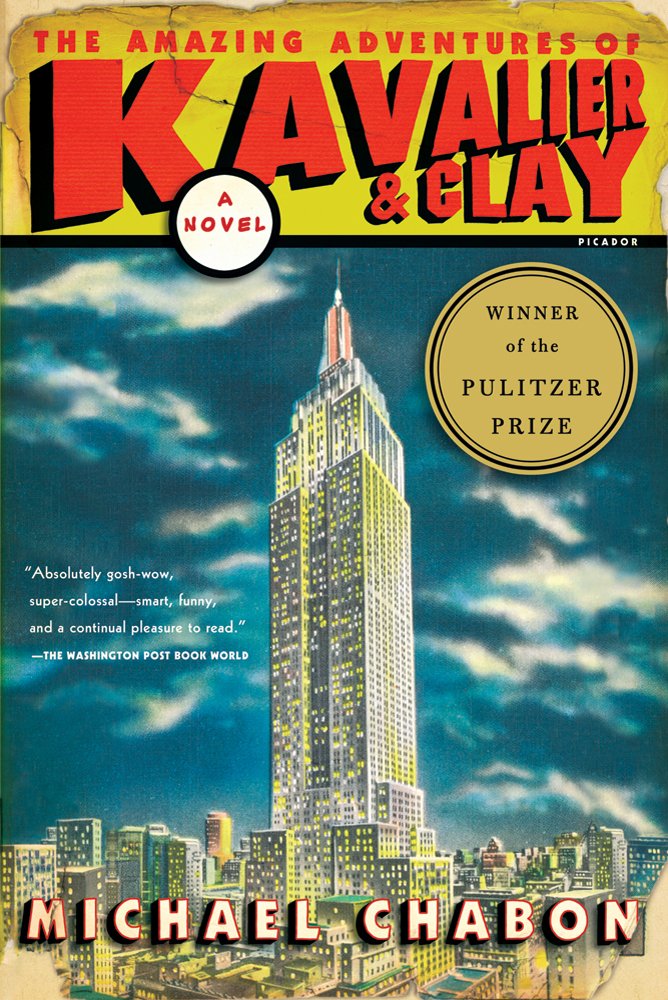
    I’ve been rereading “The Amazing Adventures of Kavalier & Klay” to refresh my memory, in advance of checking out Mason Bates’ new opera at the Met this week. A little while ago, I watched an unrelated interview with the book’s author, Pulitzer Prize winner Michael Chabon, who straddles the worlds of “serious” and pop cultural fiction (i.e. comic books, the pulps, genre pastiche) with the authority of a literary colossus. The interview was geared toward young readers, and one of the things he recommended was making an effort to read outside one’s comfort zone. By that, he means not only reading about subjects to which one wouldn’t ordinarily gravitate, but also getting to know different characters by writers who come from diverse backgrounds, as it can really expand one’s understanding and empathy for other perspectives. It’s clear that Chabon practices what he preaches, as it’s the only explanation for the richness of the world he creates and recalls in “Kavalier & Clay” (much of the book is set during the Great Depression and World War II) and the realistic characters who occupy it.

    For instance, I don’t know what kind of music Chabon enjoys, but clearly he’s an intellectual omnivore. His curiosity about the classics may not extend very deeply into opera (the premiere of “Kavalier & Klay” was the first time he ever set foot in the Met), but it drove him far enough beyond Bach and Beethoven to turn up no less than Karol Szymanowski. Szymanowski, one of Poland’s foremost composers, was born on this date (according to some sources) in 1882. Szymanowski is referenced multiple times throughout “Kavalier & Clay,” and I’m not entirely sure why. It could just be that the author enjoys his music, or perhaps he simply likes the sound of his name (Shim-an-OFF-ski). Or it could be that he is trying to demonstrate, as he lets drop several times throughout the narrative, that many of these characters who are caught up in the pulp, comic, and novelty business are actually very talented people, immigrants who perhaps abandoned their higher aspirations when they settled in the United States and determined to improve their lot. Which would explain why long-suffering publisher Sheldon Anapol is a member of the Szymanowski Society.

    Later in the book, Szymanowski is not mentioned by name when we are told that a portrait of the composer of “Songs of an Infatuated Muezzin” hangs on the wall behind his desk. Holy moly, Chabon! “Songs of an Infatuated Muezzin” isn’t even one of Szymanowski’s better-known works! I wonder if, thematically, the author might also have found the subject matter – a Muslim holy man who, in the execution of his sacred duty to call the faithful to prayer five times a day, finds himself increasingly distracted by erotic thoughts of his beloved – apposite to the situation of one of Chabon’s protagonists, Joe Kavalier, who succumbs to his guilt over the distraction from his primary mission, to get his family out of Nazi-occupied Czechoslovakia. In the meantime, he’s been engaged in a serious affair. Two affairs, actually – one with a free-spirited Greenwich Village bohemian and another, his artistic devotion to comic books – and the reader wonders which passion outstrips the other. In his way, he too is distracted from his sacred duty by a beguiling mistress.

    I don’t know that Chabon had this in mind, but the parallel is there. Or, as I say, it could be that he just likes the music.

    Looking forward to “Kavalier & Clay.” Also, happy birthday, Karol Szymanowski!


    “Songs of an Infatuated Muezzin”

    “The Amazing Adventures of Kavalier & Clay” at the Met

    https://www.metopera.org/season/2025-26-season/the-amazing-adventures-of-kavalier–clay/

    Szymanowski’s Violin Concerto No. 2, recorded by Henryk Szeryng

    Michael Chabon interview geared to young readers


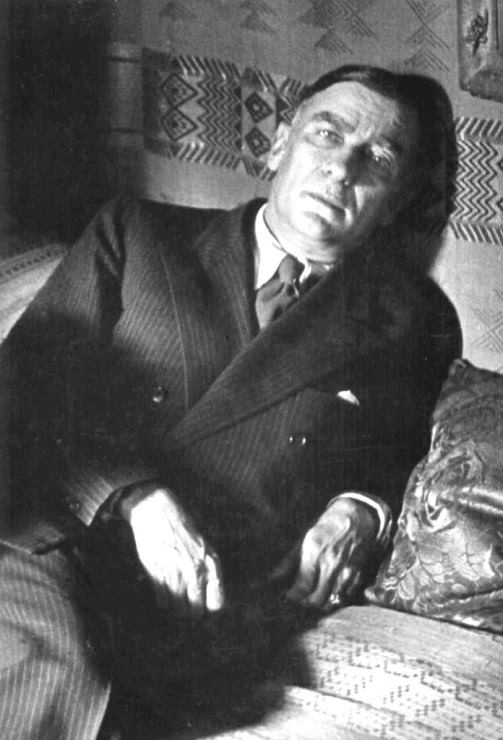
    CLOCKWISE FROM LEFT: The novel, a still from the opera, and Karol Szymanowski

  • Polish Music Legends: Skrowaczewski & Szymanowski

    Polish Music Legends: Skrowaczewski & Szymanowski

    Big day in Polish music today, which marks the 100th anniversary of the birth of Stanislaw Skrowaczewski and, somewhat more randomly, the celebration via Google Doodle of the 141st birthday of Karol Szymanowski.

    Skrowaczewski, born in Lwów, was forced to abandon his dream to become a concert pianist after sustaining a hand injury during World War II. Nevertheless, music served him well. By 1946, he had already begun his conquest of the great Polish orchestras, becoming music director in turn of the Wrocław, Katowice, and Krakow Philharmonics. He also studied composition in Paris with Nadia Boulanger.

    He made his American debut conducting the Cleveland Orchestra at the invitation of George Szell. This led to a music directorship with the Minneapolis Symphony, beginning in 1960 (the organization was rebranded the Minnesota Orchestra during his tenure, against his protests). After 1979, he maintained a long relationship with the orchestra as conductor laureate. For many, it would have been considered an honorary title, but Skrowaczewski really did return just about every season to conduct.

    He was also principal conductor of the Hallé Orchestra from 1983 to 1992. He served as artistic adviser to the Milwaukee Symphony Orchestra from 1995 to 1997, and in 1988 he was composer-in-residence for the Philadelphia Orchestra’s summer season at Saratoga. His composition, “Passacaglia Immaginaria,” was nominated for the Pulitzer Prize for Music in 1997.

    As a budding record collector, I cut my teeth on a number of Skrowaczewski’s recordings that were issued on the Vox label. I still find his Ravel to be particularly fine. I am also partial to his recordings for Mercury, including an “Italian Symphony” framed by some unusually fleet outer movements. In concertos, he accompanied the label’s most distinguished soloists, artists such as Gina Bachauer, Byron Janis, and János Starker.

    Later, I discovered his Bruckner recordings with the Deutsche Radio Philharmonie Saarbrücken Kaiserslautern (now on Oehms Classics), interpretations that render the composer’s student symphonies with as much logic and dignity as his mature works.

    Skrowaczewski lived a long and productive life. He died in 2017 at the age of 93. He conducted his last series of concerts in Minnesota less than four months before his death. On the program was Bruckner’s grandest symphonic edifice, the Symphony No. 8, which clocks in, depending on performance, at around 80 or 90 minutes in length. While there are plenty of maestros who’ve conducted Bruckner into their 90s (I saw Herbert Blomstedt do so only last season), I venture to guess there are few who have been able to do it without the aid of chair. Skrowaczewski remained on his feet the entire time.

    Karol Szymanowski is regarded as the most important Polish composer between Chopin and the generation that yielded Witold Lutoslawski. He absorbed the musical influences of Richard Strauss, Alexander Scriabin, and Claude Debussy, but put them through his own creative refinery.

    Listening to Szymanowski can be a bit like submerging oneself too long in a hot bath – the same low blood-pressure, the increased heart rate, the wooziness. Though the harmonies and melodies suggest the familiar patterns of tonality, the traditional framework has been almost wholly eaten away by the hothouse atmosphere. The music is seductive and dangerous, and one risks being overcome by languor, even as one is overrun by fast-growing vegetation.

    It may be in poor taste to suggest that so much humidity was bad for the acute tuberculosis that eventually claimed him at the age 55. Find out more about him in this biographical sketch on Google’s website. You’ll note the “Doodle’s Reach” map at the bottom of the page indicates that the artwork is only visible in the U.K. and Poland!

    https://www.google.com/doodles/karol-szymanowskis-141st-birthday

    Parenthetically, I knew the composer’s nephew in Philadelphia.

    Wszystkiego najlepszego z okazji urodzin, boys!


    Szymanowski, Violin Concerto No. 1 (1916)

    The brigand ballet “Harnaisie” (1923-31)

    Symphony No. 3 “Song of the Night” (1914)


    Skrowaczewski conducts Bruckner’s 9th in Frankfurt

    Ravel, “Mother Goose” (transferred at a low level, so turn it up!)

    Mendelssohn, Symphony No. 4 “Italian”

  • Karol Szymanowski: Seductive & Dangerous Music

    Karol Szymanowski: Seductive & Dangerous Music

    Arguably the most important Polish composer of his generation, Karol Szymanowski (1882-1937) absorbed the musical influences of Richard Strauss, Alexander Scriabin and Claude Debussy, and then put them through his own creative refinery. Listening to Szymanowski can be a bit like submerging oneself too long in a hot bath – the same low blood-pressure, the increased heart rate, the wooziness. Though the harmonies and melodies suggest the familiar patterns of tonality, the traditional framework has been almost wholly eaten away by the hothouse atmosphere. The music is seductive and dangerous, and one risks being overcome by languor, even as one is overrun by fast-growing vegetation. It may be in poor taste to suggest that so much humidity was bad for the acute tuberculosis that eventually claimed him at the age 55.

    Even so, happy birthday, Karol Szymanowski!


    Symphony No. 2 (1910):

    https://www.youtube.com/watch?v=0OMjbIdQBjc

    Symphony No. 3 “Song of the Night” (1914):

    PHOTO: Languid Szymanowski

  • Remembering Conductor Jerzy Semkow and Szymanowski

    Remembering Conductor Jerzy Semkow and Szymanowski

    This Sunday night on “The Lost Chord,” we remember conductor Jerzy Semkow, who died on December 23 at the age of 86.

    Semkow, Polish by birth, was a longtime resident of Paris. He apprenticed with Erich Kleiber, Bruno Walter and Tullio Serafin. He was assistant conductor of the Leningrad Philharmonic under Yevgeny Mravinsky.

    Later, he held posts as principal conductor of the National Opera in Warsaw, principal conductor of the Royal Danish Opera and the Royal Danish Orchestra in Copenhagen, and music director of the Orchestra of Radio-Televisione Italiana in Rome (RIA).

    Semkow was the ninth music director of the Saint Louis Symphony Orchestra (where he served from 1975 to 1979), as well as music advisor and principal conductor of the Rochester Philharmonic (where he served from 1985 to 1989). He was a regular guest conductor of the Detroit Symphony Orchestra for some 40 years. His last appearance there was in 2009.

    Though he made some respectable Beethoven and Wagner recordings for the Vox label, I thought we’d honor him with two works by his compatriot, Karol Szymanowski, both of them issued on EMI. We’ll hear Szymanowski’s “Symphonie concertante,” for piano and orchestra, and his Symphony No. 3, subtitled “Song of the Night,” for tenor, chorus and large orchestra, an opulent setting of poetry by Rumi.

    I hope you’ll join me for “A Send-Off for Semkow,” tonight at 10 ET, with a repeat Wednesday evening at 6, or that you’ll listen to it later as a webcast at http://www.wwfm.org.

    PHOTOS: Polish up on your Polish with Semkow and Szymanowski

  • Szymanowski’s Autumnal Dreamscapes

    Szymanowski’s Autumnal Dreamscapes

    Personally I love this weather, but if the early morning autumn chill makes you long for summer nights that make your head feel like it is stuck in a pressure cooker, then maybe you should put on some Karol Szymanowski.

    Szymanowski, probably the most celebrated Polish composer to have lived between Chopin and Lutoslawski, rode Hokusai’s wave of Impressionism clear into the Tatras highlands.

    Strange, oriental dreams follow the exertion. The listener awakes in a languid, atonal nightscape, with an occasional, distant fiddle overheard from a brigands’ camp. Caddisflies and vampires flourish, but reason fails. It is the world of “The Manuscript Found in Saragasso.”

    Happy birthday, Karol Szymanowski.

    Szymanowski’s Violin Concerto No. 1 (1916):

    His Symphony No. 4 “Song of the Night” (1914-1916):

    PHOTO: Optic phenomenon known as the “Brocken Spectre,” captured in the Tatra Mountains, which occurs when a person sees his shadow cast on a cloud at a lower altitude

Tag Cloud

Aaron Copland (92) Beethoven (95) Composer (114) Film Music (120) Film Score (143) Film Scores (255) Halloween (94) John Williams (185) KWAX (229) Leonard Bernstein (100) Marlboro Music Festival (125) Movie Music (135) Opera (198) Philadelphia Orchestra (88) Picture Perfect (174) Princeton Symphony Orchestra (106) Radio (87) Ralph Vaughan Williams (85) Ross Amico (244) Roy's Tie-Dye Sci-Fi Corner (290) The Classical Network (101) The Lost Chord (268) Vaughan Williams (103) WPRB (396) WWFM (881)

DON’T MISS A BEAT

Receive a weekly digest every Sunday at noon by signing up here


RECENT POSTS