Tag: Ken Russell

  • Vaughan Williams Birthday: Ken Russell’s Portrait

    Vaughan Williams Birthday: Ken Russell’s Portrait

    On the birthday of Ralph Vaughan Williams, a party favor:

    A link to Ken Russell’s quasi-documentary, “Vaughan Williams: A Symphonic Portrait” (1983) – aptly named, since the hour is structured around the composer’s nine symphonies, with a few welcome digressions to accommodate reflections on the “Tallis Fantasia,” “The Lark Ascending,” and the Oboe Concerto.

    The film is surprisingly reverential by Russell standards – this, after all, is the guy who directed “Tommy” and “Lisztomania” – though it is not without its moments of impishness. Russell himself appears prominently, as does his crew, who are made part of the supporting cast, as they are shown shooting on various locations with the composer’s widow, Ursula. The style is part documentary, part deconstruction, with touches straight out of French New Wave, as when Russell calls in a script supervisor to sit down with Ursula to go over her “lines,” when she leaves something out of one her personal reminiscences! There are a number of instances of filmmaker and subjects breaking the fourth wall.

    There is also a recurring bit with Russell and his daughter, Molly, clearly engaged and asking questions, as he flips through photographs in a book about Vaughan Williams. By the end, cumulatively, I found this surprisingly moving.

    A number Vaughan Williams associates and champions also appear: David Willcocks, Vernon Handley, and Evelyn Barbirolli – widow of the conductor John Barbirolli (Glorious John, as Ralph called him), for whom RVW composed his Oboe Concerto – composer and Vaughan Williams pupil Elizabeth Maconchy, and violinist Iona Brown, arguably the foremost interpreter in her day of “The Lark Ascending.”

    I’m afraid you’ll have to ignore the Swedish subtitles. The only other option I could find is dubbed into German!

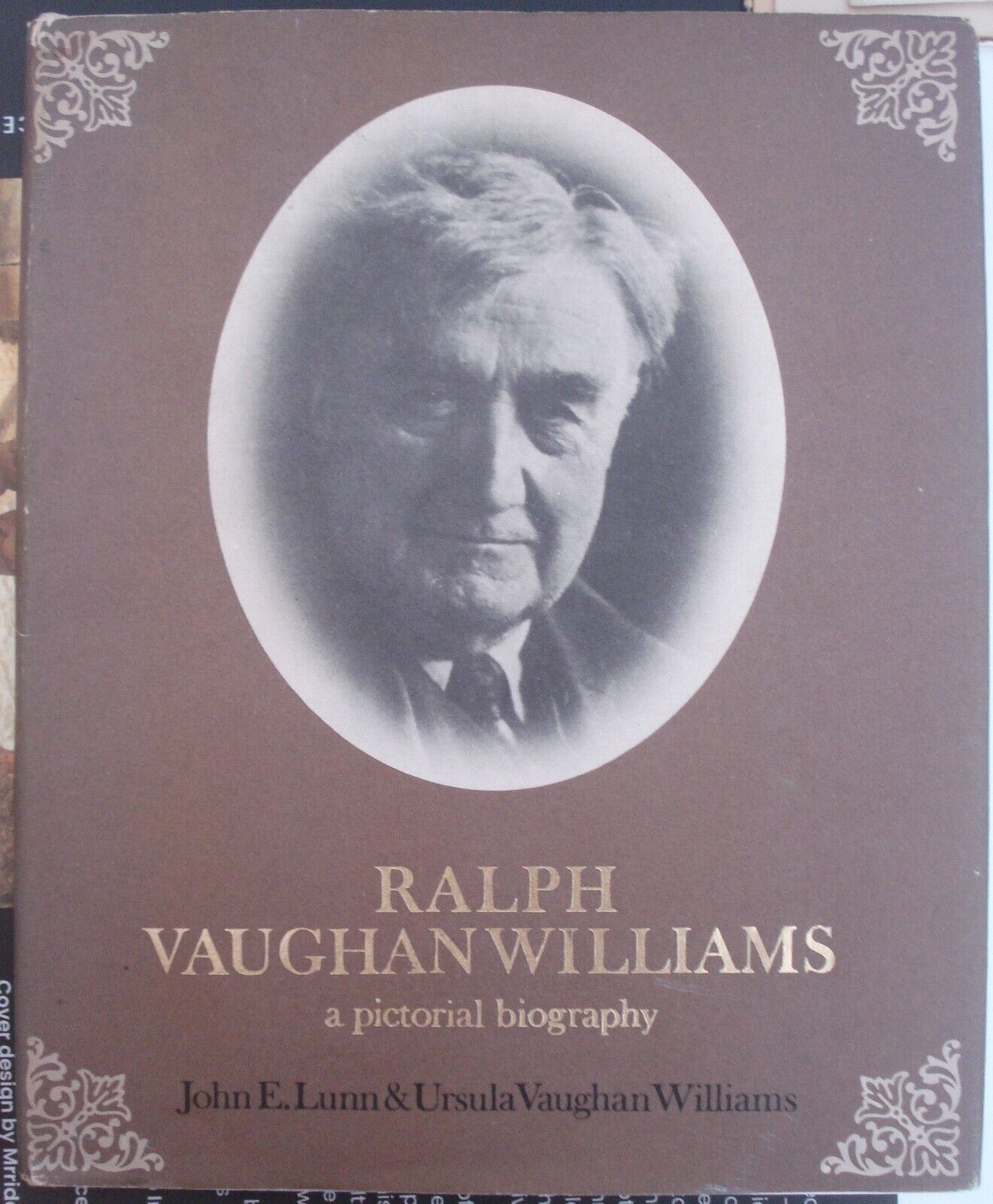
    I figured out that the book the Russells are reading is “Ralph Vaughan Williams: A Pictorial Biography,” a volume I had somehow overlooked. Since viewing the film, I was able to track down a copy, signed by Ursula and her co-author, John E. Lunn. This will now reside in my library alongside Jerrold Northrop Moore’s “Vaughan Williams: A Life in Photographs.”

    Enjoy the film, and happy birthday, Ralph Vaughan Williams!

  • Mahler in Hollywood Ken Russell’s Biopic

    Mahler in Hollywood Ken Russell’s Biopic

    If you ever thought Mahler sounds an awful lot like film music, well, a lot of composers of Hollywood’s Golden Age – Max Steiner and Erich Wolfgang Korngold spring to mind – were forged in Mahler’s Vienna. They shared his sensibility, to some extent, and boiled it down into a pop cultural gulasch when they settled in Hollywood.

    Ken Russell’s “Mahler” (1974) goes one step further in marrying Mahler’s actual music to the director’s poetic fancies and metaphorical musings about the composer and his life. So don’t look at it as strict biography, though there are certainly truths to be divined from it.

    Next to some of Russell’s other composer biopics (“Lisztomania,” for example), this one is positively restrained by comparison. Still, Russell being Russell, he couldn’t help but interpolate a Nazi dominatrix – presented as a silent movie parody, no less.

    Happy birthday (?), Gustav Mahler!

    https://www.youtube.com/watch?v=PGq7TFoxB4E

    Watch for Oliver Reed in a brief cameo as a train conductor. Allegedly, his payment was three bottles of Dom Perignon.

  • Corigliano’s “Altered States” Dream

    Corigliano’s “Altered States” Dream

    “Altered States,” you may recall, stars William Hurt as a psychopathologist whose experiments with sensory deprivation tanks and hallucinatory drugs result in strobe-lit episodes of biological devolution. Mr. Hyde has nothing on these regressions that have him turning into an ape man on the prowl for goat meat at the city zoo, or at their most extreme, transforming into a kind of whirlpooling proto-consciousness.

    Nudity and religious symbolism? Well, it is a Ken Russell film, and one of his best, actually, because it’s actually rooted in character and plot. (The screenplay is by Paddy Chayefsky.)

    Russell later recalled, “After a tiring day at the Burbank Studios working on ‘Altered States’ I was out for an evening of relaxation with a much loved and familiar masterpiece the memory of which was blown into oblivion by the music of a name totally unfamiliar to me – John Corigliano. Reading from my program that he was a contemporary composer I braced myself for thirty minutes of plinks and plunks that pass for music these days. I was in for a shock, a surprise, a revelation.

    “Not since Bartok’s ‘Miraculous Mandarin’ have I been so excited in the concert hall. Here were sounds of magic and grandeur I had long since despaired of hearing from a modern musician. . . . if only he would compose the music for ‘Altered States’ instead of some commercial hack we directors are usually saddled with, I thought wistfully. But that’s just a dream.

    “I should have known better – Hollywood is the place where dreams come true.”

    The music he encountered on that Los Angeles Philharmonic concert? Corigliano’s Clarinet Concerto.

    Corigliano composed his concerto for legendary New York Philharmonic principal clarinetist Stanley Drucker. The first movement, “Cadenzas,” is virtuosic right out of the box. When Drucker first looked at the score, he remarked, “How am I gonna play this?” The second movement, the soul of the piece, serves as an elegy to the memory of Corigliano’s father, longtime concertmaster of the Philharmonic, who died in 1975. The third movement evocates the antiphonal style of Renaissance composer Giovanni Gabrieli.

    The work was given its first performance by Drucker and the New York Philharmonic, conducted by Leonard Bernstein, on December 6, 1977. It became the first concerto for the instrument by an American composer since Aaron Copland’s Clarinet Concerto to enter the repertoire.

    Russell was so impressed with the piece when he heard it in Los Angeles that he offered Corigliano his first assignment scoring a feature film. (Earlier, he had written music for a documentary, “A Williamsburg Sampler.”) His music for “Altered States” would earn him an Academy Award nomination.

    In the film, Corigliano’s score brilliantly complements Russell’s psychedelic flights of fancy. It’s not hard to understand why the composer caught the Academy’s attention. Ultimately, the Oscar that year went to “Fame,” of all things, but Corigliano revisited his score for a concert suite which he titled “Three Hallucinations.”

    Later, he would win an Academy Award for his work on “The Red Violin.” He would also be honored with a Pulitzer Prize, for his Symphony No. 2, five Grammys, and a Grawemeyer Award for Contemporary Composition. His first opera, “The Ghosts of Versailles,” would be commissioned by the Metropolitan Opera for its 100th anniversary.

    Even so, Hollywood can be a fickle town. He may have won an Oscar, but that didn’t shield him from the indignity of having his score for the Mel Gibson film “Edge of Darkness” chucked out. The studio decided it wanted to take a more bankable approach, and because of his obligations in the concert world, Corigliano was not available for rewrites. So the assignment was given to Howard Shore. Rejection stings, yet Corigliano has stated he remains open to the prospect of scoring another film, if the right project should present itself.

    But the movies need John Corigliano more than he needs them.

    The composer is 85 today. Happy birthday!


    World premiere broadcast of the Clarinet Concerto

    Selections from “Altered States”

    “Three Hallucinations”

  • Ken Russell’s Wild Ride Through Music & Film

    Ken Russell’s Wild Ride Through Music & Film

    Throughout his career, Ken Russell alternately tickled and tried the patience of audiences and critics alike with his excesses in films like “The Devils” (1971), “Tommy” (1975), “Gothic” (1986), and “Salome’s Last Dance” (1988). (The latter was memorably reviewed in the Philadelphia Inquirer and given a rating of three question marks.)

    But he had a parallel fascination with the great composers and also directed features or short subjects about Bartók, Bax, Bruckner, Delius, Elgar, Mahler, Martinu, Richard Strauss, Tchaikovsky, Vaughan Williams, and perhaps most notorious of all, Franz Liszt.

    In “Lisztomania” (1975), The Who’s Roger Daltrey plays Liszt and Wagner is portrayed as a kind of zombie-Nosferatu-Frankenstein’s monster-Hitler, whose electric guitar doubles as a machine gun. (I’m not kidding.)

    Occasionally, Russell also directed staged opera, including a production of Boito’s “Mefistofele,” with Faust reimagined as an aging hippie.

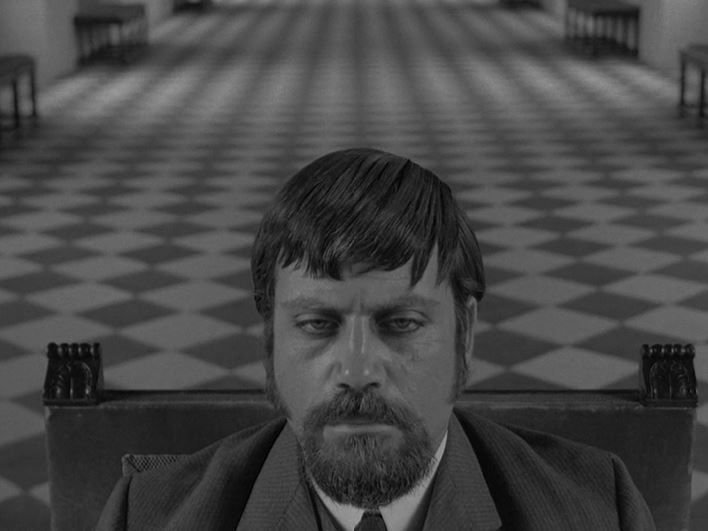
    On Claude Debussy’s birthday, would you buy Oliver Reed as the great French composer? Why not?

    You can watch “The Debussy Film” (1965) here:

  • Altered States, William Hurt, and Existential Dread

    Altered States, William Hurt, and Existential Dread

    As one of our viewers wryly observed last night: “Showed up for a discussion about ‘Altered States’ and ended up hearing how Ross and Roy spent their youth getting into R-rated movies.”

    Fair enough. The digressions were front-loaded and thick on the ground.

    But we also talked a bit about the nature of existence, too. If there is a God, I’m pretty sure He’s not some bearded Michelangelo sitting on a cloud. From the evidence of Paddy Chayefsky’s screenplay, the Universe is a pretty cold place and whatever comfort exists is in the here and now. So be thankful for the love you’ve got. And don’t do too many ‘shrooms.

    The chill of the Universe is nothing next to the tension that existed onset between Chayefsky and director Ken Russell. There’s plenty of hard fact amidst the dime store philosophizing on last night’s show, a tribute to the late William Hurt, now archived at the link.

    I can’t say it will expand your consciousness, but there’s every possibility you could regress.

    Next week, we’ll observe the 91st birthday of William Shatner, with a discussion of one of his immortal screen classics, “Kingdom of the Spiders” (1977). The Shat demonstrates his incredible versatility, going from starship captain to Southwestern veterinarian, in a town besieged by crazed tarantulas. The comments section will be devoid of arachnophobes, on the next Roy’s Tie-Dye Sci-Fi Corner. Roy and I will have the best legs in the room, when we livestream on Facebook, Friday evening at 7:00 EDT!

    https://www.facebook.com/roystiedyescificorner


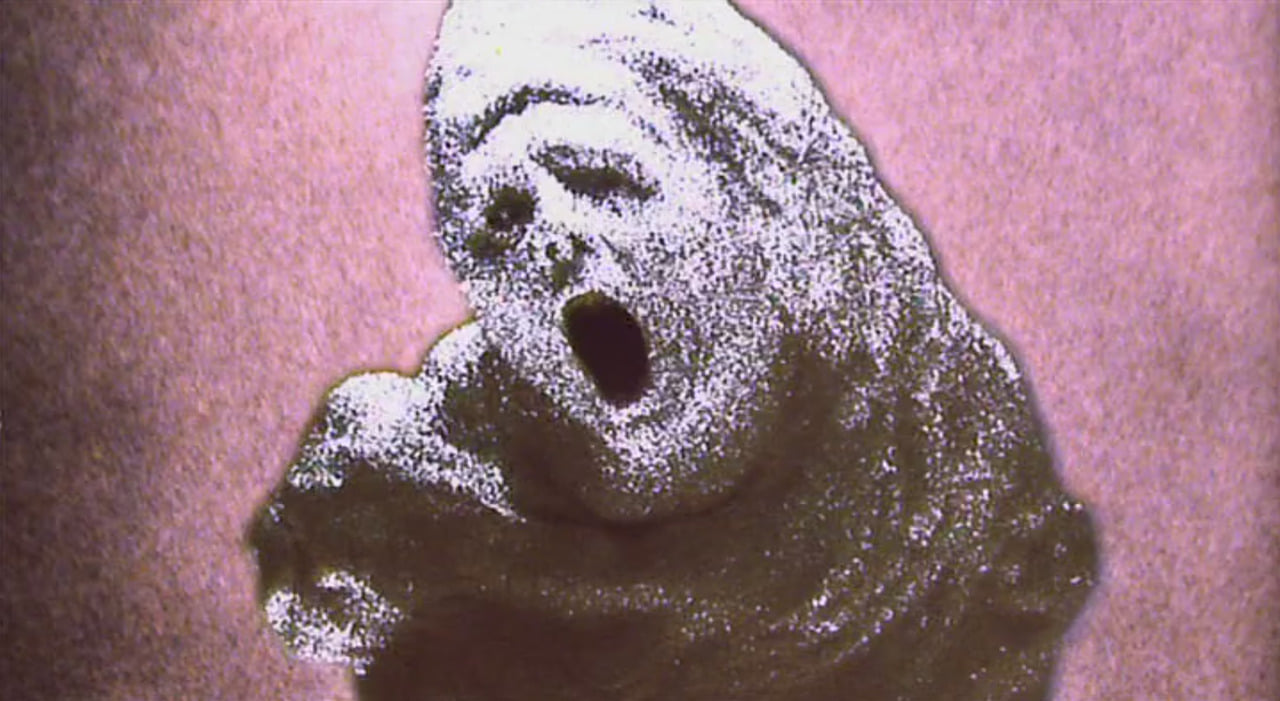
    PHOTO: Hurts, don’t it? Maybe Edvard Munch was right.

Tag Cloud

Aaron Copland (92) Beethoven (95) Composer (114) Film Music (120) Film Score (143) Film Scores (255) Halloween (94) John Williams (185) KWAX (229) Leonard Bernstein (100) Marlboro Music Festival (125) Movie Music (135) Opera (198) Philadelphia Orchestra (88) Picture Perfect (174) Princeton Symphony Orchestra (106) Radio (87) Ralph Vaughan Williams (85) Ross Amico (244) Roy's Tie-Dye Sci-Fi Corner (290) The Classical Network (101) The Lost Chord (268) Vaughan Williams (103) WPRB (396) WWFM (881)

DON’T MISS A BEAT

Receive a weekly digest every Sunday at noon by signing up here


RECENT POSTS