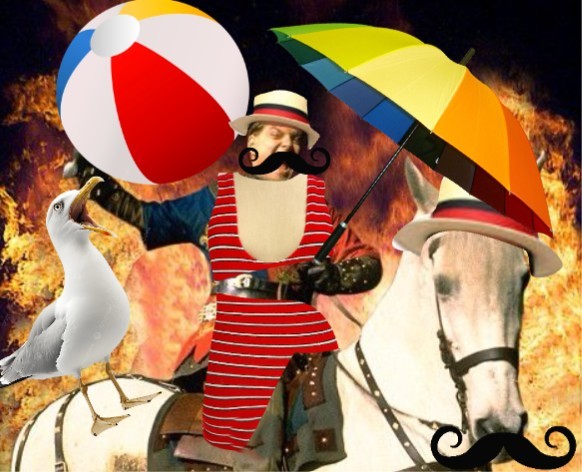
Once more unto the beach, dear friends!
This morning on “Sweetness and Light,” for Labor Day weekend, we’ll wring the last from our beach towels as we bid farewell to the summer season.
I’ll have two works that are Jersey Shore specific, including the “Cape May Suite” by Rick Sowash (who lives in Cincinnati) and “The Atlantic City Pageant” by John Philip Sousa – named for the famous beauty pageant and given its first performance on Atlantic City’s Steel Pier.
We’ll also hear from Virgil Thomson, Émile Waldteufel, Ronald Binge, Clive Richardson, Ralph Vaughan Williams, John Williams, and Morton Gould.
It will be hotter than Harfleur, but we’ll seek solace in the surf. Join me by the seaside for the last throes of summer, on “Sweetness and Light,” this Saturday morning at 11:00 EDT/8:00 PDT, exclusively on KWAX Classical Oregon!
Stream it, wherever you are, at the link:
https://kwax.uoregon.edu/
Tag: Kenneth Branagh
-
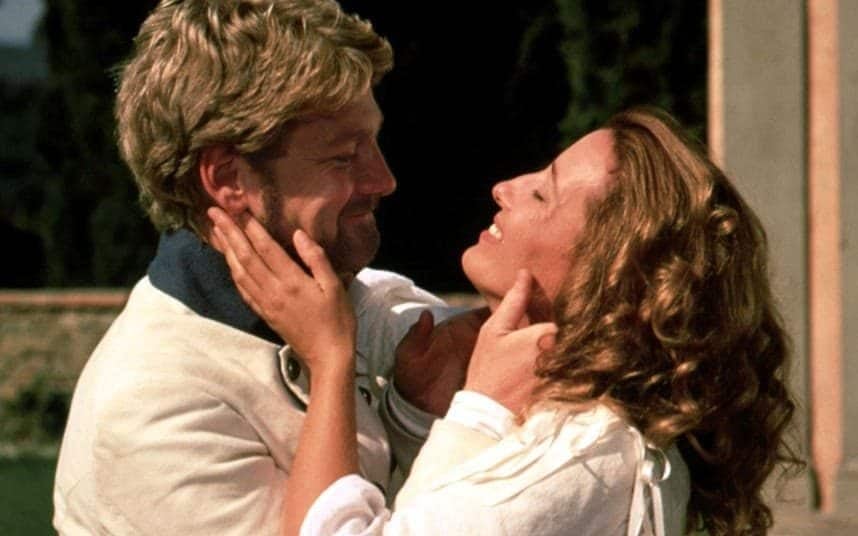
Strike Up, Pipers! Patrick Doyle Does Shakespeare on “Picture Perfect”
We don’t know exactly when Shakespeare was born, but he was baptized on April 26, 1564 – so it could have been a few days before that. Since he died on April 23, 1616, and because human beings love symmetry, the Bard’s birthday is most commonly observed on the presumptively-shared anniversary of his death. His little life may have been rounded with a sleep, but posterity has fluffed the pillows in an impulse to keep things tidy.
Be that as it may, this time of year is an excellent excuse to make much ado about Patrick Doyle. This week on “Picture Perfect,” we’ll enjoy selections from Doyle’s scores composed for the films of Kenneth Branagh.
In 1987, Doyle joined Branagh’s Renaissance Theatre Company, for which he provided incidental music. Two years later, Branagh – and by extension, Doyle – made a leap to the big screen, where they achieved a remarkable feat, rethinking Shakespeare’s “Henry V.” Remember, this is the play that propelled Laurence Olivier to worldwide fame in 1944, both as a filmmaker and the Bard’s most celebrated interpreter, and William Walton’s score is regarded as one of the best of all time.
Branagh’s version is quite different. Though equally rousing, it doesn’t shy away from Henry’s more complicated nature and the grittier aspects of what it means to go to war. It was a bold gamble, but one that paid off. Not only did this revisionist “Henry” receive nearly universal acclaim, the film was a box office success, and Branagh would be nominated for two Academy Awards, like his predecessor, in the categories of Best Actor and Best Director. Certainly, the film’s score deserved to be recognized – but in the year of “The Little Mermaid,” it failed even to secure an Academy Award nomination.
An interesting footnote: Doyle himself is the baritone who introduces “Non nobis Domine,” a prayer of thanksgiving, following the Battle of Agincourt.
In 2006, Branagh directed an adaptation of “As You Like It.” As has become his custom, he took a celebrity approach to its casting, although perhaps not so wildly uneven as some of the cameos in his big screen “Hamlet.” Kevin Kline plays Jacques; Alfred Molina the fool, Touchstone; and Branagh regulars, Brian Blessed and Richard Briers appear, as well.
The most radical liberty taken with the play is that Branagh transplants the action to 19th century Japan. The language remains firmly rooted in Shakespeare’s text, although there are striking cross-cultural elements, including ample kimonos, kabuki theatre, ninjas, and a sumo wrestler. Still, it’s a long way off from the astounding bomb that was Branagh’s American Songbook-interpolated “Love’s Labour’s Lost.”
While Olivier’s “Hamlet” won four Academy Awards in 1948, including those for Best Picture and Best Actor, Branagh’s 1996 version is cinema’s first adaptation of the complete text. It is, unavoidably, an uneven interpretation, with some puzzling casting choices – including walk-ons by Jack Lemmon, Robin Williams, and Gerard Depardieu – but there are enough merits, certainly, to make the four-hour trek worthwhile.
Finally, Branagh teamed with his then-wife, Emma Thompson, for a “merry war” of wits, as Benedick and Beatrice, in his 1993 adaptation of “Much Ado About Nothing.” Again, the film features an eclectic supporting cast of classically trained actors and pop Hollywood phenomena. Briers, Blessed, and Imelda Staunton share screen time with Denzel Washington, Michael Keaton, and Keanu Reeves. Yet, somehow, despite the different nationalities, ethnicities, and accents, the entire enterprise works. There is an exuberance to the over-the-top opening sequence which sets up a momentum that carries through the rest of the film.
Sigh no more! Join me for the Shakespeare scores of Patrick Doyle on “Picture Perfect,” music for the movies, now in syndication on KWAX Classical Oregon!
——–
Clip and save the start times for all three of my recorded shows:
PICTURE PERFECT, the movie music show – Friday at 8:00 PM EDT/5:00 PM PDT
SWEETNESS AND LIGHT, the light music program – Saturday at 11:00 AM EDT/8:00 AM PDT
THE LOST CHORD, unusual and neglected rep – Saturday at 7:00 PM EDT/4:00 PM PDT
Stream them, wherever you are, at the link!
https://kwax.uoregon.edu -

Shakespeare’s Birthday Henry V on Film
This week on “Picture Perfect,” it’s William Shakespeare’s birthday (observed).
No one knows for sure when the Bard was born – his baptismal date was April 26, 1564 – but since he died on April 23, 1616, the tradition has been to keep it tidy. So, like Mark Twain, who “came in” with Halley’s comet and “went out” upon its return, we feel it as a matter of poetic satisfaction that Shakespeare’s death date must also be his birth date.
All’s well that ends well! I’ll celebrate Shakespeare on both of my show’s this weekend (following up tomorrow night on “The Lost Chord” with some Shakespeare-inspired concert works at 10:00 EDT), beginning today with two complementary versions of “Henry V.”
William Walton composed his now-classic score for Laurence Olivier in 1944. We’ll hear selections from a recording that hews closer to the film’s original orchestrations than does the sanctioned concert suite by Muir Mathieson and restores the parts for chorus. In addition, Olivier himself will declaim two of Henry’s rousing speeches, in a separate release conducted by the composer.
Then Patrick Doyle will be the baritone that initiates the choral showpiece “Non nobis Domine” that caps his own acclaimed score for Kenneth Branagh’s directorial debut in 1989.
Olivier’s “Henry V” was nominated for four Academy Awards: those for Best Picture, Best Actor, Best Art Direction, and Best Score. It didn’t win in the competitive categories, but Olivier was honored with a special award “for his outstanding achievement as an actor, producer and director in bringing ‘Henry V’ to the screen.”
To go toe-to-toe with the 20th century’s most renowned Shakespearean interpreter was a bold gamble, but at 29 Branagh did just that. Amazingly, when his version galloped into theaters 45 years later, comparisons were not unfavorable. The film and Branagh’s performance would also be nominated (along with the film’s Costume Design). But despite its enthusiastic reception, Doyle’s music would be overlooked by the Academy. The soundtrack, however, received a lot of exposure on classical radio at the time, and the score remains popular.
It’s instructive to view the two directors’ takes on “Henry V” in the context of the times in which they were filmed. When Olivier brought Harry the King to the big screen, England was in throes of the Second World War and his “Henry” bubbles over with patriotic zeal.
Branagh, on the other hand, offers a grittier, post-Vietnam “Henry,” with his charismatic, ambitious king plunging his country into a war that is both costly and messy. Fortunately, as history tells us, the long-bow saves the day, and Branagh’s Henry makes us forget his cold rejection of old friendships with a hair-raising rendition of the St. Crispin’s Day speech that would drive anyone who hears it to want to fight the French, consequences be damned.
Judge for yourself, from these two contrasting interpretations of the St. Crispin’s pep talk from “Henry V.”
Olivier, a powerful and patriotic – if somewhat theatrical – symbol for the beleaguered British during World War II:
And Branagh, a cinematic, very human Henry for today:
https://www.youtube.com/watch?v=cRj01LShXN8
Once more unto the breach, dear friends! I hope you’ll join me for “Henry V” times two, on “Picture Perfect,” music for the movies, this Saturday at 6:00 EDT, on WWFM – The Classical Network and wwfm.org.
-
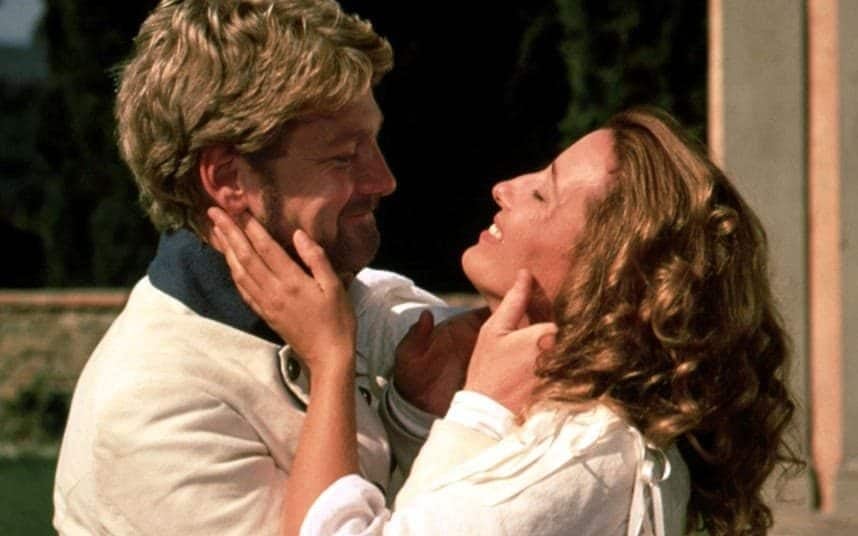
Patrick Doyle’s Shakespeare Sound
“Is it not strange that sheep’s guts should hale souls out of men’s bodies?”
This week on “Picture Perfect,” on the presumed birthday of William Shakespeare (April 23, 1564), we’ll make much ado about Patrick Doyle, with selections from his scores written for the films of Kenneth Branagh.
In 1987, Doyle joined Branagh’s Renaissance Theatre Company, for which he provided incidental music. Two years later, Branagh – and by extension, Doyle – made a leap to the big screen, where they achieved a remarkable feat, rethinking Shakespeare’s “Henry V.” Remember, this is the play that propelled Laurence Olivier to worldwide fame in 1944, both as a filmmaker and the Bard’s most celebrated interpreter, and William Walton’s score is regarded as one of the best of all time.
Branagh’s version is quite different. Though equally rousing, it doesn’t shy away from Henry’s more complicated nature and the grittier aspects of what it means to go to war. It was a bold gamble, but one that paid off. Not only did this revisionist “Henry” receive nearly universal acclaim, the film was a box office success, and Branagh would be nominated for two Academy Awards, like his predecessor, in the categories of Best Actor and Best Director. Certainly, the film’s score deserved to be recognized – but in the year of “The Little Mermaid,” it failed even to secure an Academy Award nomination.
An interesting footnote: Doyle himself is the baritone who introduces “Non nobis Domine,” a prayer of thanksgiving, following the Battle of Agincourt.
In 2006, Branagh directed an adaptation of “As You Like It.” As has become his custom, he took a celebrity approach to its casting, although perhaps not so widely uneven as some of the cameos in his big screen “Hamlet.” Kevin Kline plays Jacques; Alfred Molina the fool, Touchstone; and Branagh regulars, Brian Blessed and Richard Briers appear, as well.
The most radical liberty taken with the play is that Branagh transplants the action to 19th century Japan. The language remains firmly rooted in Shakespeare’s text, although there are striking cross-cultural elements, including ample kimonos, kabuki theatre, ninjas, and a sumo wrestler. Still, it’s a long way off from the astounding bomb that was Branagh’s American Songbook-interpolated “Love’s Labour’s Lost.”
While Olivier’s “Hamlet” won four Academy Awards in 1948, including those for Best Picture and Best Actor, Branagh’s 1996 version is cinema’s first adaptation of the complete text. It is, perhaps, an uneven interpretation, with some puzzling casting choices – including walk-ons by Jack Lemmon, Robin Williams, and Gerard Depardieu – but there are enough merits, certainly, to make the four-hour trek worthwhile.
Finally, Branagh teamed with his then-wife, Emma Thompson, for a “merry war” of wits, as Benedick and Beatrice, in his 1993 adaptation of “Much Ado About Nothing.” Again, the film features an eclectic supporting cast of classically trained actors and pop Hollywood phenomena. Briers, Blessed, and Imelda Staunton share screen time with Denzel Washington, Michael Keaton, and Keanu Reeves. Yet, somehow, despite the different nationalities, ethnicities, and accents, the entire enterprise works. There is an exuberance to the over-the-top opening sequence which sets up a momentum that carries through the rest of the film.
Sigh no more, but join me for the Shakespeare scores of Patrick Doyle on “Picture Perfect,” music for the movies, this Saturday evening at 6:00 EDT, on WWFM – The Classical Network and wwfm.org.
How could you not love this opening?
Faith and sheep’s guts in “Much Ado About Nothing”
-
Branagh’s Henry V Soundtrack & Shakespeare
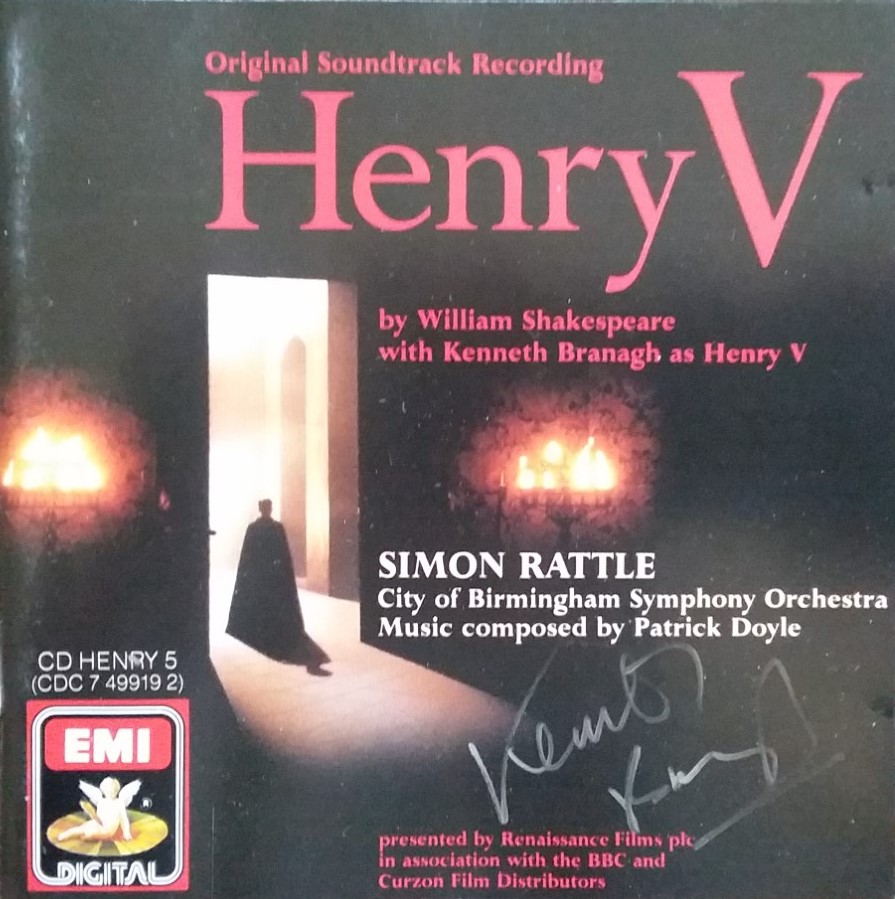
Here’s a glimpse of my soundtrack to Patrick Doyle’s “Henry V.” I had the booklet signed by Kenneth Branagh. At the time, Branagh had just been hired by Marvel to direct “Thor,” and I was hoping to talk him into casting Brian Blessed as Odin and Derek Jacobi as Loki. Alas, it was not to be… not that I ever thought it would be!
Enjoy selections from Branagh’s “Henry V,” alongside Doyle’s music for “As You Like It,” “Hamlet,” and “Much Ado About Nothing.”
Branagh meets the Bard on “Picture Perfect,” this Friday evening at 6:00 EDT, on WWFM – The Classical Network and wwfm.org.
Tag Cloud
Aaron Copland (93) Beethoven (95) Composer (114) Film Music (144) Film Score (143) Film Scores (255) Halloween (94) John Williams (195) KWAX (229) Leonard Bernstein (104) Marlboro Music Festival (125) Movie Music (159) Mozart (90) Opera (212) Philadelphia Orchestra (89) Picture Perfect (174) Princeton Symphony Orchestra (109) Radio (88) Ross Amico (244) Roy's Tie-Dye Sci-Fi Corner (290) The Classical Network (101) The Lost Chord (269) Vaughan Williams (105) WPRB (397) WWFM (881)