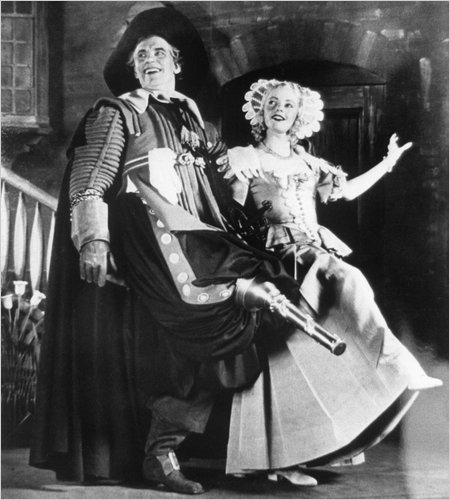
My goodness, it’s the last of September! It won’t be long now before I’ll be watching Walter Huston as Mr. Scratch in “The Devil and Daniel Webster” (1941). Here he is to sing Kurt Weill’s “September Song,” from “Knickerbocker Holiday” (1938). The lyrics are by Maxwell Anderson.
Tag: Kurt Weill
-
Pearl Harbor: Weill, Schoenberg, and Remembrance
December 7, FDR’s “day of infamy.”
On this date in 1941, a Japanese strike force of 353 aircraft laid waste to the United States naval base on Oahu, Hawaii. Thousands of American servicemen and civilians were killed, precipitating the country’s entry into World War II.
Although Europe, Russia, and the Far East were already at war, for the U.S. the attack on Pearl Harbor was an unanticipated catastrophe in peacetime. Days always start early in the service, but 7:48 on 12/7/41, a Sunday, will always be the wake-up call nobody wanted to get.
In past years, I’ve written about American-born composers with connections to those caught in the attacks or who memorialized those who perished in them. This year, I direct your attention to two European refugees who proudly embraced their adopted country in its time of need. Both were Jewish. Both got out of Nazi Germany early, in 1933.
Kurt Weill was denounced by the Nazis not only on racial grounds, but also for his leftist political leanings. After an interlude in Paris, he and his wife, Lotte Lenya, arrived in New York in 1935. There, he reinvented himself, embracing American popular song and stage music and finding success as a composer for Broadway. He became an American citizen in 1943.
Three of Weill’s Walt Whitman songs – “Beat! Beat! Drums!,” “Oh Captain! My Captain!,” and “A Dirge for Two Veterans” – were written in response to the Pearl Harbor attack. He composed a fourth, “Come Up from the Fields, Father,” in 1947. Weill went on to orchestrate the first three of them. Carlos Surinach orchestrated the last, following the composer’s untimely death, three years later, at the age of 50.
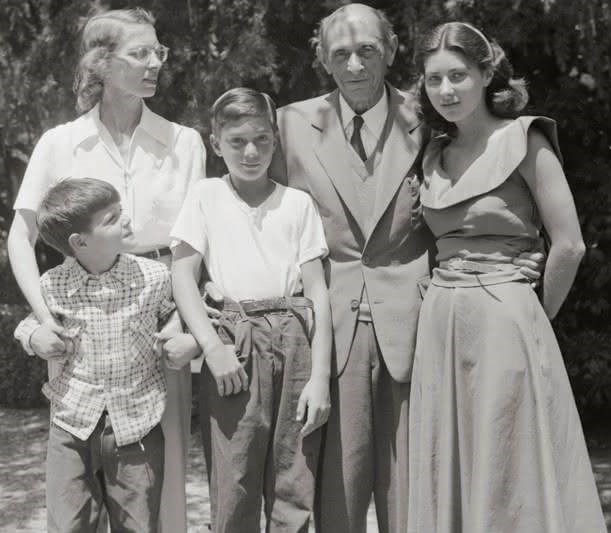
Arnold Schoenberg, who was actually Austrian, also left Germany in 1933. When the Nazis banned Jews from the universities, he lost his teaching position at the Prussian Academy of Arts. Furthermore, his music was branded “degenerate.” Schoenberg had actually converted to Lutheranism in 1898; but Nazi anti-Semitism caused him to swing back hard to Judaism, in defiance of Hitler. He became an American citizen in 1941.
In contrast to Weill, Schoenberg found the vulgarity and vacuity of much of American culture frustrating. Yet he was clearly grateful to have been “driven into paradise,” as he described it, where “my head can be erect.”
The attack on Pearl Harbor stirred him to reflect on his indebtedness to his adopted country. Leonard Stein, his assistant at the time, recollected a conversation they had had on December 7, following the bombing, which led him to believe that perhaps Schoenberg’s “Ode to Napoleon” was written in direct response to the event. More broadly, the composer’s setting of the poem by Lord Byron is a thrust in the face of tyranny that culminates in a commitment to the ideal of democracy as personified by George Washington.
Not popular entertainment, perhaps – sprechstimme would be a hard-sell for the masses – but clearly Schoenberg had his heart in the right place.
Weill, “Four Walt Whitman Songs” (orchestrated)
Schoenberg, “Ode to Napoleon”
PHOTOS: Schoenberg and family in the 1940s; Weill and Lenya at the piano
-
Columbus Day Music From Dvorak to Weill
Without wishing to throw my austere explorer’s hat into the ring on the whole Columbus Day controversy, this is an interesting article in the Washington Post about the origins of the now-reviled holiday and its significance to Italian-American history. Don’t like it? Thank American “nativist” backlash against Italian immigrants and violence against Italian-Americans – and a Hail Mary pass (my dad’s people may have been Italian, but my mother was Irish) by President Benjamin Harrison to stem anti-immigration sentiment. Hey, if things had played out differently, Americans could just as easily have been arguing about Giovanni da Verrazzano.
The greatest irony is the article’s concluding observation. There is nothing at all incendiary in the fairly objective tone of the piece (which the Post has published as an “opinion”), but the comments are full of passionate vitriol.
What’s all this got to do with music? Whether due to personal interest or in pursuit of a paycheck, there are plenty of composers who wrote works inspired by, or commissioned to celebrate, Columbus: Leonardo Balada, Antonin Dvořák, Manuel de Falla, Alberto Franchetti, Philip Glass, Victor Herbert, Arthur Honegger, Darius Milhaud, Richard Wagner, Sir William Walton, and Kurt Weill are just a few that spring to mind.
No political message intended; I simply find the article – and some of the music – interesting.
Well, at least, to my knowledge, nobody raises hell anymore about Amerigo Vespucci (for whom “America” is named) – except perhaps Kurt Weill and Ira Gershwin.
-

September Song Kurt Weill’s Timeless Classic
The last of September. My favorite Kurt Weill song? “September Song,” from “Knickerbocker Holiday.” Here’s Walter Huston in 1938. The lyrics are by Maxwell Anderson.
-
Princeton Festival: Storm Large & Carmen Suite
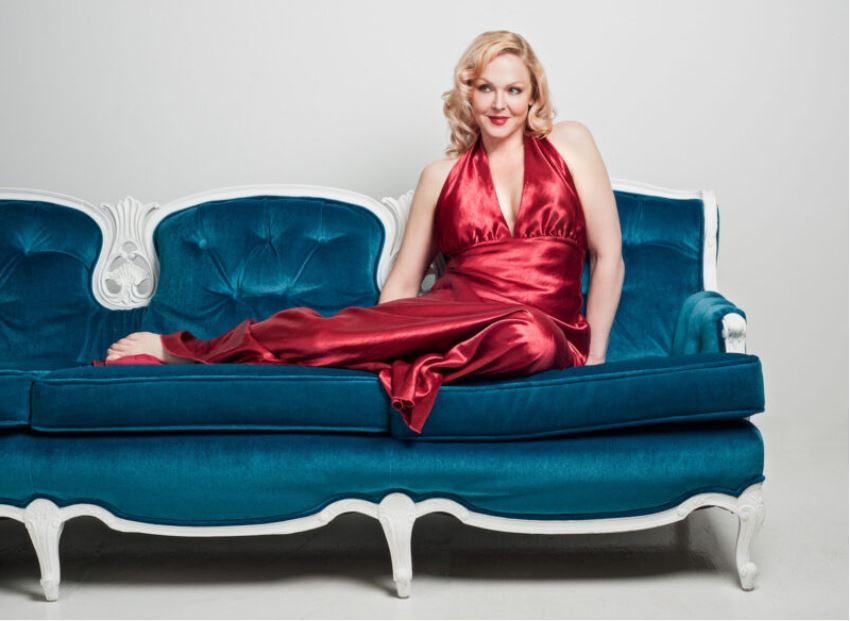
The all-new The Princeton Festival (the first overseen by the Princeton Symphony Orchestra) begins this evening at 7:30, with Storm Large in Kurt Weill’s “The Seven Deadly Sins.” On the second half of the program: Rodion Shchedrin’s colorful arrangement for strings and percussion of Bizet’s most famous music as the “Carmen Suite.”
Rossen Milanov will conduct, in a specially-constructed outdoor 10,000 square foot state-of-the-art performance tent on the grounds of Morven Museum & Garden on Route 206 (55 Stockton Street), not far from the Princeton Battle Monument.
The Princeton Festival runs through June 25, with a variety of musical events filling every evening: opera, jazz, cabaret, musical theater, chamber music, classical and Broadway pops, and Baroque music across the street at Trinity Episcopal Church.
Partake of free pre-concert talks, a poetry workshop, an on-site bar, and abundant lawn space at Morven for picnicking prior to the concerts. For a complete schedule, visit princetonsymphony.org/festival.
In case you missed it, here’s my preview in last week’s U.S. 1
The raising of the tent!
Storm Large sings “The Seven Deadly Sins” with the Detroit Symphony Orchestra
Rodion Shchedrin’s “Carmen Suite”
https://www.youtube.com/watch?v=QysD8zCfGTs
Direct link to tickets for tonight’s concert
https://princetonsymphony.org/performances/seven-deadly-sins/2022-06-10
Tag Cloud
Aaron Copland (93) Beethoven (95) Composer (114) Film Music (144) Film Score (143) Film Scores (255) Halloween (94) John Williams (195) KWAX (229) Leonard Bernstein (104) Marlboro Music Festival (125) Movie Music (159) Mozart (90) Opera (212) Philadelphia Orchestra (89) Picture Perfect (174) Princeton Symphony Orchestra (109) Radio (88) Ross Amico (244) Roy's Tie-Dye Sci-Fi Corner (290) The Classical Network (101) The Lost Chord (269) Vaughan Williams (105) WPRB (397) WWFM (881)