Tag: Late Romanticism

  • Rued Langgaard Eccentric Genius Rediscovered

    Rued Langgaard Eccentric Genius Rediscovered

    Even by composer standards, Rued Langgaard (1893-1952) was a little bit of a strange bird. Despite a promising start – born to musical parents, a precocious childhood, meetings with major conductors, and a symphony performed by the Berlin Philharmonic – his personal and creative eccentricities worked against him.

    Langgaard followed his personal muse deep into the realm of late Romanticism at a time when most of the musical world was exploring modernist territory. Though he was given a state grant at 30, he failed to secure a permanent job until the age of 46, as an organist at the cathedral in Ribe, the oldest town in Denmark – which somehow seems appropriate for this most anachronistic of Danish outsiders.

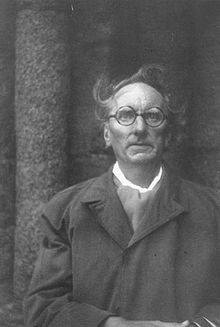
    An eccentric, shabby figure with wild hair, Laangaard died in Ribe 13 years later, in 1952, just shy of his 59th birthday, still largely unrecognized as a composer.

    His reputation would not begin to gain traction for another 16 years. In all, he composed over 400 works, including 16 symphonies – which bear evocative titles such as “Yon Hall of Thunder” and “Deluge of the Sun” – and an opera, “Antikrist.”

    It was in 1968 that no less a personage than György Ligeti found himself on a jury alongside Danish composer Per Nørgård. In this capacity, he examined a large number of new scores by Scandinavian composers. Unbeknownst to his fellow jurors, Nørgård had slipped in the score of Langgaard’s “Music of the Spheres.” Ligeti became captivated by what he found. When the ruse was revealed, he exclaimed, with a twinkle in his eye, “Gentlemen, I have just discovered that I am a Langgaard epigone!”

    Langgaard had anticipated some of the technical aspects – tone clusters, layers, and so forth – which would appear in Ligeti’s avant garde experiments of the 1960s, in works such as “Atmosphères.”

    I hope you’ll join me for “Rued Awakenings,” music of Rued Langgaard, including “Music of the Spheres,” on “The Lost Chord,” this Sunday night at 10:00 EST, on WWFM – The Classical Network and wwm.org.
  • Rued Langgaard Eccentric Genius Rediscovered

    Rued Langgaard Eccentric Genius Rediscovered

    Even by composer standards, Rued Langgaard (1893-1952) was a little bit of a strange bird. Despite a promising start – born to musical parents, a precocious childhood, meetings with major conductors, and a symphony performed by the Berlin Philharmonic – his personal and creative eccentricities worked against him.

    Langgaard followed his personal muse deep into the realm of late Romanticism at a time when most of the musical world was exploring modernist territory. Though he was given a state grant at 30, he failed to secure a permanent job until the age of 46, as an organist at the cathedral in Ribe, the oldest town in Denmark – which somehow seems appropriate for this most anachronistic of Danish outsiders.

    An eccentric, shabby figure with wild hair, Laangaard died in Ribe 13 years later, in 1952, just shy of his 59th birthday, still largely unrecognized as a composer.

    His reputation would not begin to gain traction for another 16 years. In all, he composed over 400 works, including 16 symphonies – which bear evocative titles such as “Yon Hall of Thunder” and “Deluge of the Sun” – and an opera, “Antikrist.”

    It was in 1968 that no less a personage than György Ligeti found himself on a jury alongside Danish composer Per Nørgård. In this capacity, he examined a large number of new scores by Scandinavian composers. Unbeknownst to his fellow jurors, Nørgård had slipped in the score of Langgaard’s “Music of the Spheres.” Ligeti became captivated by what he found. When the ruse was revealed, he exclaimed, with a twinkle in his eye, “Gentlemen, I have just discovered that I am a Langgaard epigone!”

    Langgaard had anticipated some of the technical aspects – tone clusters, layers, and so forth – which would appear in Ligeti’s avant garde experiments of the 1960s, in works such as “Atmosphères.”

    Hear “Music of the Spheres,” alongside Langgaard’s String Quartet No. 3, this week on “The Lost Chord.” That’s “Rued Awakenings,” this Sunday night at 10:00 EDT, on WWFM – The Classical Network and wwm.org.
  • Rued Langgaard Eccentric Genius Rediscovered

    Rued Langgaard Eccentric Genius Rediscovered

    Even by composer standards, Rued Langgaard (1893-1952) was a little bit of a strange bird. Despite a promising start – born to musical parents, a precocious childhood, meetings with major conductors, and a symphony performed by the Berlin Philharmonic – his personal and creative eccentricities worked against him.

    Langgaard followed his personal muse deep into the realm of late Romanticism at a time when most of the musical world was exploring modernist territory. Though he was given a state grant at 30, he failed to secure a permanent job until the age of 46, as an organist at the cathedral in Ribe, the oldest town in Denmark – which somehow seems appropriate for this most anachronistic of Danish outsiders.

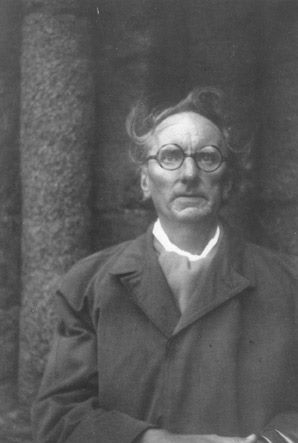
    An eccentric , shabby figure with wild hair, Laangaard died in Ribe 13 years later, in 1952, just shy of his 59th birthday, still largely unrecognized as a composer.

    His reputation would not begin to gain traction for another 16 years. In all, he composed over 400 works, including 16 symphonies – which bear evocative titles such as “Yon Hall of Thunder” and “Deluge of the Sun” – and an opera, “Antikrist.”

    Be sure to listen in, in the 9:00 hour this morning, to enjoy Langgaard’s Symphony No. 4, subtitled “Fall of the Leaf.” It’s all music about autumn this morning until 11:00 ET, at WPRB 103.3 FM and online at wprb.com.

  • Rued Langgaard Eccentric Danish Genius

    Rued Langgaard Eccentric Danish Genius

    Rued Langgaard, a name to challenge the English-speaking tongue if ever there was one, followed a vision quite unlike any other in Danish music. A precocious pianist, organist and composer, he studied theory under C.F.E. Horneman and later Vilhelm Rosenberg, with lessons in counterpoint, briefly, under Carl Nielsen.

    His first compositions were published when he was 13. By the time he was 19, his first symphony was performed by the Berlin Philharmonic. After such a promising start, sadly it was all downhill from there.

    Langgaard followed his own eccentric muse deep into the realm of late Romanticism at a time when most of the musical world was exploring modernist territory. Though he was given a state grant at 30, he failed to secure a permanent job until the age of 46, as an organist at the cathedral in Ribe, the oldest town in Denmark – which somehow seems appropriate for this most anachronistic of Danish outsiders.

    An eccentric, shabby figure with wild hair, Laangaard died in Ribe 13 years later, in 1952, just shy of his 59th birthday, still largely unrecognized as a composer.

    His reputation would not begin to gain traction for another 16 years. In all, he composed over 400 works, including 16 symphonies – which bear evocative titles such as “Yon Hall of Thunder” and “Deluge of the Sun” – and an opera, “Antikrist.”

    Langgaard believed he was living in a corrupt age, the age of Antichrist, where the clash of good and evil was coming to a furious climax. The final movement of his “Music of the Spheres” suggests an encounter between Christ and his malevolent doppelganger.

    “Music of the Spheres” was composed between 1916 and 1918. In the preface to the score, the composer describes the work as “celestial and earthly music from red glowing strings, on which life plays with claws of a beast of prey – life, with a crown of iris on its marble face and the stereotypical – yet living – demonic smile on its lily-white cheeks…”

    The descriptive titles of the movements are as follows:

    I. Like sunbeams on a coffin decorated with sweet-smelling flowers
    II. Like the twinkling of stars in the blue sky at sunset –
    III. Like light and the depths –
    IV. Like the refraction of sunbeams in the waves –
    V. Like the twinkling of a pearl of dew in the sun on a beautiful summer’s morning –
    VI. Longing – Despair – Ecstasy –
    VII. Soul of the world – Abyss – All Soul’s Day –
    VIII. I wish…! –
    IX. Chaos – Ruin – Far and near –
    X. Flowers wither –
    XI. Glimpse of the sun through tears –
    XII. Bells pealing: Look! He comes –
    XIII. The gospel of flowers – From the far distance –
    XIV. The new day –
    XV. The end: Antichrist – Christ

    Here is Langgaard’s “Music of the Spheres”:

    And his name pronounced by a native speaker, on Forvo:

    http://www.forvo.com/word/rued_langgaard/

    You go, Rued Langgaard! Happy birthday.

Tag Cloud

Aaron Copland (92) Beethoven (95) Composer (114) Film Music (119) Film Score (143) Film Scores (255) Halloween (94) John Williams (185) KWAX (229) Leonard Bernstein (99) Marlboro Music Festival (125) Movie Music (134) Opera (198) Philadelphia Orchestra (86) Picture Perfect (174) Princeton Symphony Orchestra (106) Radio (87) Ralph Vaughan Williams (85) Ross Amico (244) Roy's Tie-Dye Sci-Fi Corner (290) The Classical Network (101) The Lost Chord (268) Vaughan Williams (102) WPRB (396) WWFM (881)

DON’T MISS A BEAT

Receive a weekly digest every Sunday at noon by signing up here


RECENT POSTS