Tag: Laurence Olivier

  • Shakespeare’s Birthday Henry V on Film

    Shakespeare’s Birthday Henry V on Film

    This week on “Picture Perfect,” it’s William Shakespeare’s birthday (observed).

    No one knows for sure when the Bard was born – his baptismal date was April 26, 1564 – but since he died on April 23, 1616, the tradition has been to keep it tidy. So, like Mark Twain, who “came in” with Halley’s comet and “went out” upon its return, we feel it as a matter of poetic satisfaction that Shakespeare’s death date must also be his birth date.

    All’s well that ends well! I’ll celebrate Shakespeare on both of my show’s this weekend (following up tomorrow night on “The Lost Chord” with some Shakespeare-inspired concert works at 10:00 EDT), beginning today with two complementary versions of “Henry V.”

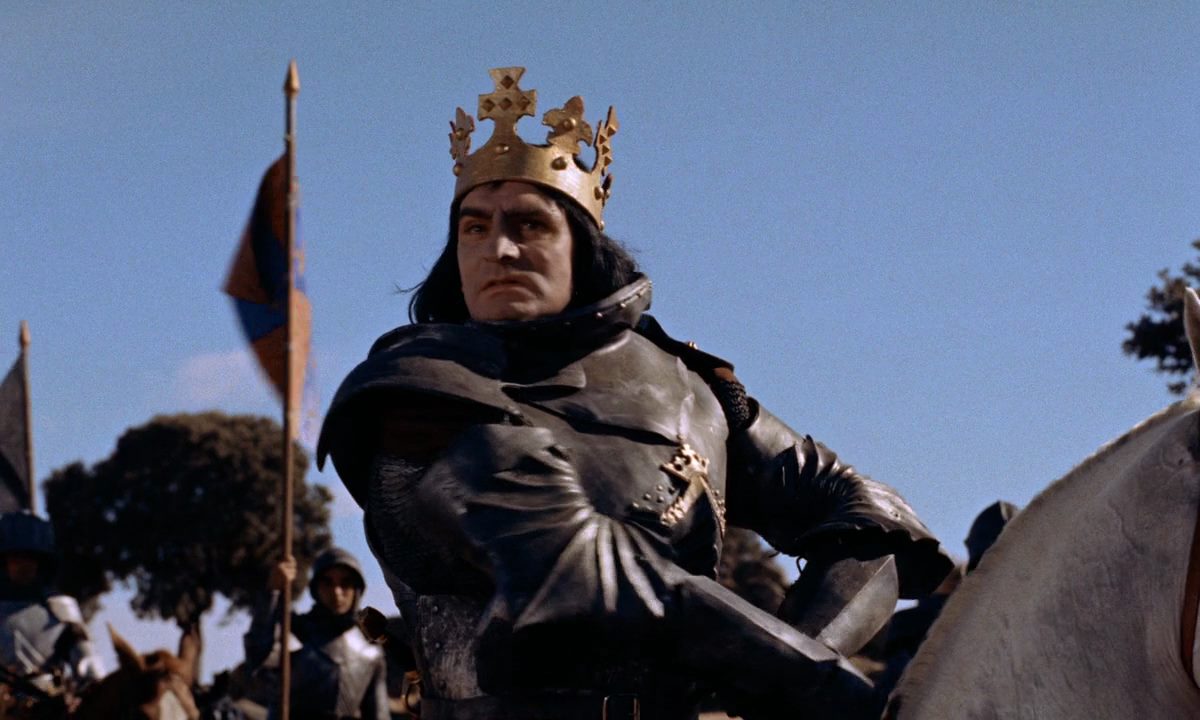
    William Walton composed his now-classic score for Laurence Olivier in 1944. We’ll hear selections from a recording that hews closer to the film’s original orchestrations than does the sanctioned concert suite by Muir Mathieson and restores the parts for chorus. In addition, Olivier himself will declaim two of Henry’s rousing speeches, in a separate release conducted by the composer.

    Then Patrick Doyle will be the baritone that initiates the choral showpiece “Non nobis Domine” that caps his own acclaimed score for Kenneth Branagh’s directorial debut in 1989.

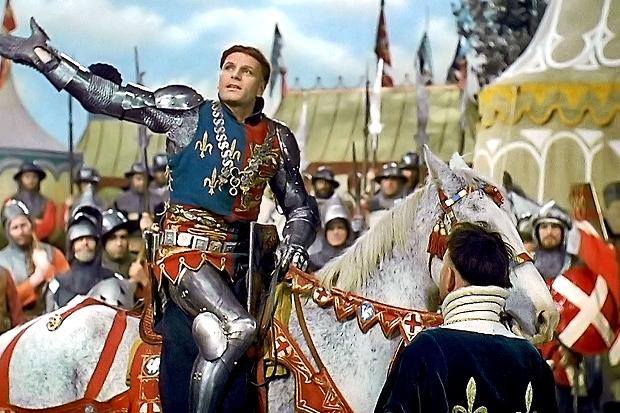
    Olivier’s “Henry V” was nominated for four Academy Awards: those for Best Picture, Best Actor, Best Art Direction, and Best Score. It didn’t win in the competitive categories, but Olivier was honored with a special award “for his outstanding achievement as an actor, producer and director in bringing ‘Henry V’ to the screen.”

    To go toe-to-toe with the 20th century’s most renowned Shakespearean interpreter was a bold gamble, but at 29 Branagh did just that. Amazingly, when his version galloped into theaters 45 years later, comparisons were not unfavorable. The film and Branagh’s performance would also be nominated (along with the film’s Costume Design). But despite its enthusiastic reception, Doyle’s music would be overlooked by the Academy. The soundtrack, however, received a lot of exposure on classical radio at the time, and the score remains popular.

    It’s instructive to view the two directors’ takes on “Henry V” in the context of the times in which they were filmed. When Olivier brought Harry the King to the big screen, England was in throes of the Second World War and his “Henry” bubbles over with patriotic zeal.

    Branagh, on the other hand, offers a grittier, post-Vietnam “Henry,” with his charismatic, ambitious king plunging his country into a war that is both costly and messy. Fortunately, as history tells us, the long-bow saves the day, and Branagh’s Henry makes us forget his cold rejection of old friendships with a hair-raising rendition of the St. Crispin’s Day speech that would drive anyone who hears it to want to fight the French, consequences be damned.

    Judge for yourself, from these two contrasting interpretations of the St. Crispin’s pep talk from “Henry V.”

    Olivier, a powerful and patriotic – if somewhat theatrical – symbol for the beleaguered British during World War II:

    And Branagh, a cinematic, very human Henry for today:

    https://www.youtube.com/watch?v=cRj01LShXN8

    Once more unto the breach, dear friends! I hope you’ll join me for “Henry V” times two, on “Picture Perfect,” music for the movies, this Saturday at 6:00 EDT, on WWFM – The Classical Network and wwfm.org.

  • Langella’s Dracula A Retro Review

    Langella’s Dracula A Retro Review

    Frank Langella’s characterization of Bram Stoker’s Dracula drove the critics wild when the play by Hamilton Deane and John L. Balderston was revived on Broadway in 1977. It was the same adaptation that propelled Bela Lugosi to the big screen. But when the film “Dracula” (1979) was released a couple of years later, reviews were mixed.

    Langella retained his dreamy magnetism, and the producers managed to secure Sir Laurence Olivier and Kate Nelligan for the parts of Van Helsing and Lucy, respectively, but I wonder if John Badham was the best choice for director. Badham had just come off the enormous box office success of “Saturday Night Fever,” and it looks as if his Dracula retains John Travolta’s hair. You know, just for luck.

    I haven’t seen the film for decades, and having rewatched it now after rereading the book (for the first time in 30 years), I’ve got a few bones to pick. I hope you’ll join Roy and me tomorrow night, on the next Roy’s Tie-Dye Sci-Fi Corner, when I sink my fangs into “Dracula.” Enjoy some extra garlic on your pizza as you share your thoughts in the comments section. We’ll livestream with the undead on Facebook, this Friday evening at 7:00 EDT!

    https://www.facebook.com/roystiedyescificorner


    I remember being so excited, watching this trailer as a 13 year-old at the movies. When Langella leaped through a window and transformed into a wolf in mid-flight to John Williams’ music, it was almost more than I could bear. Watch the trailer (so much crisper and more intoxicating in the theater) here:

  • Shakespeare St Crispin’s Day Speech Analysis

    Shakespeare St Crispin’s Day Speech Analysis

    Happy birthday – and lamentable death date – William Shakespeare!

    The next time you’re feeling overwhelmed, do yourself a favor and revisit these two contrasting interpretations of the St. Crispin’s pep talk from “Henry V.”

    Olivier, a powerful and patriotic – if somewhat theatrical – symbol for the beleaguered British during World War II:

    And Branagh, a cinematic, very human Henry for today:

    https://www.youtube.com/watch?v=cRj01LShXN8

    Wow! Somebody hand me a sword!

    #Shakespeare400

  • Shakespeare’s Cinematic Legacy: Walton & Olivier

    Shakespeare’s Cinematic Legacy: Walton & Olivier

    April 23 marks the 400th anniversary of the death of William Shakespeare. We’ll honor the Bard on “Picture Perfect” over the coming weeks with music from film adaptations of his plays.

    William Walton may be the composer most associated with the cinematic Bard, thanks to his collaborations with Laurence Olivier. While Walton participated in three superb Olivier productions, beginning with “Henry V” in 1944, and continuing with “Hamlet” in 1948 and “Richard III” in 1955, the two had actually been brought together on an earlier Shakespeare project, in which Olivier appeared solely as an actor – a very charming version of “As You Like It.” The 1936 film was directed by Paul Czinner and starred his wife, Elisabeth Bergner, as Rosalind. Olivier appeared as the love-struck Orlando.

    Walton’s “Henry V” would become one of the most celebrated film scores of all time, certainly in terms of a so-called concert composer working in the cinema. The music is best known in a concert arrangement by Muir Mathieson, who conducted the orchestra on the film’s actual soundtrack. We’ll hear a recording that restores the composer’s original orchestration AND incorporates the chorus, as in the film.

    For Walton’s work on Olivier’s 1948 adaptation of “Hamlet,” the composer was nominated for an Academy Award for Best Original Score. The film won four Oscars in all, including that for Best Picture. Olivier directed himself in an Academy Award-winning performance. It was the first foreign film to be honored as Best Picture.

    Finally, we’ll turn to “Richard III,” from 1955, by which time both Olivier and Walton could be addressed as “Sir.” (Olivier was knighted in 1947; Walton received his knighthood in 1951.) Olivier gives a wry performance as the scheming Duke of Gloucester. While he very much enjoyed their ongoing partnership, Walton felt there was a limit to just how many ceremonial fanfares and battle charges he could compose. Across the head of the score he inscribed the instruction, in Italian, “Con prosciutto, agnello e confitura di fragole” – “With ham, lamb and strawberry jam.” Nevertheless, he manages to turn in yet another superb score.

    I hope you’ll join me for an hour of fanfares and battle charges, with an interlude of brooding over the skull of Yorick, this Friday evening at 6 EDT, with a repeat Saturday morning at 6; or that you’ll listen to it later as a webcast at wwfm.org.

    Here’s an appreciation of Walton’s Shakespearean achievements that ran in The Telegraph during the composer’s centenary in 2002, rightly noting his influence on John Williams:

    http://www.telegraph.co.uk/culture/music/classicalmusic/3574714/The-last-great-movie-composer.html

    #Shakespeare400

  • Shakespeare Film Scores Olivier vs Branagh

    Shakespeare Film Scores Olivier vs Branagh

    We continue our celebration of the 450th anniversary of the birth of William Shakespeare on “Picture Perfect” this week, with music from film adaptations made by Laurence Olivier and Kenneth Branagh. The two overlapped on a handful of the Shakespeare plays, including “Henry V” and “Hamlet.” William Walton was Olivier’s house composer, and Patrick Doyle provides the scores for Branagh.

    Walton and Olivier collaborated on three big projects, with Olivier as actor, director and usually producer – “Henry V” (1944), “Hamlet” (1948) and “Richard III” (1955). Earlier, in 1936, Walton scored a film version of “As You Like It.” Olivier didn’t direct this one, but rather appeared in one of the leads as the lovesick Orlando. In the role of Rosalind was the more unconventional choice of Austrian actress Elisabeth Bergner, who had played the role on stage. Her husband, Paul Czinner, directed. The film exudes great charm, and Walton’s music is as close to springtime as it gets.

    Branagh is today’s foremost popularizer of the Bard. His turn as actor and director in “Henry V” (1989) boldly placed him toe-to-toe with Olivier. Amazingly – and deservedly – comparisons were not unfavorable. Branagh’s performance was nominated for an Academy Award. (Olivier, too, had been nominated, and received a special award for his “Outstanding achievement as actor, producer and director in bringing ‘Henry V’ to the screen”). However, by the time Branagh came to direct his version of “As You Like It” (2006), a number of factors had changed.

    Following “Henry V,” things continued promisingly with a crowd-pleasing romp, “Much Ado About Nothing” (1993). But then Branagh mounted an unabridged, four-hour film adaptation of “Hamlet” (1996), laden with crazy cameos from Jack Lemmon (bad) to Charlton Heston (amazingly good), followed by a headscratch-inducing, American Songbook-laden “Love’s Labours Lost” (2000), which was universally panned. It certainly didn’t help Shakespeare’s clout in the eyes of distributors.

    “As You Like It” received theatrical showings overseas, but was shown in America only on HBO. In Branagh’s version, the forest of Arden is transferred to 19th century Japan. There, English traders encounter ample kimonos, kabuki theatre, ninjas and a sumo wrestler. As always, Doyle provides a score that is lyrical and lovely.

    It’s instructive to view the two directors’ takes on “Henry V” in the context of the times in which they were filmed. When Olivier brought Harry the King to the big screen, England was in throes of the Second World War and his “Henry” bubbles over with patriotic zeal.

    Branagh, on the other hand, offers a darker, post-Vietnam “Henry,” with his charismatic, ambitious king plunging his country into a war that is both costly and messy. Fortunately, as history tells us, the long-bow saves the day, and Branagh’s Henry makes us forget his cold rejection of old friendships with a hair-raising rendition of the St. Crispin’s Day speech that makes anyone who hears it want to fight the French, consequences be damned.

    Join me Friday evening at 6 ET for “Picture Perfect: Music for the Movies,” or catch the show later as a webcast, at http://www.wwfm.org.

Tag Cloud

Aaron Copland (92) Beethoven (95) Composer (114) Film Music (120) Film Score (143) Film Scores (255) Halloween (94) John Williams (185) KWAX (229) Leonard Bernstein (100) Marlboro Music Festival (125) Movie Music (135) Opera (198) Philadelphia Orchestra (88) Picture Perfect (174) Princeton Symphony Orchestra (106) Radio (87) Ralph Vaughan Williams (85) Ross Amico (244) Roy's Tie-Dye Sci-Fi Corner (290) The Classical Network (101) The Lost Chord (268) Vaughan Williams (103) WPRB (396) WWFM (881)

DON’T MISS A BEAT

Receive a weekly digest every Sunday at noon by signing up here


RECENT POSTS