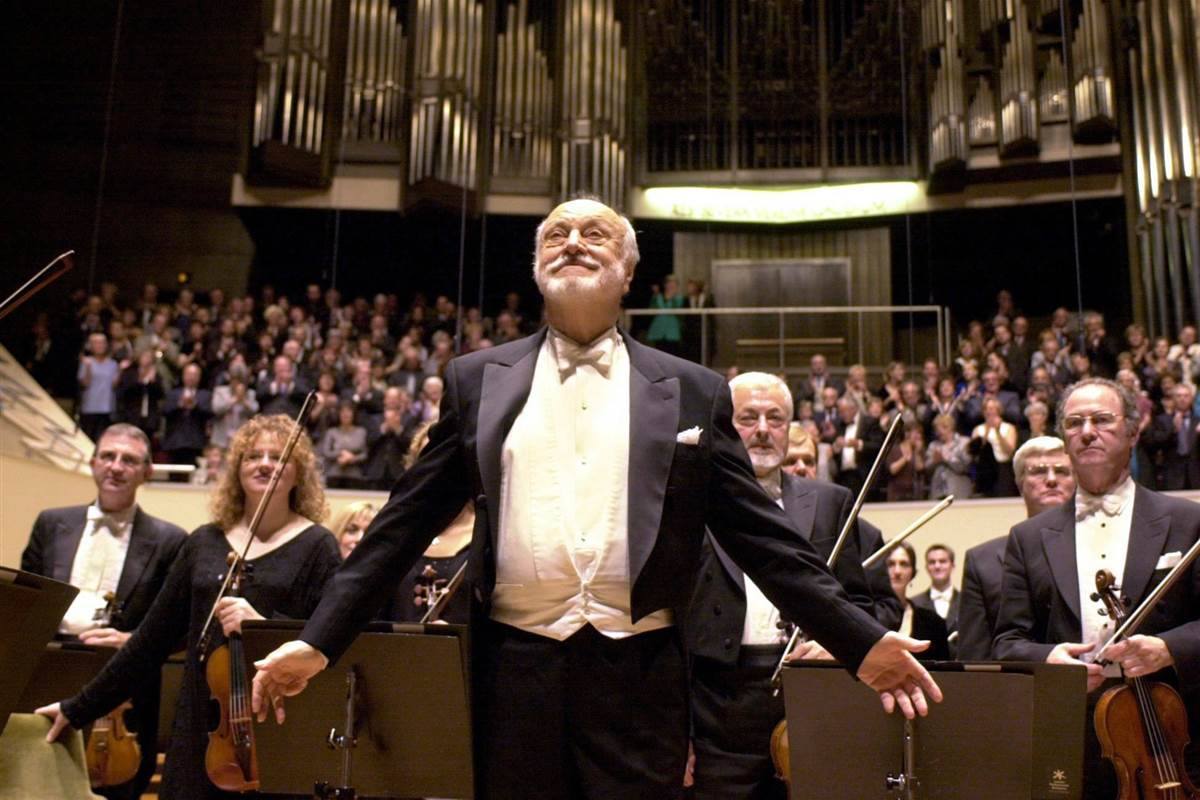
Tag: Leipzig Gewandhaus Orchestra

  • Carl Reinecke: A Forgotten Master

    Carl Reinecke: A Forgotten Master

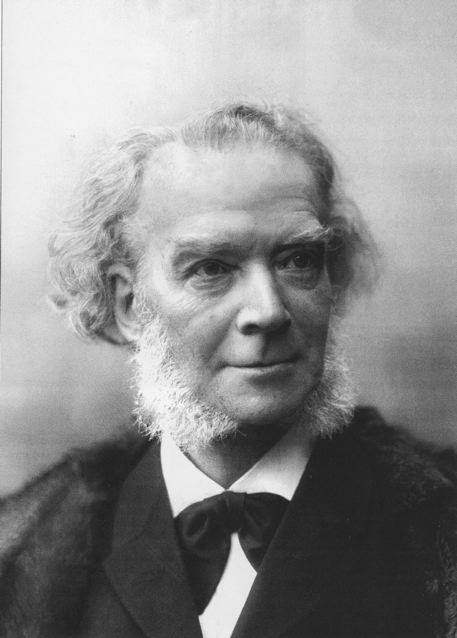
    Today marks the bicentennial of the birth of Carl Reinecke (1824-1910). What, no fireworks? Perhaps there should be.

    Reinecke lived an unusually long life for his day. But it is the amount of incident crammed into that life that makes it seem even more so.

    A musical prodigy who composed from the age of 7, and performed in public from the age of 12, Reinecke lived and worked in Copenhagen, Paris, Cologne, and Leipzig. He studied with Felix Mendelssohn, Robert Schumann, and Franz Liszt. His concert tours took him all over Germany, Denmark, Sweden, and the British Isles.

    He taught in Cologne, Breslau, and Leipzig. Among his pupils were Isaac Albéniz, Max Bruch, Ferruccio Busoni, Mikalojus Čiurlionis, Edvard Grieg, Leoš Janáček, Julius Röntgen, Christian Sinding, Charles Villiers Stanford, Johan Svendsen, and Felix Weingartner. Furthermore, he was music director of the Leipzig Gewandhaus Orchestra for 35 years. (The final, seven-movement version of Brahms’ “Ein deutsches Requiem” was among the works he premiered.)

    Somewhere along the way, he found time to compose. I mean a lot. Look at the opus numbers on the links below! Operas, symphonies, concertos, chamber music, and instrumental works – some 300 pieces published. As if that’s not enough to make one sit up and take notice, it’s not far into the Opp. 200s that he’s writing in the 20th century. Think about that. I don’t know, it blows MY mind. It really brings home just how short music history is.

    At the time of his birth, Beethoven and Schubert were still alive. In fact, he was born the same year Schubert wrote his “Death and the Maiden” quartet. He died the year Alban Berg wrote HIS String Quartet. It was a totally different world.

    Toward the end of his life, between 1904 and 1907, Reinecke made some 27 piano rolls, 12 of which document performances of his own music. He was the earliest born musician to have his artistry as an interpreter preserved in any format. Among the other composers whose music he “recorded” were Haydn, Mozart, Beethoven, and Schumann.

    He died in 1910 at the age of 85.

    And where is he now? Flutists, I suppose, still know “Undine.” Pianists may be familiar with the cadenzas he wrote for the Mozart and Beethoven concertos. He also composed a fun “Toy Symphony” I used to enjoy broadcasting around Christmas.

    Mostly, however, his works remain cherished secrets for the blessed few, like holy relics preserved in the hearts and libraries of the most devout musical monastics.

    You’ll find plenty to enjoy below. Take a few minutes today to celebrate Carl Reinecke!


    Flute Sonata in E minor, Op. 167 “Undine” (1882) – the subtitle alludes to a novella by Friedrich de la Motte Fouqué, very popular among the Romantics, that tells the story of a water spirit who marries a knight in order to gain a soul

    Flute Concerto in D major, Op. 283 (1908)

    Harp Concerto in E minor, Op. 182 (1884)

    Piano Concerto No. 3 in C major, Op. 144 (1877)

    Violin Concerto in G minor, Op. 141 (1876), composed for Joseph Joachim

    Toy Symphony, Op. 239 (first 15 minutes of this LP)

    Piano Quartet in E-flat major, Op. 34 (1853)

    https://www.youtube.com/watch?v=R45wVXFx6ac

    Trio in A minor for Clarinet, Viola, and Piano, Op. 264 (1903)

    https://www.youtube.com/watch?v=bM1IG1Wm7nU

    Octet for Winds in B-flat major, Op. 216 (1892)

    Hupfeld piano roll, c. 1908, of Reinecke and his wife, Margharite, playing selections from his suite “Nutcracker and Mouse King,” composed in 1855 – predating Tchaikovsky’s ballet on the same subject by nearly 40 years

    More piano rolls

    https://www.forte-piano-pianissimo.com/carlreinecke.html

    Reinecke cadenza for Mozart Piano Concerto No. 21


    Carl Reinecke: He had the chops – mutton and otherwise

  • Mendelssohn: Underrated Genius and Musical Revolutionary

    Mendelssohn: Underrated Genius and Musical Revolutionary

    I am starting to get just a little bit tired of hearing that if Felix Mendelssohn had never lived, music history would not have turned out any differently. He’s second-rate, he’s sentimental, he’s an academician, blah blah blah. When are these pompous idiots going to open their ears and acknowledge the fact that he was only one of the most influential composers of the 19th century? Especially in Germany, England and America, did any serious musician escape his sway?

    Mendelssohn was essentially adopted as England’s national composer. Figures from William Sterndale Bennett through Sir Arthur Sullivan gleefully played in his shadow. In fact, Mendelssohn was the hottest composer in England since Handel. Such a stranglehold did Handel and Mendelssohn have on English concertgoers’ affections that, in Germany, England was mocked as “Das Land ohne Musik” – The Land without Music. The best English composers were all German.

    But if the Germans were to be at all honest with themselves, they would have realized that all the best German composers were also followers of Mendelssohn. What about Wagner, you say, surely one of the most progressive composers who ever lived? There’s plenty of Mendelssohn in early Wagner. Ditto for Richard Strauss. As for the “second rank,” the more conservative school, just about everyone emulated Mendelssohn.

    Of himself, of course, Mendelssohn was one of the most astonishing of musical prodigies. He composed two of the most enduring masterpieces in the repertoire, the overture to a “Midsummer Night’s Dream” and the Octet for Strings, at 16 and 17 respectively. In terms of maturity and polish, these were certainly on a par with anything written by the teenaged Mozart.

    Yes, Mendelssohn was a traditionalist. He structured his music on foundations laid in the past. Even so, he cautiously ventured into the mists of Romanticism. Occasionally, he even subverted expectations, in works like his famous Violin Concerto. Furthermore, he was respectful, if not kind, to everyone, even those of whose music he disapproved.

    As a conductor, there’s no question he was one of the most influential musicians in Europe, if not the world. For twelve years, he led the Leipzig Gewandhaus Orchestra, an ensemble full of players who went on to distinction in their own right. He was admired for the precision of his performances. He was also the one who essentially drew up the blueprint for modern orchestras in developing a musical “canon.” He gave important premieres of music by his contemporaries, while also reviving works of Bach, Mozart, and Beethoven.

    In particular, he is credited with resuscitating the reputation of Johann Sebastian Bach, not only through his resurrection of the “St. Matthew Passion,” but in overseeing an edition of Bach’s organ works, along with an edition of Handel’s oratorios, both of which were published in England.

    So music history would have been quite different if not for Mendelssohn, thank you very much. He may not have been the most seismic of innovators, but there’s something to be said for being a master of one’s craft.

    Mendelssohn died in Leipzig, after a series of strokes, at the age of 38. Did he live up to his potential? Who among us is really qualified to judge? How much is one man expected to accomplish, anyway?

    No radio station in the world is going to devote a full day to Mendelssohn’s music. Since the death of Victoria, I don’t think Mendelssohn has ever really been fashionable, except perhaps at weddings. But who doesn’t love the overture to “A Midsummer Night’s Dream,” the Octet for Strings, the “Hebrides Overture,” the “Italian” Symphony, or the Violin Concerto in E minor?

    Morton Feldman once said, “The people you think are radicals might really be conservative. The people who you think are conservative might really be radical.”

    I don’t know that I would ever go so far as to label Mendelssohn a radical, but he most certainly did change the world, and those of us who love music would have been a lot poorer without him.

    Happy birthday, Felix Mendelssohn!


    IMAGE: Another view of Mendelssohn

  • Rethinking Mendelssohn’s Influence on Music History

    Rethinking Mendelssohn’s Influence on Music History

    I am starting to get just a little bit tired of hearing that if Felix Mendelssohn had never lived, music history would not have turned out any differently. He’s second-rate, he’s sentimental, he’s an academician, blah blah blah. When are these pompous idiots going to open their ears and acknowledge the fact that he was only one of the most influential composers of the 19th century? Especially in Germany, England and America, did any serious musician escape his sway?

    Mendelssohn was essentially adopted as England’s national composer. Figures from William Sterndale Bennett through Sir Arthur Sullivan gleefully played in his shadow. In fact, Mendelssohn was the hottest composer in England since Handel. Such a stranglehold did Handel and Mendelssohn have on English concertgoers’ affections that, in Germany, England was mocked as “Das Land ohne Musik” – The Land without Music. The best English composers were all German.

    But if the Germans were to be at all honest with themselves, they would have realized that all the best German composers were also followers of Mendelssohn. What about Wagner, you say, surely one of the most progressive composers who ever lived? There’s plenty of Mendelssohn in early Wagner. Ditto for Richard Strauss. As for the “second rank,” the more conservative school, just about everyone emulated Mendelssohn.

    Of himself, of course, Mendelssohn was one of the most astonishing of musical prodigies. He composed two of the most enduring masterpieces in the repertoire, the overture to a “Midsummer Night’s Dream” and the Octet for Strings, at 16 and 17 respectively. In terms of maturity and polish, these were certainly on a par with anything written by the teenaged Mozart.

    Yes, Mendelssohn was a traditionalist. He structured his music on foundations laid in the past. Even so, he cautiously ventured into the mists of Romanticism. Occasionally, he even subverted expectations, in works like his famous Violin Concerto. Furthermore, he was respectful, if not kind, to everyone, even those of whose music he disapproved.

    As a conductor, there’s no question he was one of the most influential musicians in Europe, if not the world. For twelve years, he led the Leipzig Gewandhaus Orchestra, an ensemble full of players who went on to distinction in their own right. He was admired for the precision of his performances. He was also the one who essentially drew up the blueprint for modern orchestras in developing a musical “canon.” He gave important premieres of music by his contemporaries, while also reviving works of Bach, Mozart, and Beethoven.

    In particular, he is credited with resuscitating the reputation of Johann Sebastian Bach, not only through his resurrection of the “St. Matthew Passion,” but in overseeing an edition of Bach’s organ works, along with an edition of Handel’s oratorios, both of which were published in England.

    So music history would have been quite different if not for Mendelssohn, thank you very much. He may not have been the most seismic of innovators, but there’s something to be said for being a master of one’s craft.

    Mendelssohn died in Leipzig, after a series of strokes, at the age of 38. Did he live up to his potential? Who among us is really qualified to judge? How much is one man expected to accomplish, anyway?

    No radio station in the world is going to devote a full day to Mendelssohn’s music. Since the death of Victoria, I don’t think Mendelssohn has ever really been fashionable, except perhaps at weddings. But who doesn’t love the overture to “A Midsummer Night’s Dream,” the Octet for Strings, the “Hebrides Overture,” the “Italian” Symphony, or the Violin Concerto in E minor?

    Morton Feldman once said, “The people you think are radicals might really be conservative. The people who you think are conservative might really be radical.”

    I don’t know that I would ever go so far as to label Mendelssohn a radical, but he most certainly did change the world, and those of us who love music would have been a lot poorer without him.

    Happy birthday, Felix Mendelssohn! Felix the burn, from 4 to 7 p.m. EST on WWFM – The Classical Network and wwfm.org.


    PHOTO: Another view of Mendelssohn

  • Carl Reinecke: An Unsung Musical Titan

    Carl Reinecke: An Unsung Musical Titan

    Carl Reinecke lived an unusually long life for his day. Or perhaps it is just the amount of incident crammed into that life that makes it seem so.

    A musical prodigy who composed from the age of 7 and performed in public from the age of 12, Reinecke lived and worked in Copenhagen, Paris, Cologne, and Leipzig. He studied with Mendelssohn, Schumann, and Liszt. His concert tours took him throughout Germany, Denmark, Sweden, and the British Isles.

    He taught in Cologne, Breslau, and Leipzig. Among his pupils were Isaac Albéniz, Max Bruch, Ferruccio Busoni, Mikalojus Čiurlionis, Edvard Grieg, Leoš Janáček, Julius Röntgen, Christian Sinding, Charles Villiers Stanford, Johan Svendsen, and Felix Weingartner. In addition, he was music director of the Leipzig Gewandhaus Orchestra for over three decades.

    Somewhere along the way, he found time to compose – three hundred published works, including operas, symphonies, concertos, chamber music, and instrumental pieces. When he was born, Beethoven and Schubert were still alive. Toward the end of his life, he was making piano rolls, the earliest born musician to have his artistry preserved in any format. Reinecke died in 1910 at the age of 85.

    For having lived such a monumental life and having wielded such an enormous influence, Reinecke’s own compositions can seem so effortless – modest, even.

    On this week’s “Music from Marlboro,” we’ll enjoy his utterly charming Octet for Winds, Op. 216. Also on the program will be a performance of Beethoven’s “Three Marches for Piano Four Hands,” with the 87 year-old Mieczyslaw Horszowski and the 18 year-old Cecile Licad.

    Age is just a number, at the legendary Marlboro Music Festival, this Wednesday evening at 6:00 EST, on WWFM – The Classical Network and wwfm.org.

    Marlboro School of Music and Festival: Official Page


    Carl Reinecke: He had the chops – mutton and otherwise
  • Remembering Kurt Masur on His 90th Birthday

    Remembering Kurt Masur on His 90th Birthday

    When Kurt Masur died two years ago at the age of 88, many of his obituaries lauded him as the conductor who rebuilt the New York Philharmonic. Masur, longtime kapellmeister of the Leipzig Gewandhaus Orchestra, brought no-nonsense discipline and a meat-and-potatoes diet of Beethoven and Brahms to Manhattan’s flagging flagship ensemble.

    He may not have always been the most exciting conductor, or the most charismatic, but he exuded authority and demanded respect. This was the man who managed to get a new concert hall built in East Germany during the Cold War and was permitted to lead the Gewandhaus Orchestra, ensconced behind the Iron Curtain, on international tours. In 1989, when violence threatened to erupt in the streets, Masur brokered peace, inviting protesters in to his concert hall to meet with the East German leadership.

    An unlikely candidate for the directorship of the New York Philharmonic, he improved the sound of both the orchestra and its hall, brought in new players like principle cellist Carter Brey, and began collaborating with trumpeter Wynton Marsalis, artistic director of Jazz at Lincoln Center. Interestingly, given his devotion to the core repertoire, Masur during his New York tenure also spearheaded the commissioning of over 40 new works.

    In addition, he held important posts with the Orchestre National de France, the London Philharmonic, the Israel Philharmonic, and, earlier in his career, the Dresden Philharmonic.

    I hope you’ll join me today, on what would have been Masur’s 90th birthday, as we listen to a selection of his recordings, including music by Felix Mendelssohn, Max Bruch, and Franz Liszt. We remember the maestro, from noon to 4 p.m. EDT, on WWFM – The Classical Network and wwfm.org.


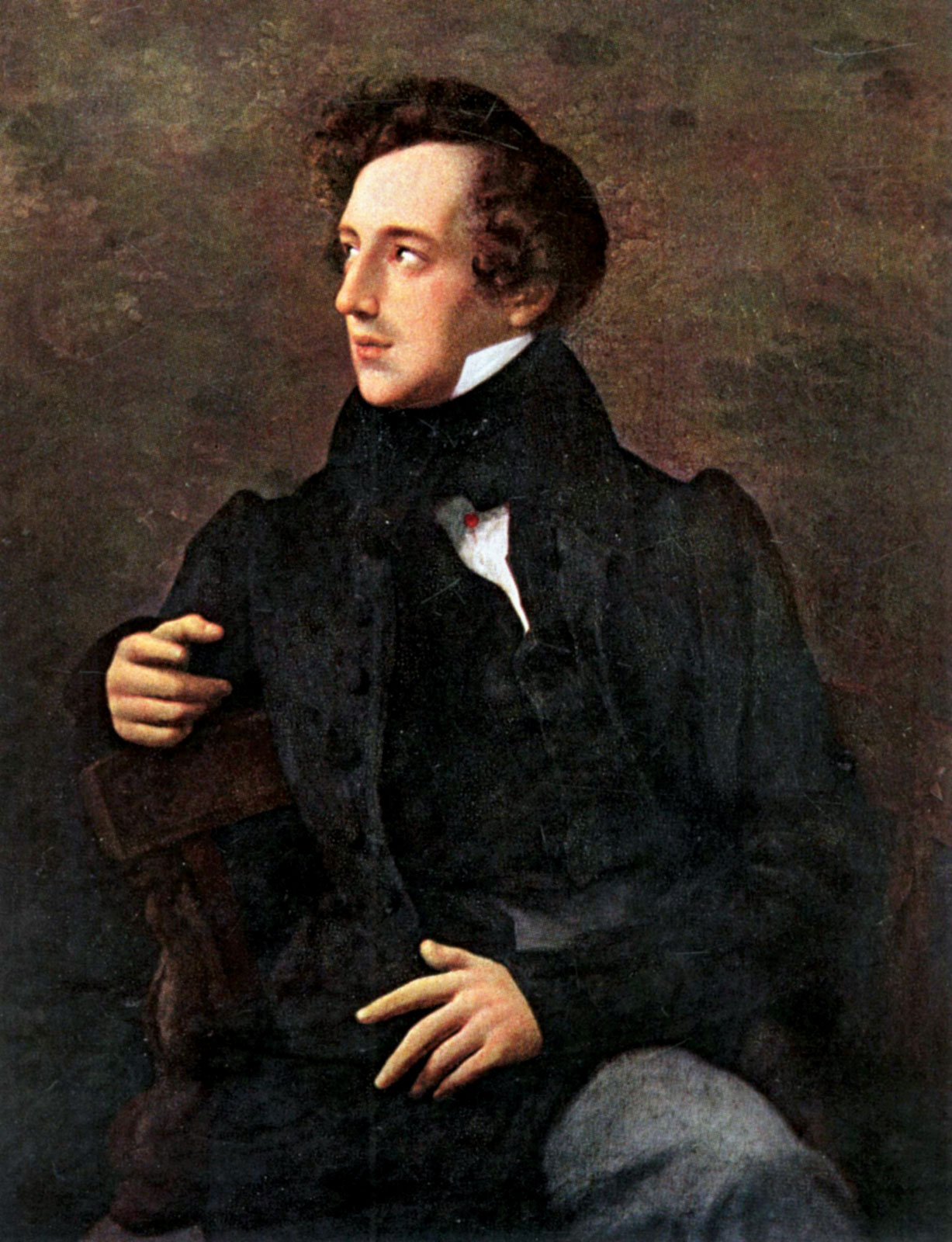
    PHOTO: Kurt Masur with the London Philharmonic at his old stomping ground, the Leipzig Gewandhaus, in 2010

Tag Cloud

Aaron Copland (92) Beethoven (95) Composer (114) Film Music (120) Film Score (143) Film Scores (255) Halloween (94) John Williams (185) KWAX (229) Leonard Bernstein (100) Marlboro Music Festival (125) Movie Music (135) Opera (198) Philadelphia Orchestra (88) Picture Perfect (174) Princeton Symphony Orchestra (106) Radio (87) Ralph Vaughan Williams (85) Ross Amico (244) Roy's Tie-Dye Sci-Fi Corner (290) The Classical Network (101) The Lost Chord (268) Vaughan Williams (103) WPRB (396) WWFM (881)

DON’T MISS A BEAT

Receive a weekly digest every Sunday at noon by signing up here


RECENT POSTS