
Presidents Day. Hopefully you hit the white sales early, so that now you can sit back and enjoy the music. We’ll have works inspired by Washington and Lincoln, with observances of a number of other, musical birthday anniversaries along the way, from 4 to 7 p.m. EST, on WWFM – The Classical Network and at wwfm.org.
Tag: Lincoln
-
Thanksgiving Movies Family Community Country
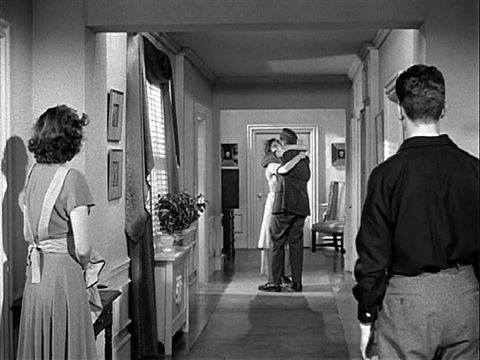
This week on “Picture Perfect,” with Thanksgiving right around the corner, the focus is on movies that celebrate family, community and country.
In 1945, Aaron Copland scored a short semi-documentary for the Office of War Information. “The Cummington Story” relates the gradual acceptance of European war refugees into a cautious but fundamentally decent New England community. The score is pure Americana, with some of the material later finding its way into Copland’s Clarinet Concerto and “Down a Country Lane.”
Thank you, amazing YouTube, for making the complete film available online!
“Field of Dreams,” from 1989, is one of those rare films that has the ability to reduce manly men – even those without father issues – to a pool of tears. Phil Alden Robinson’s superior adaptation of W.P. Kinsella’s novel, “Shoeless Joe,” is a male wish-fulfillment fantasy, in which a man finds redemption, and a new understanding of his father, in the enchanted cornfields of America’s heartland. And it’s all brought about courtesy of America’s pastime, baseball. The evocative score is by James Horner.
“The Best Years of Our Lives,” from 1946, is one of the great American classics. This touching film tells the tale of the three WWII veterans struggling to readjust to civilian life. It isn’t easy, but with the support of family and friends, there’s plenty of hope for the future. Hugo Friedhofer wrote the Academy Award-winning score, earning the film one of its seven Oscars. The orchestrations were by Copland protégé (and composer of “The Big Country”) Jerome Moross.
Finally, from 2012, Daniel Day-Lewis elevated Steven Spielberg’s “Lincoln” to greatness with one of the most amazing performances ever captured on film. Day-Lewis’ gentle but shrewd Man of Destiny would go to any lengths to hold the country together. John Williams tapped into America’s proud musical heritage, clearly influenced by Copland and Ives, to create a score of stirring nobility.
I hope you’ll join me as we give thanks for family, community and country on “Picture Perfect,” music for the movies, this Friday evening at 6 EST, on WWFM – The Classical Network and at wwfm.org.
-
Sandburg’s America Music and Memorial Day
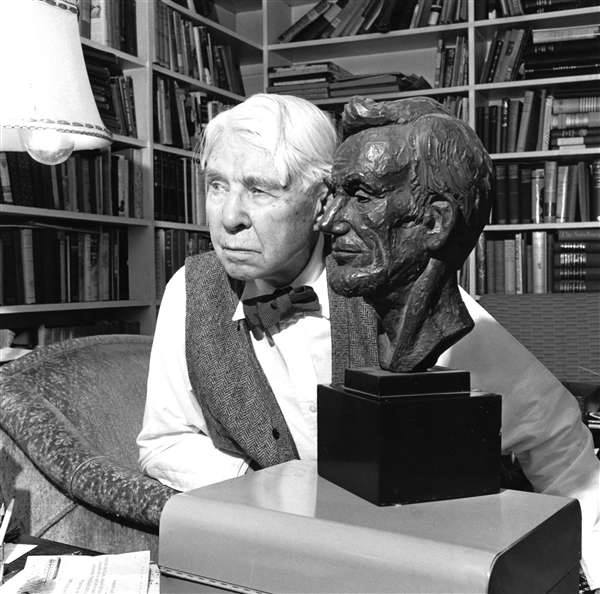
Carl Sandburg was the recipient of three Pulitzer Prizes: two for his poetry, and a third for his biography of Abraham Lincoln. He was also known for his 1927 anthology “The American Songbag,” espousing our native folk song and anticipating the folksong revivals the 1940s and the 1960s. On top of everything else, he was awarded a Grammy for his recording of Aaron Copland’s “Lincoln Portrait.” When Sandburg died in 1967, at the age of 89, Lyndon Johnson observed that “Carl Sandburg was more than the voice of America, more than the poet of its strength and genius. He WAS America.”
This Sunday night on “The Lost Chord,” we’ll hear music inspired by this popular – and populist – figure, with two works especially appropriate for Memorial Day and, in between, a piece after a poem evocative of the American heartland.
Philadelphia composer Romeo Cascarino (1922-2002), who had served in the U.S. Army, composed a plaintive elegy, “Blades of Grass,” in 1945, just after World War II. He expressed a preference on several occasions that Sandburg’s poem “Grass” be read before performances. You’re probably familiar with it:
Pile the bodies high at Austerlitz and Waterloo.
Shovel them under and let me work—
I am the grass; I cover all.And pile them high at Gettysburg
And pile them high at Ypres and Verdun.
Shovel them under and let me work.
Two years, ten years, and passengers ask the conductor:
What place is this?
Where are we now?I am the grass. Let me work.Leo Sowerby (1895-1968) was born in Grand Rapids, MI, and spent much of his career in the Midwest. Sometimes referred to as the “Dean of American church music,” he was the recipient of the Pulitzer Prize for Music in 1946 for his cantata, “The Canticle of the Sun.”
The published score of his symphonic poem after Sandburg, titled “Prairie,” from 1929, bears the following lines:
“Have you seen a red sunset drip over one of my cornfields, the shore of night stars, the wave lines of dawn up a wheat valley?
“Have you heard my threshing crews yelling in the chaff of a strawpile and the running wheat of the wagonboards, my cornhuskers, my harvest hands hauling crops, singing dreams of women, worlds, horizons?”
Last but certainly not least, Roy Harris, who shared Lincoln’s birthday (though born 89 years later), was born in a log cabin in Lincoln County, OK, only adding to his sense of destiny. Indeed he went on to become one of America’s greatest composers.
Harris’ Symphony No. 6 is subtitled “Gettysburg.” It’s one of a number of works the composer wrote with a “Lincoln” connection. Each movement of the symphony bears a superscription taken from the Gettysburg Address: the first, “Awakening (‘Fourscore and seven years ago…’);” the second, “Conflict (‘Now we are engaged in a great civil war…’);” the third, “Dedication (“We are met on a great battlefield of that war…’);” and the fourth and final movement, “Affirmation (‘…that we here highly resolve that these dead shall not have died in vain…’).”
Prior to composing the work, Harris read – you guessed it – Sandburg’s biography of Lincoln.
I hope you’ll join me for “Lincoln Logger,” an hour of music inspired by Carl Sandburg, this Sunday night at 10 EDT, with a repeat Wednesday evening at 6; or that you’ll listen to it later as a webcast at wwfm.org.
Although not on tonight’s show, here, as an added bonus, is Sandburg narrating Aaron Copland’s “Lincoln Portrait”:
-
John Williams Scores Presidents for Presidents Day
Presidents Day is on the way.
Over the course of his 60-year career, John Williams has had the opportunity to score just about every kind of film. Not surprisingly, this would include several fictionalized accounts of American presidents. This week on “Picture Perfect,” we’ll sample music from four of them.
“JFK” (1991) was one of three collaborations between Williams and director Oliver Stone. The film had more to do with conspiracy theories surrounding Kennedy’s assassination than anything to do with his presidency. A controversial feature, no doubt – still, a compelling piece of cinema. It certainly inspired an effective score.
Kevin Costner plays New Orleans district attorney Jim Garrison; Sissy Spacek, his wife; Gary Oldman, Lee Harvey Oswald; Tommy Lee Jones and Joe Pesci are unforgettable as a pair of outlandish conspirators; and Donald Sutherland is a government whistleblower who identifies himself merely as “X.”
Williams and Stone had previously worked together on “Born on the Fourth of July.” Later, they would team on a second presidential collaboration, a character study of Richard Milhous Nixon, called – well, “Nixon” (1995). Anthony Hopkins played the president, heading an impressive cast, which included Joan Allen, Powers Boothe, Ed Harris, Bob Hoskins, E.G. Marshall, David Hyde Pierce, Paul Sorvino, Mary Steenburgen and James Woods.
Williams also wrote the music for Steven Spielberg’s “Amistad” (1997). The film, about a mutiny on board a slave ship in 1839, and subsequent courtroom drama, featured two American presidents: Nigel Hawthorne plays Martin van Buren, the sitting president; and again, Anthony Hopkins appears, in a memorable supporting turn, as aging former president John Quincy Adams. Adams argues the defense of the Africans who took part in the mutiny.
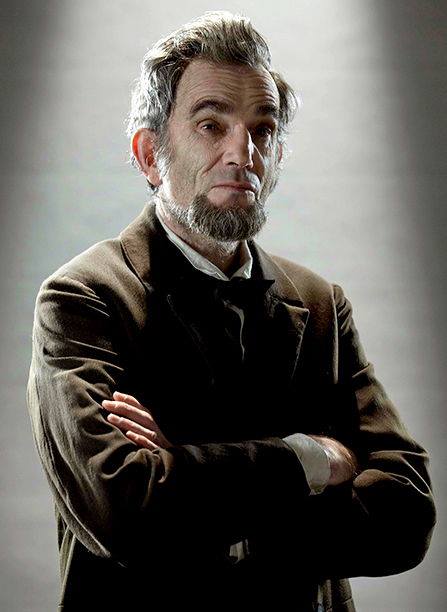
Daniel Day-Lewis plays the nation’s 16th president, in Spielberg’s “Lincoln” (2012). He’s lent able support by Sally Field as Mary Todd Lincoln, David Strathairn as Secretary of State William Steward and Tommy Lee Jones as Thaddeus Stevens.
It’s a bold assessment, but Day-Lewis elevates “Lincoln,” the film, to greatness, with arguably one of the most amazing performances in cinematic history. Day-Lewis’ gentle – but shrewd – Man of Destiny would go to any lengths to hold the country together. Williams tapped into America’s proud musical heritage, clearly influenced by Copland and Ives, to create a score of stirring nobility. BTW – In case you missed it, today is Lincoln’s birthday.
I hope you’ll join me, as John Williams does the presidents, on “Picture Perfect,” tonight at 6 ET, with a repeat tomorrow morning at 6; or that you’ll listen to it later as a webcast at wwfm.org.
PHOTOS: (clockwise from left) Day-Lewis as Lincoln; Hopkins as Nixon; poster for “JFK;” Hopkins as John Quincy Adams
-

Presidents Day Music Unusual Presidential Songs
It’s Presidents’ Day. Before you hit the white sales, I’ve got a couple of musical selections for you.
Here’s a melody called “Lincoln and Liberty” (originally “Rosin the Beau”), a tune Lincoln appropriated for his campaign song in 1860. If you note the pattern on the performer’s pants, you might deduce he is an escaped convict.
https://www.youtube.com/watch?v=Es3J4yxPFiI
This is a concert overture titled “McKonkey’s Ferry (Washington at Trenton)” by Trenton’s own George Antheil. I think you’ll agree, Washington has never sounded so Soviet.
https://www.youtube.com/watch?v=dROk2QXrFOs
Which presidents to celebrate, anyway?
Chester A. Arthur, our 21st president, thought “Hail to the Chief” too undignified, so he requested a new piece from John Philip Sousa. The result was the “Presidential Polonaise” (1886):
I wonder if anyone ever thought to write a polka for Polk?
Tag Cloud
Aaron Copland (94) Beethoven (95) Composer (114) Film Music (149) Film Score (143) Film Scores (255) Halloween (97) John Williams (197) KWAX (232) Leonard Bernstein (105) Marlboro Music Festival (125) Movie Music (164) Mozart (91) Opera (215) Philadelphia Orchestra (90) Picture Perfect (174) Princeton Symphony Orchestra (110) Radio (90) Ross Amico (244) Roy's Tie-Dye Sci-Fi Corner (290) The Classical Network (101) The Lost Chord (269) Vaughan Williams (107) WPRB (397) WWFM (881)