It took a German composer to kick off the Italian opera craze in England.
George Frideric Handel, fresh off an Italian sojourn, exploded onto the London music scene with “Rinaldo” in 1711. In fact, despite some stiff competition from rival companies, Handel would dominate Italian opera there for several decades.
One of his chief competitors was the Italian composer, cellist, and singer Giovanni Bononcini. In fact, it was their rivalry, and the rabid partisan allegiance of their respective followers, that spawned the epigram “Tweelde-dum and Tweedle-dee.” The phrase was coined nearly 150 years before Lewis Carroll’s usage, by John Byrom in 1725.
Some say, compar’d to Bononcini
That Mynheer Handel’s but a Ninny
Others aver, that he to Handel
Is scarcely fit to hold a Candle
Strange all this Difference should be
‘Twixt Tweedle-dum and Tweedle-dee!
It was on this date 300 years ago that Handel and Bononcini were pitted against one another in a back-to-back musical contest, when directors of the Royal Academy of Music arranged for the two composers to set adjacent acts of the same opera. The music for the first act of “Muzio Scevola” would be written by house composer Filippo Amadei, for the second by Bononcini, and for the third by Handel.
You might think that Handel, in clean-up position, had the natural advantage, but Bononcini had already written two complete operas based on the libretto himself, in 1695 and 1710. Furthermore, he had been composing operas for the Academy for just as long as Handel had been its music director. There were plenty who preferred Bononcini’s lighter touch and straightforward melodies. Underlying all, there was also an interesting political component, as Handel was favored by the Whig party, and Bononcini by the Tories.
Neither composer’s victory was a foregone conclusion. But on the night of the opera’s premiere, March 23, 1721, the audience overwhelmingly favored Handel.
In the end, Bononcini left London in disgrace in 1732, when it was discovered that he had passed off a madrigal by Antonio Lotti as his own work – unusual blowback in an era when composers frequently stole from one another with impunity.
Adding insult to injury, Handel took the libretto for Bononcini’s “Xerse” and set it to music himself, as “Serse” or “Xerxes.” Granted, it was received as one of Handel’s rare failures (Londoners were taken off guard by its comedic elements). Nevertheless, it yielded one of his best-known melodies, the aria “Ombra mai fu,” widely circulated in countless instrumental arrangements as “Handel’s Largo.”
“Ombra mai fu”
Handel’s Largo
“Lascia ch’io pianga” from Handel’s “Rinaldo”
“Muzio Scevola”
Baroque opera… ‘tis a silly place (if occasionally sublime).
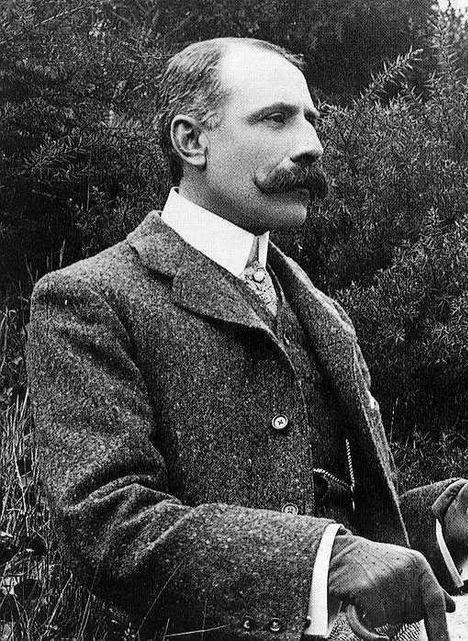
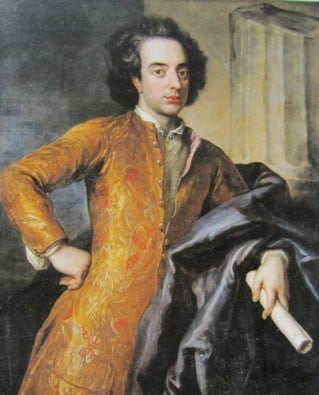
Dueling portraits of Bononcini and Handel. Is it any wonder that Handel was favored by the “Whigs?”