Tag: Los Angeles Philharmonic

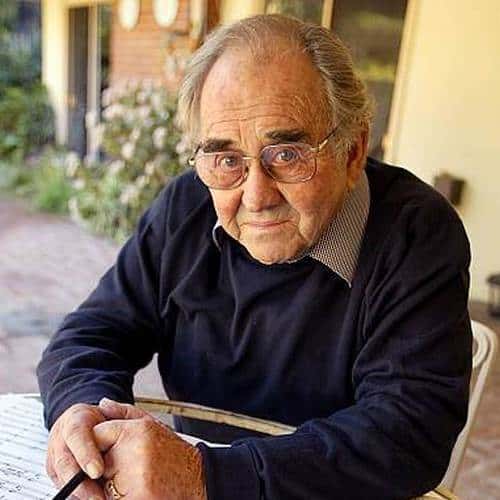
  • William Kraft A Centennial Celebration

    William Kraft A Centennial Celebration

    Whether as a composer, a performer, or a conductor, he was all Kraft.

    William Kraft, a triple threat, was born 100 years ago today.

    Born in Chicago in 1923, he was raised in Santa Barbara, and it was on the West Coast that he made his greatest mark for over 40 years.

    Already as a young man and freelance musician in Manhattan, he was rubbing shoulders with some of the most remarkable musicians of his day.

    He studied composition at Columbia with Otto Luening, Vladimir Ussachevsky, and Jack Beeson. Closer to home, he also took lessons with Henry Cowell. He learned orchestration from Henry Brant, percussion with Morris Goldenberg, and timpani with Saul Goodman, for 50 years principal timpanist of the New York Philharmonic. He also studied conducting with Rudolph Thomas and Fritz Zweig.

    After a brief stint with the Dallas Symphony Orchestra, he returned to California, where from 1955 to 1985, he served as percussionist with the Los Angeles Philharmonic. He later became its first composer-in-residence. For several seasons, he also served as regular guest conductor and assistant conductor. In 1991, he began teaching at the University of California.

    He organized and directed the Los Angeles Percussion Ensemble, a group that gave first performances and made first recordings of works by Alberto Ginastera, Lou Harrison, Ernst Krenek, Igor Stravinsky, and Edgard Varèse.

    Kraft was in charge of all percussion activities for Stravinsky in Los Angeles and appeared on some of the composer’s own recordings, including “L’Histoire du soldat.” As a soloist, Kraft performed in the American premieres of Karlheinz Stockhausen’s “Zyklus” and Pierre Boulez’ “Le marteau sans maître.”

    Also, as one of the more unlikely composers to score a success with the Boston Pops, Kraft was enlisted alongside Sir Peter Maxwell Davies, Oliver Knussen, Joseph Schwantner, and John Adams to write works to be premiered under the baton of John Williams. Come to think of it, these Boston Pops commissions would make a terrific album! (To my knowledge only Maxwell Davies’ “An Orkney Wedding with Sunrise” was ever recorded by them and issued commercially.)

    Kraft composed “Vintage Renaissance” for the Pops in 1989. The work incorporates two Renaissance melodies: “Danza” by Francesco de la Torre, and an anonymous “bransle” (pronounced “brawl”).

    Like Williams, Kraft sometimes worked in film, although his projects as composer tended to be a little less prestigious. He wrote music for the slasher flick “Psychic Killer” (1975), the risible “Avalanche” (1978), and Ralph Bakshi’s “Fire and Ice.”

    However, was also active in the music departments on more reputable fare, appearing as a percussionist on the soundtracks to “North by Northwest,” “None But the Brave” (scored by Williams), “Inside Daisy Clover,” “The War Wagon,” “A Man Called Horse,” “The Life and Times of Judge Roy Bean,” and “The Great Santini.” As a conductor, he led studio orchestras in recording the music for “Dead Again,” “Indochine,” and “Carlito’s Way.”

    Kraft was chair of the composition department at USC. He retired in 2002. He died as recently as February of last year at the age of 98!


    “Vintage Renaissance”

    Concerto for Four Percussion Soloists and Orchestra

    “French Suite”

    Bakshi’s “Fire and Ice”

    Kraft on percussion in Stravinsky’s “The Soldier’s Tale”

    An interview with Bruce Duffie

    http://www.bruceduffie.com/wm-kraft.html

  • Dudamel to New York Philharmonic: The Dude Moves East

    Dudamel to New York Philharmonic: The Dude Moves East

    The Dude is headed to New York!

    It was announced yesterday that Gustavo Dudamel will be leaving the Los Angeles Philharmonic to take up the post of “music and artistic director” of the New York Philharmonic, beginning in 2026. The double-barrel title is bestowed in the same week as the announcement that Yannick Nézet-Séguin will now be “music and artistic director” of the Philadelphia Orchestra. Nézet-Séguin, who has been music director in Philly since 2012, renewed his contract through 2030.

    Granted, both these gentlemen do a lot of heavy-lifting, more than justifying the compound-if-cumbersome descriptors. Dudamel, 42, has been a transformative force in L.A. He is, with the possible exception of Nézet-Séguin, our most visible and energetic young man of the podium. (Yannick, 47, is also music director of the Metropolitan Opera and his home orchestra, the Orchestre Métropolitain de Montréal.) I don’t know if the East Coast can handle the combined kinetic energy of Yannick and The Dude.

    Dudamel carved out time for a whirlwind residency in Princeton in 2018. Although I got to meet him, our interview had to be conducted via email. Knowing Dudamel, he probably dashed off his responses in a limo on the way to the airport. You can learn more about The Dude and read our exchange at the link.

    https://www.communitynews.org/princetoninfo/artsandentertainment/princeton-concerts-celebrating-125-years-with-the-dude-gustavo-dudamel/article_a2905abc-098d-5bf5-a56c-20625675fdbe.html

    Brace yourselves, New York, and congratulations, Gustavo Dudamel!

    Press release from the New York Philharmonic

    https://nyphil.org/~/media/pdfs/newsroom/2223/GD-press-release-final.ashx?la=en

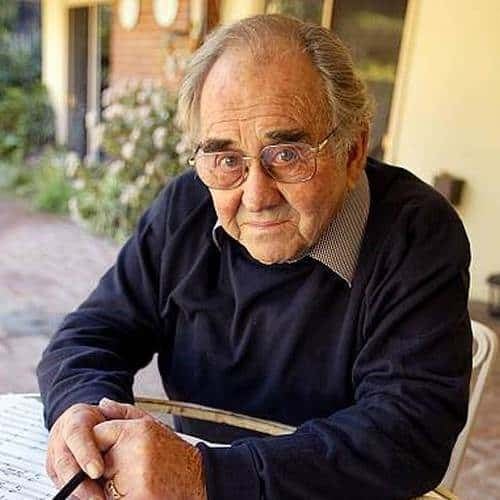
  • William Kraft Composer Performer Conductor

    William Kraft Composer Performer Conductor

    Whether as a composer, a performer, or a conductor, he was all Kraft.

    William Kraft, a triple threat, died on Saturday at the age of 98.

    Born in Chicago in 1923, he was raised in Santa Barbara, and it was on the West Coast that he made his greatest mark for over 40 years.

    Already as a young man and freelance musician in Manhattan, he was rubbing shoulders with some of the most remarkable musicians of his day.

    He studied composition at Columbia with Otto Luening, Vladimir Ussachevsky, and Jack Beeson. Closer to home, he also took lessons with Henry Cowell. He learned orchestration from Henry Brant, percussion with Morris Goldenberg, and timpani with Saul Goodman, for 50 years principal timpanist of the New York Philharmonic. He also studied conducting with Rudolph Thomas and Fritz Zweig.

    After a brief stint with the Dallas Symphony Orchestra, he returned to California, where from 1955 to 1985, he served as percussionist with the Los Angeles Philharmonic. He later became its first composer-in-residence. For several seasons, he also served as regular guest conductor and assistant conductor. In 1991, he began teaching at the University of California.

    He organized and directed the Los Angeles Percussion Ensemble, a group that gave first performances and made first recordings of works by Alberto Ginastera, Lou Harrison, Ernst Krenek, Igor Stravinsky, and Edgard Varèse.

    Kraft was in charge of all percussion activities for Stravinsky in Los Angeles and appeared on some of the composer’s own recordings, including “L’Histoire du soldat.” As a soloist, Kraft performed in the American premieres of Karlheinz Stockhausen’s “Zyklus” and Pierre Boulez’ “Le marteau sans maître.”

    Also, as one of the more unlikely composers to score a success with the Boston Pops, Kraft was enlisted alongside Sir Peter Maxwell Davies, Oliver Knussen, Joseph Schwantner, and John Adams to write works to be premiered under the baton of John Williams. Come to think of it, these Boston Pops commissions would make a terrific album! (To my knowledge only Maxwell Davies’ “An Orkney Wedding with Sunrise” was ever recorded by them and issued commercially.)

    Kraft composed “Vintage Renaissance” for the Pops in 1989. The work incorporates two Renaissance melodies: “Danza” by Francesco de la Torre, and an anonymous “bransle” (pronounced “brawl”).

    Like Williams, Kraft sometimes worked in film, although his projects as composer tended to be a little less prestigious. He wrote music for the slasher flick “Psychic Killer” (1975), the risible “Avalanche” (1978), and Ralph Bakshi’s “Fire and Ice.”

    However, was also active in the music departments on more reputable fare, appearing as a percussionist on the soundtracks to “North by Northwest,” “None But the Brave” (scored by Williams), “Inside Daisy Clover,” “The War Wagon,” “A Man Called Horse,” “The Life and Times of Judge Roy Bean,” and “The Great Santini.” As a conductor, he led studio orchestras in recording the music for “Dead Again,” “Indochine,” and “Carlito’s Way.”

    Kraft was chair of the composition department at USC. He retired in 2002.


    “Vintage Renaissance”

    Concerto for Four Percussion Soloists and Orchestra

    “French Suite”

    Bakshi’s “Fire and Ice”

    Kraft on percussion in Stravinsky’s “The Soldier’s Tale”

    An interview with Bruce Duffie
    http://www.bruceduffie.com/wm-kraft.html

Tag Cloud

Aaron Copland (92) Beethoven (95) Composer (114) Film Music (119) Film Score (143) Film Scores (255) Halloween (94) John Williams (185) KWAX (229) Leonard Bernstein (99) Marlboro Music Festival (125) Movie Music (134) Opera (198) Philadelphia Orchestra (86) Picture Perfect (174) Princeton Symphony Orchestra (106) Radio (87) Ralph Vaughan Williams (85) Ross Amico (244) Roy's Tie-Dye Sci-Fi Corner (290) The Classical Network (101) The Lost Chord (268) Vaughan Williams (102) WPRB (396) WWFM (881)

DON’T MISS A BEAT

Receive a weekly digest every Sunday at noon by signing up here


RECENT POSTS