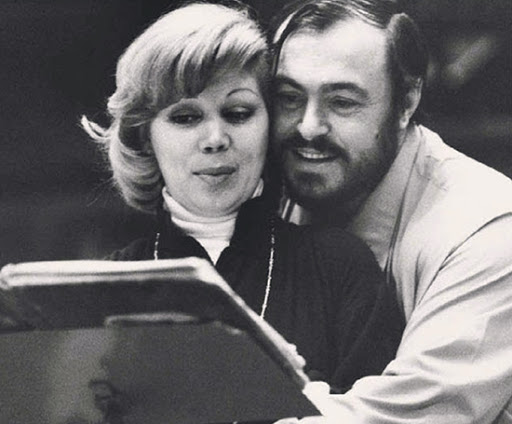
Golden Era soprano Mirella Freni has died. A childhood friend of Luciano Pavarotti, the two actually shared the same wet nurse, as both their mothers worked in a cigarette factory. The children even sometimes wore identical clothing. Later, of course, they would be teamed in the opera house and on recordings.
Freni won acclaim early with her radiant singing as Mimi, Micaëla, Nanetta, and Susanna. By the early ‘70s, she began tackling some of the heavier roles, such as Desdemona and Aida. Even so, she was realistic about how much stress her voice could handle, and she selected her roles carefully.
In the early ‘80s, she married Bulgarian bass Nicolai Ghiaurov, her second husband. He encouraged her to expand her repertoire to include Russian roles. She went on to become a notable Tatyana in Tchaikovsky’s “Eugene Onegin.”
Freni was 84 years-old. In an afternoon in which I’ll also remember Leontyne Price and Cesare Siepi on their birthdays (to say nothing of film composer Jerry Goldsmith, on his), I’ll celebrate Freni’s artistry, from 4 to 7 p.m. EST, on WWFM – The Classical Network and wwfm.org.
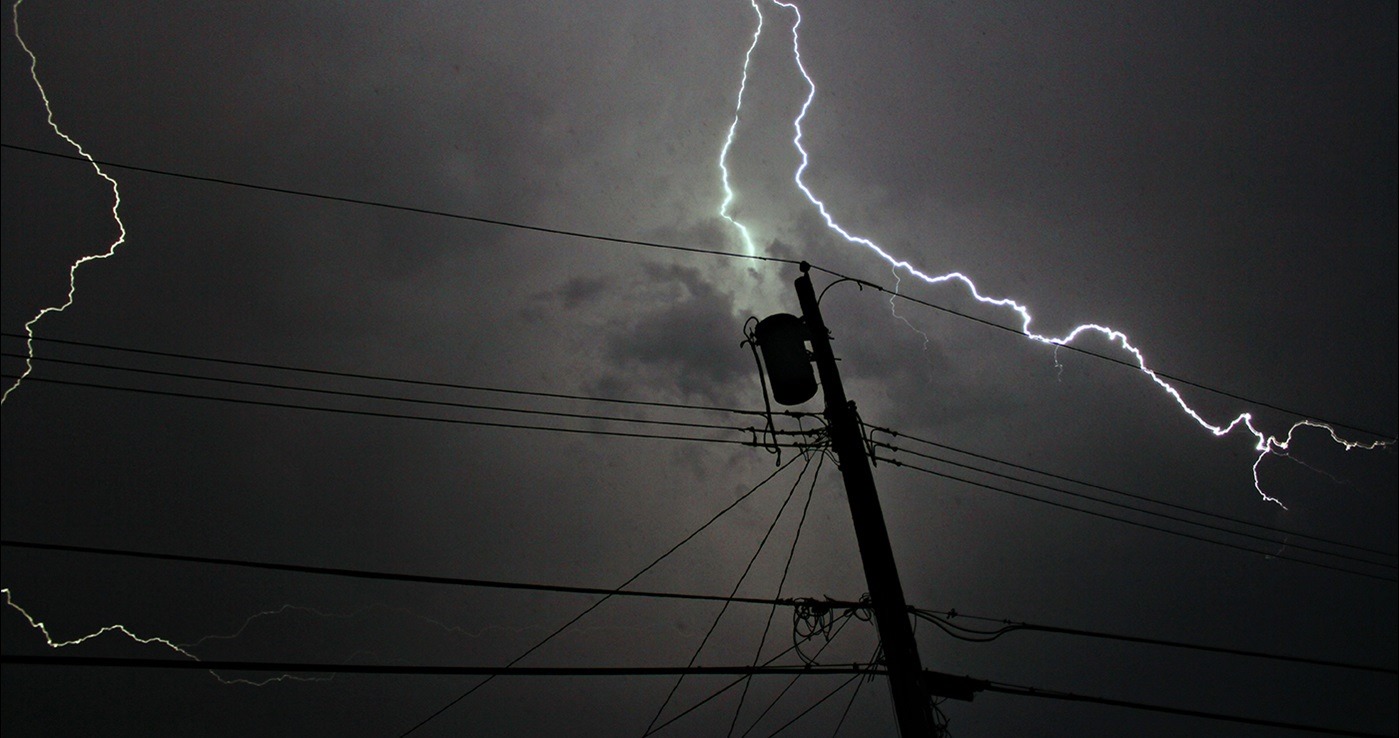
After thanking my lucky stars on Saturday that I don’t live in New York City (and not for the first time, I might add), a violent thunderstorm knocked out power last night until after 1 a.m. Rather than ensure an early and extended night’s sleep, as one might expect, a confluence of unfortunate circumstances (too much caffeine consumed too late in the day, an unusually late take-out dinner, chirping smoke alarms) made for a very long night. There is only so much reading one can do by flashlight.
Roughly three hours sleep, and the day is off to a rough start. Volunteer work in the morning, a script to be written, and recording to be done for tomorrow night’s “Picture Perfect.” All First World problems, I know. The internet is made for whining.
Good training for the impending solar flare that is fated to destroy all electronics. Nessun dorma!
In the run-up to Ron Howard’s documentary about Luciano Pavarotti (release date: June 7), I got to thinking about “Yes, Giorgio” (1982). The most charismatic tenor of his day made his non-operatic, big-screen debut in this Franklin J. Schaffner-directed film. You know, the same Franklin J. Schaffner who directed “Patton?”
Franklin, you magnificent bastard, I saw your movie…
Here’s the premise: Operatic superstar Giorgo Fini (Pavarotti) is on tour in the U.S., when the unthinkable happens – he loses his voice! Naturally his manager engages a throat specialist, played by Kathryn Harrold (Giorgio thinks she is a nurse, ha ha), leading to much risible “repartee.” Not at all believably, the two fall in love. But of course there are complications. Giorgi IS Italian, after all.
Okay, so the premise is creaky. Is there any opera? Oh yes there is, including Luciano, as Calaf, belting out “Nessun dorma” at the peak of his powers. But to get there you have to slog through countless scenes of Pavarotti, with a face as open and as ingratiating as that of a golden retriever, trying to compensate for a horrible script by charming the socks off everyone in the room. Let’s face it: he may have had a voice from the heavens, but Pavarotti is no dramatic actor. Fortunately, there is also comic relief, courtesy of “Green Acres’” Eddie Albert (just to keep it real). And not to worry, there is a pie fight.
I guess there was no room in the $21 million budget – or his schedule – for John Williams to provide a complete music score (Michael J. Lewis does the dishonor), but Williams does contribute an Oscar-nominated song, “If We Were in Love,” with lyrics by the legendary Alan & Marilyn Bergman. Williams is in his element, and turns in a buoyant set-piece. In theory, this should have been a real showstopper.
Alas, for all his lyrical gift, Williams is not a song composer, and even with (or perhaps because it is) Pavarotti singing, it turns out to be kind of embarrassing. It would be perfectly fine if it weren’t a song, but let’s face it, the balloon ride over Napa Valley ranks up there – or down there, as it were – with Margot Kidder reciting poetry to Superman.
This was the same year as “E.T.,” by the way.
Ironically, the original soundtrack is now a collector’s item. The belated domestic CD reissue was shorn of the Oscar-nominated song. Williams, the Bergmans, and the Pavarotti estate must want this one buried deep.
“Yes, Giorgio” sank like a stone. Taking into account promotional and distribution costs, it lost MGM an estimated $45 million. Siskel and Ebert selected it as one of the worst movies of the year, and the film was nominated for multiple Razzies. Ebert claimed that Pavarotti utters the line, “I will sing this aria just for you!” a dozen times. The film opens with the following dedication: “This story is dedicated to lovers everywhere.” Oy vey.
There’s so much talent squandered on this movie that I could easily be fooled into thinking I would like to watch it again. This is the most dangerous kind of bad.
No, Giorgio!
I am, however, very much looking forward to seeing Ron Howard’s documentary.
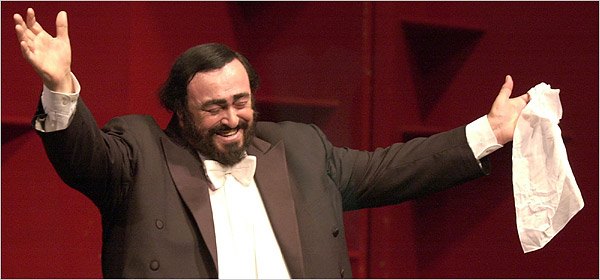
So as not to completely neglect Luciano Pavarotti on the anniversary of his birth, here he is charming the pants off an audience, with an anecdote about being caught without his. I really miss this guy, one of classical music’s last superstars. Pavarotti died in 2007 at the age of 71.
Pavarotti in “Yes, Giorgio” (1982) – from the director of “Patton!”