Tag: Lust for Life

  • Miklós Rózsa: Golden Age Film Music

    Miklós Rózsa: Golden Age Film Music

    Happy birthday, Miklós Rózsa (1907-1995)!

    Can you spare ten minutes to soak up some Golden Age greatness? Check out this wonderful medley of some of his classic film scores.

    I had a blast picking out the films without looking at the images. I own recordings of all of them, of course.

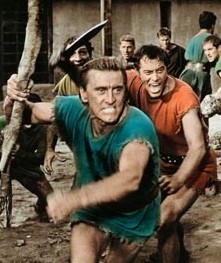
    One of my personal favorites, not in the medley, is “Lust for Life” (1956), in which Kirk Douglas plays Vincent Van Gogh. The composer softens up the edges of his brawny Hungarian sound by dipping into the hazy palette of the French Impressionists.

    In a similar mold is this concert work, “The Vintner’s Daughter,” twelve variations inspired by a poem by Juste Olivier, in which a maiden drifts off to sleep in the sun at harvest time and dreams of the arrival of three Hungarian knights. Originally composed for piano in 1953, it was orchestrated two years later at the request of Eugene Ormandy.

    The original piano version

    For orchestra

    Rózsa conducts the Pittsburgh Symphony in his most celebrated music, for “Ben-Hur” (1959)

    Jascha Heifetz plays the Violin Concerto (1953; subsequently adapted for use in the 1970 film “The Private Life of Sherlock Holmes”)

    They just don’t make ‘em like Miklós anymore.


    PHOTOS: Rózsa and (top to bottom) “Ben-Hur,” “Lust for Life,” and preparing the Violin Concerto with Jascha Heifetz and Walter Hendl

  • Artistic Drama Behind the Masterpieces on Screen

    Artistic Drama Behind the Masterpieces on Screen

    How to translate visual art to the big screen? Generally, by focusing on the drama in the artists’ lives, that’s how.

    And what drama!

    This week on “Picture Perfect,” expand your palette with music from movies about the great artists. “The Agony and the Ecstasy” (1965), based on the novel of Irving Stone, dramatizes the friction between Michelangelo (Charlton Heston) and his benefactor, Pope Julius II (Rex Harrison), over the painting of the ceiling of the Sistine Chapel. For his part, Michelangelo would have been perfectly content to stick to sculpture. Alex North’s score is an Early Music banquet, with allusions to – and sometimes outright quotations of – music of the Renaissance.

    Stone had another bestseller in “Lust for Life” (1956), about the tormented Vincent van Gogh. This time Kirk Douglas plays one of his most sympathetic roles – and looks remarkably like the artist. Anthony Quinn turns up as his “frenemy,” the painter Paul Gaugin, and earns an Academy Award for Best Supporting Actor. The great Miklós Rózsa wrote the music, softening up the edges of his brawny Hungarian sound with the softer palette of the French Impressionists.

    John Huston brought Pierre La Mure’s novel about Henri de Toulouse-Lautrec to the big screen as “Moulin Rouge” (1952) – not to be confused with the more recent Baz Luhrmann spectacle starring Nicole Kidman and Ewan McGregor, which relegated the artist to a supporting role. José Ferrer dominates the earlier version, spending most of the film walking through off-camera trenches and shuffling along on his knees. Georges Auric, one of the composers of Les Six (which also included Francis Poulenc and Darius Milhaud), captures the spirit of the titular cabaret. The score became one of Auric’s best-known, thanks to the waltz becoming a popular hit, “Where is Your Heart?”

    “The Picasso Summer” (1969) is a departure from the usual formula of focusing on the artist himself. Instead, a young couple (Albert Finney and Yvette Mimieux), admirers of Picasso’s work, take off on a European adventure in an attempt to track him down. Originally Picasso had agreed to appear, but he was driven off by some off-screen drama involving a matador friend and Yul Brynner’s wife! The film was based on a short story by Ray Bradbury. Bradbury hated the adaptation, as did the studio, and “The Picasso Summer,” after being heavily cut and patched with new footage, was never released theatrically in the United States. The film is striking for its extended animation sequences inspired by Picasso’s paintings, and for its score by Michel Legrand.

    I hope you’ll join me for brushes with the great artists, on “Picture Perfect,” music for the movies, this Saturday evening at 6:00 EDT, on WWFM – The Classical Network and wwfm.org.

  • Kirk Douglas: Music from His Greatest Films

    Kirk Douglas: Music from His Greatest Films

    Hollywood legend Kirk Douglas died on February 5 at the age of 103. An actor of vitality, determination, and conscience, Douglas appeared in over 90 films. This week on “Picture Perfect,” we’ll honor his memory with music from four of his personal favorites.

    We’ll begin with “Spartacus” (1960). Douglas plays the 1st century leader of a slave revolt against the Roman Empire. His co-stars include Laurence Olivier, Jean Simmons, and Tony Curtis. The music is by Alex North (born in Chester, PA, just outside of Philadelphia). The love theme, one of North’s best-known melodies, lends a sense of human connection amidst the martial fanfares and gladiatorial violence.

    Douglas is often credited with having broken the back of the Hollywood blacklist by openly acknowledging Dalton Trumbo as the screenwriter on “Spartacus.” Trumbo had been forced underground as a ghostwriter for refusing to testify before the House Un-American Activities Committee. The film became the biggest money-maker in the history of Universal Studios, up to that time.

    Vincente Minnelli’s cynical exposé of behind-the-scenes Hollywood, “The Bad and the Beautiful” (1952), stars Douglas as a ruthless mogul, who uses and abuses everyone around him. It’s one of his great “bad boy” characterizations. The film, which also features Lana Turner, Walter Pigeon, Dick Powell, and Gloria Graham, won a whole slew of Oscars. Graham was recognized as Best Supporting Actress.

    The music is by Philadelphia-born David Raksin, who is best-remembered for his theme to the all-time noir classic “Laura.” It doesn’t seem possible, but here he really surpasses himself. If you love the sound of Golden Age Hollywood, complete with haunting saxophone, then this one’s for you!

    Minnelli directed Douglas in another one of his standout roles, a much more sympathetic portrayal of the tortured artist Vincent Van Gogh, in “Lust for Life” (1956). For the film, Douglas turns in one of the great performances of his career. Furthermore, his physical resemblance to the painter is uncanny.

    Anthony Quinn won an Oscar for Best Supporting Actor as Van Gogh’s sometimes friend, the artist Paul Gaugin. The powerful score is by the great Miklós Rózsa, who here marries his Hungarian-inflected signature sound to an evocative sort of French impressionism.

    Finally, when Kirk isn’t fighting giant squid, he’s singing “A Whale of Tale,” as Ned Land, in Walt Disney’s “20,000 Leagues Under the Sea” (1954). The otherwise brooding score is a real showcase for Paul J. Smith, who had earlier provided incidental music for Disney’s animated features “Snow White and the Seven Dwarfs,” “Bambi,” and “Pinocchio.”

    As actor, director, producer, and author, Douglas was a whale of a talent. He himself included these four titles among his top ten films.

    Bad and beautiful, with a lust for life, and in a league of his own… Douglas can still knock your block off, this Friday evening at 6:00 EST, on WWFM – The Classical Network and at wwfm.org.


    PHOTOS: Douglas in “Spartacus,” “The Bad and the Beautiful,” “Lust for Life,” and “20,000 Leagues”

  • Artist Biopics Great Art Great Music

    Artist Biopics Great Art Great Music

    How to translate visual art to the big screen? Generally by focusing on the drama in the artists’ lives, that’s how.

    And what drama!

    This week on “Picture Perfect,” expand your palette with music from movies about the great artists. “The Agony and the Ecstasy,” based on the novel of Irving Stone, dramatizes the friction between Michelangelo (Charlton Heston) and his benefactor, Pope Julius II (Rex Harrison), over the painting of the ceiling of the Sistine Chapel. For his part, Michelangelo would have been perfectly content to stick to sculpture. Alex North’s score is an Early Music banquet, with allusions to – and sometimes outright quotations of – music of the Renaissance.

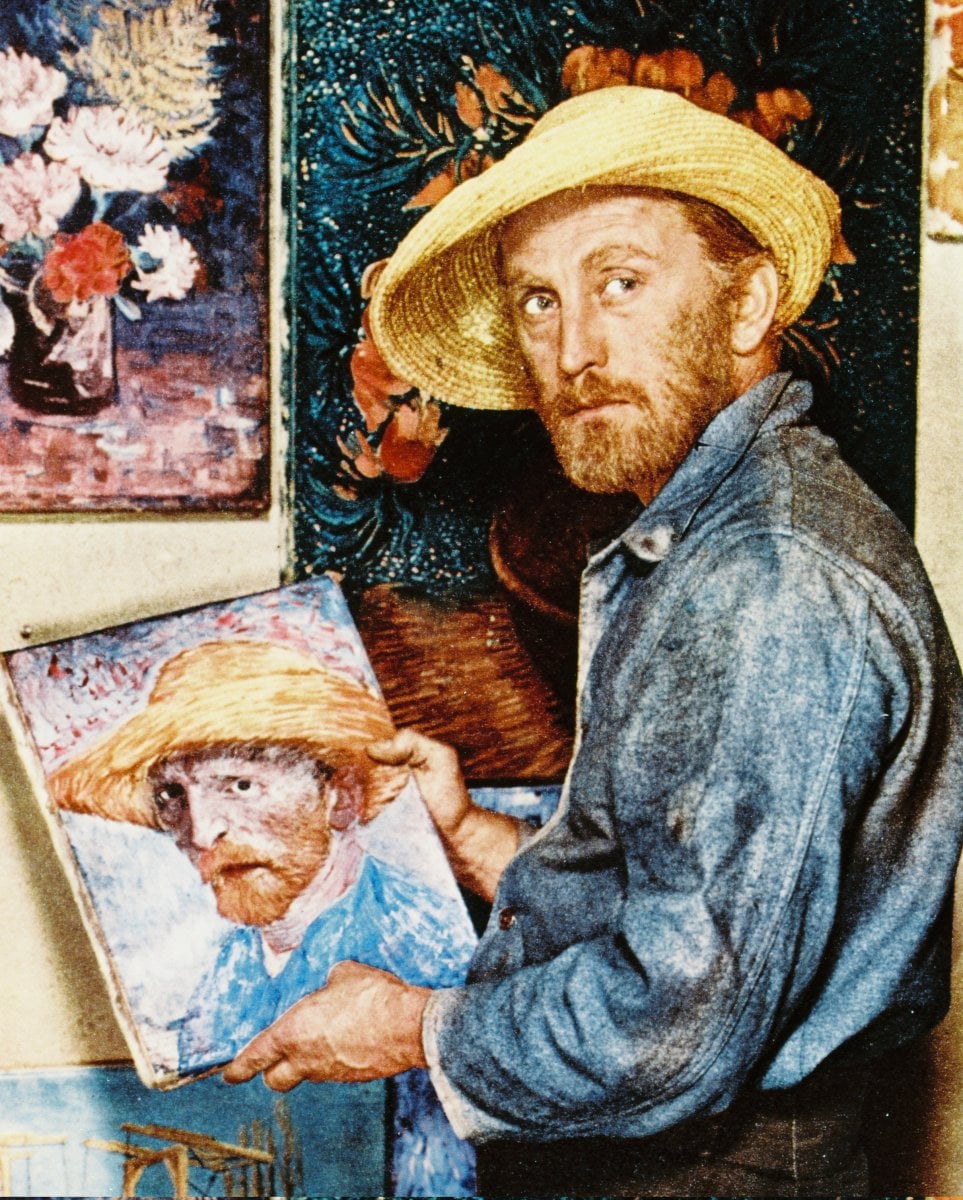
    Stone had another bestseller in “Lust for Life,” about the tormented Vincent van Gogh. This time Kirk Douglas plays one of his most sympathetic roles – and looks remarkably like the artist. Anthony Quinn turns up as his “frenemy,” the painter Paul Gaugin, and earns an Academy Award for Best Supporting Actor. The great Miklós Rózsa wrote the music, softening up the edges of his brawny Hungarian sound with the softer palette of the French Impressionists.

    John Huston brought Pierre La Mure’s novel about Henri de Toulouse-Lautrec to the big screen as “Moulin Rouge” (not to be confused with the more recent Baz Luhrmann spectacle starring Nicole Kidman and Ewan McGregor, which relegated the artist to a supporting role). José Ferrer dominates the earlier version, spending most of the film walking through off-camera trenches and shuffling along on his knees. Georges Auric, one of the composers of Les Six (which also included Francis Poulenc and Darius Milhaud), captures the spirit of the titular cabaret. The score became one of Auric’s best-known, thanks to the waltz becoming a popular hit, “Where is Your Heart.”

    “The Picasso Summer” is a departure from the usual formula of focusing on the artist himself. Instead, a young couple (played by Albert Finney and Yvette Mimieux), admirers of Picasso’s work, take off on a European adventure in an attempt to track him down. Originally Picasso himself had agreed to appear, but some off-screen drama involving a matador friend and Yul Brynner’s wife drove him off. The film was based on a short story by Ray Bradbury. Bradbury hated the adaptation, as did the studio, and “The Picasso Summer,” after being heavily cut and patched with new footage, was never released theatrically in the United States. The film is striking for its extended animation sequences inspired by Picasso’s paintings, and for its score by Michel Legrand.

    Join me for a brush with greatness – music from movies about the great artists – on “Picture Perfect,” this Friday evening at 6:00 EDT, on WWFM – The Classical Network and wwfm.org.

Tag Cloud

Aaron Copland (92) Beethoven (95) Composer (114) Film Music (120) Film Score (143) Film Scores (255) Halloween (94) John Williams (185) KWAX (229) Leonard Bernstein (100) Marlboro Music Festival (125) Movie Music (135) Opera (198) Philadelphia Orchestra (88) Picture Perfect (174) Princeton Symphony Orchestra (106) Radio (87) Ralph Vaughan Williams (85) Ross Amico (244) Roy's Tie-Dye Sci-Fi Corner (290) The Classical Network (101) The Lost Chord (268) Vaughan Williams (103) WPRB (396) WWFM (881)

DON’T MISS A BEAT

Receive a weekly digest every Sunday at noon by signing up here


RECENT POSTS