Martin Scorsese’s Super Bowl commercial provides quite the platform for Mexican composer José Pablo Moncayo (1912-1958), whose “Huapango” reaches its largest audience ever.
Here’s the music, shorn of Scorsese’s visuals:
It’s not just for Cinco de Mayo anymore!
The Super Bowl attracts over 100 million viewers and conspiracy theorists.
His was an enviable career that spanned some 50 years. He composed music for over 150 movies and nearly 80 television projects, many of them still much-beloved, including “The Ten Commandments” (1956), “The Magnificent Seven” (1960), “To Kill a Mockingbird” (1962), “The Great Escape” (1963), and the iconic theme for the National Geographic television specials.
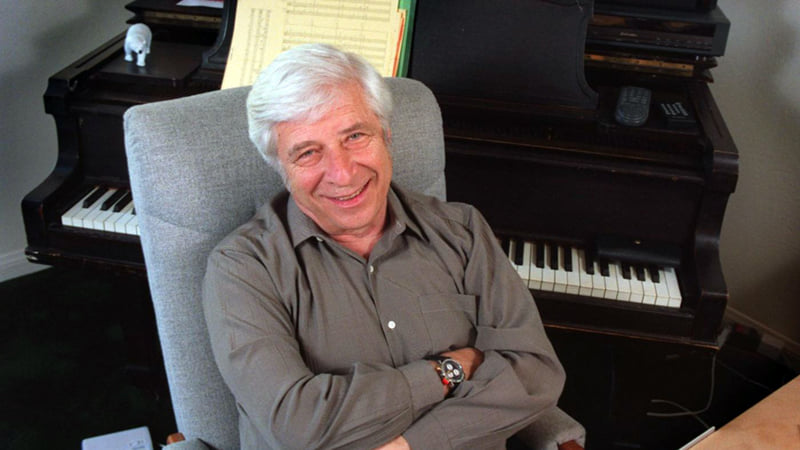
Elmer Bernstein would have been 100 years-old today.
Bernstein was composer-of-choice for John Wayne’s later films, including “The Comancheros” (1961), “The Sons of Katie Elder” (1965), “True Grit” (1969), and “The Shootist” (1976).
In addition, he was one of the first film composers to incorporate jazz elements into his work for dramatic purposes, in movies like “The Man with the Golden Arm” (1955), “Sweet Smell of Success” (1957), and “Walk on the Wild Side” (1962).
Coming out of the Swinging Sixties, a time when the industry clearly favored a more popular sound over purely orchestral music (that is, until John Williams changed everything), Bernstein kept right on working. Thanks to a generation of younger filmmakers who had grown up on his classics, he never lacked for choice. Suddenly, he found himself much in demand as a comedy composer, providing the underscores for “Animal House” (1978), “The Blues Brothers” (1980), “Airplane!” (1980), “Stripes” (1981), and “Ghostbusters” (1984).
For Martin Scorsese, he composed music for “The Age of Innocence” (1993), “Bringing Out the Dead” (1999), and “The Gangs of New York” (2002) – although his score for the latter was ultimately rejected due to extensive tampering in post-production. He also adapted Bernard Herrmann’s music for Scorsese’s remake of “Cape Fear” (1991) and wrote the music for the Scorsese-produced “The Grifters” (1990).
In all, Bernstein was nominated for 14 Academy Awards, but claimed the Oscar only once, fairly early on, for his work on “Thoroughly Modern Millie” (1967), of all things. His final nomination was for his very last score, for “Far from Heaven” (2002). Elmer Bernstein died on August 18, 2004 at the age of 82.
No relation to Leonard Bernstein (or “Bern-STINE”), Elmer pronounced his name “Bern-STEEN.” The two were sometimes further differentiated as “East Coast Bernstein” and “West Coast Bernstein.”
In the year 2000, Elmer Bernstein composed a guitar concerto and expressed regret that he hadn’t contributed more to the concert hall. At least it was good one. David Hurwitz of classicstoday.com described it as “incontestably the finest piece ever composed for this combination” (i.e. guitar and orchestra), going so far as to hold it up to Joaquin Rodrigo’s “Concierto de Aranjuez.” I don’t know if I’d take it that far, but it is pretty damn good.
Keep an eye out for my webcast for this past weekend’s “Picture Perfect,” devoted to Bernstein. I’m told the audio will be up this afternoon. Once it’s posted, you can click on “listen” at the link.
Some of Bernstein’s music for “The Ten Commandments” will also be featured on this weekend’s show, which will be devoted to scores composed for Biblical epics, this Saturday evening at 7:00 EDT, on WWFM – The Classical Network and wwfm.org.
In the meantime, enjoy “Elmer Bernstein: This Is Your Life,” with appearances by John Williams, John Landis, Eli Wallach, and others, offering congratulations to the composer at the age of 80.
Happy birthday, Elmer Bernstein. Thank you for your magnificent body of work!
“The Gilded Age” was a term coined by none other than Mark Twain to describe the era extending roughly from the end of Reconstruction (following the Civil War) to the turn of the 20th century. He didn’t mean it as a compliment. A gilded age is one which conceals serious social problems beneath a veneer of gold. This week on “Picture Perfect,” we have an hour of music from films based on novels of, or about, the period.
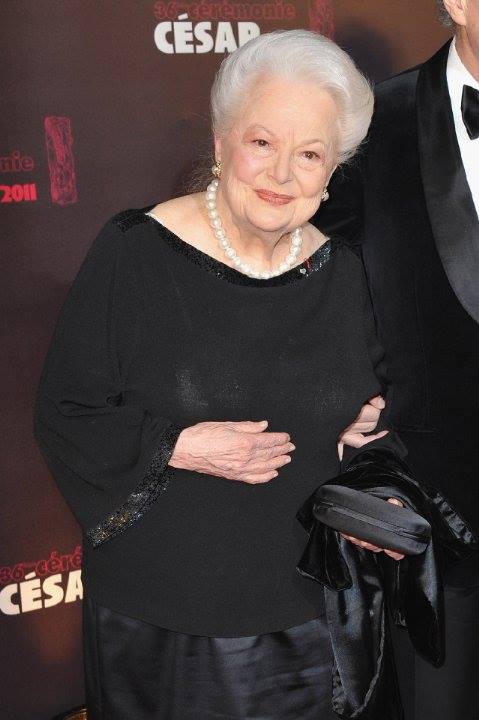
“The Heiress” (1949) is based on a play by Ruth and Augustus Goetz, which in turn was adapted from Henry James’ novel, “Washington Square.” Olivia De Havilland is the “plain Jane” heiress of the title, Ralph Richardson her overbearing father, and Montgomery Clift, the adventurer who may or may not be out for her fortune. De Havilland (100 years-old today!) won an Oscar for her portrayal, as did the music, by Aaron Copland.
“The Age of Innocence” (1993) is based on a novel by one-time James correspondent and close friend, Edith Wharton. The book was published in 1920, but looks back to the 1870s, its story dealing with the impending marriage of an upper class couple and the appearance of a disreputable interloper who threatens their happiness. The title is an ironic play on the outward manners of New York society, in contrast to its inward machinations. The novel earned a Pulitzer Prize, the first Pulitzer awarded to a woman.
The film, which starred Daniel Day-Lewis, Michelle Pfeiffer and Wynona Rider, was something of a curve ball from director Martin Scorsese. Veteran composer Elmer Bernstein provided a lovely, Brahmsian score.
“The Magnificent Ambersons” (1942) is based on another Pultizer Prize winner, this time by Booth Tarkington, from 1918. The novel is part of trilogy that tells the story of the declining fortunes of three generations of an aristocratic Midwestern family, between the end of the Civil War and the early years of the 20th century. With industrialism on the rise, the Ambersons’ “old money” wealth and prestige wane.
“Ambersons” became the basis for only the second film directed by Orson Welles. By that time, however, the fall-out from “Citizen Kane” caused the film to be removed from Welles’ control and re-cut by the studio, shaving a full hour off the original running time. It says something about the quality of the film that it yet remains in itself a magnificent achievement.
The score was by Bernard Herrmann, CBS staff composer from Welles’ radio days. Herrmann had followed Welles to Hollywood to provide the music for “Citizen Kane.” Like the film, the score was drastically edited, with half the music removed. The famously irascible Herrmann, who had just written his Academy Award winning music for “The Devil and Daniel Webster,” was so angry that he threatened legal action if his name was not removed from the credits.
The action of “Mr. Skeffington” (1944), based on a 1940 novel by Elizabeth van Arnim, begins at a point some consider the end of the Gilded Age, the eve of World War I. Bette Davis stars as a woman so enamored of her own beauty and the suitors it attracts that she fails to value the affections of the man who eventually becomes her husband. Mr. Skeffington, played by Claude Rains, is a Jewish financier, riding high in the ‘teens, but whose fortunes change when he’s caught in Europe during the rise of the Nazis.
Both Davis and Rains earned Academy Award nominations for their work. The vivid score is by Franz Waxman. Davis was going through a period of emotional turmoil during the filming, so that she was allegedly insufferable to everyone during the entire shoot. Someone finally poisoned her eyewash. When the police questioned the director, Vincent Sherman, he wished them good luck with their investigation. “If you asked everyone on the set who would have committed such a thing, everyone would raise their hand!”
Clearly all that glitters is not gold. We peel back the veneer of prosperity with “Novels of the Gilded Age,” on “Picture Perfect,” this Friday evening at 6 EDT, on WWFM – The Classical Network; or listen to it later as a webcast at wwfm.org.
Olivia de Havilland receives her Oscar for “The Heiress,” with the orchestra playing a few bars of Aaron Copland’s score:
#OliviaDeHavilland 100
PHOTOS: (Clockwise from left) Olivia de Havilland today; in “The Heiress;” and with her Oscar in 1950
Only months after Martin Scorsese revealed he would be making a film about Leonard Bernstein, Variety announces a second project, with Scorsese producing – a biopic of pianist Byron Janis!