Today is the birthday of E.T.A. Hoffman (1776-1822), and what a good day for it! Mid-winter is the perfect time to enjoy Hoffmann’s tales of madness and obsession.
Not only was Hoffmann a seminal author of dark fantasy and horror, he was also a jurist, a draftsman, a caricaturist, and of course a composer and music critic.
Well, perhaps I shouldn’t say “of course.” Hoffmann is most famous for his writings, and justifiably so. None of his musical compositions have attained anything like repertoire status. However he did manage to turn out a lovely Harp Quintet, and his opera, about the water spirit “Undine,” certainly shows promise, though given the source – after all, he was the author of “The Sandman” and “Mademoiselle de Scuderi” – it is a mite disappointing.
Perhaps that’s the viewpoint of someone looking back from a more jaded era, when the fantastic is routinely hammered home in all its CGI vulgarity. By contrast, Hoffmann’s tales are dream-like and insinuating in ways that still have the power to haunt across the centuries.
Musically, from our perspective, Hoffmann is perhaps more important for having inspired other, more enduring composers, who wrote works like “Coppelia” (Delibes), “The Nutcracker” (Tchaikovsky) and of course “The Tales of Hoffmann” (Offenbach). Even so, these works seldom reflect the spirit of Hoffmann’s originals.
Of the Romantics, surprisingly, only Robert Schumann seems to have really got it. You can really hear how Hoffmann got into his head in works like “Kreisleriana” and the “Nachtstücke.” But Schumann was perhaps one step away from “Sandman” material anyway.
Hoffmann’s tales have had a more palpable influence on 19th century literature, firing the creative imaginations of writers from Dostoyevsky to Dumas to (least surprisingly) Edgar Allan Poe.
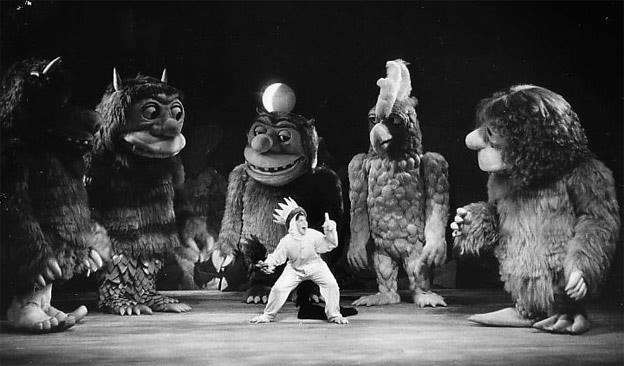
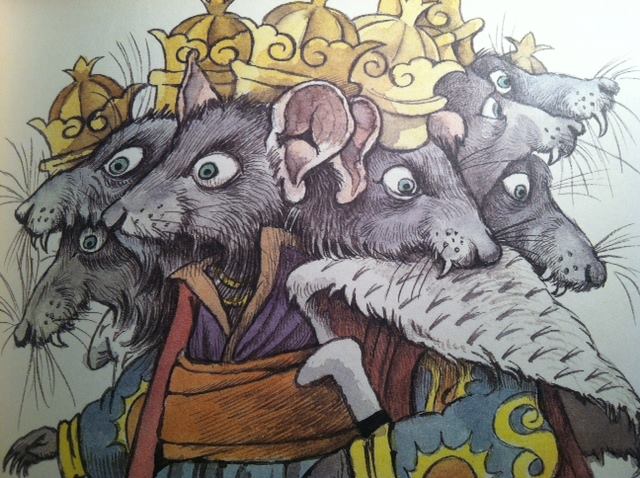
If all you know is “The Nutcracker” or the Offenbach opera, you don’t really know Hoffmann. Though Tchaikovsky had an intuitive grasp of the idiom, he was working from a watered down adaptation by Dumas. It took Maurice Sendak to bring the story back to its roots.
Sadly, Pacific Northwest Ballet discontinued its annual presentations of this gutsy production. Apparently, it was too freaky for audiences expecting to be spoon-fed sugar plums. Instead the company has taken up the insipid Balanchine version, which inexplicably thrives like fungus on a fruitcake. Is this really the same artist who choreographed “Agon?”
Fortunately, the PNB Sendak version was made into a feature film in 1986.
This is a “Nutcracker” that will put hair on your chest.
Anyway, “The Nutcracker, “The Tales of Hoffmann,” and especially “Coppelia” are almost like children’s book versions of the originals. If you have a taste for such things, you owe it to yourself to at least read “The Sandman.” Here it is, though it’s really not the kind of story you should read off of a computer:
https://germanstories.vcu.edu/hoffmann/sand_e.html
Happy birthday, E.T.A. Hoffmann!
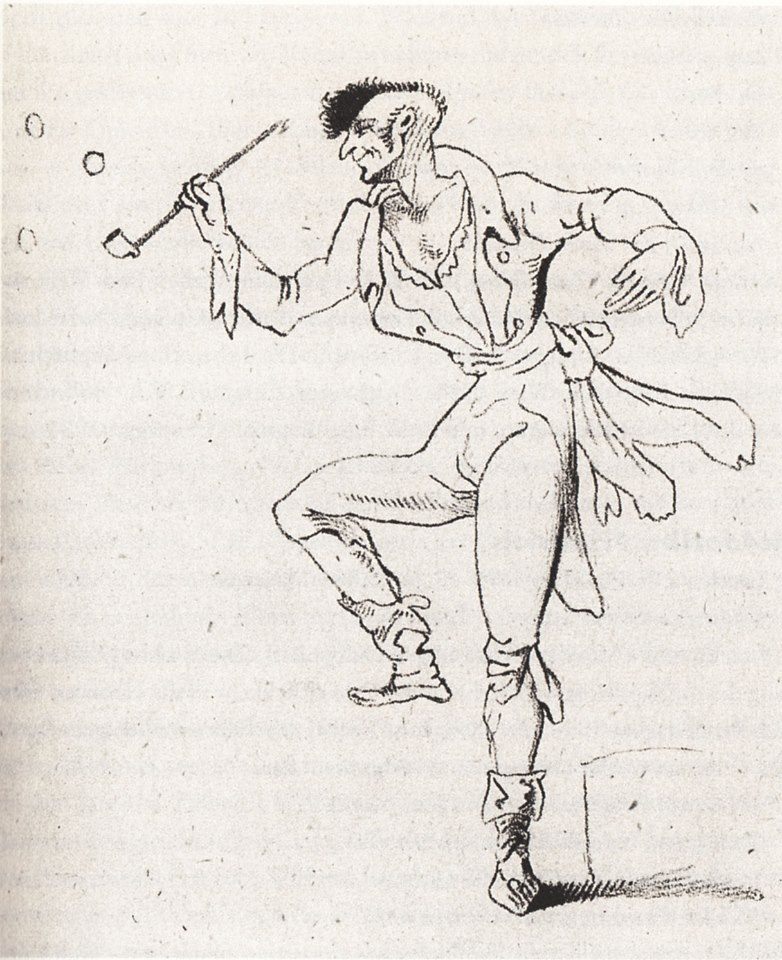
IMAGE: One of Hoffmann’s most famous creations, Kapellmeister Kreisler, sporting a rad haircut and blowing bubbles