Tag: Minnesota Orchestra

  • Polish Music Legends: Skrowaczewski & Szymanowski

    Polish Music Legends: Skrowaczewski & Szymanowski

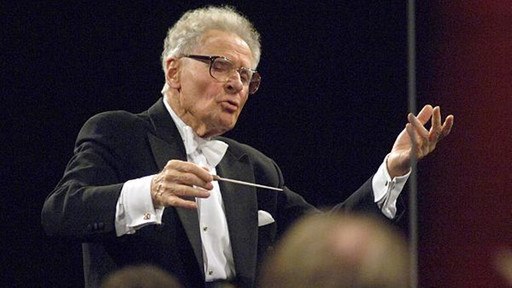
    Big day in Polish music today, which marks the 100th anniversary of the birth of Stanislaw Skrowaczewski and, somewhat more randomly, the celebration via Google Doodle of the 141st birthday of Karol Szymanowski.

    Skrowaczewski, born in Lwów, was forced to abandon his dream to become a concert pianist after sustaining a hand injury during World War II. Nevertheless, music served him well. By 1946, he had already begun his conquest of the great Polish orchestras, becoming music director in turn of the Wrocław, Katowice, and Krakow Philharmonics. He also studied composition in Paris with Nadia Boulanger.

    He made his American debut conducting the Cleveland Orchestra at the invitation of George Szell. This led to a music directorship with the Minneapolis Symphony, beginning in 1960 (the organization was rebranded the Minnesota Orchestra during his tenure, against his protests). After 1979, he maintained a long relationship with the orchestra as conductor laureate. For many, it would have been considered an honorary title, but Skrowaczewski really did return just about every season to conduct.

    He was also principal conductor of the Hallé Orchestra from 1983 to 1992. He served as artistic adviser to the Milwaukee Symphony Orchestra from 1995 to 1997, and in 1988 he was composer-in-residence for the Philadelphia Orchestra’s summer season at Saratoga. His composition, “Passacaglia Immaginaria,” was nominated for the Pulitzer Prize for Music in 1997.

    As a budding record collector, I cut my teeth on a number of Skrowaczewski’s recordings that were issued on the Vox label. I still find his Ravel to be particularly fine. I am also partial to his recordings for Mercury, including an “Italian Symphony” framed by some unusually fleet outer movements. In concertos, he accompanied the label’s most distinguished soloists, artists such as Gina Bachauer, Byron Janis, and János Starker.

    Later, I discovered his Bruckner recordings with the Deutsche Radio Philharmonie Saarbrücken Kaiserslautern (now on Oehms Classics), interpretations that render the composer’s student symphonies with as much logic and dignity as his mature works.

    Skrowaczewski lived a long and productive life. He died in 2017 at the age of 93. He conducted his last series of concerts in Minnesota less than four months before his death. On the program was Bruckner’s grandest symphonic edifice, the Symphony No. 8, which clocks in, depending on performance, at around 80 or 90 minutes in length. While there are plenty of maestros who’ve conducted Bruckner into their 90s (I saw Herbert Blomstedt do so only last season), I venture to guess there are few who have been able to do it without the aid of chair. Skrowaczewski remained on his feet the entire time.

    Karol Szymanowski is regarded as the most important Polish composer between Chopin and the generation that yielded Witold Lutoslawski. He absorbed the musical influences of Richard Strauss, Alexander Scriabin, and Claude Debussy, but put them through his own creative refinery.

    Listening to Szymanowski can be a bit like submerging oneself too long in a hot bath – the same low blood-pressure, the increased heart rate, the wooziness. Though the harmonies and melodies suggest the familiar patterns of tonality, the traditional framework has been almost wholly eaten away by the hothouse atmosphere. The music is seductive and dangerous, and one risks being overcome by languor, even as one is overrun by fast-growing vegetation.

    It may be in poor taste to suggest that so much humidity was bad for the acute tuberculosis that eventually claimed him at the age 55. Find out more about him in this biographical sketch on Google’s website. You’ll note the “Doodle’s Reach” map at the bottom of the page indicates that the artwork is only visible in the U.K. and Poland!

    https://www.google.com/doodles/karol-szymanowskis-141st-birthday

    Parenthetically, I knew the composer’s nephew in Philadelphia.

    Wszystkiego najlepszego z okazji urodzin, boys!


    Szymanowski, Violin Concerto No. 1 (1916)

    The brigand ballet “Harnaisie” (1923-31)

    Symphony No. 3 “Song of the Night” (1914)


    Skrowaczewski conducts Bruckner’s 9th in Frankfurt

    Ravel, “Mother Goose” (transferred at a low level, so turn it up!)

    Mendelssohn, Symphony No. 4 “Italian”
  • Jorja Fleezanis Minnesota Orchestra Concertmaster Dies

    Jorja Fleezanis Minnesota Orchestra Concertmaster Dies

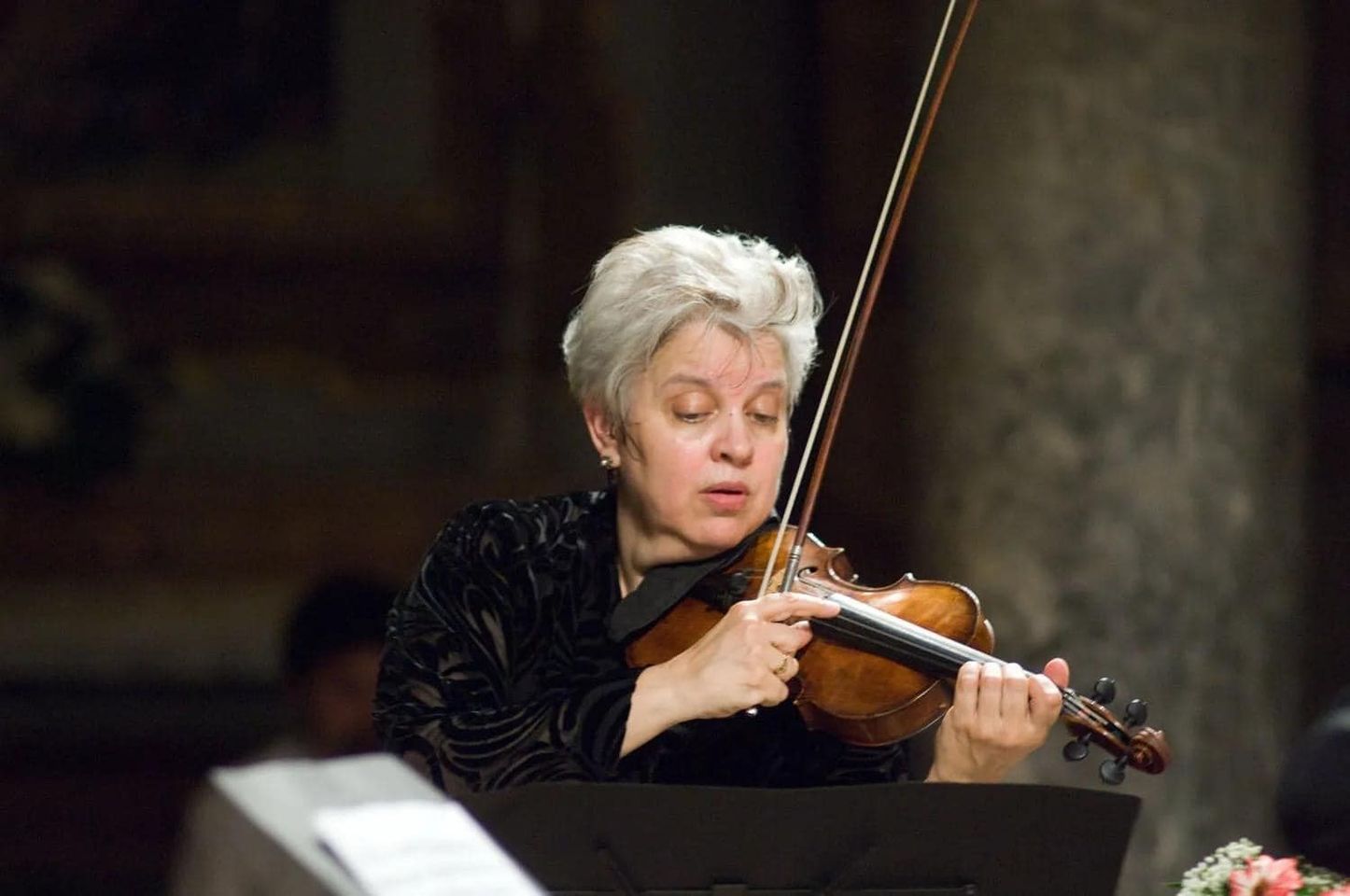
    The violinist Jorja Fleezanis has died. Fleezanis served as concertmaster of the Minnesota Orchestra for twenty years (1989-2009). At the time of her appointment, she was only the second woman to be named concertmaster of a major U.S. orchestra.

    Prior to her run in Minnesota, she was associate concertmaster in San Francisco for eight years. And before that, she was with the Chicago Symphony from the age of 23.

    Fleezanis gave the world premiere of John Adams’ Violin Concerto, a work commissioned for her by the Minnesota Orchestra, in 1994.

    With acclaimed pianist Garrick Ohlsson and principal cellist of the San Francisco Symphony Michael Grebanier, she formed the FOG Trio.

    Public radio listeners with long memories will also remember her from her frequent appearances on “St. Paul Sunday” with Bill McGlaughlin.

    Fleezanis was 70 years-old.


    Plenty examples of her artistry on YouTube, both with the FOG Trio and her colleagues from the San Francisco Symphony.

    Haydn & Brahms

    Beethoven

    Schumann

    Arensky, Chausson & Saint-Saëns

    Elgar

    Dvořák piano trios

    Dvořák quartet with members of the San Francisco Symphony

    San Francisco Ravel

    San Francisco Hindemith

    San Francisco Shostakovich

    Fleezanis interview

    https://interlude.hk/in-touch-with-jorja-fleezanisconcertmaster-and-prophet/

  • Dominick Argento A Remembrance

    Dominick Argento A Remembrance

    American composer Dominick Argento died on February 20 at the age of 91. Acclaimed particularly for his vocal works, Argento was awarded the Pulitzer Prize for Music for his song cycle, “From the Diary of Virginia Woolf,” in 1975. This Sunday night on “The Lost Chord,” I’ll offer a remembrance of the man and his achievements.

    Argento was born in York, PA, to Sicilian immigrant parents, who were inn-keepers and restaurateurs. However, it was in the Twin Cities that he would flourish. He became a professor of music at the University of Minnesota and one of the founders of what is now Minnesota Opera.

    He was recognized as a master of modern opera, the most significant American operatic composer between Gian Carlo Menotti in the 1950s and Philip Glass in the 1970s. His success is all the more remarkable, considering Argento spent virtually his entire career very far away from the artistic centers on either coast.

    Largely self-taught as a child, he was accepted into the Peabody Conservatory, after service in WWII. There, among his teachers, were Nicolas Nabokov and Hugo Weisgall. Later, he continued his studies with Luigi Dallapiccola in Florence. Howard Hanson, Bernard Rogers, and Alan Hovhaness were also important mentors. Argento received his doctorate from the Eastman School in 1958. He then moved to Minneapolis, where he lived for the next six decades, summering in Florence with his wife, the soprano Carolyn Bailey.

    In Minneapolis, he worked closely with the newly-formed Guthrie Theatre. His local successes attracted national nation and led to commissions from major opera houses from all over the country. His song cycles were championed by some of the great singers, including Frederica von Stade, Janet Baker, and Håkon Hågegard. “Casa Guidi,” a song cycle on texts of Elizabeth Barrett Browning, was recorded by Von Stade and received a Grammy Award in 2004 for Best Contemporary Classical Composition.

    Beginning in the early ‘70s, Argento also devoted himself to choral music, in large part because of his association with Philip Brunelle and the Plymouth Music Series of Minneapolis’ Plymouth Congregational Church.

    In common with Benjamin Britten, Argento’s musical language could be, on occasion, a little quirky, yet always he strove for accessibility. Among his own students were Libby Larsen and Stephen Paulus.

    We’ll hear music from one of his 14 operas, “The Dream of Valentino,” from 1993. Accordionist William Schimmel will strut and slither in “Valentino Dances.”

    That will be followed by “Six Elizabethan Songs” from 1958. Originally scored for voice and piano, it was subsequently arranged by the composer in 1962 for voice and Baroque ensemble. The added colors of flute, oboe, violin, cello, and harpsichord lend the work a kind of refracted authenticity, conjuring a loosely apposite sound world to the individual texts by Thomas Nash, Samuel Daniel, William Shakespeare, Henry Constable, and Ben Johnson. The performance will be by Patrice Michaels and the Rembrandt Chamber Players.

    Finally, Argento was composer laureate of the Minnesota Orchestra, having been commissioned to write no less than seven works for the ensemble. We’ll hear “A Ring of Time,” conceived for the 1972-73 season, the orchestra’s 70th anniversary. Argento considers different measurements of the passage of time – the seasons of the year and the times of the day – in the work’s four movements: “Spring,” “Summer,” “Fall,” and “Winter.” The Minnesota Orchestra will be conducted by Eiji Oue.

    Time has passed for Domenick Argento. I hope you’ll join me for an hour of musical remembrances on “Argento Mementos,” this Sunday night at 10:00 EST, on WWFM – The Classical Network and wwfm.org.

  • Remembering Skrowaczewski: A Life in Music

    Remembering Skrowaczewski: A Life in Music

    Stanisław Skrowaczewski has been part of my life for over 30 years. The conductor and composer died yesterday at the age of 93.

    Skrowaczewski, born in Lwów (then in Poland), was forced to abandon his dream to become a concert pianist after sustaining a hand injury during World War II. Nevertheless, music served him well. By 1946, he had already begun his conquest of the great Polish orchestras, becoming music director in turn of the Wrocław, Katowice, and Krakow Philharmonics. He also studied composition in Paris with Nadia Boulanger.

    He made his American debut conducting the Cleveland Orchestra at the invitation of George Szell. This led to a music directorship with the Minneapolis Symphony, beginning in 1960 (the organization was rebranded the Minnesota Orchestra during his tenure, against his protests). After 1979, he maintained a long relationship with the orchestra as conductor laureate. For many, it would have been considered an honorary title, but Skrowaczewski really did return just about every season to conduct.

    He was also principal conductor of the Hallé Orchestra from 1983 to 1992. He served as artistic adviser to the Milwaukee Symphony Orchestra from 1995 to 1997, and in 1988 he was composer-in-residence for the Philadelphia Orchestra’s summer season at Saratoga. His composition, “Passacaglia Immaginaria,” was nominated for the Pulitzer Prize for Music in 1997.

    As a budding record collector, I cut my teeth on a number of Skrowaczewski’s recordings that were issued on the Vox label. I still find his Ravel to be particularly fine. I am also partial to his recordings for Mercury, including an “Italian Symphony” framed by some unusually fleet outer movements. In concertos, he accompanied the label’s most distinguished soloists, artists such as Gina Bachauer, Byron Janis, and János Starker.

    Later, I discovered his Bruckner recordings with the Deutsche Radio Philharmonie Saarbrücken Kaiserslautern (now on Oehms Classics), interpretations that render the composer’s student symphonies with as much logic and dignity as his mature works.

    Skrowaczewski lived a long and productive life. He conducted his last concert (in Minnesota) in October. I will do my best to honor him today, from 4 to 7 p.m. EST, on WWFM – The Classical Network and at wwfm.org.


    Skrowaczewski conducts Bruckner’s 9th in Frankfurt:

Tag Cloud

Aaron Copland (92) Beethoven (95) Composer (114) Film Music (120) Film Score (143) Film Scores (255) Halloween (94) John Williams (185) KWAX (229) Leonard Bernstein (100) Marlboro Music Festival (125) Movie Music (135) Opera (198) Philadelphia Orchestra (88) Picture Perfect (174) Princeton Symphony Orchestra (106) Radio (87) Ralph Vaughan Williams (85) Ross Amico (244) Roy's Tie-Dye Sci-Fi Corner (290) The Classical Network (101) The Lost Chord (268) Vaughan Williams (103) WPRB (396) WWFM (881)

DON’T MISS A BEAT

Receive a weekly digest every Sunday at noon by signing up here


RECENT POSTS