Tag: Movie Music

  • Lost Worlds Movie Music Adventures

    Lost Worlds Movie Music Adventures

    This week on “Picture Perfect,” I invite you to get lost. It’s all music from movies about lost worlds and forgotten civilizations.

    While the concept of the “Lost World” dates at least as far back as Plato’s Atlantis, it wasn’t until the Victorian Era that the idea really blossomed in the public consciousness. At the time, of course, lost civilizations were genuinely being discovered – which might help explain, in part, the incredible of success of “King Solomon’s Mines.” The author, H. Rider Haggard, wrote the book on a bet that he could churn out an adventure story half as good as Robert Louis Stevenson’s “Treasure Island,” which had been published two years earlier.

    “King Solomon’s Mines” became the literary sensation of 1885. Its protagonist, Allen Quatermain, is a direct ancestor of Indiana Jones. The book inspired reams of sequels and at least five film adaptations.

    The two best known starred Stewart Granger, in 1950, and Paul Robeson, in 1937. Robeson, who played Umbopa, a king in disguise, received top billing. The score was by Mischa Spoliansky.

    Haggard achieved another “Lost World” hit with “She,” first issued in book form in 1887 – another adventure about Europeans in Africa, who meet a seemingly immortal white queen known as the all-powerful “She,” or “She-Who-Must-Be-Obeyed.”

    “She” has been adapted to film six times. The 1965 version starred Ursula Andress, Peter Cushing and Christopher Lee. The music was by Hammer Studios house composer, James Bernard. It’s nice to hear Bernard, who mostly wrote horror scores for the likes of Dracula and Frankenstein, provide something a little more nuanced for a change.

    Rudyard Kipling’s “The Man Who Would Be King,” published in 1888, was clearly influenced by the writings of Haggard. In this case, two British adventurers in India strike out for a remote corner of Afghanistan to set themselves up as kings. The story was made into one of the great adventure films of the 1970s, directed by John Huston, and starring Sean Connery and Michael Caine. That Christopher Plummer appears as Kipling himself is only icing on the cake. Maurice Jarre wrote the rousing score.

    Finally, James Hilton’s “Lost Horizon,” published in 1933, imagines Shangri-La, a Utopian society nestled in a sheltered valley somewhere in the mountains of Tibet. A British diplomat is one of a handful of passengers who survives a plane crash to be taken into the lamasery.

    “Lost Horizon” was made into a film twice. The less said about the 1973 version, a musical with songs by Burt Bacharach, the better. Frank Capra directed the classic 1937 version, which starred Ronald Colman, Jane Wyatt, and outstanding character actors of the day, people like Edward Everett Horton, Thomas Mitchell, Sam Jaffe and H.B. Warner.

    The score, Dimitri Tiomkin’s first major contribution, was also one of his most ambitious. Seldom was it so obvious that he had studied at the St. Petersburg Conservatory under Alexander Glazunov.

    I hope you’ll lose yourself in music for lost civilizations this week, on “Picture Perfect” – music for the movies – this Friday evening at 6, with a repeat Saturday morning at 6; or that you’ll listen to it later as a webcast at wwfm.org.

    PHOTO: Connery (right) with the man who would be Caine

  • Wizard Movie Music Picture Perfect

    Wizard Movie Music Picture Perfect

    This week on “Picture Perfect,” you’ll be spellbound (I hope), as I present an hour of musical selections from movies about wizards and sorcerers.

    Gandalf and Saruman duke it out in Peter Jackson’s frenetic, yet somehow ponderous adaptations of J.R.R. Tolkien’s “The Lord of the Rings,” films so bloated and poorly paced that anyone who had not read the books probably wondered what all the fuss was about. Its abundant defects didn’t keep the screen trilogy from making over a billion dollars and garnering 30 Academy Award nominations. Three of those were bestowed upon composer Howard Shore. We’ll be sampling from his music to “The Fellowship of the Ring” (2001).

    Made for a fraction of the budget, much less self-serious, and arguably way more fun is “The Sword and the Sorcerer” (1982), which holds no pretense to be anything beyond what it is: a schlocky B-movie sword and sandal swashbuckler. However, the composer, David Whitaker, aspired for something greater. Against tremendous time pressures, he turned in a marvelous score, which sounds like Erich Wolfgang Korngold on a shoestring. If this film had been made by George Lucas, Whitaker would be world famous.

    After creating one of his greatest scores for Stanley Kubrick’s “Spartacus,” Alex North had his music for Kubrick’s “2001: A Space Odyssey” rejected – and not in a nice way. (North didn’t find out about it until the lights went down at the film’s premiere.) Fortunately, the composer was able to salvage the best material for “Dragonslayer” (1981). The plot, about a bumbling sorcerer’s apprentice who faces a seemingly impossible challenge, is serviceable at best, but the dragon may yet be the most amazing committed to film. Also, the score is terrific.

    Finally, John Williams kicks off another billion dollar franchise with “Harry Potter and the Sorcerer’s Stone” (2001), which in England was released (as was the book) as “Harry Potter and the Philosopher’s Stone.” Who ever heard of a sorcerer’s stone? I guess the publishers were afraid Americans would be put off by any association with philosophy.

    I hope you’ll join me for wizards and sorcerers this week, on “Picture Perfect,” this evening at 6 ET, with a repeat tomorrow morning at 6; or that you’ll listen to it later as a webcast at http://www.wwfm.org.

    PHOTO: Saruman vexes Gandalf with the exquisite whiteness of his beard

  • Movie Music with Women’s Names

    Movie Music with Women’s Names

    This week on “Picture Perfect,” we’ll have music from movies with women’s names for titles.

    “Rachel, Rachel” (1968) stars Joanne Woodward as a repressed, small-town schoolteacher, who learns to take control of her own life. The film marked the directorial debut of Woodward’s husband, Paul Newman. “Rachel, Rachel” was nominated for four Academy Awards, including those for Best Actress and Best Picture. Newman picked up a Golden Globe and a New York Critics Circle Award for his direction. The lovely Americana score was composed by Jerome Moross.

    “Emma” (1996) was adapted from the Jane Austen novel. Gwyneth Paltrow plays the high spirited-though-somewhat-clueless matchmaker, who fails to recognize her own feelings or those of the men around her. Also among the cast are Alan Cumming, Toni Collette, Ewan McGregor and Jeremy Northam. Screenwriter and director Douglas McGrath fell in love with the book while an undergraduate at Princeton University. Rachel Portman wrote the Academy Award-winning score.

    Otto Preminger’s film noir, “Laura” (1944), features quite the cast, including Gene Tierney, Dana Andrews, Clifton Webb, Judith Anderson and Vincent Price. The equally impressive theme, which is heard in endless permutations throughout the film, was by Philadelphia-born David Raksin. Outfitted with lyrics by Johnny Mercer, it became the second most-recorded song during the composer’s lifetime, after only Hoagie Carmichael’s “Stardust.”

    Finally, “Diane” (1956) takes us back to 16th century France, with a plot concerning Diane de Poitiers (played by Lana Turner), a member of the court of Francis I, who becomes the mistress of the king’s son, Henri d’Orleon (played by a very young Roger Moore). Their illicit love unfolds against the backdrop of Medici intrigue and lust for power. Miklós Rózsa, M-G-M’s go-to-composer for its historical spectacles, wrote the music.

    I hope you’ll join me for “What’s in a Name?,” tonight at 6 ET, with a repeat tomorrow morning at 6; or that you’ll listen to it later as a webcast at http://www.wwfm.org.

    PHOTO: Dana Andrews likes his women stiff, like his bourbon

  • Remembering Jerry Goldsmith: A Film Music Legend

    Remembering Jerry Goldsmith: A Film Music Legend

    Oh, Jerry, I can’t tell you how much I miss you. What a joy it was to go to the movies when you were still alive. Of course, the movies got precipitously worse in your last decade, but you lent a degree of enjoyment even to the transparently crappy ones – even if it was combined with a lingering wistfulness for the glory days of the 1970s.

    I will always cherish your music for “The Flim Flam Man,” “Patton,” “Chinatown,” “Papillon,” “The Great Train Robbery,” “Star Trek: The Motion Picture,” and especially “The Wind and the Lion.”

    You often wound up playing second banana to John Williams (Williams got “Superman;” you got “Supergirl”), and a great many of the films you scored were unworthy of your talents, but you were always a professional (if at times a bit grouchy). I can recall many a moviegoing experience when your music wound up being the only redeeming quality.

    But that’s the price of being fast and good. You were often brought on, on very short notice, especially late in your career, to write replacement scores for bad movies. Still, every once in a while you were tossed a bone, as with “L.A. Confidential.”

    Criminally, you were honored with but a single Academy Award, for your work on “The Omen.” It was bad luck that “The Wind and the Lion” was released the same year as “Jaws.”

    How many people know you also worked in television, providing music for shows like “Gunsmoke” and “The Twilight Zone,” or that you wrote the theme music for “The Man from U.N.C.L.E.” and “The Waltons?”

    I confess I don’t share your enthusiasm for electronics, but I understand you felt it was something you needed to work through. At least you didn’t require an intervention like Maurice Jarre.

    What I would give to go see a quasi-intelligent, mainstream American movie again and see the credit, “Music by Jerry Goldsmith.” Those days will never come again, on any level.

    Happy birthday, Jerry. I hope they’re still making good movies where you are.

    “The Wind and the Lion”

    “Patton”
    https://www.youtube.com/watch?v=vdEy4GneZfw

    “Star Trek: The Motion Picture”

    PHOTO: Jerry Goldsmith (1929-2004)

  • Toy Movie Music Picture Perfect

    Toy Movie Music Picture Perfect

    Eesh. Two posts already today, and I forgot to mention “Picture Perfect!” What day is it, anyway? Holidays…

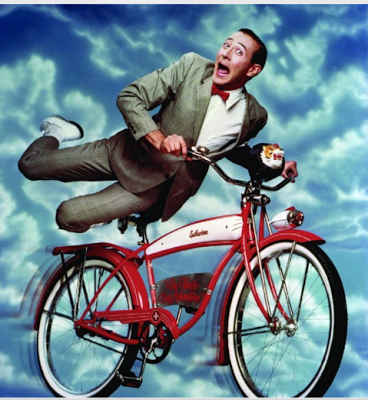
    With everyone still reeling from Christmas, I thought I would present an hour of music from movies about toys, including selections from “Citizen Kane” (shhh, don’t give it away), with music by Bernard Herrmann; “Pee Wee’s Big Adventure” (it’s in the basement of the Alamo!), with music by Danny Elfman; “Toccata for Toy Trains” (Charles and Ray Eames love vintage toys), with music by Elmer Bernstein; and “Toy Story” (not much of a stretch there), with music by Randy Newman.

    That’s toys everywhere this week, on “Picture Perfect,” music for the movies. I hope you’ll join me tonight at 6 ET, or for the repeat, tomorrow morning at 6; or that you’ll catch it later as a webcast at http://www.wwfm.org.

Tag Cloud

Aaron Copland (93) Beethoven (95) Composer (114) Film Music (141) Film Score (143) Film Scores (255) Halloween (94) John Williams (195) KWAX (229) Leonard Bernstein (103) Marlboro Music Festival (125) Movie Music (156) Mozart (89) Opera (212) Philadelphia Orchestra (89) Picture Perfect (174) Princeton Symphony Orchestra (108) Radio (88) Ross Amico (244) Roy's Tie-Dye Sci-Fi Corner (290) The Classical Network (101) The Lost Chord (268) Vaughan Williams (103) WPRB (396) WWFM (881)

DON’T MISS A BEAT

Receive a weekly digest every Sunday at noon by signing up here


RECENT POSTS