Tag: Music History

  • Beethoven Find Attic Treasures

    Beethoven Find Attic Treasures

    Has anyone else heard about this? It’s like a classical music version of “Antiques Roadshow.” As a former book dealer, I speak from experience: you never know what you’re going to find in people’s attics or when rummaging around their basements.

    http://m.greenwichtime.com/news/article/Beethoven-composition-discovered-in-Greenwich-6709891.php

    PHOTO: Kind of a bait-and-switch, since it isn’t really the document described in the article, but rather a literal shopping list scrawled by Beethoven. Among the desired items: soap, a mousetrap, a knife, and a metronome.

  • Remembering Boulez Provocateur of Music

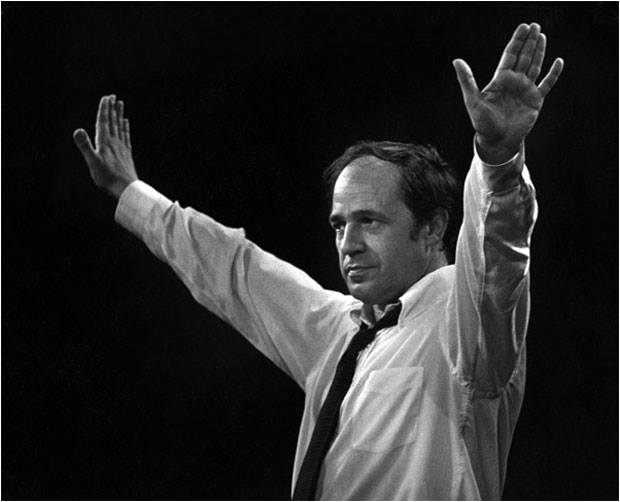
    Remembering Boulez Provocateur of Music

    He wanted to blow up the opera houses and destroy the Mona Lisa. Sometimes it’s necessary to push hard in order to find equilibrium.

    Pierre Boulez might not be to everyone’s taste, either as a composer or a conductor, but if he did one thing well it was to force everyone to think – about music, about progress and about the reasons we value the things we hold sacred.

    It had originally been my intention to show up for my WPRB shift tomorrow and enjoy a lazy morning of English music, since I really didn’t have any other plans. As soon as I drafted my Facebook announcement, however, I was blindsided by the news that Boulez died yesterday at the age of 90.

    Now, I can’t claim to be passionate about Boulez, but he is too important a figure in the world of classical music simply to ignore. Besides, I do like his recordings of Bartók and Debussy, he made a fine set of Schoenberg’s choral music, and the last time I listened to “Le marteau sans maître,” I thought, you know, this isn’t so bad.

    Boulez proclaimed, “A civilization that conserves is one that will decay!” Just the same, I think he’d be glad to join me tomorrow morning from 6 to 11 ET, on WPRB 103.3 FM and at wprb.com, as I share Boulez records from my collection. It certainly beats the alternative, says Classic Ross Amico.

  • Faure vs Massenet A Composer Duel

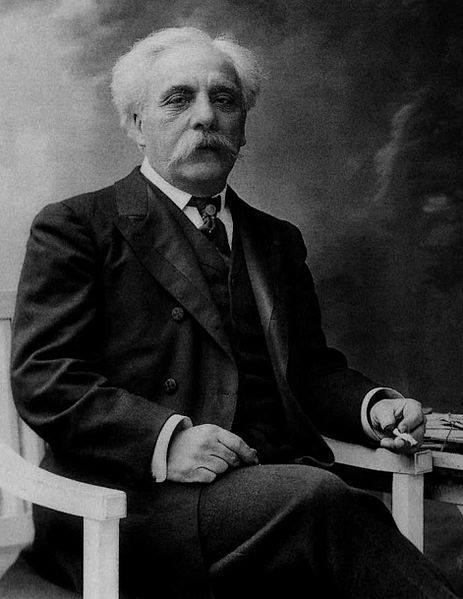
    Faure vs Massenet A Composer Duel

    If Gabriel Fauré (1845-1924) and Jules Massenet (1842-1912) got in a knife fight, who would win? Discuss.

    Happy birthday, gentlemen.

  • Brahms and Tchaikovsky: Best Frenemies Forever

    Brahms and Tchaikovsky: Best Frenemies Forever

    Brahms and Tchaikovsky were totally B.F.F. – Best Frenemies Forever.

    The latter famously confided to his diary, “I have played over the music of that scoundrel Brahms. What a giftless bastard!”

    And that’s only the short version.

    The two shared the same birthday, May 7 (Brahms born in 1833 and Tchaikovsky in 1840). Unfortunately, that was about all they had in common – Brahms, the great classicist among Romantics, and Tchaikovsky, always heart-on-the-sleeve.

    Or so they thought, until the two met on New Year’s Day, in 1888. Surprise! They actually delighted in one another’s company. There was much drinking and backslapping and drinking and hanging on one another’s shoulders and drinking and happy tears and drinking. (Of course, all this took place in spite of Brahms falling asleep during a rehearsal of Tchaikovsky’s Fifth Symphony.) In fact, they liked one another so well, they decided to do it again.

    However, the two never could reconcile themselves to one another’s music. After a lovely evening with Brahms, during which both men drank and smoked prodigiously, while Adolph Brodsky (the violinist who had introduced Tchaikovsky’s Violin Concerto) rehearsed with some friends a Brahms piano trio, Mrs. Brodsky asked Tchaikovsky what he had thought of the piece.

    “Don’t be angry with me, my dear friend,” he said, “but I did not like it.”

    Happy birthday, boys!


    PHOTOS: Peter Ilych Tchaikovsky (left) and Johannes Brahms, agreeing to disagree

  • Salieri Beyond the Mozart Myth

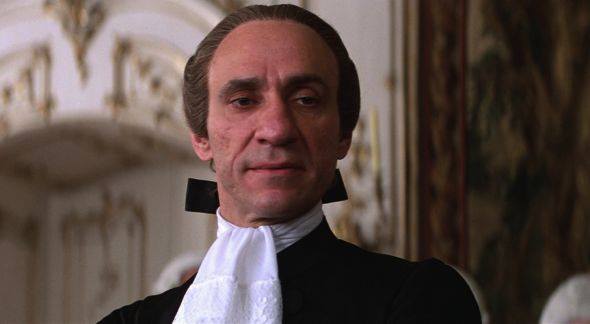
    Salieri Beyond the Mozart Myth

    Poor, maligned Antonio Salieri. He was a second-rate hack. He murdered Mozart. You know the drill.

    While it’s true there’s no such thing as bad publicity, it would be nice if the man could transcend his notoriety to be recognized for his achievements. Especially since none of the charges happen to be true.

    I like “Amadeus” very much, and while I am happy it has served to keep Salieri’s name alive and perhaps lend a greater degree of commercial viability to subsequent recordings of his music, it is worth looking into the historical facts.

    In reality, Salieri was a generous teacher, who fostered Beethoven, Schubert, Liszt and even Franz Xaver Mozart, the composer’s son, who was born the year after his father’s death.

    Salieri was also a prolific and successful composer. He wrote 37 operas, in addition to orchestral works, concertos, chamber music and sacred pieces. While he was no Mozart – who was? – his music is finely crafted and often quite enjoyable, certainly no worse than that of a majority of his contemporaries.

    Yes, Mozart believed Salieri and the Italian faction ensconced at the Viennese court (including future Mozart librettist Lorenzo Da Ponte) were against him, and there may have been something to it at first. However, beyond a rivalry over certain specific jobs, Mozart and Salieri appeared often to be better than cordial acquaintances. The two even collaborated on a cantata (now lost), “Per la ricuperata salute di Ophelia,” a venture which was apparently entered into voluntarily (as opposed to an earlier juxtaposition of one-act operas composed for the edification of the emperor).

    When Salieri was appointed Kapellmeister in 1788, his first act was to revive “The Marriage of Figaro.” He was responsible for arranging first performances of Mozart’s Piano Concerto No. 22, K. 482, the Clarinet Quintet and the Symphony No. 40. He was full of praise for “The Magic Flute.” And as I said, he took it upon himself to educate Mozart’s son.

    Sadly, Salieri’s enormous compositional output gradually faded from memory already during the latter years of his life. Ironically, it is the scandalmongers who kept his name alive.

    Rumors of Salieri’s involvement in Mozart’s death were codified by Alexander Pushkin in 1831, a few years after Salieri himself had passed, in the tragedy “Mozart and Salieri.” This was later set as an opera, in 1898, by Nikolai Rimsky-Korsakov.

    Peter Schaffer picked up the thread in 1979, when he wrote the play “Amadeus,” which of course was adapted into the Academy Award-winning film in 1984.

    As the compact disc era progressed, more and more of Salieri’s repertoire became available for first-hand assessment – and guess what? A lot of it is quite good!

    Here’s one of my favorite Salieri works, his Concerto for Flute, Oboe and Orchestra:

    https://www.youtube.com/watch?v=cJK87k7jlHo&list=PL653040801EF6DF3A

    And Cecilia Bartoli, from the documentary “Why Salieri, Signora Bartoli?”:

    https://www.youtube.com/watch?v=eq1Fj77eqDw

    Happy birthday, Antonio Salieri!

Tag Cloud

Aaron Copland (92) Beethoven (95) Composer (114) Film Music (120) Film Score (143) Film Scores (255) Halloween (94) John Williams (185) KWAX (229) Leonard Bernstein (100) Marlboro Music Festival (125) Movie Music (135) Opera (198) Philadelphia Orchestra (88) Picture Perfect (174) Princeton Symphony Orchestra (106) Radio (87) Ralph Vaughan Williams (85) Ross Amico (244) Roy's Tie-Dye Sci-Fi Corner (290) The Classical Network (101) The Lost Chord (268) Vaughan Williams (103) WPRB (396) WWFM (881)

DON’T MISS A BEAT

Receive a weekly digest every Sunday at noon by signing up here


RECENT POSTS