Tag: New World Symphony

  • Dvořák’s Hiawatha Melodrama Premiere

    Dvořák’s Hiawatha Melodrama Premiere

    If, like me, you’re of the opinion that Dvořák never wrote a bad note, or if you are a particular fan of the “New World” Symphony, you might be interested to tune in this week to hear the “Hiawatha Melodrama.”

    Dvořák composed what is now commonly numbered his Symphony No. 9 (for decades it was known as the Symphony No. 5) in 1893, while he was director of the National Conservatory of Music in New York City. The work was influenced by Native American music and African American spirituals. The composer intimated that certain sections were inspired by his reading of “The Song of Hiawatha.” In fact, he intended the famous Largo as a sketch for a later opera or cantata on the theme, and the third movement scherzo was suggested by a dance at Hiawatha’s wedding feast.

    Beginning in the early 1990s, cultural historian Joseph Horowitz and Dvořák scholar Michael Beckerman began experimenting with presentations involving portions of Longfellow’s text with music from Dvořák’s symphony. These developed into a 35-minute work, which achieved its final form in 2013. (In musical terms, a melodrama is the marriage of music with spoken word.) The arrangers also lifted passages from Native American-influenced music from Dvořák’s Sonatina, Op. 100 (the composer sketched the theme for the Larghetto on his starched cuff during a visit to Minnehaha Falls in Minnesota), and his “American Suite.”

    We’ll hear the world premiere recording, on the Naxos label, featuring as the narrator bass-baritone Kevin Deas.

    To round out the hour, I’ve programmed selections from “Hiawatha’s Wedding Feast,” one of three cantatas that comprise “Scenes from the Song of Hiawatha,” by the English composer of African descent Samuel Coleridge-Taylor. Coleridge-Taylor composed the work five years after Dvořák completed his “New World” Symphony.

    “Hiawatha’s Wedding Feast,” became a cultural phenomenon. By the time it was taken up by Sir Malcolm Sargent, it was given annually, from 1928 to 1939, in a costumed, semi-ballet version, featuring close to a thousand performers. Unfortunately, this was among the works the composer had sold outright, his heirs thereby missing out on the royalties. By the time of Sargent’s advocacy, the short-lived Coleridge-Taylor had already been dead for 16 years.

    The recording, released on the Argo label back in 1991, is one of the earliest of rising star Bryn Terfel.

    I hope you’ll join me for “Indian Summer” – works inspired by Longfellow’s “The Song of Hiawatha” – on “The Lost Chord,” now in syndication on KWAX, the radio station of the University of Oregon!


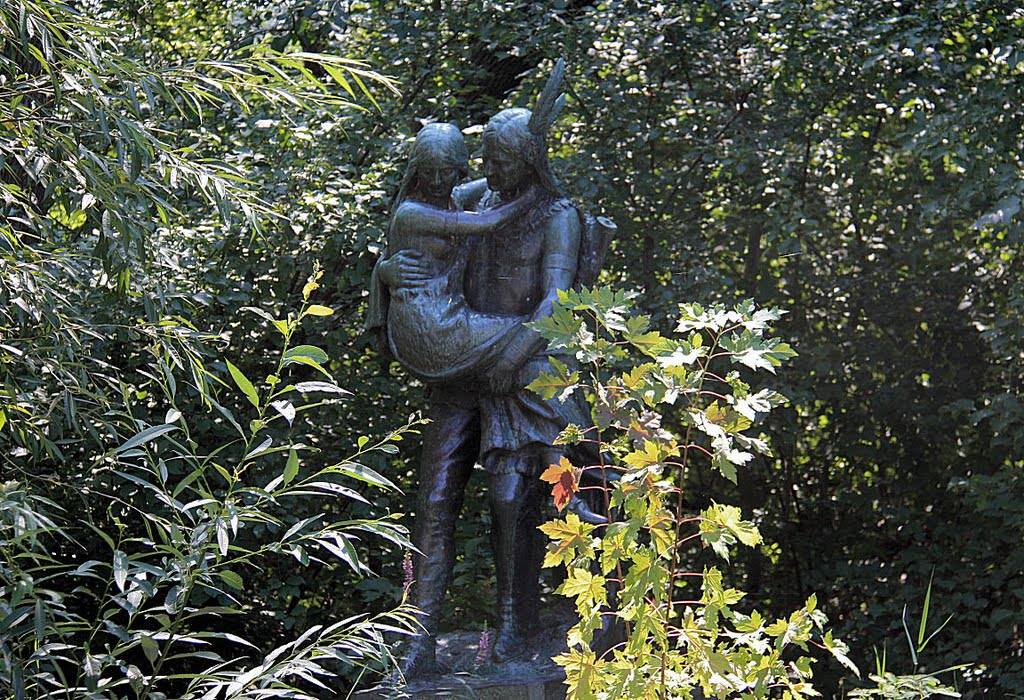
    PHOTO: “Hiawatha and Minnehaha” by Jacob Fjelde, Minnehaha Park, Minneapolis

    https://www.mnopedia.org/thing/hiawatha-and-minnehaha-jacob-fjelde?fbclid=IwY2xjawG4EvFleHRuA2FlbQIxMAABHU_hRqi-NEDWZvDwbK9LRjzlO644UCOZdko1iRKOgcOVXyGBnvaENyeWWg_aem__TMot1CSAzR_xCmofrsP5Q


    Clip and save the start times for all three of my recorded shows:

    PICTURE PERFECT, the movie music show – Friday at 8:00 PM EST/5:00 PM PST

    SWEETNESS AND LIGHT, the light music program – ALL NEW! – Saturday at 11:00 AM EST/8:00 AM PST

    THE LOST CHORD, unusual and neglected rep – Saturday at 7:00 PM EST/4:00 PM PST
    Stream them, wherever you are, at the link!

    https://kwax.uoregon.edu/

  • Harry T. Burleigh: The Voice That Shaped Dvořák

    Harry T. Burleigh: The Voice That Shaped Dvořák

    Harry T. Burleigh is one of the great unsung figures in American music – which is ironic, since it was his singing that changed the course of history.

    Burleigh was a student at the National Conservatory of Music in New York, where he studied with, among others, Rubin Goldmark, the conservative pedagogue who later gave lessons to Aaron Copland and George Gershwin.

    It just so happens that Burleigh’s attendance there coincided with the tenure of Antonin Dvořák as the conservatory’s director. Dvořák overheard the young man singing African American spirituals in a corridor adjacent to his office and was transfixed. This was his first exposure to the spiritual, and it had the force of an epiphany. Thereafter, Burleigh was a regular guest at the Dvořák home. He frequently sang for Dvořák and worked as his copyist beginning in 1893.

    Reflecting on his own debt to the folk idioms of his native land in the development of a Czech national sound, Dvořák was eager to share his impressions with American composers, and to encourage them to embrace this unique and neglected resource.

    “I am now satisfied that the future music of this country must be founded upon what are called Negro melodies,” he wrote. “This must be the real foundation of any serious and original school of composition to be developed in the United States. When I first came here last year I was impressed with this idea and it has developed into a settled conviction. These beautiful and varied themes are the product of the soil. They are American.”

    This was quite the pronouncement for 1893.

    Spirituals, of course, became an important part of the “New World” Symphony’s DNA. Since Dvořák’s masterwork was intended, in part, as instructional, leading American composers by example to a distinctly national sound, the significance of Burleigh’s influence becomes inescapable.

    Burleigh also served as a double-bassist and timpanist in the school’s orchestra, which Dvořák conducted. He was born in Stamford, CT, on this date in 1866.

    Happy birthday, Harry T. Burleigh, and thank you!


    More about Burleigh:

    “Goin’ Home”

    “Wade in de Water”

    Dvorak, Symphony No. 9 “From the New World”

    https://www.youtube.com/watch?v=oT8dqLoRIVU

  • Dvořák’s New World Symphony Goes Home for Yom Kippur

    Dvořák’s New World Symphony Goes Home for Yom Kippur

    Everyone knows the “New World” Symphony, right? You know, THE musical blueprint laid out by Antonin Dvořák, through which, as an outside observer, while visiting director of the National Conservatory in New York, he hoped to reveal to American artists the raw material on which could be built a uniquely national identity. In particular, Dvořák found fascination in African-American spirituals and Native American dances.

    Except on today’s Noontime Concert on The Classical Network, the “New World” is goin’ home. In an interesting feat of cross-fertilization, the Alba Consort will weave iconic themes from Dvořák’s most famous symphony into a program of early Sephardic, Iberian, French, Italian, Cypriot, Armenian, and North African music.

    The imaginative and revelatory venture is Alba’s response to an invitation from the New York Philharmonic as part of the orchestra’s “New World Initiative,” which encouraged fresh perspectives on the “New World” Symphony. The result is like the discovery of a lost bridge from the Old Country to a brave New World.

    The concert was made possible in part by Gotham Early Music Scene, or GEMS, one of its free lunchtime offerings presented on Thursdays at 1:15 p.m, at St. Bartholomew’s Church, 50th Street and Park Avenue, in Midtown Manhattan.

    GEMS is a non-profit corporation that supports and promotes artists and organizations in New York City devoted to Early Music – music of the Middle Ages, Renaissance, Baroque, and early Classical periods. For more information on its upcoming midday concerts and other GEMS’ events, look online at gemsny.org.

    Then stick around for more music reflective of a journey from the Old World to the New – with works by Dvořák and his colleague at the National Conservatory, Victor Herbert – and some musical presentiments of Yom Kippur.

    The holiest day on the Jewish calendar begins at sunset. Get ready to mark the occasion with, among others, Enest Bloch’s moving “Israel Symphony,” Joseph Joachim’s “Hebrew Melodies,” David Stock’s “Yizkor,” and Emil Nikolaus von Reznicek’s set of unpredictable variations on “Kol Nidre.”

    We’ll sail the ocean blue and set the tone for atonement, between 12 and 4 p.m. EDT, on WWFM – The Classical Network and wwfm.org.


    “Yom Kippur” (1969), by Chaim Gross

  • Dvořák’s Hiawatha Melodrama Premiere

    Dvořák’s Hiawatha Melodrama Premiere

    If, like me, you’re of the opinion that Dvořák never wrote a bad note, or if you are a particular fan of the “New World” Symphony, you might be interested to tune in tonight to hear the “Hiawatha Melodrama.”

    Dvořák composed what is now commonly numbered his Symphony No. 9 (for decades it was known as the Symphony No. 5) in 1893, while he was director of the National Conservatory of Music in New York City. The work was influenced by Native American music and African American spirituals. The composer intimated that certain sections were inspired by his reading of “The Song of Hiawatha.” In fact, he intended the famous Largo as a sketch for a later opera or cantata on the theme, and the third movement scherzo was suggested by a dance at Hiawatha’s wedding feast.

    Beginning in the early 1990s, cultural historian Joseph Horowitz and Dvořák scholar Michael Beckerman began experimenting with presentations involving portions of Longfellow’s text with music from Dvořák’s symphony. These developed into a 35-minute work, which achieved its final form in 2013. (In musical terms, a melodrama is the marriage of music with spoken word.) The arrangers also lifted passages from Native American-influenced music from Dvořák’s Sonatina, Op. 100 (the composer sketched the theme for the Larghetto on his starched cuff during a visit to Minnehaha Falls in Minnesota), and his “American Suite.”

    We’ll hear the world premiere recording, on the Naxos label, featuring as the narrator bass-baritone Kevin Deas.

    To round out the hour, I’ve programmed selections from “Hiawatha’s Wedding Feast,” one of three cantatas that comprise “Scenes from the Song of Hiawatha,” by the English composer of African descent, Samuel Coleridge-Taylor. Coleridge-Taylor composed the work five years after Dvořák completed his “New World” Symphony.

    “Hiawatha’s Wedding Feast,” became a cultural phenomenon. By the time it was taken up by Sir Malcolm Sargent, it was given annually, from 1928 to 1939, in a costumed, semi-ballet version, featuring close to a thousand performers. Unfortunately, this was among the works the composer had sold outright, his heirs thereby missing out on the royalties. By the time of Sargent’s advocacy, the short-lived Coleridge-Taylor had already been dead for 16 years.

    The recording, released on the Argo label back in 1991, is one of the earliest of rising star Bryn Terfel.

    I hope you’ll join me for “Indian Summer” – works inspired by Longfellow’s “The Song of Hiawatha” – this Sunday night at 10:00 EST, on WWFM – The Classical Network and at wwfm.org.


    PHOTO: “Hiawatha and Minnehaha” by Jacob Fjelde, Minnehaha Park, Minneapolis

    More about it here: http://www.mnopedia.org/thing/hiawatha-and-minnehaha-jacob-fjelde

  • Happy Birthday Dvořák A Musical Appreciation

    Happy Birthday Dvořák A Musical Appreciation

    Oh Toni, how could I ignore the fact that today is your birthday anniversary? You, who never wrote a bad note?

    Having cut my teeth on the “New World” Symphony, I later discovered that yours is one of those peculiar cases where, looking back, I find that what attracted me to you in the first place is not necessarily what is most characteristic in your other music.

    However, having gotten to know your other works, I have to say, I may like them even better.

    Hard to believe that the composer of the Serenade for Strings and the sunny Symphony No. 8 could write those lurid potboilers based on Czech fairy tales, or that one could find so much depth and melancholy in simple children’s stories.

    Further, you virtually reinvented American music, directing young composers to forget about emulating Mendelssohn and Schumann and Brahms, since they could never hope to beat them at their own game, and focus on that which is distinctly America: Indian tunes and Negro spirituals (using the parlance of the day).

    Thanks for everything, Antonin Dvořák (1841-1904). Yours was a beautiful and generous soul.

    https://www.youtube.com/watch?v=tY79rR0k8Fc

Tag Cloud

Aaron Copland (92) Beethoven (95) Composer (114) Film Music (120) Film Score (143) Film Scores (255) Halloween (94) John Williams (185) KWAX (229) Leonard Bernstein (100) Marlboro Music Festival (125) Movie Music (135) Opera (198) Philadelphia Orchestra (88) Picture Perfect (174) Princeton Symphony Orchestra (106) Radio (87) Ralph Vaughan Williams (85) Ross Amico (244) Roy's Tie-Dye Sci-Fi Corner (290) The Classical Network (101) The Lost Chord (268) Vaughan Williams (103) WPRB (396) WWFM (881)

DON’T MISS A BEAT

Receive a weekly digest every Sunday at noon by signing up here


RECENT POSTS