
This week on “The Lost Chord,” we salute the laborer for Labor Day.
Nikolai Medtner, classmate and friend of Sergei Rachmaninoff, wrote an awful lot of music for the piano. Alas, comparatively little of it is heard with any frequency. Pianists are said to adore his music, but for those in charge of concert venues the composer remains a tough sell. Medtner’s curiously titled triptych, “Three Hymns in Praise of Toil,” from 1926-27, consists of three movements: “Hymn Before Work,” “At the Anvil,” and “Hymn After Work.”
Manuel Rosenthal’s original compositions have been eclipsed by his arrangements for the runaway success, “Gaité Parisienne.” Rosenthal wrote music for the stage, orchestral pieces, pieces for voice and chorus, and instrumental works, but none of them have attained anywhere near the recognition of his Offenbach ballet, on which his name, if it appears at all, does so in rather small print. He did enjoy a successful career as one of France’s most prominent conductors. Interestingly, he was also the third and last pupil of Maurice Ravel.
We’ll hear Rosenthal’s “Les petits métiers” (“The Little Trades”), from 1933, ten deft orchestral sketches, including “The Farrier,” “The Herbalist,” “The Puppeteer,” “The Night-Watchman,” “The Postman Déodat,” “The Barber,” “The Cornet-seller,” “The Grinder,” “The Nanny,” and “The Little Telegraph-Boy.” If you don’t know what a farrier is, it’s a specialist in equine foot care!
According to the composer, “In this score, I have put my memories of the urchin I once was in the streets of Paris. They were full of songs of the trades-people, glazier, knife-grinder and so on. But I did not forget the wet-nurses who fed the new-born children of richer families, the soldiers or the little telegraph-boys, urchins of 12 or 13 years-old, who carried telegrams by bicycle. In short, all those little trades that favored exchange between people and contributed to a very French and very cheerful atmosphere.”
Speaking of horse feet, we’ll also enjoy a brief part-song by Gustav Holst, called “The Song of the Blacksmith,” a folk song arrangement from 1917. Holst later included the melody in his Second Suite in F for military band, with a lively part for anvil!
Finally, American composer John Alden Carpenter’s ballet “Skyscrapers,” from 1924, is set against the backdrop of a big city, with workmen in overalls exerting themselves amidst the haste and confusion of urban life. A whistle blows. There’s a side trip to an amusement park, with suggestions of carousels and raucous dance bands. These are interrupted, briefly, by a flashback to the idea of work, the workmen swinging their hammers and preparing to rivet. Then a reversion to play, with sailors, flappers and midway types performing a succession of colorful dances. The whistle blows again, and the laborers are summoned back to the job at hand.
Pull up a girder and get out your Stanley thermoses. I’ll be doing the heavy lifting as we punch the clock for Labor Day with “Labor Intensive” on “The Lost Chord,” now in syndication on KWAX Classical Oregon!
———-
Clip and save the start times for all three of my recorded shows:
PICTURE PERFECT, the movie music show – Friday at 8:00 PM EDT/5:00 PM PDT
SWEETNESS AND LIGHT, the light music program – Saturday at 11:00 AM EDT/8:00 AM PDT
THE LOST CHORD, unusual and neglected rep – Saturday at 7:00 PM EDT/4:00 PM PDT
Stream them, wherever you are, at the link!
https://kwax.uoregon.edu/
Tag: Nikolai Medtner
-

Labor Day Lost Chord Medtner Rosenthal Carpenter
This week on “The Lost Chord,” it’s a working weekend, as we salute the laborer for Labor Day.
Nikolai Medtner, classmate and friend of Sergei Rachmaninoff, wrote an awful lot of music for the piano. Alas, comparatively little of it is heard with any frequency. Pianists are said to adore his music, but for those in charge of concert venues the composer remains a tough sell. Medtner’s curiously titled triptych, “Three Hymns in Praise of Toil,” from 1926-27, consists of three movements: “Hymn Before Work,” “At the Anvil,” and “Hymn After Work.”
Manuel Rosenthal’s original compositions have been eclipsed by his arrangements for the runaway success, “Gaité Parisienne.” Rosenthal wrote music for the stage, orchestral pieces, pieces for voice and chorus, and instrumental works, but none of them have attained anywhere near the recognition of his Offenbach ballet, on which his name, if it appears at all, does so in rather small print. He did enjoy a successful career as one of France’s most prominent conductors. Interestingly, he was also the third and last pupil of Maurice Ravel.
We’ll hear Rosenthal’s “Les petits métiers” (“The Little Trades”), from 1933, ten deft orchestral sketches, including “The Farrier,” “The Herbalist,” “The Puppeteer,” “The Night-Watchman,” “The Postman Déodat,” “The Barber,” “The Cornet-seller,” “The Grinder,” “The Nanny,” and “The Little Telegraph-Boy.” If you don’t know what a farrier is, it’s a specialist in equine foot care!
According to the composer, “In this score, I have put my memories of the urchin I once was in the streets of Paris. They were full of songs of the trades-people, glazier, knife-grinder and so on. But I did not forget the wet-nurses who fed the new-born children of richer families, the soldiers or the little telegraph-boys, urchins of 12 or 13 years-old, who carried telegrams by bicycle. In short, all those little trades that favored exchange between people and contributed to a very French and very cheerful atmosphere.”
Speaking of horse feet, we’ll also enjoy a brief part-song by Gustav Holst, called “The Song of the Blacksmith,” a folk song arrangement from 1917. Holst later included the melody in his Second Suite in F for military band, with a lively part for anvil!
Finally, American composer John Alden Carpenter’s ballet “Skyscrapers,” from 1924, is set against the backdrop of a big city, with workmen in overalls exerting themselves amidst the haste and confusion of urban life. A whistle blows. There’s a side trip to an amusement park, with suggestions of carousels and raucous dance bands. These are interrupted, briefly, by a flashback to the idea of work, the workmen swinging their hammers and preparing to rivet. Then a reversion to play, with sailors, flappers and midway types performing a succession of colorful dances. The whistle blows again, and the laborers are summoned back to the job at hand.
Pull up a girder and get out your Stanley thermoses. I’ll be doing the heavy lifting as we punch the clock for Labor Day with “Labor Intensive” on “The Lost Chord,” now in syndication on KWAX, the radio station of the University of Oregon!
Remember, KWAX is on the West Coast, so there’s a three-hour difference for the Trenton-Princeton area. Here are the respective air-times of my recorded shows (with East Coast conversions in parentheses):
PICTURE PERFECT, the movie music show – Friday on KWAX at 5:00 PACIFIC TIME (8:00 PM EDT)
THE LOST CHORD, unusual and neglected rep – Saturday on KWAX at 4:00 PACIFIC TIME (7:00 PM EDT)
Stream them here!
-
Remembering Milne & de Leeuw on The Classical Network
Sadly, the past week has left us short of two fine musicians.
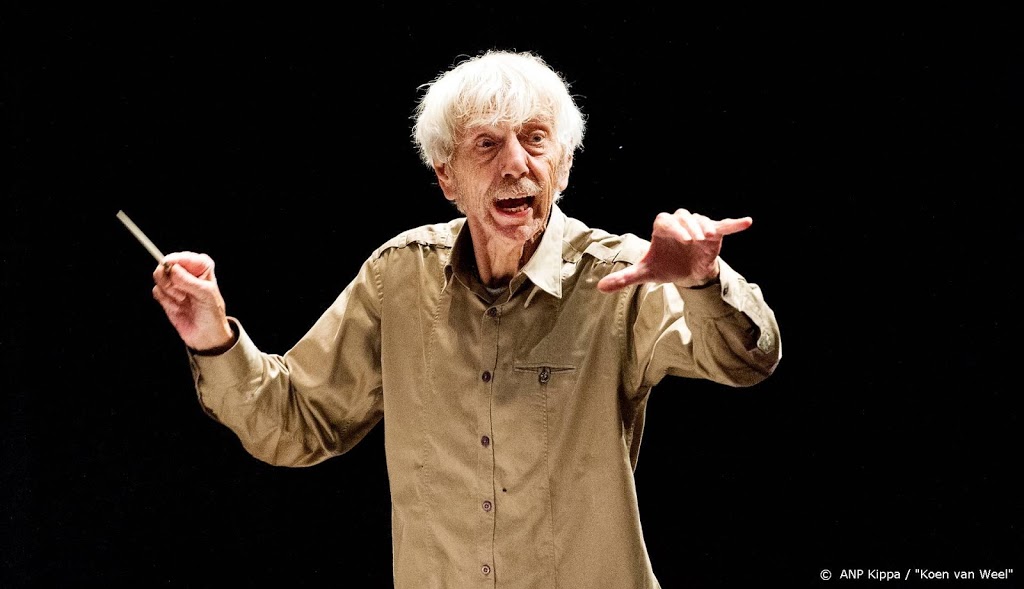
Pianist Hamish Milne died on Wednesday at the age of 80, and conductor and pianist Reinbert de Leeuw died on Valentine’s Day at 81.
This afternoon on The Classical Network, we’ll celebrate both artists with selections from their recorded legacies.
Milne will be represented by one of his many performances of Nikolai Medtner – a friend and contemporary of Sergei Rachmaninoff – whose music was something of a specialty. We’ll also hear Milne as soloist in a Romantic piano concerto, to be announced.
De Leeuw will conduct Steve Reich’s “Tehillim,” vibrant settings of Hebrew Psalms. He’ll also sit down at the keyboard for a highly individual performance of Erik Satie’s “Gymnopédies.”
First, on today’s Noontime Concert, Piffaro, The Renaissance Band will present a program titled “Burgundian Beginnings & Beyond,” a Franco-Flemish feast of instrumental works by Guillaume Dufay, Robert Morton, Antoine Busnois, Josquin des Prez, Pierre de la Rue, and Nicholas Gombert. Directors Joan Kimball and Robert Wiemken will join host David Osenberg for this Early Music concert at 12 p.m.
I’ll be along around 1:40. Settle in for a heymish afternoon with Hamish Milne and “Tehillim,” from 2 to 4 p.m. EST, on WWFM – The Classical Network and wwfm.org.
-
Hamish Milne Medtner Champion Dies
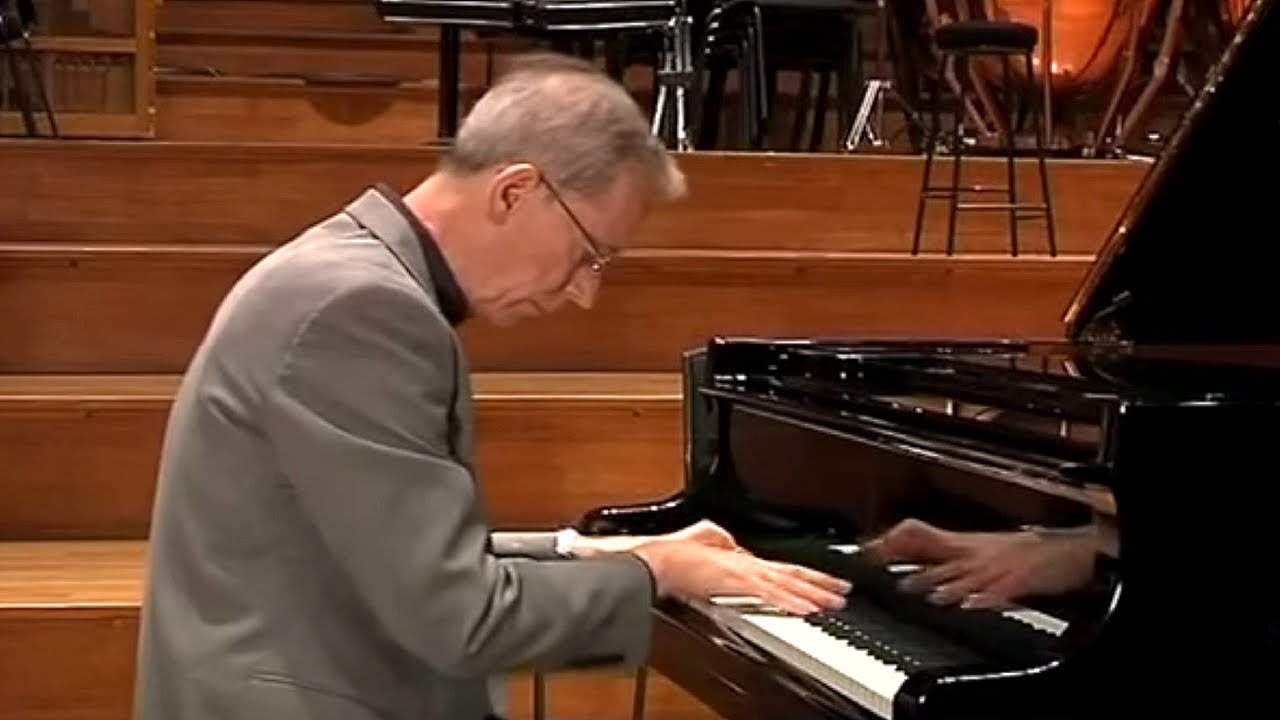
Sad day for fans of Nikolai Medtner. One of his great champions, Hamish Milne, has died.
Medtner was a good friend of Sergei Rachmaninoff. Both artists emerged from the same piano class at the Moscow Conservatory. Rachmaninoff was a lifelong advocate of Medtner’s music. Though undeniably Rach was the more successful of the two, Medtner developed a reputation as something of a pianist’s pianist.
In fact, Rachmaninoff believed wholeheartedly in his friend’s superior talent. He once described him as “the greatest composer of our time.” Rach dedicated his Piano Concerto No. 4 to Medtner. Medtner returned the kindness by dedicating his own Piano Concerto No. 2 to Rachmaninoff. He also provided emotional support for Rach during his frequent periods of self-doubt.
Medtner made another important friend in Jayachamarajendra Wadiyar Bahadur, twenty-fifth Maharaja of the Kingdom of Mysore. Bahadur founded a Medtner Society in London to record all of the composer’s works.
Milne did his very best to carry on the tradition. A glance at his discography reveals an obvious preference for Medtner’s music. In addition, he recorded underplayed gems by Anatoly Alexandrov, William Sterndale Bennett, Ferruccio Busoni, Hermann Goetz, Sergei Lyapunov, Julius Reubke, Carl Maria von Weber, and Haydn Wood. He was the first pianist to set down a comprehensive survey of Medtner’s music since the composer’s own recordings, released all the way back in the 78 era.
At the time of his death, Milne was 80 years-old.
Medtner, Dithyramb, Op. 10, No. 2
Piano Sonata in G minor:
Interview with Melanie Spanswick:
-
Rediscovering Medtner Rachmaninoff’s Forgotten Genius
It’s hard to figure out exactly why the music of Nikolai Medtner hasn’t caught on with audiences. Except, of course, it hardly ever gets played, so nobody knows it’s out there.
On today’s Noontime Concert on The Classical Network, violinist Rolf Schulte will be joined by pianist Nicolas Namoradze for a performance of Medtner’s “Three Night Songs,” (or “Nocturnes”), Op. 16, alongside two works by Sergei Prokofiev – “Five Melodies,” Op. 35b, and the Violin Sonata No. 1, Op. 80. The concert, titled “From Czarist Russia to the Soviet Union,” was recorded on April 19, at Elebash Recital Hall in Midtown Manhattan, as part of The Graduate Center, CUNY’s free “Music in Midtown” series, designed to showcase the university’s DMA program. Schulte is on the faculty there; Namoradze is a DMA candidate.
Medtner was a good friend and classmate of Sergei Rachmaninoff. Both studied with Vasily Safanov at the Moscow Conservatory. Later, they both became exiles, who shared a painful nostalgia for their homeland.
It was Rachmaninoff who arranged for Medtner his first North American concert tour – the programs decidedly uncommercial affairs, devoted entirely to Medtner’s music. Medtner never captured the public’s imagination in the way that Rachmaninoff did, and to this day, despite many recordings on the market (including the early ones sponsored by Jayachamarajendra Wadiyar, twenty-fifth maharaja of the Kingdom of Mysore), Medtner remains largely a pianist’s composer.
Tellingly, Rachmaninoff believed whole-heartedly in his friend’s superior talent. He also described him as “the greatest composer of our time.” Medtner, for his part, deeply admired Rachmaninoff’s conducting, and supported him emotionally through periods of self-doubt. Rachmaninoff would dedicate his Fourth Piano Concerto to Medtner (composed in 1926; with the final, revised version appearing in 1941); Medtner returned the compliment by dedicating his Second Concerto (composed between 1920 and 1927) to Rachmaninoff.
Following today’s Noontime Concert broadcast, stick around to hear Medtner’s Piano Concerto No. 2. It will be among my featured works between 12 and 4 p.m. EDT on WWFM – The Classical Network and wwfm.org.
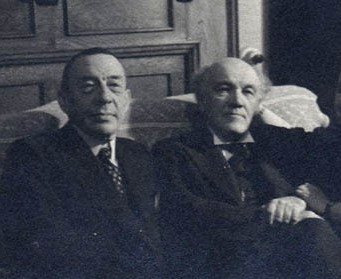
PHOTO: The Rachmaninoff-Medtner Mutual Admiration Society
Tag Cloud
Aaron Copland (93) Beethoven (95) Composer (114) Film Music (144) Film Score (143) Film Scores (255) Halloween (94) John Williams (195) KWAX (229) Leonard Bernstein (104) Marlboro Music Festival (125) Movie Music (159) Mozart (90) Opera (212) Philadelphia Orchestra (89) Picture Perfect (174) Princeton Symphony Orchestra (109) Radio (88) Ross Amico (244) Roy's Tie-Dye Sci-Fi Corner (290) The Classical Network (101) The Lost Chord (269) Vaughan Williams (105) WPRB (397) WWFM (881)