Tag: Norwegian Composer

  • Edvard Grieg A Master’s Melancholy Lyricism

    Edvard Grieg A Master’s Melancholy Lyricism

    If Edvard Grieg and Mark Twain got into a knife fight, who would win? Twain, probably. But once Grieg sat down at the piano, there would be no contest. Did this guy ever write a bad note?

    Celebrated as Norway’s greatest composer, Grieg embraced his native folk music, lovingly elevated it, and infused it with an intriguing delicacy, melancholy, and yes, lyricism. Like listening to a Nordic Schubert, you never know when a cloud will break across the fjords. Or perhaps, more to the point, a sunny jaunt across a field of wildflowers will be disrupted by an encounter with a troll.

    The most common criticism leveled against Grieg is that he was essentially a miniaturist. You might as well attack Chopin for being a sloppy orchestrator.

    From his letters, we know that Grieg himself was frustrated by his propensity for shorter works. “Nothing that I do satisfies me,” he wrote, “and though it seems to me that I have ideas, they neither soar nor take form when I proceed to the working out of something big.”

    Claude Debussy was only too happy to kick him while he was down. He famously derided Grieg’s output as so many “pink bonbons filled with snow.” Yet it has been convincingly demonstrated that Debussy owed more than a little to his Norwegian colleague in the writing of his String Quartet in G minor and in some of his own piano miniatures. What is it about Grieg that so galled the Gauls?

    Myself, I could listen to Grieg all day. In fact, I think I will.


    Neeme Järvi conducts the four “Symphonic Dances.” I used the second of these as signature music for an overnight show, back when I was starting out in community radio.

    Emil Gilels plays a selection of the “Lyric Pieces.” Gilels hedged when asked to make the recording, fearing that no one would buy it. Of course, it went on to become one of the great piano classics.

    The husband-and-wife team of Augustin Dumay and Maria João Pires whip up a fair amount of unsuspected passion in the Violin Sonatas. Here’s the full album.

    “The First Meeting,” sung by Barbara Bonney

    Six Songs, Op. 48

    “Solveig’s Song” from “Peer Gynt”

    Arturo Benedetto Michelangeli shatters the stereotype of Grieg as “provincial” composer with this volcanic performance of the Piano Concerto in A minor:


    PHOTO: Grieg is great! Happy birthday, master!
  • Agathe Backer Grøndahl 175th Anniversary

    Agathe Backer Grøndahl 175th Anniversary

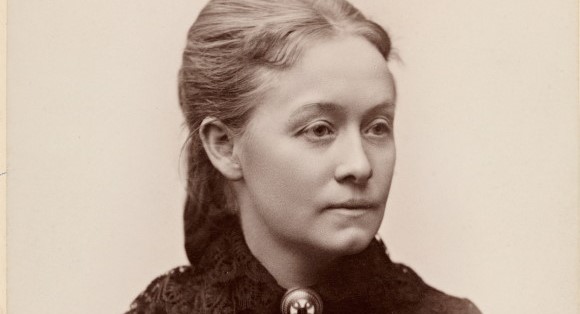
    Today is the 175th anniversary of the birth of Norwegian pianist and composer Agathe Backer Grøndahl. Backer, from a well-to-do, art-loving family, studied music in Christiana, Berlin, and Florence. Among her teachers were Theodor Kullak and Hans von Bülow.

    She made her professional debut in Christiana in 1868, as soloist in Beethoven’s “Emperor” Concerto, with Edvard Grieg on the podium. Of course, she was also a celebrated interpreter of Grieg’s own piano concerto. In fact, the two artists enjoyed a close friendship. She was also guided by Ole Bull, the famed Norwegian violinist, who recommended teachers and had a special piano constructed for her.

    In 1873, she became part of Franz Liszt’s circle at Weimar, and she took lessons with him. She herself was to become an influential teacher. George Bernard Shaw praised her as one of the greatest piano virtuosos of the century.

    She married Olaus Andreas Grøndahl, a vocal teacher, in 1875. A mother of three, Backer Grøndahl yet managed to compose more than 400 works for piano, voice, and orchestra. Over 70 of these were published in her lifetime. She died in 1907 at the age of 59.

    Her sister was the painter Harriet Backer.


    Sara Aimée Smiseth talks about and plays Agathe Backer Grøndahl. Smiseth recorded an album of Grøndahl’s works for the Grand Piano label.

    Geir Henning Braaten plays Grøndahl’s 3 Morceaux, Op. 15. The opening “Serenade” is among her most frequently performed works.

    Lubov Timofeyeva plays a Grøndahl assortment

    More about Grøndahl’s sister, Harriet Backer

    https://www.norwegianamerican.com/harriet-backer-a-gifted-determined-artist/


    PHOTOS: Agathe Backer Grøndahl, top, and at center, at an 1898 music festival in Bergen. To her left (our right) are some of the most famous names in Norwegian music: Edvard Grieg, Christian Sinding, Johan Svendsen, and Johan Halvorsen.

  • Geirr Tveitt’s Haunting Halloween Nightmare

    Geirr Tveitt’s Haunting Halloween Nightmare

    31 DAYS OF HALLOWEEN (DAY 19)

    For Geirr Tveitt’s birthday, a literal and figurative nightmare:

    Tveitt was born in Bergen, Norway, in 1908. His family originally came from the Hardanger region. Each summer, they returned to Kvam to do farm work.

    Tveitt would take up permanent residence in Hardanger in 1940. In the meantime, he studied music in Leipzig and Paris (with Honegger, Villa-Lobos, and Boulanger) and gained renown throughout Europe as a concert pianist, but it was his connection to the Norwegian countryside that would color most of his mature compositional output.

    In 1970, a great tragedy stuck, when fire swept through Tveitt’s home, a farmhouse in Nordheimsund, destroying most of his unpublished manuscripts – 300 pieces, stored in wooden chests – fully 4/5ths of his compositional output. By extension, and not surprisingly, it also destroyed his ability to compose. He succumbed to alcoholism and died a broken man, with little hope of being remembered, in 1981.

    Sadly, Tveitt did not live to see his reputation revived. In the intervening decades, musicologists have been able to piece together a number of these “lost” works, using as reference scattered orchestral parts and live concert recordings. Performances of these reconstructions have been widely distributed on the Naxos and BIS labels. The exceptional quality of what’s now available, and speculation over what’s been lost, is cause for a listener to share Tveitt’s heartbreak.

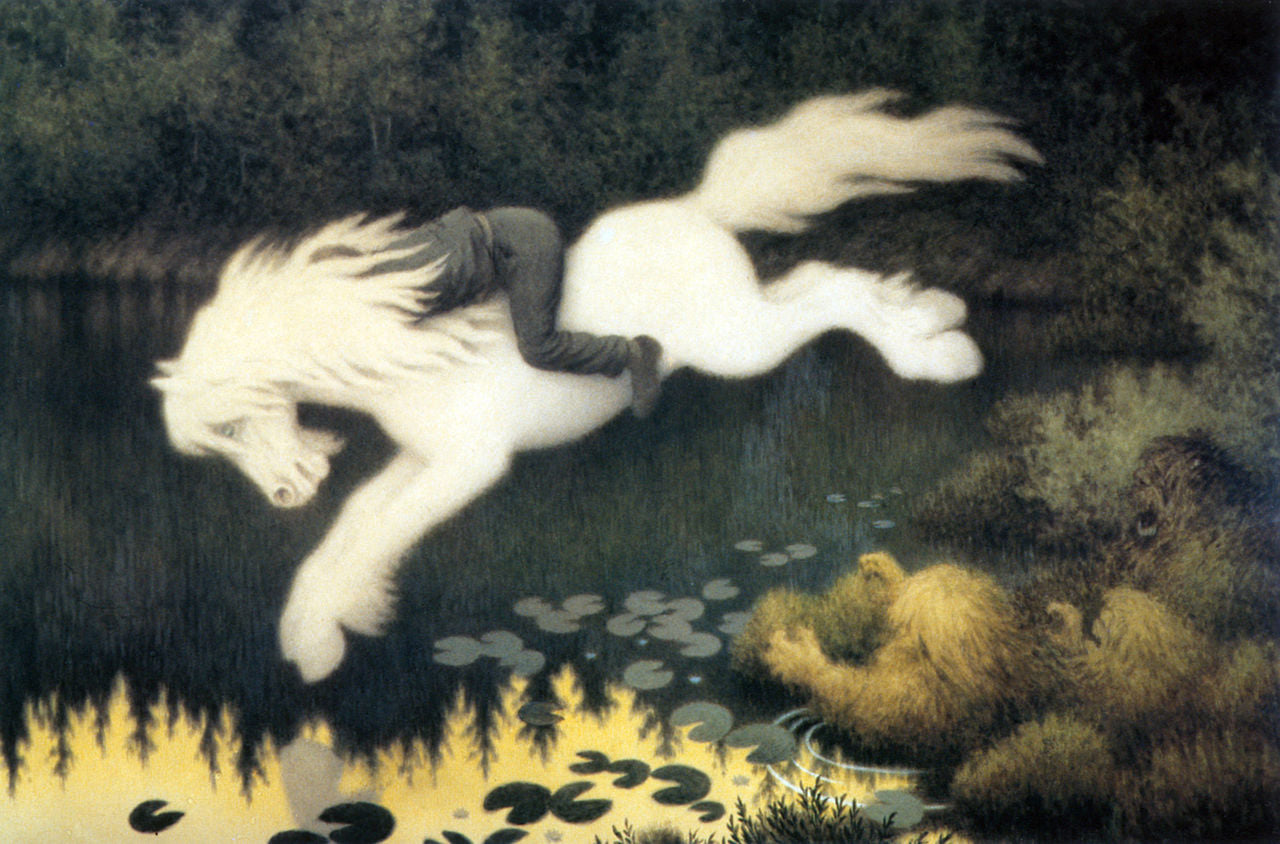
    Tveitt’s symphonic poem “Nykken,” from 1956, is about a literal “night mare,” a white horse that lurks in a nocturnal wood near a silent pond. The beauty of the horse charms a hapless wanderer into attempting a ride. But the horse plunges into the depths of the pond, dragging its victim to a watery grave.

    Here’s the music:

    Happy birthday, Geirr Tveitt.

Tag Cloud

Aaron Copland (92) Beethoven (95) Composer (114) Film Music (120) Film Score (143) Film Scores (255) Halloween (94) John Williams (185) KWAX (229) Leonard Bernstein (100) Marlboro Music Festival (125) Movie Music (135) Opera (198) Philadelphia Orchestra (88) Picture Perfect (174) Princeton Symphony Orchestra (106) Radio (87) Ralph Vaughan Williams (85) Ross Amico (244) Roy's Tie-Dye Sci-Fi Corner (290) The Classical Network (101) The Lost Chord (268) Vaughan Williams (103) WPRB (396) WWFM (881)

DON’T MISS A BEAT

Receive a weekly digest every Sunday at noon by signing up here


RECENT POSTS