I leave many windows open on my computer. Dozens. Whenever I read anything of interest, I am more likely just to leave it up and open another screen than to bookmark, since bookmarking virtually guarantees I will never again return to whatever it is I’ve saved.
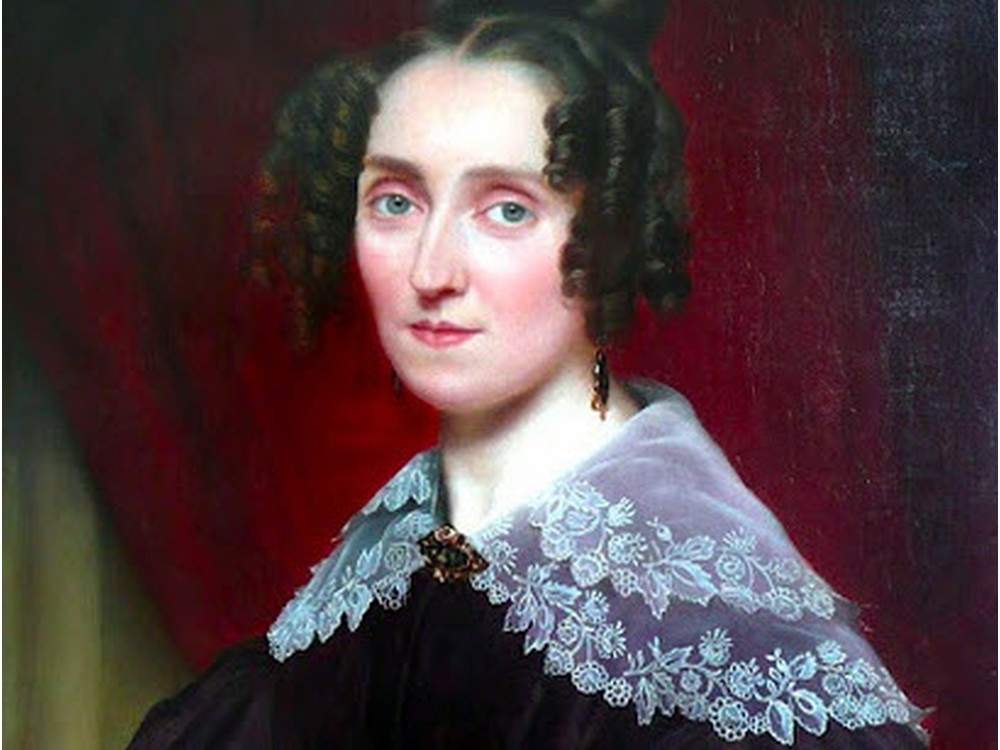
Be that as it may, I was just cleaning out some of those open screens, when I came across this article on Louise Farrenc, which I probably read around the time the Philadelphia Orchestra performed her Second Symphony. I’ve always been fond of Farrenc’s music, but I was unfamiliar with her Piano Quintet No. 2. The writer makes the astute observation that one of the themes eerily anticipates that for NPR’s “All Things Considered.”
Here’s a link to the entire piece. The “All Things Considered” theme appears for the first time at the 47-second mark.
Farrenc, a virtuoso pianist, was the only female professor at the Paris Conservatory in the whole of the 19th century. Of course, she was only allowed to teach women – and just piano, not composition.
She and her husband, the flutist Aristide Farrenc, founded Éditions Farrenc, for almost 40 years one of the leading music publishers in France. Together, they edited the successful series, “Le trésor des pianistes,” which included works originally written for harpsichord by Bach, Couperin, Handel, Rameau, Scarlatti, and others, and sonatas for pianoforte by C.P.E. Bach, Beethoven, Chopin, Clementi, Dussek, Haydn, Hummel, and Weber.
Following Aristide’s death in 1865, Louise continued to oversee the series until its 20th and final volume in 1872. Later, three additional volumes were added of music which had previously been published in the early 19th century.
She was a remarkable figure. Do yourself a favor and familiarize yourself with her Symphony No. 3, recorded at least three times under studio conditions. This is but an excerpt conducted by Johannes Goritzki, whose commercial recording on CPO is very good.