Tag: Olivia de Havilland

  • Novels of the Gilded Age on “Picture Perfect”

    Novels of the Gilded Age on “Picture Perfect”

    When I first assembled this week’s “Picture Perfect,” the Gilded Age was a period of American history most people would have been relieved to have receded into the distant past. Now everything old is new again.

    “The Gilded Age” was a term coined by none other than Mark Twain to describe the era spanning, roughly, from the end of Reconstruction (after the Civil War) to the turn of the 20th century. He didn’t mean it as a compliment. A gilded age is one that conceals serious social problems beneath a veneer of gold. On this week’s program, we look past the dazzle to focus on music from films inspired by novels from, or about, the period.

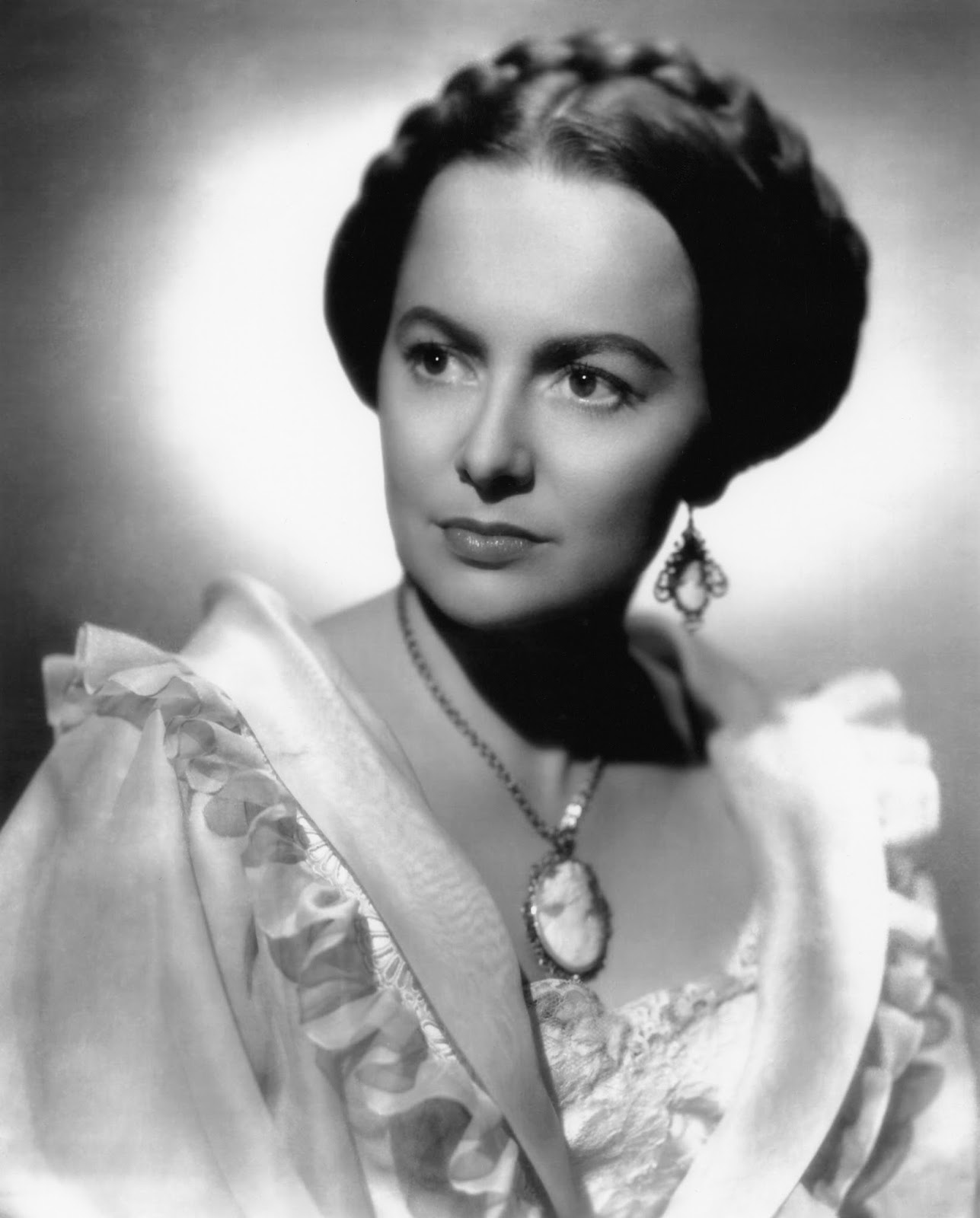
    “The Heiress” (1949) was adapted from a play by Ruth and Augustus Goetz, which in turn was based on the book “Washington Square,” by Henry James. Olivia De Havilland plays the “plain Jane” heiress of the title, Ralph Richardson her overbearing father, and Montgomery Clift, the adventurer who may or may not be out for her fortune. De Havilland won an Oscar for her portrayal, as did the music, by Aaron Copland.

    “The Age of Innocence” (1993) was written by one-time James correspondent, his close friend, Edith Wharton. The book was published in 1920, but looks back to the 1870s, its story dealing with the impending marriage of an upper class couple and the appearance of a disreputable interloper who threatens their happiness. The title is an ironic play on the contrast between the outward manners of New York society and its inward machinations. The novel earned Wharton a Pulitzer Prize, the first ever to be awarded to a woman. The film was something of a curve ball from director Martin Scorsese, who made his reputation on arguably meaner streets. Veteran composer Elmer Bernstein provided the lovely, Brahmsian score.

    “The Magnificent Ambersons” (1942) is based on another Pulitzer Prize winner, this time by Booth Tarkington, from 1918. The novel is part of trilogy that traces the declining fortunes of three generations of an aristocratic Midwestern family. With industrialism on the rise, the Ambersons’ “old money” wealth and prestige wane.

    “Ambersons” was only the second film directed by Orson Welles. Sadly, the financial failure of “Citizen Kane” and Welles’ uncompromising artistic vision caused the project to be removed from his control and re-cut by the studio, shaving a full hour off the original running time. It says something about the strength of Welles’ material that what survives yet remains a magnificent achievement.

    The score was by Bernard Herrmann, CBS staff composer from Welles’ radio days. Herrmann had followed Welles to Hollywood to supply the music for “Kane.” With the trimming of “Ambersons,” his score was drastically edited and half the music removed. The famously irascible Herrmann, who had just written his Academy Award winning music for “The Devil and Daniel Webster,” was so angry that he threatened legal action if his name was not removed from the credits. (The studio complied.)

    The action of “Mr. Skeffington” (1944), based on a 1940 novel by Elizabeth von Arnim, begins at a point some consider to be the twilight of the Gilded Age, the eve of World War I. Bette Davis stars as a woman so enamored with her own beauty, and the suitors it attracts, that she fails to value the affections of the man who eventually becomes her husband. Mr. Skeffington, played by Claude Rains, is a Jewish financier, riding high in the ‘teens, but his fortunes change when he’s caught in Europe during the rise of the Nazis.

    Davis and Rains both earned Academy Award nominations for their work. The vivid score is by Franz Waxman. Davis was going through a period of emotional turmoil during the filming, so that she was allegedly insufferable to be around throughout the entire shoot. Someone finally poisoned her eyewash. When the police questioned the director, Vincent Sherman, he wished them good luck with their investigation. “If you asked everyone on the set who would have committed such a thing, everyone would raise their hand!”

    Certainly all that glitters is not gold. We peel back the veneer of prosperity, this week, with “Novels of the Gilded Age,” on “Picture Perfect,” music for the movies, now in syndication on KWAX Classical Oregon!

    ———-

    Clip and save the start times for all three of my recorded shows:

    PICTURE PERFECT, the movie music show – Friday at 8:00 PM EDT/5:00 PM PDT

    SWEETNESS AND LIGHT, the light music program – Saturday at 11:00 AM EDT/8:00 AM PDT (***now with a repeat Sunday at 9:00 PM EDT/6:00 PM PDT***)

    THE LOST CHORD, unusual and neglected rep – Saturday at 7:00 PM EDT/4:00 PM PDT

    Stream them, wherever you are, at the link
    !https://kwax.uoregon.edu/

  • Olivia de Havilland They Died With Their Boots On

    Olivia de Havilland They Died With Their Boots On

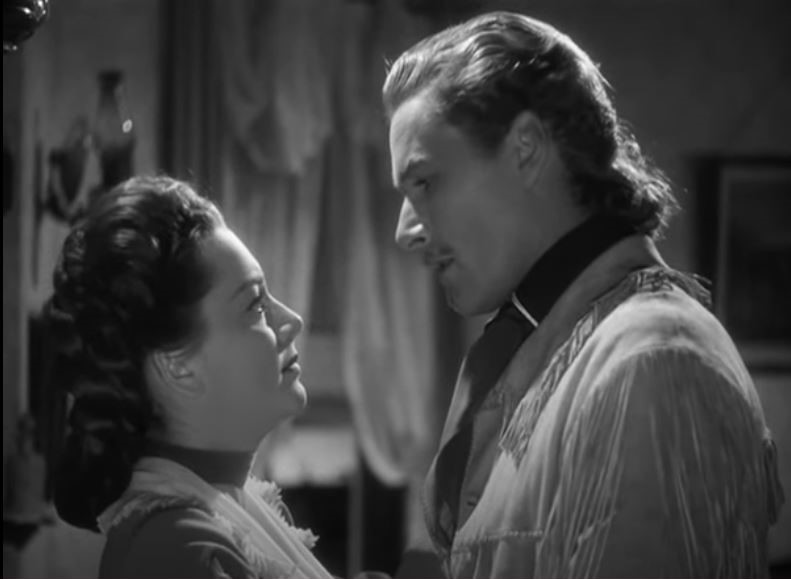
    Olivia de Havilland and Errol Flynn made eight films together. Everybody knows “The Adventures of Robin Hood,” but here’s a great scene from “They Died with Their Boots On” (1941), something of a whitewashed portrait of George Armstrong Custer.

    De Havilland was about to leave behind these types of roles, where she was relegated to “the girl” in boy’s adventure movies, and move on to meatier portrayals. But she never comes across as less than committed. Here she does an amazing job. She really does look as if she is about to lose it after Flynn delivers his big line.

    The film is given the grand Warner Brothers treatment, with plenty of gloss and a moving score by Max Steiner. This was the last time de Havilland and Flynn would ever work together. She may have had a premonition that this would be the case.

    De Havilland died yesterday at 104. This scene gets me every time.

    “Walking through life with you, ma’am, has been a very gracious thing.”

  • Olivia de Havilland Heiress Birthday

    Olivia de Havilland Heiress Birthday

    Olivia de Havilland is 104 today. In her honor, here’s a suite from Aaron Copland’s score to “The Heiress,” a film for which De Havilland won her second Academy Award in 1950. (Copland won too.) Happy birthday!

  • Writers on Film Fact vs Fiction

    Writers on Film Fact vs Fiction

    Words on the printed page captivate us so completely that it’s natural to assume that the lives of writers must be rich, full of incident, and very dramatic indeed. Surely that is sometimes the case. Who among us could keep up with a Byron or a Pushkin or a Poe?

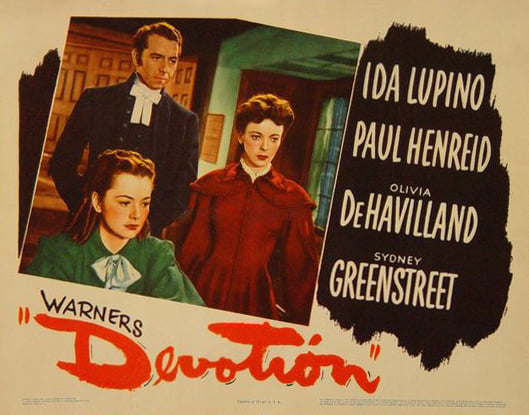
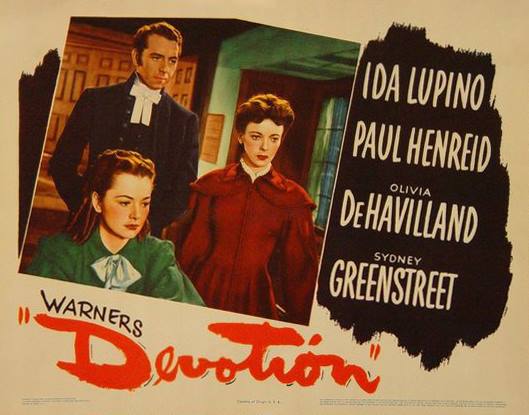
    Yet even with the most outlandish writers, Hollywood, for some reason, often feels the need to fabricate. How else to explain “Devotion” (1943), Warner Brothers’ salute to the Brontës? Then again, the temptation must be strong to characterize the sisters who penned “Jane Eyre” and “Wuthering Heights” as tortured Romantics.

    Ida Lupino plays Emily, the creator of Cathy and Heathcliff, and Olivia de Havilland, Charlotte, who conceived Jane and Rochester. Nancy Coleman is their sister Anne, who wrote “The Tenant of Wildfell Hall,” and Arthur Kennedy, their dissolute brother Branwell. The film also features Sidney Greenstreet as William Makepeace Thackeray, Paul Henreid as an Irish priest, and – well, you get the idea. The casting, at times, strains credibility.

    However, the music by Erich Wolfgang Korngold is up to the composer’s usual high standard. Korngold himself became so enamored of one of its themes that he recycled it for use in the first movement of his Violin Concerto.

    The behind-the-scenes drama on “Devotion” is nearly as colorful as anything that made it to the screen. De Havilland had originally been cast to play Emily, and her real-life sister, Joan Fontaine, was to play Charlotte. De Havilland and Fontaine had an uneasy relationship, at best, their entire lives. At times they competed for the same men (Howard Hughes) and the same roles (Melanie in “Gone With the Wind” and the “second Mrs. De Winter” in Alfred Hitchcock’s “Rebecca”). In 1942, they were both in contention for the Academy Award for Best Actress. Fontaine won. De Havilland wouldn’t win her first Oscar until 1946. To say that the two were competitive is putting it mildly.

    Fortunately for everyone on the set, an offer had come through for Fontaine to play Charlotte Brontë’s most famous creation, Jane Eyre, opposite Orson Welles’ Rochester, over at 20th Century Fox. So De Havilland assumed the part vacated by Fontaine.

    After shooting wrapped, “Devotion” actually sat on the shelf for three years, as De Havilland successfully sued Warner Brothers to terminate her contract without her having to make up the six months she had been kept on “suspension.” Until then, actors under contract to the major studios had been considered suspended between jobs, thereby extending their obligation to their employers, so that, for instance, a seven year contract was spread out over a much longer period, fulfilled only during the time an actor was actually working. The legal victory became informally known as the De Havilland Law.

    In addition to Korngold’s take on the Brontës, we’ll have music from movies inspired by Iris Murdoch (“Iris,” with music by James Horner), the Bard of Avon (“Shakespeare in Love,” with an Academy Award-winning score by Stephen Warbeck), and Samuel Clemens (“The Adventures of Mark Twain,” by Max Steiner).

    I hope you’ll join me for real-life writers who appeared as characters in the movies, on “Picture Perfect,” this Friday evening at 6:00 EST, on WWFM – The Classical Network at wwfm.org.

  • Writers on Film Behind the Screen

    Writers on Film Behind the Screen

    Words on the printed page captivate us so completely that it’s natural to assume that the lives of writers must be very rich, full of incident, and dramatic indeed. Surely that is sometimes the case. Who among us could keep up with a Byron or a Pushkin or a Poe?

    Yet even with the most outlandish writers, Hollywood, for some reason, often feels the need to fabricate. How else to explain “Devotion” (1943), Warner Brothers’ salute to the Brontës? Then again, the temptation must be strong to characterize the sisters who penned “Jane Eyre” and “Wuthering Heights” as tortured Romantics.

    Ida Lupino plays Emily, the creator of Cathy and Heathcliff, and Olivia de Havilland, Charlotte, who conceived Jane and Rochester. Nancy Coleman is their sister Anne, who wrote “The Tenant of Wildfell Hall,” and Arthur Kennedy, their dissolute brother Branwell. The film also features Sidney Greenstreet, as William Makepeace Thackeray, Paul Henreid as an Irish priest, and – well, you get the idea. The casting, at times, strains credibility.

    However, the music by Erich Wolfgang Korngold is up to the composer’s usual high standard. Korngold himself became so enamored of one of its themes that he recycled it for use in the first movement of his Violin Concerto.

    The behind-the-scenes drama on “Devotion” is nearly as colorful as anything that made it to the screen. De Havilland had originally been cast to play Emily, and her real-life sister, Joan Fontaine, was to play Charlotte. De Havilland and Fontaine had an uneasy relationship, at best, their entire lives. At times they competed for the same men (Howard Hughes) and the same roles (Melanie in “Gone With the Wind” and the “second Mrs. De Winter” in Alfred Hitchcock’s “Rebecca”). In 1942, they were both in contention for the Academy Award for Best Actress. Fontaine won. De Havilland wouldn’t win her first Oscar until 1946. To say that the two were competitive is putting it mildly.

    Fortunately for everyone on the set, an offer had come through for Fontaine to play Charlotte Brontë’s most famous creation, Jane Eyre, opposite Orson Welles’ Rochester, over at 20th Century Fox. So De Havilland assumed the part vacated by Fontaine.

    After shooting wrapped, “Devotion” actually sat on the shelf for three years, as De Havilland successfully sued Warner Brothers to terminate her contract without her having to make up the six months she had been kept on “suspension.” Until then, actors under contract to the major studios had been considered “suspended” between jobs, thereby extending their obligation to their employers, so that, for instance, a seven year contract was spread out over a much longer period, fulfilled only during the time an actor was actually working. The legal victory became informally known as the De Havilland Law.

    In addition to Korngold’s take on the Brontës, we’ll have music from movies inspired by Iris Murdoch (“Iris,” with music by James Horner), the Bard of Avon (“Shakespeare in Love,” with an Academy Award-winning score by Stephen Warbeck), and Samuel Clemens (“The Adventures of Mark Twain,” by Max Steiner).

    I hope you’ll join me for real-life writers who appeared as characters in the movies, on “Picture Perfect,” this evening at 6 ET, with a repeat tomorrow morning at 6; or that you’ll listen to it later as a webcast at wwfm.org.

Tag Cloud

Aaron Copland (94) Beethoven (95) Composer (114) Film Music (148) Film Score (143) Film Scores (255) Halloween (97) John Williams (196) KWAX (232) Leonard Bernstein (105) Marlboro Music Festival (125) Movie Music (163) Mozart (91) Opera (215) Philadelphia Orchestra (90) Picture Perfect (174) Princeton Symphony Orchestra (110) Radio (90) Ross Amico (244) Roy's Tie-Dye Sci-Fi Corner (290) The Classical Network (101) The Lost Chord (269) Vaughan Williams (107) WPRB (397) WWFM (881)

DON’T MISS A BEAT

Receive a weekly digest every Sunday at noon by signing up here


RECENT POSTS