Tag: Parsifal

  • Wagner’s Birthday A “Parsifal” Pilgrimage

    Wagner’s Birthday A “Parsifal” Pilgrimage

    Happy birthday, Richard Wagner!

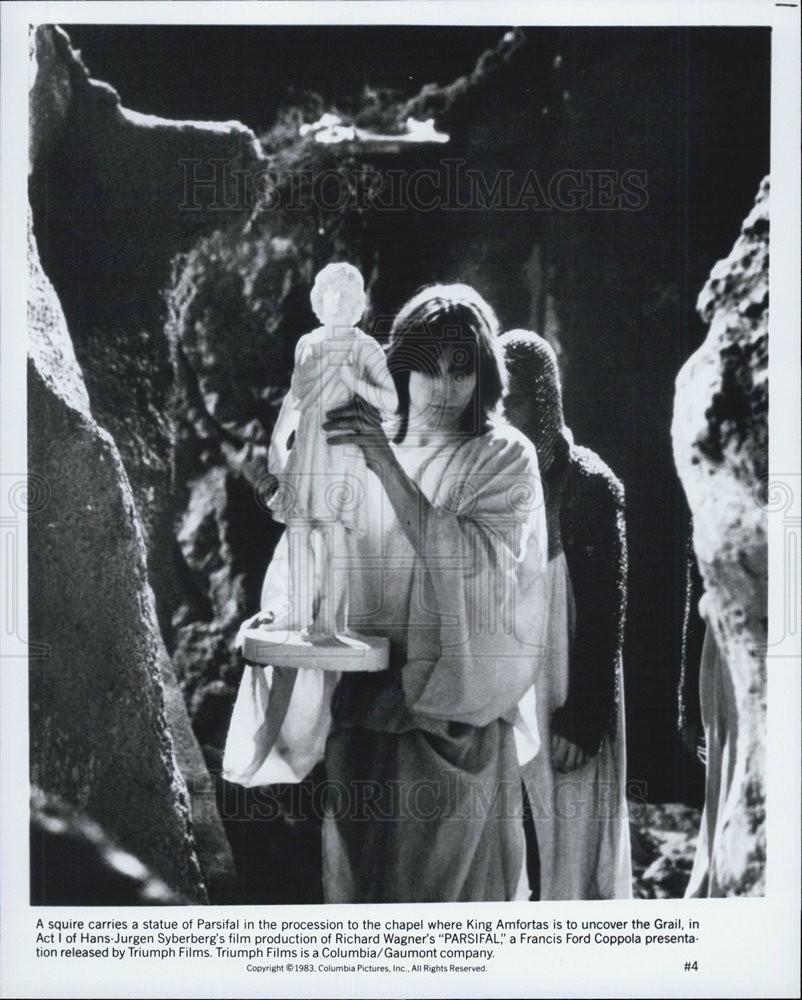
    It was sometime around 1983 or ’84 that my best buddy from high school and I determined to catch a screening of Hans-Jürgen Syberberg’s “Parsifal” at Lehigh University. Neither of us knew much about the opera at that point, but we both loved the film “Excalibur” and were at the very least familiar with the mystical prelude Wagner had composed.

    As my friend climbed into the car, he commented, “I think we’re in for a real treat. Listen to this!” Then he read to me the synopsis from Kobbé’s or Milton Cross or the equivalent. When he reached the part where Parsifal snatches Klingsor’s spear out of midair, destroying his power, we were both like, “Whoaaa.” We were ready for some serious action!

    When we arrived, we learned that the film was being presented in an auditorium with a raked floor. I remember it was raked, because at some point during the showing, an empty bottle of spirits rolled down past our feet, clanking against the chair legs as it went.

    The film was presented the old-fashioned way, on a projector, pre-digital, so periodically the tail leader would run out and the lights would have to be switched on, so that the reels could be changed. Along the way, there were also a few technical difficulties, significantly padding the film’s already four-hour-plus running time.

    Anyway, it was excruciating – which is to say, we enjoyed ourselves mightily. There was so much to laugh at and groan through. The actor who played Klingsor was totally out of shape. When he raised his spear, he must have had an aneurysm or something, because instead of hurling it like a javelin, as described in Kobbé, he simply tumbled into a ravine. We were especially amused by the revelation toward the end that the entire production was supposed to have taken place inside a gigantic bust of Wagner.

    Otherwise, Syberberg’s was a fairly straightforward interpretation, though curiously he chose to have actors stand in for the singers on the film’s soundtrack, a decision I can’t say made it any less silly. Oh yeah, there was also a passage, just before the “bust” revelation, that had knights proceeding down a long stone hallway, lined with swastika flags (???). Obviously, this was a work of genius.

    By the time it finally ended, and someone switched on the lights for probably the sixth or seventh time, we staggered out of the building, wearing conspiratorial grins, only to discover a fog had rolled in. It was now ludicrously late. Driving back on Route 22 was like crossing the North Sea in a dragon boat.

    When I arrived home, it was around 2:00 in the morning, and my mother was on pins and needles. What happened? What had we gotten up to? I shared a mercifully abridged account of our Wagnerian adventure. We were not dead in a ditch. Nor were we rotting in a police cell. We were merely watching “Parsifal.”

    Why is this film, presented by Francis Ford Coppola, not available on DVD???
    https://www.youtube.com/watch?v=Mic_EOGOTzE

  • Stokowski Conducts Wagner’s Parsifal

    Stokowski Conducts Wagner’s Parsifal

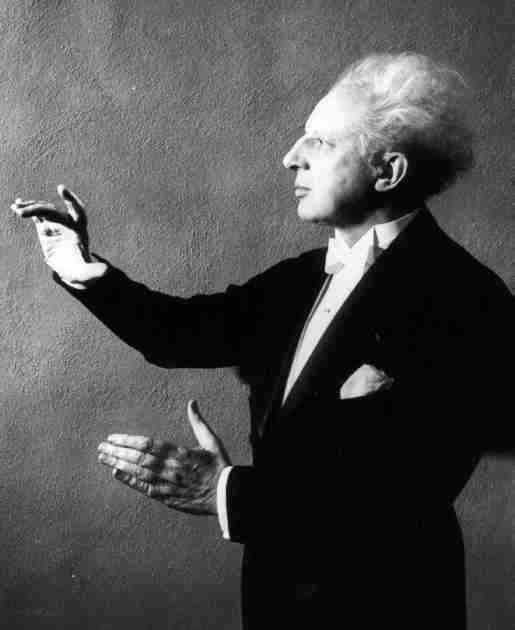
    Leopold Stokowski conducts the “Good Friday Spell” from Wagner’s “Parsifal.”

  • Karl Muck Parsifal Bells

    Karl Muck Parsifal Bells

    Karl Muck was the target of anti-German sentiment during his time as music director of the Boston Symphony Orchestra, which, unfortunately, happened to coincide with the First World War. Be that as it may, he was held in the highest regard by fellow musicians and thought by many to be one of Wagner’s finest interpreters.

    Here’s a fascinating 1927 recording of the Transformation Music and Grail Scene from Act III of “Parsifal,” made at the Festspielhaus in Bayreuth. The recording employs the original bells designed by Wagner, which would be melted down by the Nazis for ammunition during World War II. So this is a rare opportunity to experience “Parsifal” as Wagner actually knew it. (The bells begin at 5:57.)

    Muck had been associated with the Bayreuth Festival since 1892. He became its principal conductor in 1903. Between 1901 and 1930, he conducted “Parsifal” at Bayreuth 14 times.


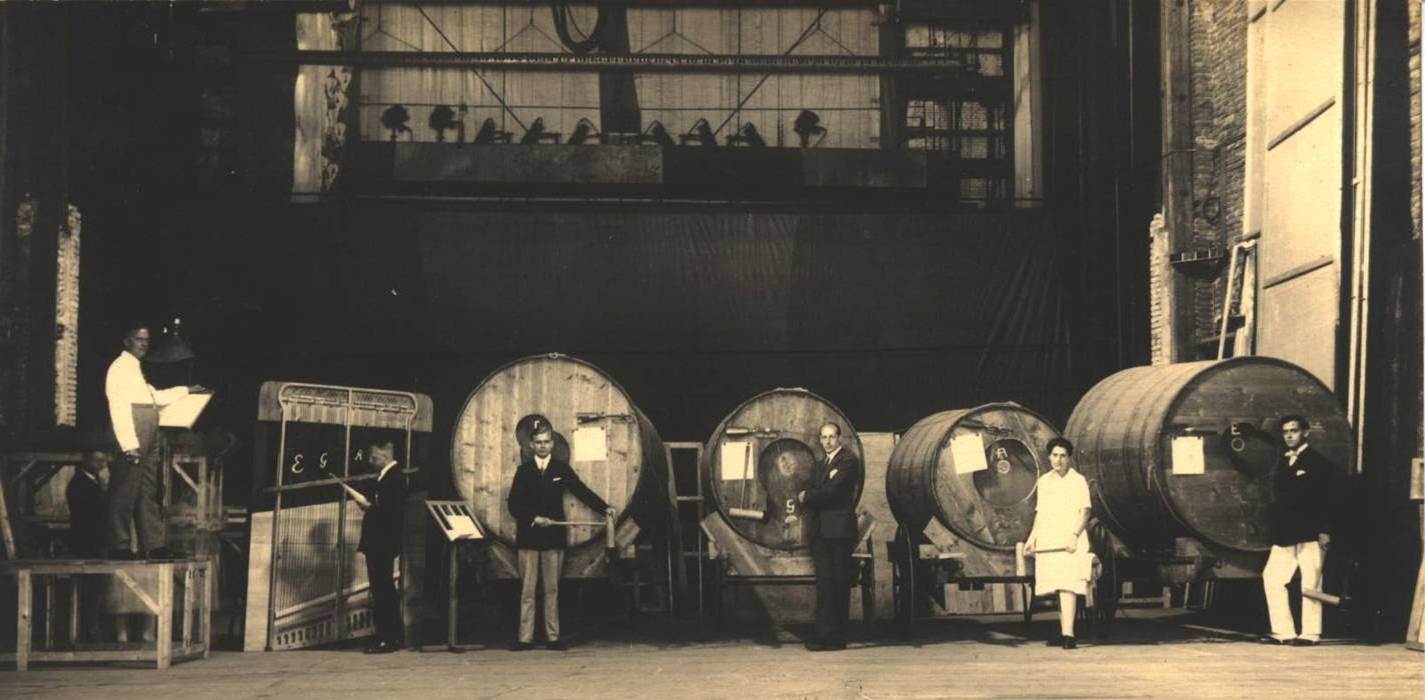
    PHOTO: Metal canisters used to produce Bayreuth bell sounds from the 1880s to about 1929.

    https://www.monsalvat.no/parsifal-bells.htm

  • Pfitzner, Horenstein: A Musical Birthday Celebration

    Pfitzner, Horenstein: A Musical Birthday Celebration

    Some wag once described Hans Pfitzner’s opera “Palestrina” as “’Parsifal’ without the jokes.”

    That may be so, but I’m not kidding when I say that yesterday marked the 150th anniversary of the Pfitzner’s birth. Allegedly he was so unpleasant a person to be around that he alienated even Hitler, but he wrote some lovely stuff, and I’m hoping to play a sampling of it this afternoon.

    It’s also the birthday today of conductor Jascha Horenstein. Horenstein emerged from a rabbinical family in what is now Ukraine to study at the Vienna Academy of Music with Joseph Marx and Franz Shrecker. From there, he moved to Berlin, where he became an assistant to Wilhelm Furtwängler. While Pfitzner was hoping his career would benefit from the rise of the Nazis (it didn’t), Horenstein fled for his life to the United States. His only post as music director would be a brief stint at the Düsseldorf Opera.

    Like Furtwängler, he developed a passionate cult following, revered for his interpretations of Mahler and Bruckner. He also championed Carl Nielsen and Andrzej Panufnik before it became cool to do so. Late in life, he led an acclaimed series of performances of “Parsifal” at the Royal Opera House, Covent Garden. Sorry about that, Pfitzner. Horenstein, it seems, enjoyed the last laugh.

    I hope you’ll join me for Pfitzner, Horenstein, and a little bouquet for spring to start, from 4 to 7 p.m. EDT, on WWFM – The Classical Network and wwfm.org.


    PHOTOS: Horenstein conducts; Pfitzner has another bad day

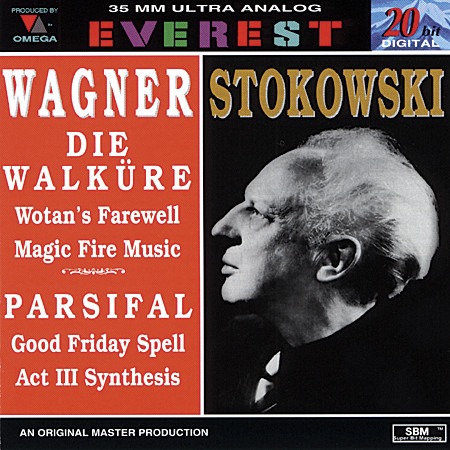
  • Leopold Stokowski Birthday Wagner Parsifal

    Leopold Stokowski Birthday Wagner Parsifal

    LEOPOLD!

    Raise a stein to Stoky on his birthday, and then join me tomorrow for a transcendent recording of the “Good Friday Spell” and “Act III Synthesis” from Wagner’s “Parsifal.” It will be a Good Friday make-good, sometime between 4 and 6 p.m. EDT, on WWFM – The Classical Network and wwfm.org.

    Happy birthday, Leopold Stokowski!

Tag Cloud

Aaron Copland (92) Beethoven (95) Composer (114) Film Music (120) Film Score (143) Film Scores (255) Halloween (94) John Williams (185) KWAX (229) Leonard Bernstein (100) Marlboro Music Festival (125) Movie Music (135) Opera (198) Philadelphia Orchestra (88) Picture Perfect (174) Princeton Symphony Orchestra (106) Radio (87) Ralph Vaughan Williams (85) Ross Amico (244) Roy's Tie-Dye Sci-Fi Corner (290) The Classical Network (101) The Lost Chord (268) Vaughan Williams (103) WPRB (396) WWFM (881)

DON’T MISS A BEAT

Receive a weekly digest every Sunday at noon by signing up here


RECENT POSTS