Tag: Paul Dessau

  • Passover Music Dessau & Koželuch

    Passover Music Dessau & Koželuch

    Chag Sameach!

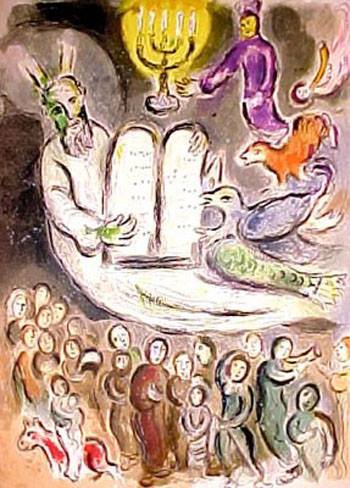
    For the first day of Passover, here’s a complete performance of the oratorio “Haggadah shel Pesach,” by German-Jewish composer Paul Dessau.

    Dessau was a successful theatrical musician, who worked both in opera, as an assistant to Otto Klemperer and Bruno Walter, and with cinema orchestras. However, in 1933, with the appointment of Adolf Hitler as chancellor of Germany, living conditions became intolerable for Dessau, who fled to Paris, and then the United States. He settled in Hollywood in 1943. Later, in 1948, he returned to East Berlin, where he taught at the Staatliche Schauspielschule (Public Drama School) and became vice president of the Academy of Arts.

    While in exile in Paris, Dessau composed “Haggadah del Pesach,” on a libretto by Max Brod. Brod is probably best known as the friend and biographer of Franz Kafka. Since neither Dessau nor Brod were fluent in Hebrew, they enlisted the help of Rabbi Mordecai Langer to assist with translation.

    Read at the Passover Seder, the Haggadah relates the story of Exodus and explains the Passover rituals. Brod interpolates additional texts from the Torah, Talmud, and Midrash. The oratorio describes “The Feast of Passover,” “Moses Slays the Egyptian,” “The Girls by the Well,” “The Saving of the Girls,” “Chorus,” “The Entrance of Pharoah,” “The Plagues,” “The Slaying of the First-Born,” “Midnight Hymn,” and “Israel’s Departure from Bondage to Freedom.”

    Whether your taste runs to maror or charoset, I hope you’ll find something in it to enjoy.

    Not your cup of Manischewitz? Try Leopold Koželuch’s “Moisè in Egitto” (“Moses in Egypt”).

    Koželuch, a very capable composer, probably would have enjoyed a more respected standing among his peers, if not for a markedly irascible personality. According to legend, he delighted in trash-talking both Haydn and Mozart, which didn’t sit well in certain circles. Is it true? Probably to the extent anything circulated about Salieri is true.

    Regardless of what his colleagues may have thought of him, he never seemed to lack for patronage. He was offered the position of court organist in Salzburg, vacated by Mozart, but declined. Later, following Mozart’s death, he assumed the responsibilities of Kammer Kapellmeister (conductor) and Hofmusik Compositor (composer) at the Imperial Court in Vienna, at twice Mozart’s salary.

    Yeah, he could be a little rough (Beethoven once described him as “Miserabilis”), but he was also a shrewd political operator.

    There’s no questioning his talent. And face it, even Moses had his moments.
  • Passover Oratorio on The Classical Network

    Passover Oratorio on The Classical Network

    Chag Sameach!

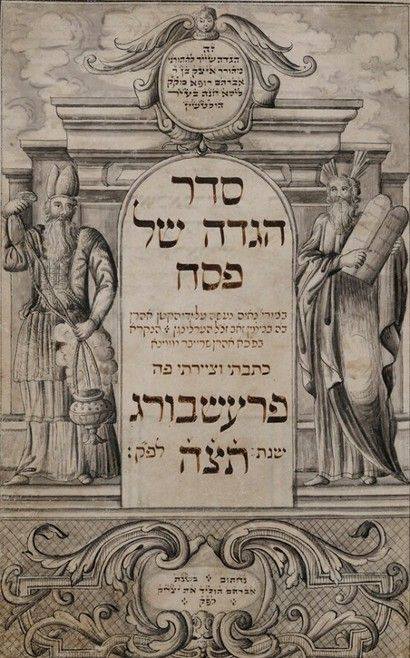
    Join me today on The Classical Network, following the noontime concert (which will conclude around 1:40), to enjoy a complete recording of the Passover oratorio “Haggadah shel Pesach,” by German-Jewish composer Paul Dessau.

    Dessau was a successful theatrical musician, who worked both in opera, as an assistant to Otto Klemperer and Bruno Walter, and with cinema orchestras. However, in 1933, with the appointment of Adolf Hitler as chancellor of Germany, living conditions became intolerable for Dessau, who fled to Paris, and then the United States. He settled in Hollywood in 1943. Later, in 1948, he returned to East Berlin, where he taught at the Staatliche Schauspielschule (Public Drama School) and became vice president of the Academy of Arts.

    While in exile in Paris, Dessau composed “Haggadah del Pesach,” on a libretto by Max Brod. Brod is probably best known as the friend and biographer of Franz Kafka. Since neither Dessau nor Brod were fluent in Hebrew, they enlisted the help of Rabbi Mordecai Langer to assist with translation.

    Read at the Passover Seder, the Haggadah relates the story of Exodus and explains the Passover rituals. Brod interpolates additional texts from the Torah, Talmud, and Midrash. The oratorio describes “The Feast of Passover,” “Moses Slays the Egyptian,” “The Girls by the Well,” “The Saving of the Girls,” “Chorus,” “The Entrance of Pharoah,” “The Plagues,” “The Slaying of the First-Born,” “Midnight Hymn,” and “Israel’s Departure from Bondage to Freedom.”

    Between Parts I & II of “Haggadah shel Pesach” (around 2:30), we’ll chat with Joe Miller, director of choral activities at Westminster Choir College. He’ll drop by to tell us a bit about two performances by the Westminster Choir and New York’s Bang on a Can All-Stars of Julia Wolfe’s Pulitzer Prize winning “Anthracite Fields.” The concerts will take place on April 21 & 22 at Roebling Wire Works in Trenton. This is shaping up to be the event of the season, so I hope you’ll listen in for my conversation with Joe.

    Of perhaps related interest, the noontime concerts today and Thursday will comprise a retrospective of Victoria Bond’s Cutting Edge Concerts New Music Festival from Symphony Space, now in its 20th year. Tune in today to hear music by Pauline Oliveros, Brian Ferneyhough, Harold Meltzer, Kyle Gann, Joan Tower, and Bond herself.

    Whether your taste runs to maror or charoset, there will be something for everyone, I hope, from 12 to 4 p.m. EDT, on WWFM – The Classical Network and wwfm.org.


    UPDATE: I just received notification that Joe Miller is unable to make it for the interview today, so I’ll be starting the oratorio at 2 p.m.

  • Passover Celebration on WWFM Today

    Passover Celebration on WWFM Today

    Pesach Sameach! Passover begins at sunset.

    Join me this afternoon, when among our featured works will be Mario Castelnuovo-Tedesco’s Violin Concerto No. 2, subtitled “The Prophets,” ballet music from Rossini’s “Moses,” and Wojciech Kilar’s “Exodus.”*

    We’ll also celebrate the birthdays today of conductor and composer Victor de Sabata, cellist and composer Auguste Franchomme, and pianist and composer Eugen d’Albert.

    Join me for an afternoon of unleavened entertainment, from 4 to 7 p.m. EDT, on WWFM – The Classical Network, and at wwfm.org.


    For more Passover music, join me tomorrow, immediately following the noontime concert (probably around 1:40 p.m.), for Paul Dessau’s oratorio “Haggadah shel Pesach.”

Tag Cloud

Aaron Copland (92) Beethoven (95) Composer (114) Film Music (119) Film Score (143) Film Scores (255) Halloween (94) John Williams (185) KWAX (229) Leonard Bernstein (99) Marlboro Music Festival (125) Movie Music (134) Opera (198) Philadelphia Orchestra (87) Picture Perfect (174) Princeton Symphony Orchestra (106) Radio (87) Ralph Vaughan Williams (85) Ross Amico (244) Roy's Tie-Dye Sci-Fi Corner (290) The Classical Network (101) The Lost Chord (268) Vaughan Williams (102) WPRB (396) WWFM (881)

DON’T MISS A BEAT

Receive a weekly digest every Sunday at noon by signing up here


RECENT POSTS