This week on “Picture Perfect,” I invite you to get lost! It’s all music from movies about lost worlds and forgotten civilizations.
While the concept of the “Lost World” dates at least as far back as Plato’s Atlantis, it wasn’t until the Victorian Era that the idea really blossomed in the public consciousness. At the time, of course, lost civilizations were genuinely being discovered – which might help explain, in part, the incredible success of “King Solomon’s Mines.” The author, H. Rider Haggard, wrote the book on a bet that he could churn out an adventure story half as good as Robert Louis Stevenson’s “Treasure Island,” which had been published two years earlier.
“King Solomon’s Mines” became the literary sensation of 1885. Its protagonist, Allan Quatermain, is a direct ancestor of Indiana Jones. The book inspired reams of sequels and at least five film adaptations.
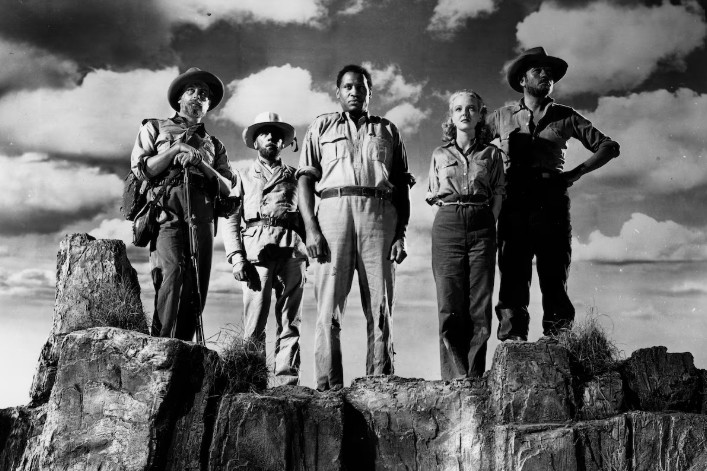
The two best known starred Stewart Granger, in 1950, and Paul Robeson, in 1937. Robeson, who played Umbopa, a king in disguise, received top billing. The score was by Mischa Spoliansky.
Haggard achieved another “Lost World” hit with “She,” first issued in book form in 1887 – another adventure about Europeans in Africa, who meet a seemingly immortal white queen known as the all-powerful She, or She-Who-Must-Be-Obeyed.
“She” has been adapted to film six times. The 1965 version starred Ursula Andress, Peter Cushing, and Christopher Lee. The music was by Hammer Studios house composer, James Bernard. It’s nice to hear Bernard, who mostly wrote horror scores for the likes of Dracula and Frankenstein, provide something a little more nuanced for a change.
Rudyard Kipling’s “The Man Who Would Be King,” published in 1888, was clearly influenced by the writings of Haggard. In this case, two British adventurers in India strike out for a remote corner of Afghanistan to set themselves up as kings. The story was made into one of the great adventure films of the 1970s, directed by John Huston, and starring Sean Connery and Michael Caine. That Christopher Plummer appears as Kipling himself is only icing on the cake. Maurice Jarre wrote the rousing score.
Finally, James Hilton’s “Lost Horizon,” published in 1933, imagines Shangri-La, a Utopian society nestled in a sheltered valley somewhere in the mountains of Tibet. A British diplomat is one of a handful of passengers who survives a plane crash to be taken into the lamasery.
“Lost Horizon” was made into a film twice. The less said about the 1973 version, a musical with songs by Burt Bacharach, the better. Frank Capra directed the classic 1937 version, which starred Ronald Colman, Jane Wyatt, and outstanding character actors of the day, people like Edward Everett Horton, Thomas Mitchell, Sam Jaffe, and H.B. Warner.
The score, Dimitri Tiomkin’s first major contribution, was also one of his most ambitious. Seldom was it so obvious that he had studied at the St. Petersburg Conservatory under Alexander Glazunov.
I hope you’ll lose yourself in music for lost civilizations this week, on “Picture Perfect,” music for the movies, now in syndication on KWAX Classical Oregon!
——-
Clip and save the start times for all three of my recorded shows:
PICTURE PERFECT, the movie music show – Friday at 8:00 PM EDT/5:00 PM PDT
SWEETNESS AND LIGHT, the light music program – Saturday at 11:00 AM EDT/8:00 AM PDT
THE LOST CHORD, unusual and neglected rep – Saturday at 7:00 PM EDT/4:00 PM PDT
Stream them, wherever you are, at the link!
https://kwax.uoregon.edu
——-
PHOTO: Paul Robeson headlines “King Solomon’s Mines”
Tag: Paul Robeson
-
So Much for Escapism: Power Corrupts on “The Lost Chord”
This week on “The Lost Chord,” I indulge my inner English major with a program inspired by two plays that explore the relationship of power and corruption – Shakespeare’s “Macbeth” and Eugene O’Neill’s “The Emperor Jones.”
The impulse grew out of my recollection of the rarely-heard ballet by Heitor Villa-Lobos, which originally aired on television in 1957. However, since the score was never published, it was believed lost for decades until rediscovered by the conductor Jan Wagner (who is Venezuelan, despite his Teutonic name). Wagner will conduct the Odense Symphony Orchestra, a Nordic band, in a surprisingly idiomatic performance.
Also on the program will be a half-remembered relic of American musical history, an aria from Louis Gruenberg’s opera, “The Emperor Jones,” sung by baritone Lawrence Tibbett, recorded in 1933.
“The Emperor Jones,” written in 1920, could be a potentially sensitive subject in a more politically correct era. No doubt about it, O’Neill’s tragedy is a product of its time, with plenty of minstrel show dialect, and the uncomfortable use of the N-word.
Already in 1924, Sidney Gilpin, the actor who created Brutus Jones, hedged at playing the character in its first revival, unless O’Neill first changed what he perceived as some of the more offensive passages. O’Neill stood his ground, and Gilpin’s replacement, Paul Robeson, went on to international stardom.
It’s easy to write-off “The Emperor Jones” as an embarrassing relic. Yet there have been some high-profile stagings over the past few years which demonstrate that the play still has much to tell us.
Jones is a former railroad porter and convict, who kills a guard in his escape from prison, and through bluff and bravado establishes himself as emperor of a Caribbean island. He maintains his power through cruelty and exploitation. However, he overplays his hand, and the situation quickly erodes. As his subjects rise up against him, Jones retreats into the jungle and descends into primal fear, haunted by images of his victims.
The play not only parallels some of the themes of “Macbeth,” it also demonstrates the fragility of human reason; how easily under the influence of adrenaline, brought on by raw terror, man is undone by the animal impulses of fight or flight; the psychological impact of guilt; and an insight into tyranny which was remarkably prescient given that fascism would soon overtake Europe.
I don’t know why it never occurred to me before to juxtapose the two plays, but a quick Google search reveals that I am not the first, so there goes my dream of an honorary doctorate.
Also on the show will be selections from rarely-heard incidental music written for two productions of “Macbeth,” by William Walton (for John Gielgud) and Sir Arthur Sullivan (for Henry Irving), respectively.
Power corrupts, on “Power Plays,” on “The Lost Chord,” now in syndication on KWAX Classical Oregon!
——–
Clip and save the start times for all three of my recorded shows:
PICTURE PERFECT, the movie music show – Friday at 8:00 PM EDT/5:00 PM PDT
SWEETNESS AND LIGHT, the light music program – Saturday at 11:00 AM EDT/8:00 AM PDT
THE LOST CHORD, unusual and neglected rep – Saturday at 7:00 PM EDT/4:00 PM PDT
Stream them, wherever you are, at the link!
https://kwax.uoregon.edu
——–
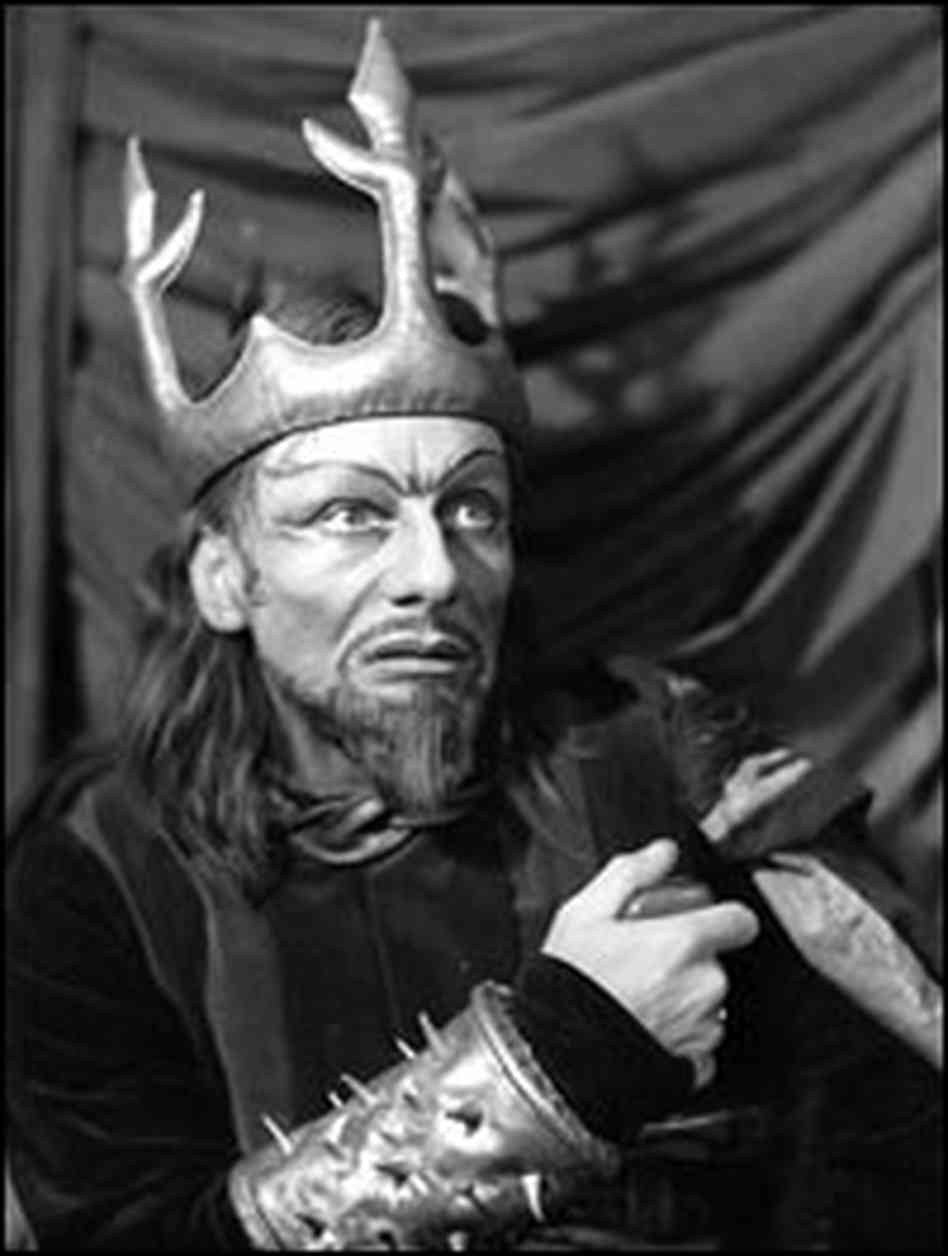
PHOTOS: Gielgud as Macbeth (top) and Tibbett as Brutus Jones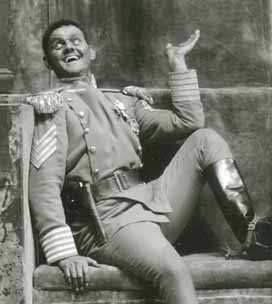
-
Paul Robeson’s Dream of Universal Brotherhood
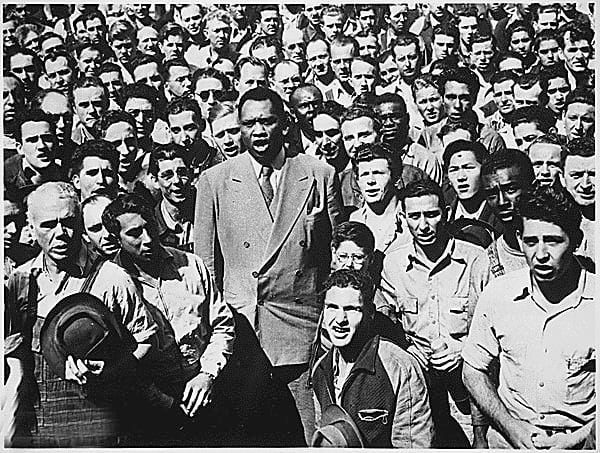
On Paul Robeson’s birthday, here’s Princeton’s own, to sing Beethoven’s celebration of universal brotherhood, his setting of Schiller’s “Ode to Joy.”
At the time of this recording, his U.S. passport had been revoked.
https://www.peoplescollection.wales/items/24367
More about Robeson’s ties to Wales and the plight of the miners:
https://www.theguardian.com/books/2017/jul/02/how-paul-robeson-found-political-voice-in-welsh-valleys
Robeson in “The Proud Valley” (1940)
The story behind “Freedom Train,” with audio:
https://njdigitalhighway.org/lesson/paul_robeson/freedom_train
Paul Robeson’s dream of universal brotherhood was a lifelong commitment to the idea that all human beings, regardless of race, nationality, or economic standing, are interconnected and deserving of dignity, equality, and peace – concepts still unfortunately radical in 2026.
The man certainly walked the walk. Happy birthday, Paul Robeson. -

Paul Robeson Passover Princeton Birthday
Paul Robeson for Passover.
Happy birthday to Princeton’s own!
-

John Henry Legend Copland Robeson & the New River Gorge
In an earlier post, I shared my disappointment at having to trim Aaron Copland’s “John Henry” from my Labor Day playlist on Saturday, because of time considerations. So I’m including it here at one of the links below.
First, the basis for the John Henry legend:
https://en.wikipedia.org/wiki/John_Henry_(folklore)
Does New River Gorge National Park doubt its veracity?
https://www.nps.gov/neri/planyourvisit/the-legend-of-john-henry-talcott-wv.htm
Princeton’s own Paul Robeson sings the folk ballad:
Copland’s “descriptive fantasy,” composed in 1940:
There’s a famous quote in John Ford’s “The Man Who Shot Liberty Valance” (1962): “When the legend becomes fact, print the legend.” The tale of John Henry is one of tragic grandeur. Whether he lived or how he died is of little consequence to its resonance. Small wonder that this powerful symbol endures.
PHOTOS: John Henry monument in Talcott, WV, at its current location near the Great Bend Tunnel, and related historical markers
Tag Cloud
Aaron Copland (94) Beethoven (95) Composer (114) Film Music (148) Film Score (143) Film Scores (255) Halloween (97) John Williams (196) KWAX (232) Leonard Bernstein (105) Marlboro Music Festival (125) Movie Music (163) Mozart (91) Opera (215) Philadelphia Orchestra (90) Picture Perfect (174) Princeton Symphony Orchestra (110) Radio (90) Ross Amico (244) Roy's Tie-Dye Sci-Fi Corner (290) The Classical Network (101) The Lost Chord (269) Vaughan Williams (107) WPRB (397) WWFM (881)