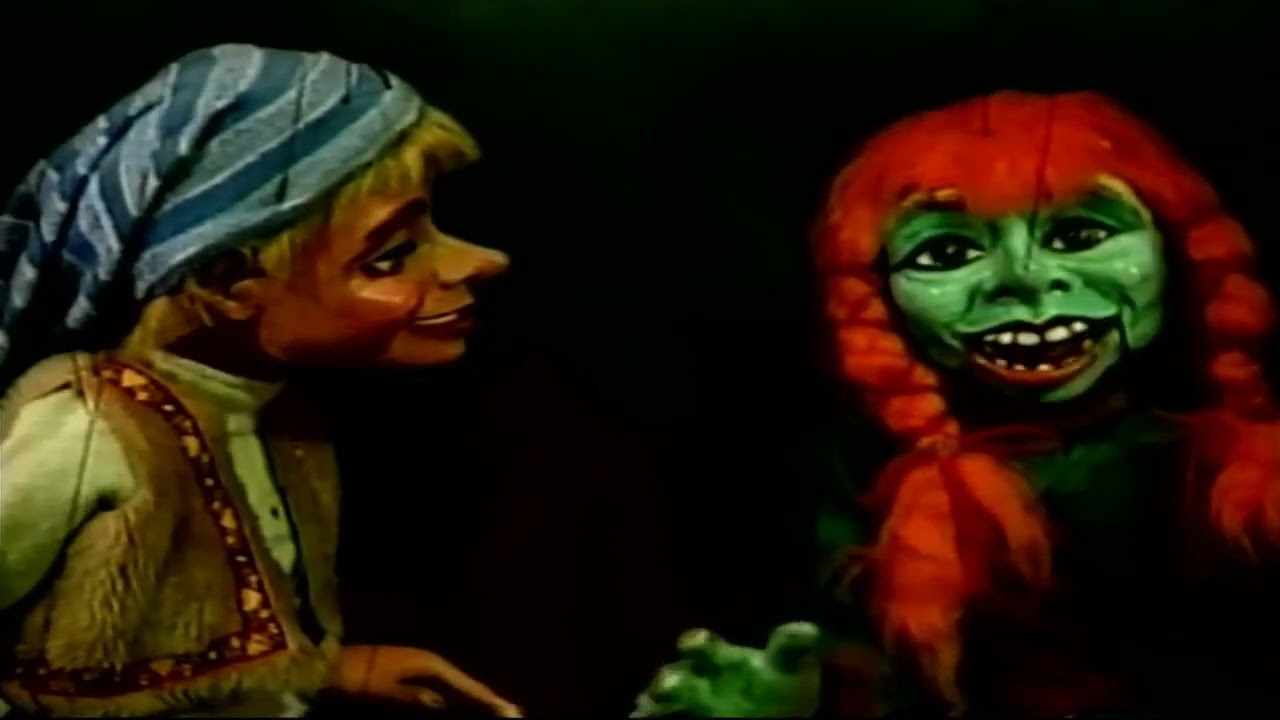
I just finished producing “Sweetness and Light,” which will air, as usual, this Saturday morning at 11:00 EST/8:00 PST on KWAX. Taking a cue from the show’s signature tune, “Puppets on Parade” by Rudolf Friml, I figured I’d go full-on puppet/marionette this week. I turned up plenty of material in my own music collection, of course, but in bouncing around the internet for ideas, I stumbled across this marionette performance of Ibsen’s “Peer Gynt” that employs the famous incidental music by Edvard Grieg. It’s not on my show, but if you’re of a certain age, perhaps it still haunts your memories of elementary school music class. Watch through your fingers, if you dare; then join me for “Puppet Masters” on “Sweetness and Light,” this Saturday morning on KWAX!
Tag: Peer Gynt
-

Edvard Grieg A Master’s Melancholy Lyricism
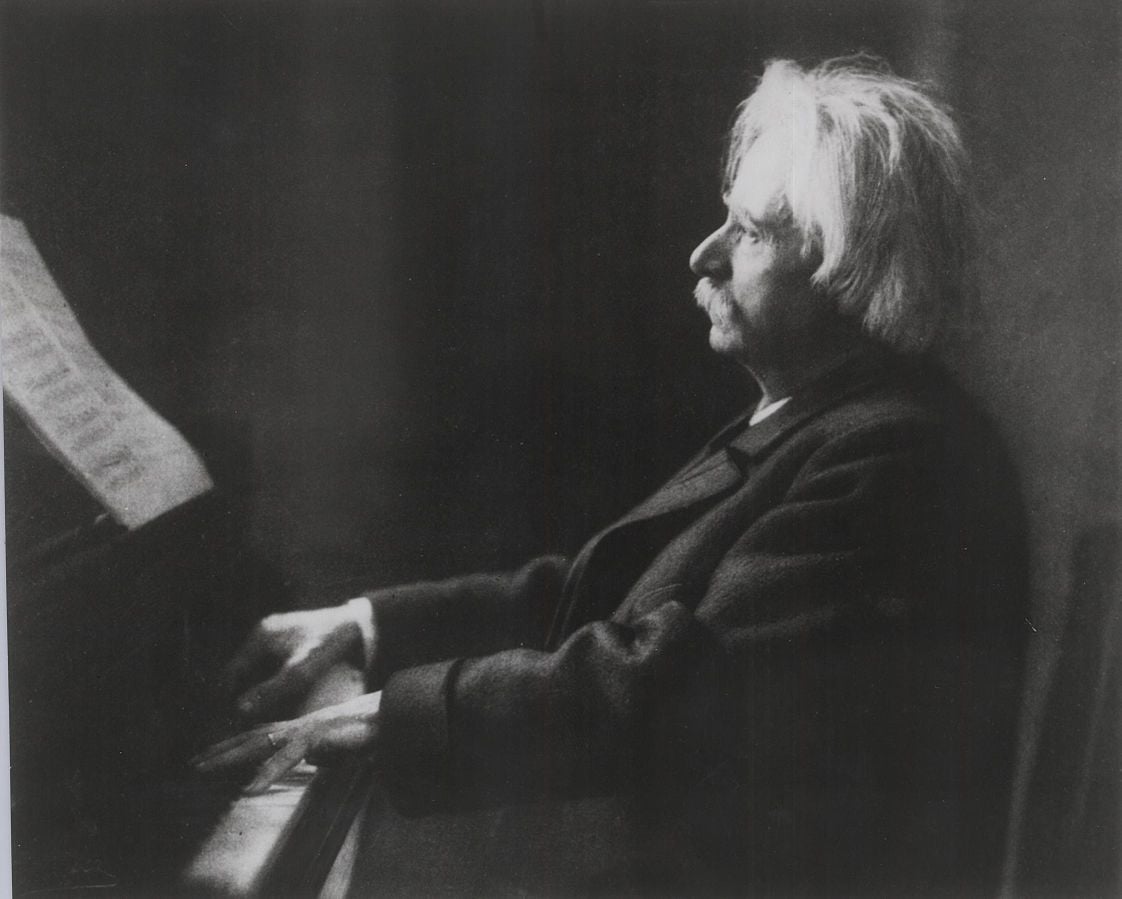
If Edvard Grieg and Mark Twain got into a knife fight, who would win? Twain, probably. But once Grieg sat down at the piano, there would be no contest. Did this guy ever write a bad note?
Celebrated as Norway’s greatest composer, Grieg embraced his native folk music, lovingly elevated it, and infused it with an intriguing delicacy, melancholy, and yes, lyricism. Like listening to a Nordic Schubert, you never know when a cloud will break across the fjords. Or perhaps, more to the point, a sunny jaunt across a field of wildflowers will be disrupted by an encounter with a troll.
The most common criticism leveled against Grieg is that he was essentially a miniaturist. You might as well attack Chopin for being a sloppy orchestrator.
From his letters, we know that Grieg himself was frustrated by his propensity for shorter works. “Nothing that I do satisfies me,” he wrote, “and though it seems to me that I have ideas, they neither soar nor take form when I proceed to the working out of something big.”
Claude Debussy was only too happy to kick him while he was down. He famously derided Grieg’s output as so many “pink bonbons filled with snow.” Yet it has been convincingly demonstrated that Debussy owed more than a little to his Norwegian colleague in the writing of his String Quartet in G minor and in some of his own piano miniatures. What is it about Grieg that so galled the Gauls?
Myself, I could listen to Grieg all day. In fact, I think I will.
Neeme Järvi conducts the four “Symphonic Dances.” I used the second of these as signature music for an overnight show, back when I was starting out in community radio.
Emil Gilels plays a selection of the “Lyric Pieces.” Gilels hedged when asked to make the recording, fearing that no one would buy it. Of course, it went on to become one of the great piano classics.
The husband-and-wife team of Augustin Dumay and Maria João Pires whip up a fair amount of unsuspected passion in the Violin Sonatas. Here’s the full album.
“The First Meeting,” sung by Barbara Bonney
Six Songs, Op. 48
“Solveig’s Song” from “Peer Gynt”
Arturo Benedetto Michelangeli shatters the stereotype of Grieg as “provincial” composer with this volcanic performance of the Piano Concerto in A minor:
PHOTO: Grieg is great! Happy birthday, master!
-
Ellington’s Grieg A Jazz “Grotesque”?
Another tribute to Edvard Grieg on his birthday: Duke Ellington’s take on “Peer Gynt.” When the album came out in 1960, the Grieg Foundation was not flattered. The president of the organization found the arrangements to be ugly and uninspired and felt that Ellington and Billy Strayhorn had made Solveig “bray like a sow.” Critics in America, at best, expressed confusion. While conceding that the undertaking was a serious one, the results were deemed “grotesque” and even “contemptible.” The classical people weren’t happy. The jazz people weren’t happy. In the process, some reached past the Duke to take a slap at Grieg for his “lightweight” originals. Ouch! Tough crowd!
More about it here:
Fiedler conducting the original suites:
-
Grieg’s Peer Gynt Plus Norwegian Gems on WWFM
This Tuesday morning at 10:00, Alice Weiss will host “The Classical Network in Concert,” featuring cellist Gabriel Cabezas, winner of the 2014 Astral Artists National Auditions. On the program will be major works for the instrument by Britten and Shostakovich, as well as transcriptions performed in association with other Astral Artists.
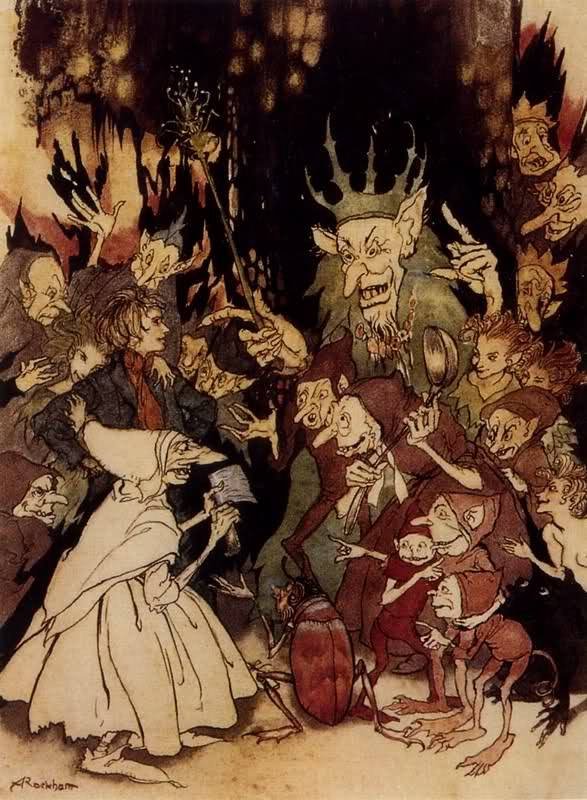
On account of the earlier broadcast, there will be no noontime concert today, leaving me with a blank canvas on which to paint for the succeeding four hours. Since I’m on earlier in the afternoon on Tuesday, I like to play at least one piece that you generally wouldn’t hear during the day, due to its extraordinary length. Today, I will be dusting off a recording of the complete incidental music composed for the premiere production in 1876 of Henrik Ibsen’s “Peer Gynt,” by Edvard Grieg. I think you’ll be surprised by just how much beauty, mystery, and menace never made it into the popular suites. You’ll also have a chance to brush up on your Norwegian!
Astonishingly, Grieg found work on the music to be a frustrating experience. He thought it a “terribly unmanageable subject,” and labored against the limitations imposed on him by the management of the theater, which gave him specifications for the duration of each number. “I was thus compelled to do patchwork,” he complained, “hence the brevity of the pieces.”
Of course, the music was a triumphant success and includes some of Grieg’s best known melodies. However, the original score was not published until after the composer’s death, and is still rarely heard in its entirety.
As an added bonus this afternoon, we’ll also hear one of the Hardanger fiddle concerts of Norwegian composer Geirr Tveitt. Tveitt, a late proponent of Norwegian nationalism, suffered a terrible loss from which he never emotionally recovered. In 1970, his farmhouse burned to the ground, reducing approximately 300 of his manuscripts – fully four-fifths of his compositional output – to ash. Tveitt, a broken man, drank himself to death, little realizing that, through private recordings, radio archives, and surviving orchestral parts, a sizable portion of these works would eventually be reconstructed.
Join me today, from noon to 4 p.m. EDT, for music from Norway and more, on WWFM – The Classical Network and at wwfm.org.
Tag Cloud
Aaron Copland (93) Beethoven (95) Composer (114) Film Music (144) Film Score (143) Film Scores (255) Halloween (94) John Williams (195) KWAX (229) Leonard Bernstein (104) Marlboro Music Festival (125) Movie Music (159) Mozart (90) Opera (212) Philadelphia Orchestra (89) Picture Perfect (174) Princeton Symphony Orchestra (109) Radio (88) Ross Amico (244) Roy's Tie-Dye Sci-Fi Corner (290) The Classical Network (101) The Lost Chord (269) Vaughan Williams (105) WPRB (397) WWFM (881)