Tag: Philadelphia Orchestra

  • Vaughan Williams Pastoral Symphony Ormandy 1972

    Vaughan Williams Pastoral Symphony Ormandy 1972

    On this, the day after Memorial Day, I’ve stumbled across a YouTube video of a concert broadcast of Eugene Ormandy conducting the Philadelphia Orchestra in Ralph Vaughan Williams’ “A Pastoral Symphony” (his Symphony No. 3), which was completed in 1922.

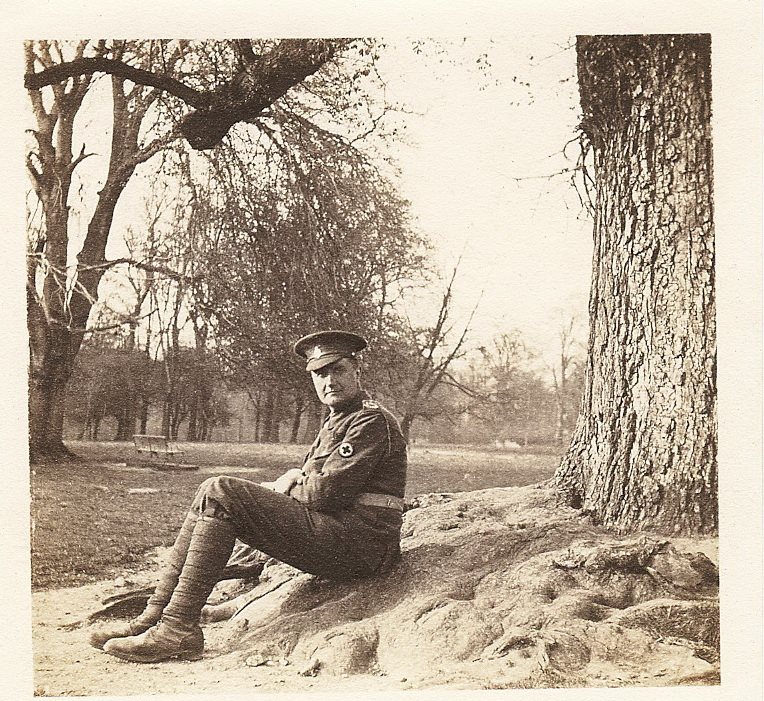
    While a good many of Vaughan Williams’ pieces are indeed pastoral, this one has something of a haunted undertow that belies its placid moniker. The composer was serving with the Royal Army Medical Corps in France during the First World War. At the end of the day, he would drive his ambulance up to the top of a hill and listen to a bugler practicing. On one occasion, the bugler accidentally played the interval of a seventh, as opposed to an octave. The trumpet solo in the second movement of the symphony enshrines this memory.

    It is pastoral, all right. As peaceful as the dead. The great Benita Valente sings the wordless soprano part in the final movement, like a distant milkmaid wandering the countryside. The contrast with the waste and destruction of the war leads to a moving and intense elegy that takes over, in this particular recording, around the 31 minute mark.

    Vaughan Williams’ next symphony, the Symphony No. 4, spilled over with rage and violence, clearing the air for one of the most hopeful utterances in all of music, his Symphony No. 5, composed, oddly enough, during the darkest days of World War II.

    Peter Warlock, who famously characterized Vaughan Williams’ music as “just a little too much like a cow looking over a gate,” called the Pastoral Symphony “a truly splendid work” and “the best English orchestral music of this century.”

    Ormandy and the Philadelphians performed the piece on October 12, 1972, to mark the centennial of Vaughan Williams’ birth. 1972 also happened to mark the semicentennial of “A Pastoral Symphony.”
  • Varese’s Amériques Premiere Orchestra History

    Varese’s Amériques Premiere Orchestra History

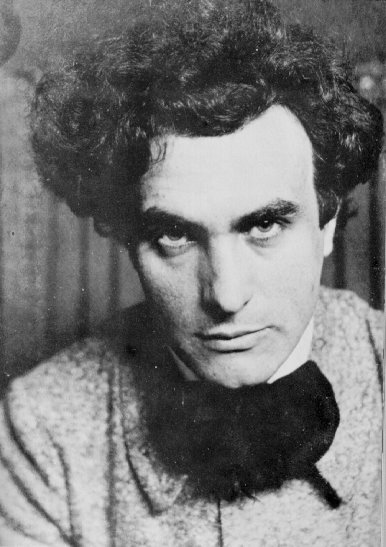
    On this date in 1926, Leopold Stokowski conducted The Philadelphia Orchestra in the first performance of Edgard Varese’s “Amèriques.” With these two guys at the helm, what could possibly go wrong?

    Here it is, conducted by Christopher Lyndon-Gee. The notorious siren makes its first appearance at the 2:30 mark.

    https://www.youtube.com/watch?v=RbPzNBvwnsM

    Next season, Lyndon-Gee will guest conduct the Princeton Symphony Orchestra in music of Elgar and Nielsen.

  • Sibelius Celebrated on WPRB 103.3 FM

    Sibelius Celebrated on WPRB 103.3 FM

    We continue our celebration of the 150th anniversary of the birth of Jean Sibelius (which occurred on December 8, 1865). Right now, we’re in the middle of an hour of his final masterworks, including incidental music from “The Tempest,” the tone poem “Tapiola,” and the Symphony No. 7.

    Then at 10:00 we’ll ricochet back to one of his early successes, “Four Legends from the Kalevala,” in a fantastic recording with Eugene Ormandy and the Philadelphia Orchestra.

    It’s all-Sibelius until 11 ET, on WPRB 103.3 FM and at wprb.com.

    #Sibelius150

    PHOTO: Sibelius with Eugene Ormandy

  • Ormandy’s Lost American Music Rediscovered

    Ormandy’s Lost American Music Rediscovered

    I hope you’ll join me tonight on “The Lost Chord,” as we round out our trilogy of programs featuring rarely-heard recordings of American music by Eugene Ormandy and the Philadelphia Orchestra.

    We’ll hear two songs (originally from a collection of five), after texts of William Blake, by Virgil Thomson; Roy Harris’ underrated Symphony No. 7, in a powerhouse performance; and Louis Gesensway’s “Four Squares of Philadelphia.”

    Gesensway was born in Latvia in 1906. A violin prodigy, he was one of the founders of the Toronto Symphony Orchestra. He came to Philadelphia at the age of 19, where he played in the orchestra under Stokowski and Ormandy.

    In his mid-20s, he took a leave of absence to study composition with Zoltán Kodály. “Four Squares of Philadelphia” was described by the composer as a “symphonic poem for large orchestra, narrator and street criers.”

    The piece opens with a recitation of William Penn’s prayer, then continues with musical evocations of Washington Square (captured in early morning, during Colonial times, with street criers hawking their wares), Rittenhouse Square (on a bright and cheerful afternoon), Logan Square (with its fountains at dusk), and Franklin Square (at night, reflective of noisy bridge traffic, with a side excursion into Chinatown, and interjections from the honky tonk joints located around the square in the 1950s).

    I hope you’ll join me for one more trip to the well, with “All-American Ormandy III,” tonight at 10 ET, or that you’ll listen to it (while you’re sitting in traffic, no doubt) when the show repeats Thanksgiving eve at 6. If your family is stressing you out, you can always catch it later as a webcast at wwfm.org.


    PHOTO: Statue of Penn high atop the city he founded

  • Ormandy’s Lost American Music

    Ormandy’s Lost American Music

    It’s not so much that I am out of ideas, but it is mighty convenient that I had so much material left over from last week’s show, consisting of rarely-heard recordings of American music performed by Eugene Ormandy and the Philadelphia Orchestra.

    This Sunday night on “The Lost Chord,” I reach for the already conveniently stacked CDs to cue up three more gems.

    Samuel Barber was born in West Chester, Pa., not far from Philly, in 1910. He attended Philadelphia’s Curtis Institute of Music and had his first orchestral work, the “School for Scandal Overture,” performed by the Philadelphia Orchestra in 1931, when he was 21 years-old.

    His “First Essay for Orchestra” was sent to Arturo Toscanini in the same mail as his “Adagio for Strings.” Toscanini performed both works with the NBC Symphony in 1938, but it was Eugene Ormandy who made the first recording of the “Essay,” with the Philadelphians, in 1940.

    Vincent Persichetti was born in Philadelphia in 1915, and he died there in 1987. In between, he attended Combs College of Music, the Curtis Institute (where he studied conducting with Fritz Reiner) and the Philadelphia Conservatory. He taught at Combs and the Philly Conservatory. Then he received an invitation from William Schuman (some of whose music we heard last week) to take up a professorship at Juilliard.

    Persichetti was one of our great composers, but to this day he remains underappreciated, more respected than loved. His Symphony No 4 of 1951 must be one of his most immediately attractive works.

    Finally, John Vincent may be the most undeservedly neglected composer in Ormandy’s entire discography. Ormandy described his recording of Vincent’s Symphony in D (“A Festival Piece in One Movement”) as “one of the best we have ever done,” and the piece itself as “one of the finest compositions created by an American composer in the past decade.” The 1954 work sounds at times like Sibelius gone to the rodeo, but my, is it good stuff!

    I hope you’ll join me for “All-American Ormandy II,” rarely-heard recordings of Barber, Persichetti and Vincent, on “The Lost Chord,” this Sunday night at 10 ET, with a repeat Wednesday evening at 6; or that you’ll listen to it later as a webcast at wwfm.org.

    To help get you in the mood, here’s an in-depth interview with Persichetti by Bruce Duffie:

    http://www.bruceduffie.com/persichetti.html

Tag Cloud

Aaron Copland (94) Beethoven (95) Composer (114) Film Music (148) Film Score (143) Film Scores (255) Halloween (97) John Williams (196) KWAX (232) Leonard Bernstein (105) Marlboro Music Festival (125) Movie Music (163) Mozart (91) Opera (215) Philadelphia Orchestra (90) Picture Perfect (174) Princeton Symphony Orchestra (110) Radio (90) Ross Amico (244) Roy's Tie-Dye Sci-Fi Corner (290) The Classical Network (101) The Lost Chord (269) Vaughan Williams (107) WPRB (397) WWFM (881)

DON’T MISS A BEAT

Receive a weekly digest every Sunday at noon by signing up here


RECENT POSTS