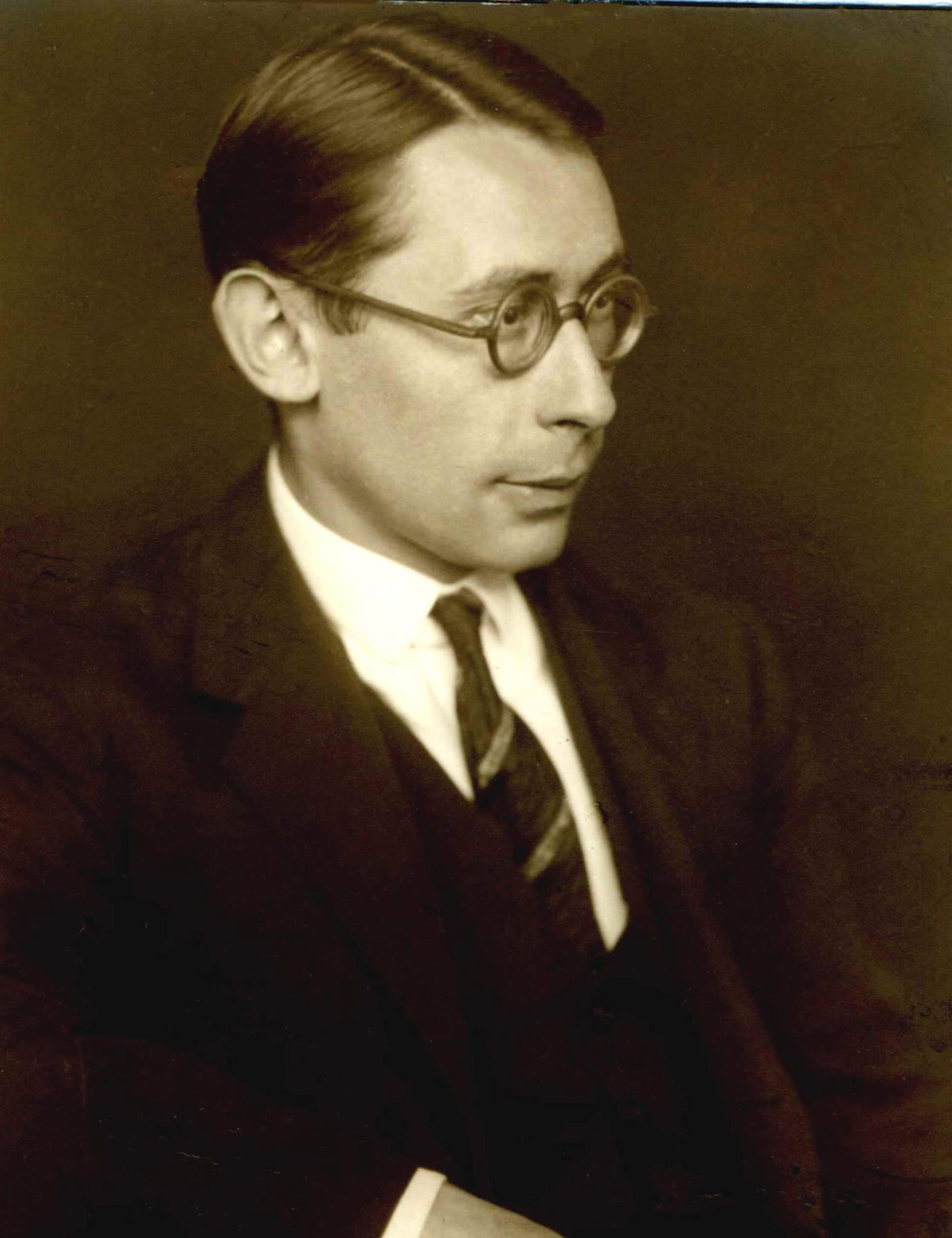
Composer, pianist and teacher Hans Gál was born outside Vienna in 1890. He studied with, among others, Eusebius Mandyczewski, lifelong friend of Johannes Brahms and a key figure in Brahms’ circle. Gál himself became a serious Brahms scholar, co-editing the master’s complete works, in cooperation with Mandyczewski, in ten volumes. He edited other scholarly volumes on Brahms, as well.
It was while Gál was director of the Mainz Conservatory of Music that the Nazis came to power. Forced out of his position, he returned to Austria. Then the Anschluss drove him to Great Britain.
He was held in an internment camp during the war. However, before that, he had managed to make friends with the Scottish musicologist Donald Francis Tovey. And although Tovey suffered a fatal heart attack, Gál was at last able to find permanent employment at Endinburgh University. He died in 1987 at the age of 97.
Gál composed in nearly every genre. He was an influential teacher in Great Britain, and was lauded by many of the greatest musicians of his day. Yet his music and reputation haven’t really pervaded the wider musical consciousness.
This Sunday night on “The Lost Chord,” we’ll hear two works by this neglected composer, issued on the Avie label, which has done much to document Gál’s orchestral, chamber and instrumental music.
First, we’ll have the Piano Sonata, Op. 28, from a complete, 3-CD set devoted to Gál’s output for the keyboard. Gál was about 37 years-old at the time of the sonata’s composition. It’s sobering to think he yet had 60 years of life ahead of him!
Then we’ll hear Gál’s Cello Concerto, from 1944. Gál’s mother died in 1942. Shortly after that, his aunt and sister took their own lives to avoid deportation to Auschwitz. Unable to bear up under the strain, the composer’s youngest son also committed suicide at 18 years-old. The concerto is elegiac, lyrical and deeply personal. For all the personal turbulence and tragedy in Gál’s life, he managed to craft a rewarding and mellifluous work, which on occasion offers glimpses of his beloved Brahms.
I hope you’ll join me for music by this remarkable figure, who weathered much to create works of lasting beauty. Gál went on to flourish in Great Britain. He was an influential teacher, a respected member of the faculty at Edinburgh University, where he remained for the rest of his very long life.
I hope you’ll join me for “Gál’s Worthy,” worthwhile music of Hans Gál, this Sunday night at 10:00 EDT, on WWFM – The Classical Network and wwfm.org.