Poland is in bloom! This Saturday on “The Lost Chord,” find refreshment in musical discoveries by four Polish composers.
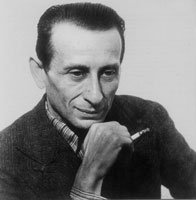
We’ll hear a Fantasy for Cello and Piano by Aleksander Tansman. Tansman spent most of his career in Paris, with an interlude during the war years in the United States. Here, he met Arnold Schoenberg, wrote film scores, and developed an affection for American jazz. Still, his most enduring influences were those of his Polish and Jewish roots.
Hyper-romantic Mieczyslaw Karlowicz lived his life at such a heightened emotional pitch that he was perhaps fated to die young. His music certainly tends in that direction, occupied as most of it is with ecstasy and death. “A Sad Tale,” his last completed work, is a contemplation of suicide. Karlowicz himself was killed in an avalanche while hiking in the Tatras. He was 32 years-old.
On a lighter note, we’ll enjoy choral music by Andrzej Koszewski – his “Kaszuby Suite,” steeped in folk traditions of northwestern Poland – and a neoclassical woodwind quintet by Wojciech Kilar, who is probably best known in the West for his film scores, including those for “Bram Stoker’s ‘Dracula,’” “The Portrait of a Lady,” and “The Pianist.”
It’s a flowering of Polish music on “Poland Spring,” on “The Lost Chord,” now in syndication on KWAX, the radio station of the University of Oregon!
Remember, KWAX is on the West Coast, so there’s a three-hour difference for those of you listening in the East. Here are the respective air-times for all three of my recorded shows (with East Coast conversions in parentheses):
PICTURE PERFECT, the movie music show – Friday on KWAX at 5:00 PM PACIFIC TIME (8:00 PM EASTERN)
SWEETNESS AND LIGHT, the light music program – ALL NEW! – Saturday on KWAX at 8:00 AM PACIFIC TIME (11:00 AM EASTERN)
THE LOST CHORD, unusual and neglected rep – Saturday on KWAX at 4:00 PM PACIFIC TIME (7:00 PM EASTERN)
Stream all three, at the times indicated, by following the link!
Big day in Polish music today, which marks the 100th anniversary of the birth of Stanislaw Skrowaczewski and, somewhat more randomly, the celebration via Google Doodle of the 141st birthday of Karol Szymanowski.
Skrowaczewski, born in Lwów, was forced to abandon his dream to become a concert pianist after sustaining a hand injury during World War II. Nevertheless, music served him well. By 1946, he had already begun his conquest of the great Polish orchestras, becoming music director in turn of the Wrocław, Katowice, and Krakow Philharmonics. He also studied composition in Paris with Nadia Boulanger.
He made his American debut conducting the Cleveland Orchestra at the invitation of George Szell. This led to a music directorship with the Minneapolis Symphony, beginning in 1960 (the organization was rebranded the Minnesota Orchestra during his tenure, against his protests). After 1979, he maintained a long relationship with the orchestra as conductor laureate. For many, it would have been considered an honorary title, but Skrowaczewski really did return just about every season to conduct.
He was also principal conductor of the Hallé Orchestra from 1983 to 1992. He served as artistic adviser to the Milwaukee Symphony Orchestra from 1995 to 1997, and in 1988 he was composer-in-residence for the Philadelphia Orchestra’s summer season at Saratoga. His composition, “Passacaglia Immaginaria,” was nominated for the Pulitzer Prize for Music in 1997.
As a budding record collector, I cut my teeth on a number of Skrowaczewski’s recordings that were issued on the Vox label. I still find his Ravel to be particularly fine. I am also partial to his recordings for Mercury, including an “Italian Symphony” framed by some unusually fleet outer movements. In concertos, he accompanied the label’s most distinguished soloists, artists such as Gina Bachauer, Byron Janis, and János Starker.
Later, I discovered his Bruckner recordings with the Deutsche Radio Philharmonie Saarbrücken Kaiserslautern (now on Oehms Classics), interpretations that render the composer’s student symphonies with as much logic and dignity as his mature works.
Skrowaczewski lived a long and productive life. He died in 2017 at the age of 93. He conducted his last series of concerts in Minnesota less than four months before his death. On the program was Bruckner’s grandest symphonic edifice, the Symphony No. 8, which clocks in, depending on performance, at around 80 or 90 minutes in length. While there are plenty of maestros who’ve conducted Bruckner into their 90s (I saw Herbert Blomstedt do so only last season), I venture to guess there are few who have been able to do it without the aid of chair. Skrowaczewski remained on his feet the entire time.
Karol Szymanowski is regarded as the most important Polish composer between Chopin and the generation that yielded Witold Lutoslawski. He absorbed the musical influences of Richard Strauss, Alexander Scriabin, and Claude Debussy, but put them through his own creative refinery.
Listening to Szymanowski can be a bit like submerging oneself too long in a hot bath – the same low blood-pressure, the increased heart rate, the wooziness. Though the harmonies and melodies suggest the familiar patterns of tonality, the traditional framework has been almost wholly eaten away by the hothouse atmosphere. The music is seductive and dangerous, and one risks being overcome by languor, even as one is overrun by fast-growing vegetation.
It may be in poor taste to suggest that so much humidity was bad for the acute tuberculosis that eventually claimed him at the age 55. Find out more about him in this biographical sketch on Google’s website. You’ll note the “Doodle’s Reach” map at the bottom of the page indicates that the artwork is only visible in the U.K. and Poland!
A performance of his Symphony No. 3 sold over a million copies, making it one of the best-selling classical records of all time.
This Sunday night on “The Lost Chord,” we’ll hear the last major work by Polish composer Henryk Górecki – his Symphony No. 4, subtitled “Tansman Episodes.” The piece was written in tribute to his compatriot, Alexandre Tansman, who lived most of his life in Paris. Górecki was cajoled into writing the work by the organizer of an annual Tansman Festival, held in Łódź, the city of Tansman’s birth.
The astounding success of his Symphony No. 3 was actually a source of consternation for Górecki. The celebrity and scrutiny thrust upon him had the effect of disrupting his routine and stirred up anguish about his future path. Remember, the Symphony No. 3 was composed in 1976. Most of the world had never even heard of Górecki before he skyrocketed to fame in 1992. That was the year that Nonesuch Records released its recording, which featured soprano Dawn Upshaw, and was conducted by David Zinman. However, in the 16 years or so between the work’s composition and its sudden, staggering popularity, Górecki had understandably moved on and continued to develop as an artist.
The sudden recognition caused him, rather Sibelius-like, to agonize over his next symphony. The work wasn’t completed in short score until 2006. The composer died in 2010 without having orchestrated the piece. However, he did leave indications of his intentions and had played through the work at the piano for his son, Mikolaj Górecki, also a composer. It was Mikolaj who took up the task of fleshing it out into full score following his father’s death.
The symphony was given its first performance on April 12, 2014, by the forces we’ll hear, the London Philharmonic Orchestra conducted by Andrey Boreyko, in its world premiere recording.
Rather than reference any of Tansman’s actual music, Górecki decided to play on the letters of the composer’s name, devising a musical cipher made up of corresponding notes to act as a recurring theme. In the second movement, he also quotes Karol Szymanowski’s “Stabat Mater.” There are passing references to Stravinsky and John Adams in the work, as well, and an appearance by Wagner’s “Siegfried” theme toward the end. In general, he trades the mesmerizing lyricism of his Third Symphony for a more aggressive brand of minimalism in his Fourth.
I thought we’d preface Górecki’s symphonic tribute with some music by Tansman himself, who was born on this date 125 years ago. We’ll hear the “Partita for Cello and Piano,” written in 1954 and 1955 for the famed Spanish cellist Gaspar Cassadó. It will be performed by the Cracow Duo – Kalinowski & Szlezer, Jan Kalinowski, cello, and Marek Szlezer, piano.
I hope you’ll join me for “Repeating Episodes” – Henryk Górecki’s Symphony No. 4 “Tansman Episodes,” etc. – this Sunday night at 10:00 EDT, on WWFM – The Classical Network and wwfm.org.
POLE POSITIONS: Alexandre Tansman (left) and Henryk Górecki
Poland is in bloom! This Sunday night on “The Lost Chord,” find refreshment in musical discoveries by four Polish composers.
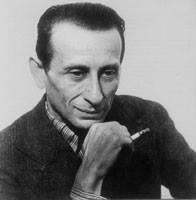
We’ll hear a Fantasy for Cello and Piano by Aleksander Tansman. Tansman spent most of his career in Paris, with an interlude during the war years in the United States. Here, he met Arnold Schoenberg, wrote film scores, and developed an affection for American jazz. Still, his most enduring influences were those of his Polish and Jewish roots.
Hyper-romantic Mieczyslaw Karlowicz lived his life at such a heightened emotional pitch that he was perhaps fated to die young. His music certainly tends in that direction, occupied as most of it is with ecstasy and death. “A Sad Tale,” his last completed work, is a contemplation of suicide. Karlowicz himself was killed in an avalanche while hiking in the Tatras. He was 32 years-old.
On a lighter note, we’ll enjoy choral music by Andrzej Koszewski –
his “Kaszuby Suite,” steeped in folk traditions of northwestern Poland – and a neoclassical woodwind quintet by Wojiech Kilar, who is probably best known in the West for his film scores, including those for “Bram Stoker’s ‘Dracula,’” “The Portrait of a Lady,” and “The Pianist.”
It’s a flowering of Polish music on “Poland Spring.” I hope you’ll join me, this Sunday night at 10:00 EDT, on WWFM – The Classical Network and wwfm.org.
A performance of his Symphony No. 3 sold over a million copies, making it one of the best-selling classical records of all time.
This Sunday night on “The Lost Chord,” we’ll hear the last major work by Polish composer Henryk Górecki – his Symphony No. 4, subtitled “Tansman Episodes.” The piece was written in tribute to his compatriot, Alexandre Tansman, who lived most of his life in Paris. Górecki had been cajoled into writing the work by the organizer of an annual Tansman Festival, held in Łódź, the city of Tansman’s birth.
The astounding success of his Symphony No. 3 was actually a source of consternation for Górecki. The celebrity and scrutiny thrust upon him had the effect of disrupting his routine and stirred up anguish about his future path. Remember, the Symphony No. 3 was composed in 1976. Most of the world had never even heard of Górecki before he skyrocketed to fame in 1992. That was the year that Nonesuch Records released its recording, which featured soprano Dawn Upshaw, and was conducted by David Zinman. However, in the 16 years or so between the work’s composition and its sudden, staggering popularity, Górecki had understandably moved on and continued to develop as an artist.
The sudden recognition caused him, rather Sibelius-like, to agonize over his next symphony. The work wasn’t completed in short score until 2006. The composer died in 2010 without having orchestrated the piece. However, he did leave indications of his intentions and had played through the work at the piano for his son, Mikolaj Górecki, also a composer. It was Mikolaj who took up the task of fleshing it out into full score following his father’s death.
The symphony was given its first performance on April 12, 2014, by the forces we’ll hear, the London Philharmonic Orchestra conducted by Andrey Boreyko, in its world premiere recording.
Rather than reference any of Tansman’s actual music, Górecki decided to play on the letters of the composer’s name, devising a musical cipher made up of corresponding notes to act as a recurring theme. In the second movement, he also quotes Karol Szymanowski’s “Stabat Mater.” There are passing references to Stravinsky and John Adams in the work, as well, and an appearance by Wagner’s “Siegfried” theme toward the end. In general, he trades the mesmerizing lyricism of his Third Symphony for a more aggressive brand of minimalism in his Fourth.
I thought we’d preface Górecki’s symphonic tribute with some music by Tansman himself. We’ll hear the “Partita for Cello and Piano,” written in 1954 and 1955 for the famed Spanish cellist Gaspar Cassadó. It will be performed by the Cracow Duo – Kalinowski & Szlezer, Jan Kalinowski, cello, and Marek Szlezer, piano.
I hope you’ll join me for “Repeating Episodes” – Henryk Górecki’s Symphony No. 4 “Tansman Episodes” – this Sunday night at 10:00 EDT, with a repeat Wednesday evening at 6; or that you’ll listen to it later as a webcast at wwfm.org.
POLE POSITIONS: Alexandre Tansman (left) and Henryk Górecki